How to Hang Icicle Lights Straight (and When to Skip Them)
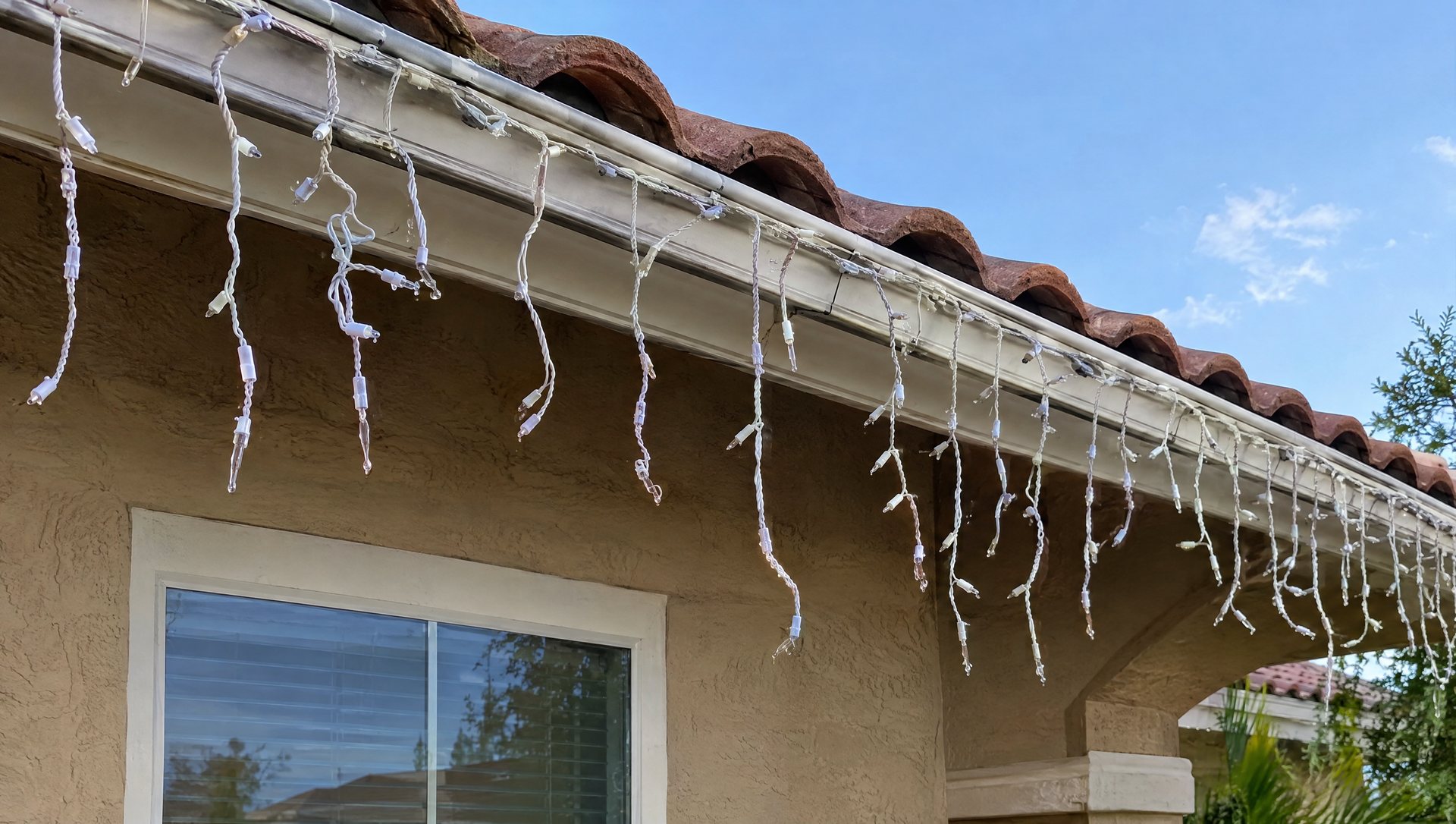
Icicle lights hang straight when the top wire is clipped every 6 to 12 inches and can’t roll, and when the drops have had a day out of the box to relax. Most crooked runs come down to a sagging or twisted top wire, not bent drops.
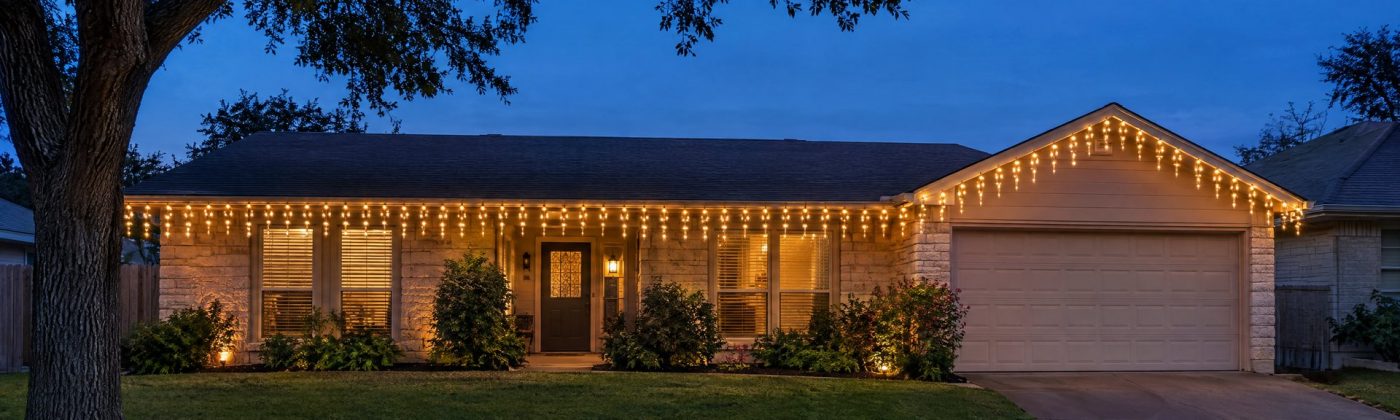
Real icicles show up in Austin about as often as a snow day, which is maybe why the fake ones are so popular here. They look great on the right house and scrappy on the wrong one. So before the how-to, the question most guides skip.
Should your house have icicles at all?
Icicles are a fringe. They need a long, continuous, level edge to hang from, and they look best seen from fairly close. Give them that and they’re lovely. Ask them to follow a complicated roof and they fall apart.

Good fits:
- A long single-story eave with a gutter, the classic Austin ranch front.
- A porch roof seen from the front walk.
- A covered patio facing the back yard, where people sit close to it.
We’d choose C9s instead when:
- The roofline is broken up. Gables, short returns and height changes chop the fringe into scraps. Icicles need long, unbroken runs to read as a line. C9s trace the geometry and actually show it off.
- There’s no gutter and the edge is tile or stucco. The Mediterranean-style stucco-and-tile homes common in newer Austin subdivisions often have no clean place for the top wire, and gutter clips won’t hold on tile.
- The eave is high and far from the street. A 9-inch drop on a second-story eave 60 feet from the sidewalk reads as a fuzzy line. C9s stay crisp at distance. If you must do icicles up high, buy the longest drops you can find.
- The eave is low over a walkway. Drops at head height get grabbed, tangled and broken.
- You want people to see the house’s shape. Icicles hide the roof under a fringe; C9s draw it.
You can mix the two: icicles on the porch, C9s on the main roof is a strong combination. Just don’t put both on the same edge. Our C9 Christmas lights guide covers the alternative.
How many sets and clips: a worked example
Read three numbers on the box, not the bulb count:
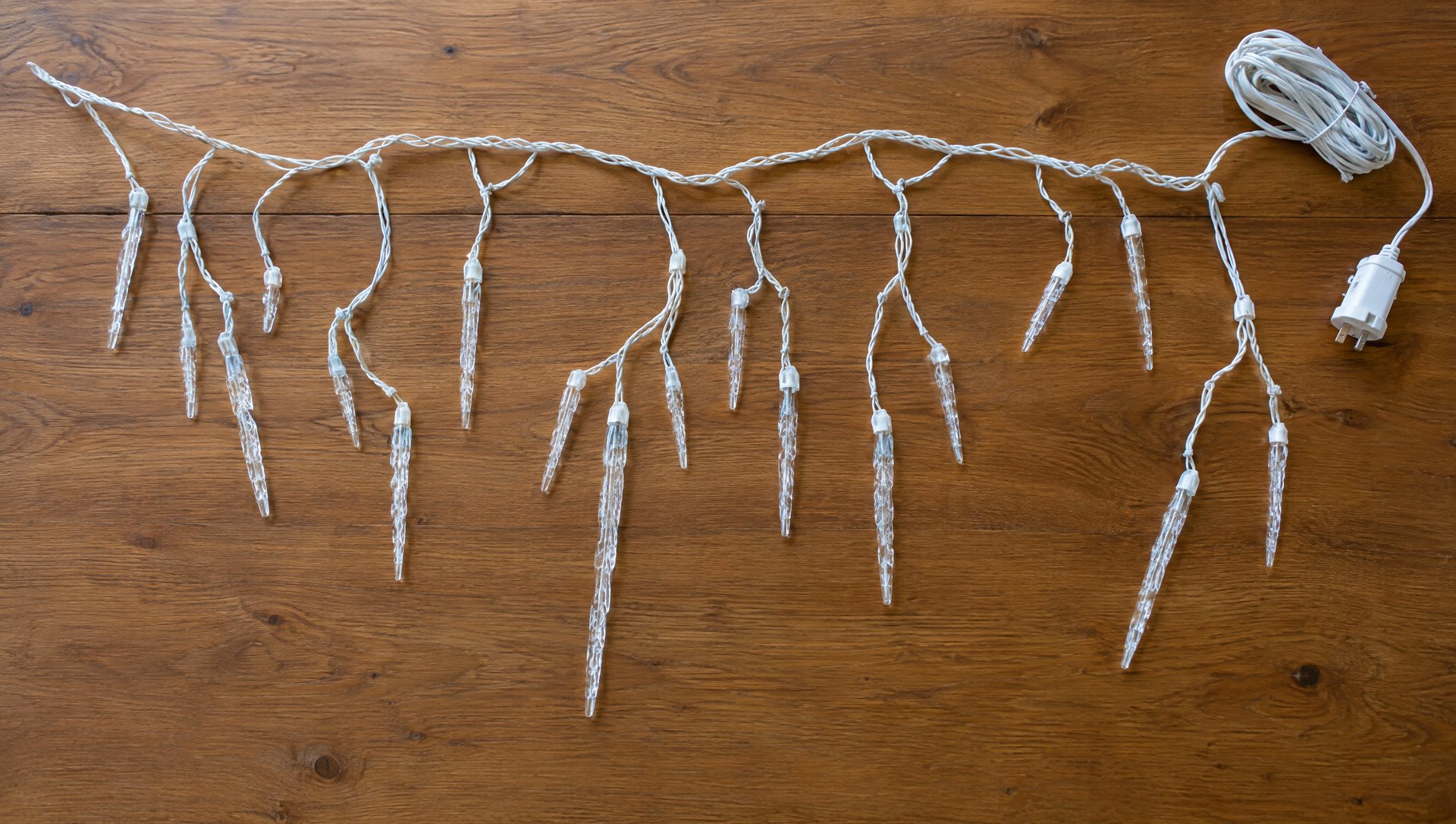
- Lighted width: how much edge the set covers. A common LED icicle set covers about 7 feet.
- Longest drop: icicle drops run about 9 to 18 inches, in a repeating short-medium-long pattern. The longest one matters over doors.
- Lead length: the unlit cord from the plug to the first drop. Box labels list it separately.
Now a real front: a single-story house with a 48-foot gutter run along the front eave and the outlet at the left end.
- Sets: 48 ÷ 7 = 6.9, so 7 sets (49 feet of coverage).
- Clips: at about 8 inches apart, 48 feet × 12 ÷ 8 = 72 clips. Buy a 100-pack; you’ll drop some and want spares for corners.
- Connections: LED icicle sets from a major supplier connect up to 45 sets end to end, so seven is nothing. Most incandescent icicle sets allow only 3 to 5, so seven incandescent sets need two separate feeds from the outlet.
- Lead: measure from the outlet to the corner where the first drop should hang. If that’s farther than the set’s lead, you need an outdoor-rated extension cord, not a “stretched” first set.
Which bulb? LED icicle sets mostly come in two mini styles. 5mm wide-angle bulbs have a concave lens that throws light out in a starburst, so each drop reads as a bright point from the street. M5 bulbs are smaller with a faceted finish and look more delicate up close. For a front eave seen from the sidewalk, we’d pick 5mm wide-angle; for a back patio you sit under, M5 is the softer choice. Warm white suits almost every Austin house; cool white reads blue next to a warm-white porch light.
Buy every set for one edge in the same product and the same order. Two batches of “warm white” on one gutter don’t always match.
Prep on the driveway, not the ladder
Straight out of the box, the drops are kinked from packing. Fix that on the ground.
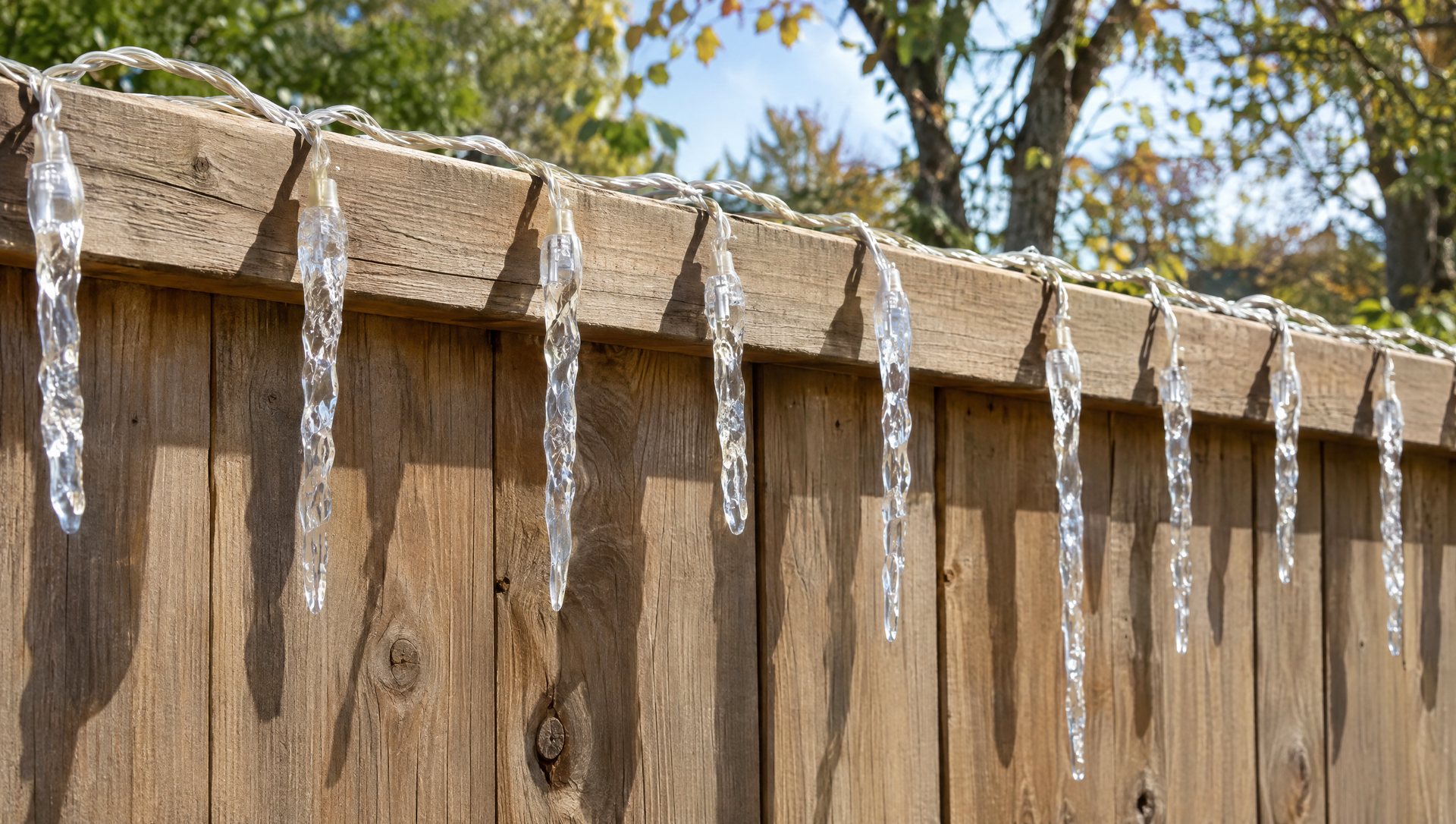
- Unbox the day before. Hang the sets over a fence or a railing, or lay them flat on the driveway in the sun. A warm Austin afternoon softens the wire enough that most kinks fall out on their own.
- Tug each drop top to bottom. Run it gently between two fingers. That’s all the straightening it needs. Skip the hair dryer, the heat gun and the weights on the bulbs: heat can soften insulation and weights strain the sockets.
- Plug in every set. A dead drop is a two-minute fix on the driveway and a twenty-minute one on a ladder. Unplug before you carry it up.
- Note the plug end. Lay each set out with the plug toward the outlet side so you aren’t flipping it on the ladder.
Clipping the top wire
Use all-in-one plastic light clips that grip the gutter lip or slide under the first course of shingles. Then:
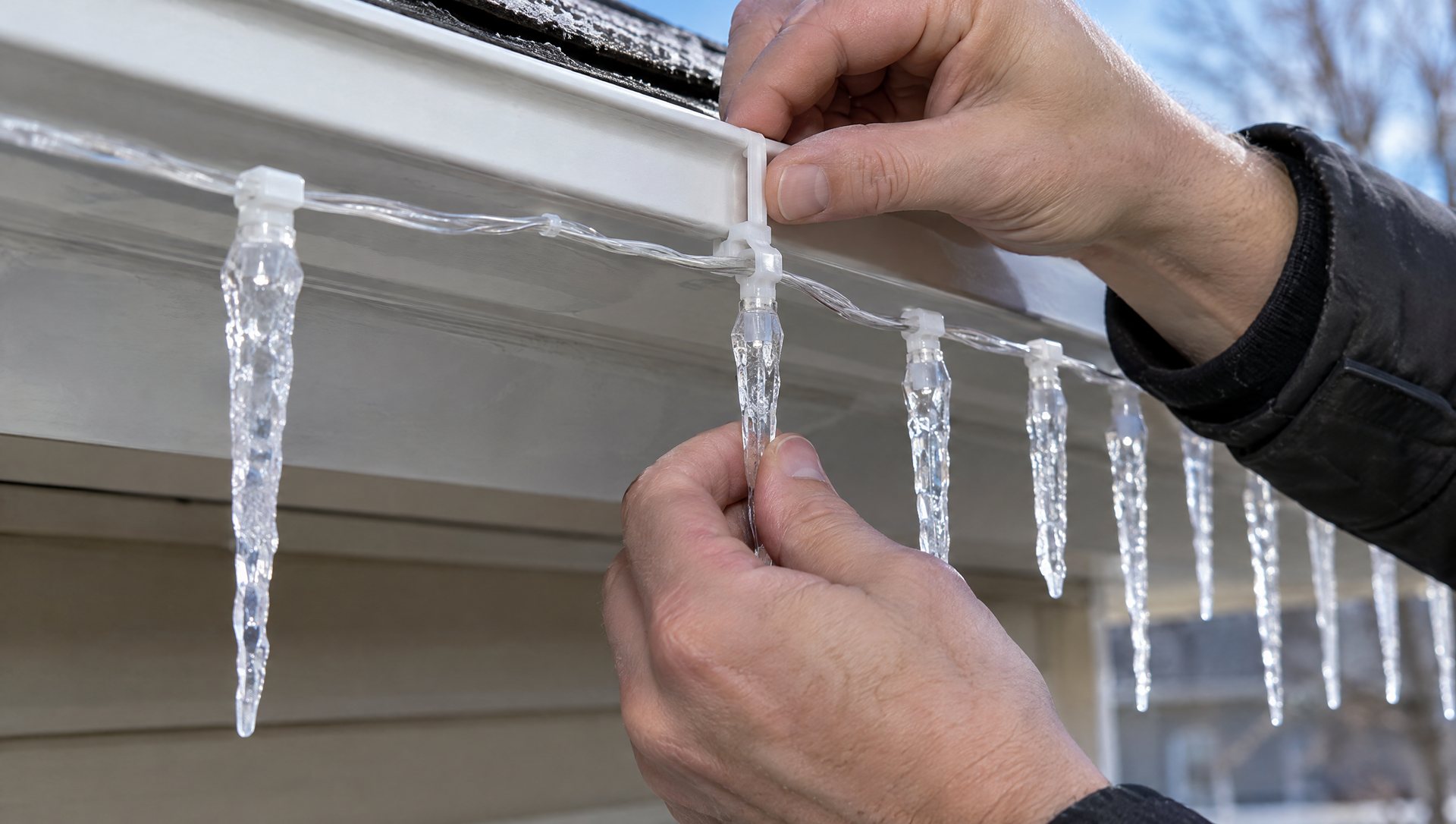
- Start at the outlet end with the plug, and work away from it.
- Space clips 6 to 12 inches apart, which on most sets means one clip between every pair of drops. Wide spacing is the number-one reason icicles look sloppy: the top wire sags between clips, and the drops on the low spots hang lower than their neighbors.
- Clip the top wire itself, never a drop or a socket.
- Make every clip grip the wire the same way. Same side, same angle. A wire that’s held differently in each clip rolls a little at each one, and that’s what makes groups of drops lean.
- Keep the top wire tight to the gutter. Snug, not stretched. A stretched wire pulls on the end sockets every time the wind moves it.
At an outside corner, end one set and start the next, or bend the top wire around with a clip on each side. Don’t let a drop wrap around the corner.
The street check
After one set is clipped, stop. Climb down, walk to the sidewalk, and look. You’re checking two things:
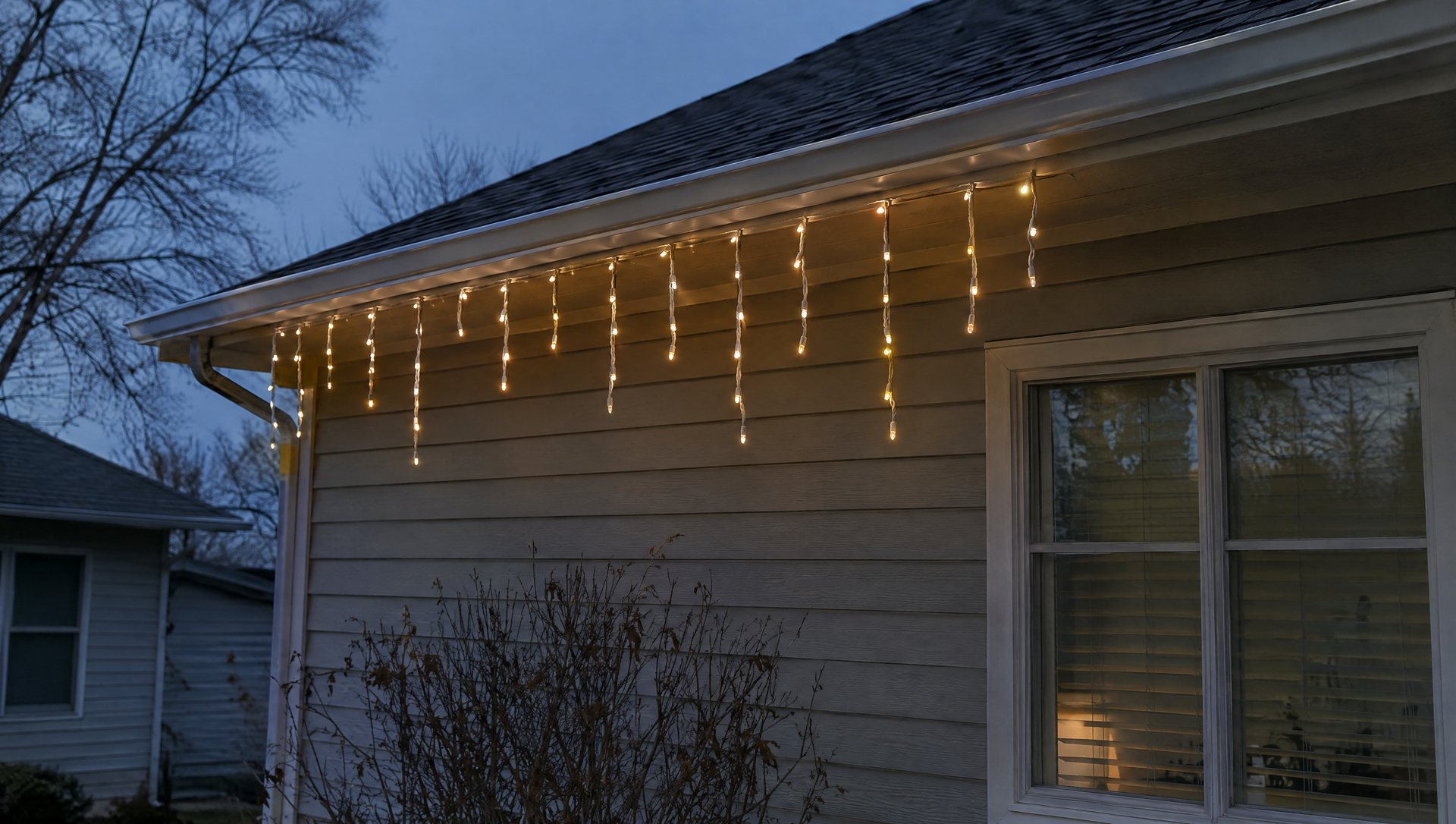
- The top line. It should follow the gutter exactly, with no dips between clips. Any dip means add a clip there.
- Lean. If a group of drops all angle the same way, the top wire is twisted in the clips. Unclip that few feet, rotate the wire until the drops hang plumb, and re-clip, every clip gripping the same way. This fixes more “crooked icicles” than anything done to the drops.
Once the first 7 feet look right from the street, copy exactly the same spacing and grip down the rest of the run. Then check from the street again at dusk with the lights on; a sag that hides in daylight shows clearly once the bulbs are lit.
Leave the uneven bottom alone. The mixed drop lengths are the design. “Straight” means each drop hangs plumb, not that the bottoms line up. If you want a level bottom edge, buy curtain lights, which have long drops of equal length. Never cut drops shorter; that’s modifying a listed electrical product.
Doors, walkways and wind
Doors. Measure from the eave to the bottom of the longest drop. A standard exterior door is 6 feet 8 inches tall, and anything lower than about 7 feet over a walkway gets brushed by heads and hands.
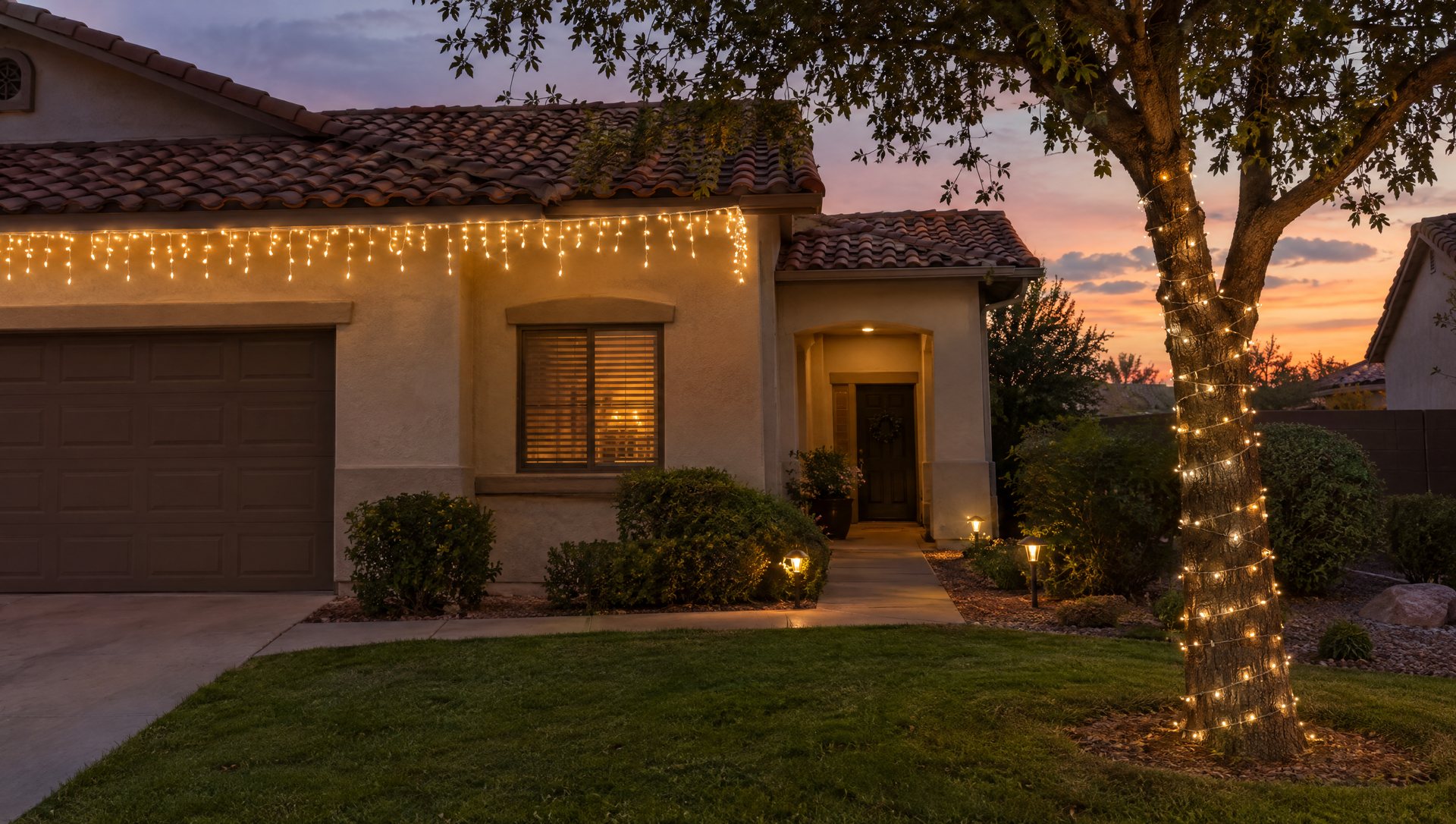
Worked example: a porch with an 8-foot beam and 18-inch drops puts the lowest bulbs at 6 feet 6 inches, right at face height for most adults. The fix is either sets with shorter drops on the porch, or ending the icicles before the door and carrying a C9 line across the opening. On a 9-foot porch, the same 18-inch drops stop at 7½ feet and clear comfortably.
Wind. Drops tangle on exposed corners. Austin’s cold fronts arrive fast on a north wind, so the north end of the house takes the most abuse. On that end, add a clip right at the corner, and consider C9s instead of icicles if it’s fully exposed.
Why your icicles look wrong (and the fix)
Already up and not right? Find the symptom.
The whole run sags between clips
Clips are too far apart. Add one between every pair of drops. Don’t pull the wire tighter to compensate; that only moves the sag and strains the end sockets.
A group of drops leans the same direction
Twisted top wire. Unclip that section, rotate the wire until the drops hang plumb, and re-clip with every clip gripping the same way.
Drops are curled or kinked
They went up straight from the box. Tug each gently top to bottom where you can reach. Drops keep straightening after they’re hung, so give it a few warm afternoons before you redo anything.
Some drops hang lower than the gutter line
Either the top wire dips there (add a clip) or a drop has slipped through the clip and the clip is gripping the drop’s wire, not the top wire. Re-clip on the top wire.
One section is dark
Many icicle sets are wired in sections. A dark section on an incandescent set is usually one loose or broken bulb; on an LED set it’s often a failed section or a blown fuse in the plug. Switch off first. Our guides to Christmas light fuses and light testers walk through finding it. A cracked socket or bare wire means the set comes down; the CPSC says to throw out damaged sets rather than repair them.
Drops are tangled into each other after a windy night
Normal on exposed edges. See the next section.
After a blue norther
Check from the ground in daylight the morning after a cold front. You’re looking for tangled drops, a clip that’s popped off the gutter, and any section of top wire that’s flipped over the gutter lip.