


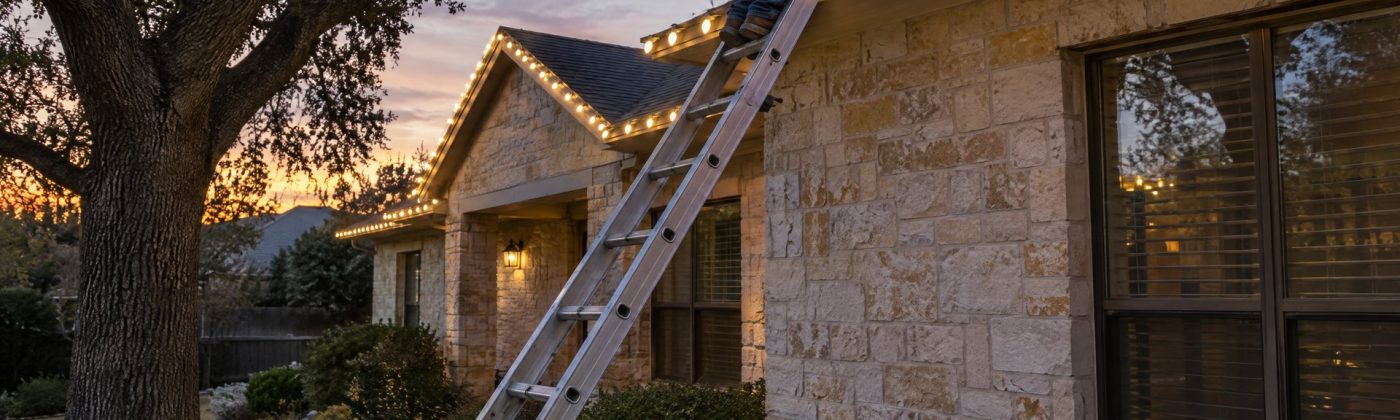
Light Installation Safety: 5 Hazards People Miss When Hanging Christmas Lights
Most holiday-light injuries don’t come from anything exotic. They come from a ladder set on soft ground, an extension cord lying in a puddle, or one more string plugged into a circuit that was already feeding the garage freezer. The U.S. Consumer Product Safety Commission estimates about 14,900 people were treated in emergency rooms for holiday decorating injuries in the 2023 season, around 160 a day, and nearly half of those injuries involved falls.
This guide covers the five hazards that catch people off guard on real houses, with the numbers to check before you plug anything in. It’s written for Central Texas, where the risks look a little different: hot roofs in October, sprinklers and sudden downpours in December, fire ants in every outdoor box, and live oaks hanging over the service drop.
Hazard 1: Overloading a Circuit Without Knowing It
The breaker is not a target to aim for. Under the National Electrical Code, a load that runs for three hours or more counts as a continuous load, and a circuit should carry no more than 80% of its rating continuously. Holiday lights that run from dusk to 11 pm are a continuous load.
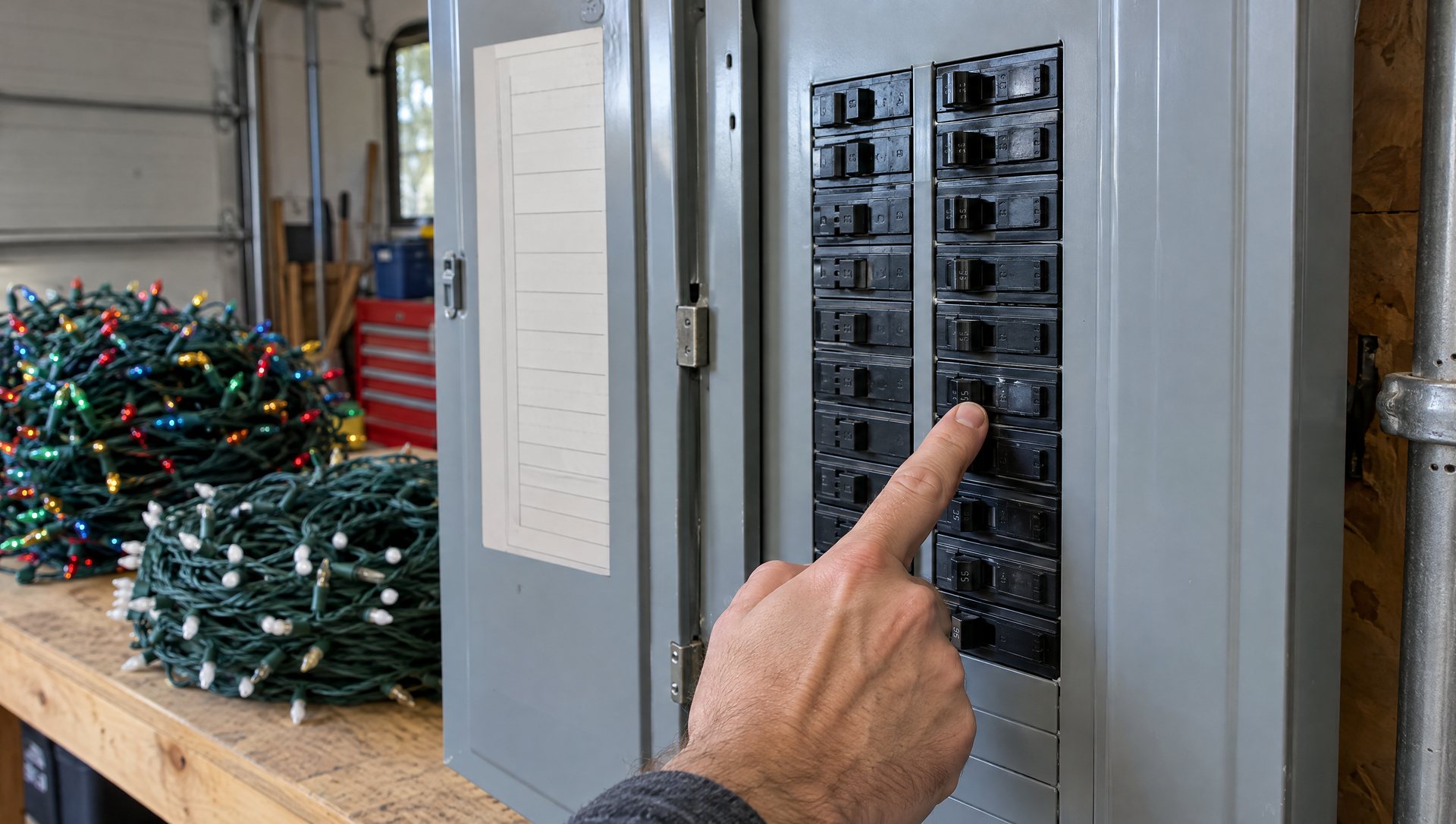
That gives you these working limits at 120 volts:
| Breaker | Rated | Continuous limit (80%) | Continuous watts |
|---|---|---|---|
| 15 A | 1,800 W | 12 A | 1,440 W |
| 20 A | 2,400 W | 16 A | 1,920 W |
A worked example on a typical Austin ranch house
Say you’re outlining 120 feet of roofline with C9 bulbs every 12 inches. That’s 120 bulbs.
- Incandescent C9 at 7 W per bulb: 120 × 7 W = 840 W, or 7.0 A at 120 V.
- LED C9 at 0.6 W per bulb (check your box; LED C9s commonly draw well under 1 W): 120 × 0.6 W = 72 W, or 0.6 A.
On paper, 840 W fits under the 1,440 W continuous limit of a 15 A circuit. But exterior outlets almost never have a circuit to themselves. In many Austin houses the front-porch outlet shares a circuit with the garage, which means a chest freezer, a garage-door opener and maybe a beer fridge. Add a 300 W inflatable and a few strings of incandescent minis on the shrubs, and you’re tripping the breaker on the first cold night when the freezer kicks on.
Before you plan the display, find out what else is on the circuit. Plug a lamp into the outlet, flip breakers one at a time, and note what goes dark. Then add up the nameplate wattage of everything on it.
The string limit is separate from the circuit limit
Every UL-listed light string has a maximum number of sets you can connect end to end, printed on a tag near the plug. That limit protects the string’s own thin wire, not your breaker, so a circuit with plenty of headroom can still overheat a string that’s been daisy-chained too far. The CPSC’s rule of thumb for incandescent sets is never more than three end to end. LED sets often allow 20 or more because they draw so little, but the tag is the number that counts.
What it costs to run, at Austin Energy rates
The same example, run six hours a night for 40 nights, at roughly 14.7¢ per kWh (Austin Energy’s Tier 3 energy charge of 7.901¢ plus 6.808¢ in per-kWh power supply, regulatory and community benefit charges, which is the marginal rate for a home already using more than 900 kWh that month):
- Incandescent: 0.840 kW × 6 h × 40 nights = 201.6 kWh, about $29.60
- LED: 0.072 kW × 6 h × 40 nights = 17.3 kWh, about $2.54
The bigger difference is heat and current. Seven amps on a string connector is worth checking by hand after the first hour. A plug that feels more than warm is a plug to unplug.
Hazard 2: Water, Plugs and Missing GFCI Protection
Austin’s December weather is mostly dry, which is why people get careless. Then a front comes through with an inch of rain in an hour, or the irrigation system runs at 5 am and soaks every connection lying in the flower bed.
GFCI protection is not optional outdoors
The NEC has required ground-fault circuit-interrupter protection on outdoor receptacles at homes for decades (Article 210.8). A GFCI trips when it senses current leaking to ground, which is exactly what happens when a wet connector starts conducting through water. If your exterior outlet is an older one without a test button and isn’t fed from a GFCI breaker or upstream GFCI outlet, have it checked before the season. Push the test button on the outlet you’ll use; if it doesn’t click off, it isn’t protecting you.
Two common mistakes:
- Running a cord from an indoor outlet through a cracked window or door. The indoor outlet usually has no GFCI, and the door or window pinches the cord every time it closes.
- Treating a tripping GFCI as the problem. It’s telling you something is wet or damaged. Find the connection that’s sitting in water rather than moving the plug to an unprotected outlet.
Keep connections off the ground and covered
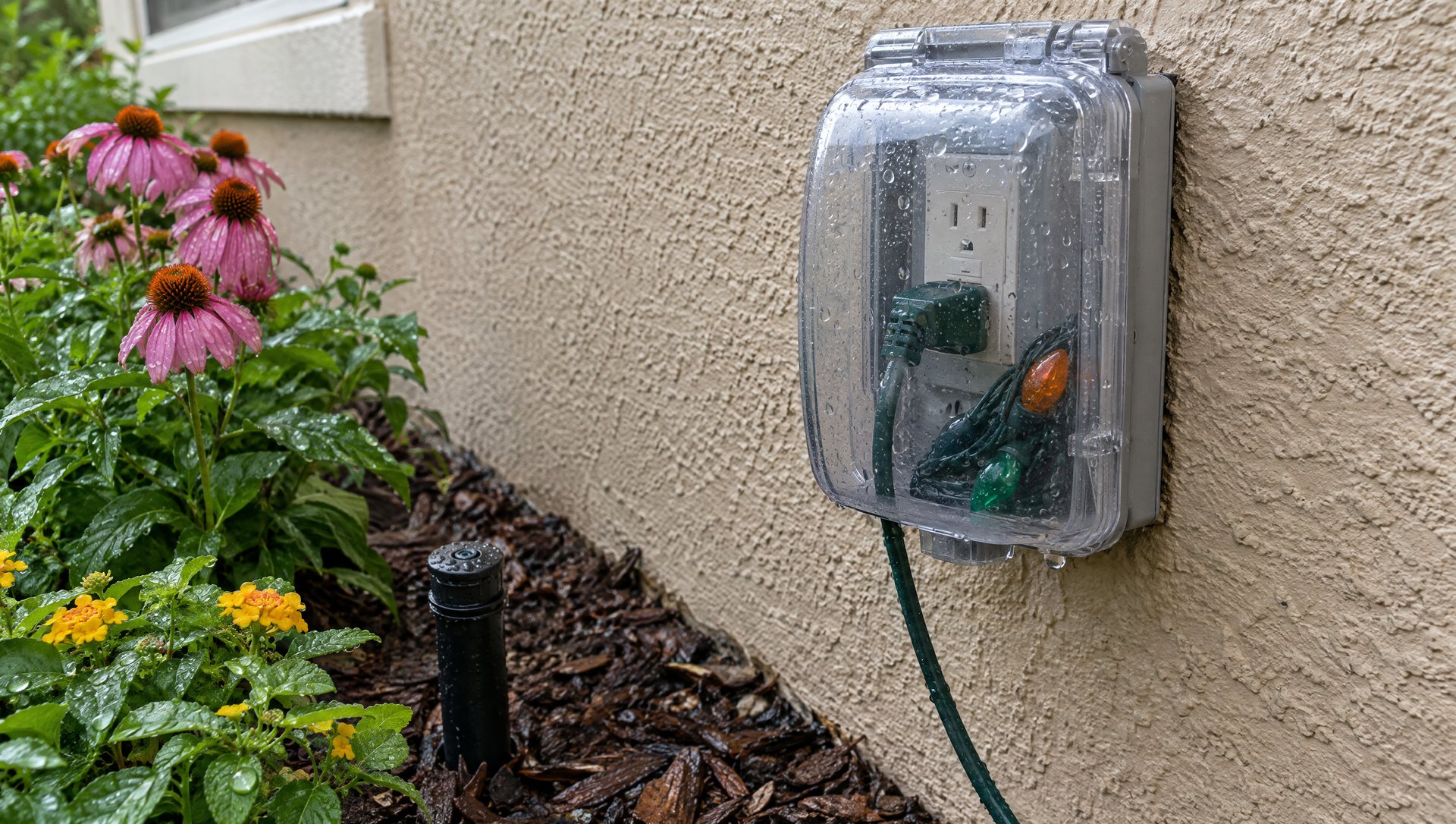
- Use an “in-use” (bubble) cover on any outdoor outlet with something plugged in. The current NEC (406.9(B)) requires outdoor 15 A and 20 A receptacles in wet locations to have a cover that stays weatherproof with a plug inserted, listed as “extra duty.” A flat flip cover that only closes when nothing is plugged in does nothing for you in December.
- Lift plug-to-plug connections off the soil with a stake or a short piece of PVC, and point open sockets and connectors downward so water drains off them.
- Map your sprinkler zones. It’s common to find a light connection sitting right in the spray pattern of a rotor head. Turn that zone off for the season or move the connection.
- Use cords and timers rated for outdoor use, and check the IP rating on anything that will sit in the weather. Our guide to IP ratings for outdoor lighting explains what IP44 and IP65 actually protect against.
If you need a new outdoor outlet or circuit to make the display work, that’s a job for a licensed electrician, not an extension cord. Our post on when you need an electrician covers where Texas draws that line.
Hazard 3: Ladders, Roofs and the Power Line Over the Driveway
Falls are the injury that sends people to the ER. Most ladder falls happen at modest heights on ordinary jobs, which is exactly what hanging lights on a one-story eave is.
Set the ladder up like a professional would
OSHA’s construction ladder rules are a good standard for homeowners too:
- The 4-to-1 angle. The foot of an extension ladder should sit about one foot out from the wall for every four feet of working length up to the support point. A ladder reaching a 12-foot eave belongs about 3 feet out.
- Three feet above the roof edge. If you’re stepping onto the roof, the side rails should extend at least 3 feet above the edge so you have something to hold as you transfer.
- Never stand on the top step of a stepladder. Use a taller ladder.
- Three points of contact while climbing, and move the ladder rather than leaning out past the rails.
Central Texas adds ground problems. Clay soil that’s been watered is soft, a rock border shifts under a ladder foot, and a sloped Hill Country lot means one leg is always shorter. Put the feet on a wide, flat board on soft ground and use a leg leveler instead of shimming with a brick.
Look up before you raise the ladder
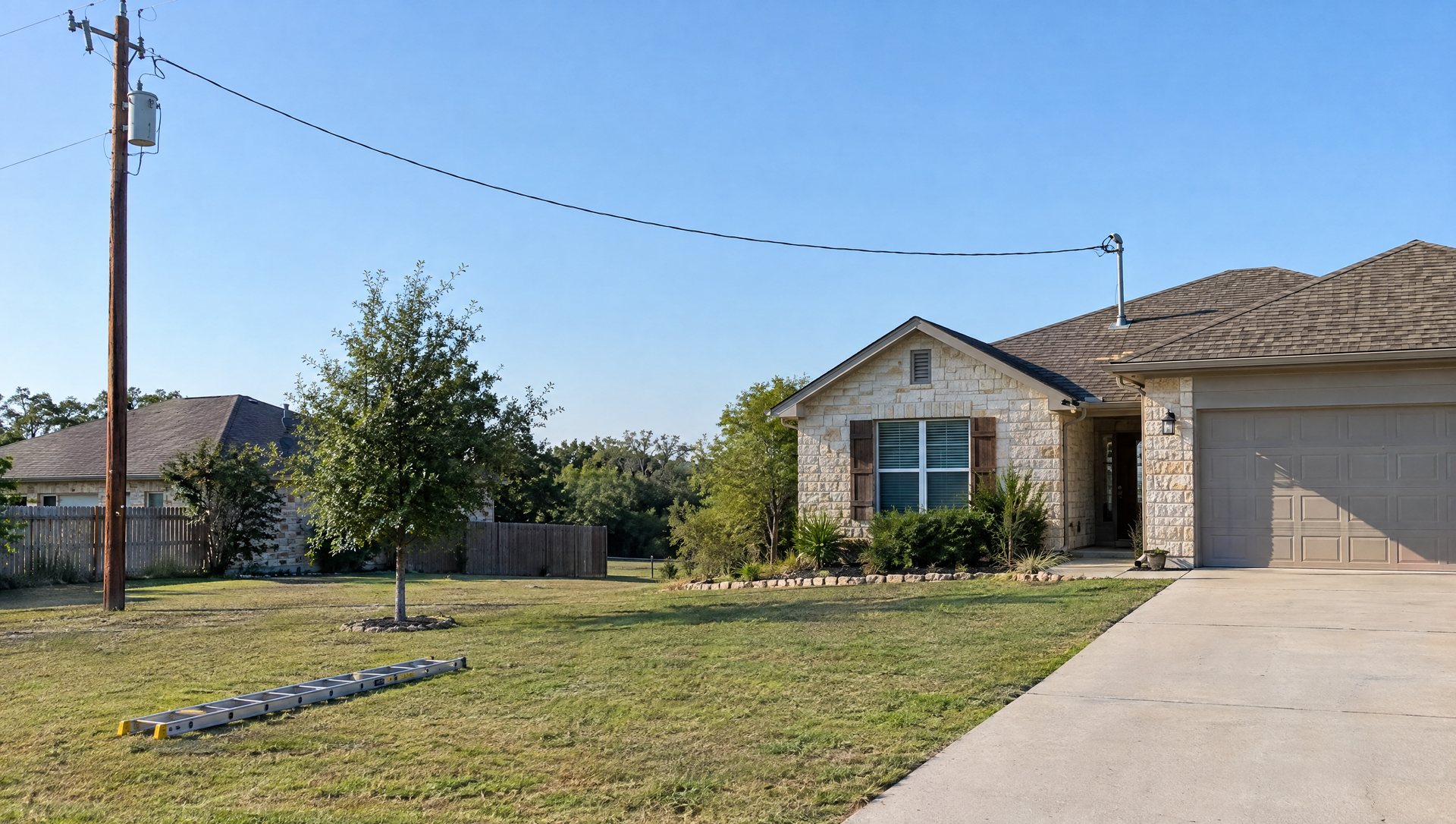
The service drop, the cable that brings power from the pole to your house, often crosses right over the driveway or the corner of the roof where people want to start a run. OSHA requires unqualified workers to keep at least 10 feet from overhead lines up to 50 kV, and that’s a sensible rule for anyone carrying a ladder. Use a fiberglass ladder for any work near the house’s electrical service, since aluminum conducts. Carry the ladder flat, not upright, when you move it across the yard. Never hang lights on the service drop or the mast that holds it.
Roof conditions in Austin
- Morning dew and frost. A shingle roof that’s dry at noon can be slick at 8 am in December. Wait until it’s dry.
- Heat early in the season. People hang lights in October when it can still reach the 90s. A dark shingle or metal roof in full sun gets hot enough to make you dizzy and soften shingle granules under your shoes. Work early, drink water, and stay off steep sections in the afternoon.
- Metal and tile roofs. Standing-seam metal is slippery even when dry, and clay or concrete tile cracks under a misplaced foot. Both are better handled from the ladder or by someone with roof anchors and a harness.
- Steep pitch. If you can’t stand comfortably without bracing, it’s too steep to walk without fall protection.
Work in pairs. The second person footing the ladder and handing up clips is worth more than any gadget.
Hazard 4: Austin Weather Swings, From Wind Fronts to Ice
Central Texas weather can swing hard in late fall and winter, which affects both the installation day and what the lights go through afterward.
Wind
A strong cold front can bring gusty north winds in a matter of hours. Wind turns an extension ladder into a sail and turns a loose run of lights into a whip. Postpone ladder work on gusty days. After the front passes, walk the house and look for sections that have pulled out of their clips, since a dangling string can rub through its insulation against a gutter edge.
Ice and hard freezes
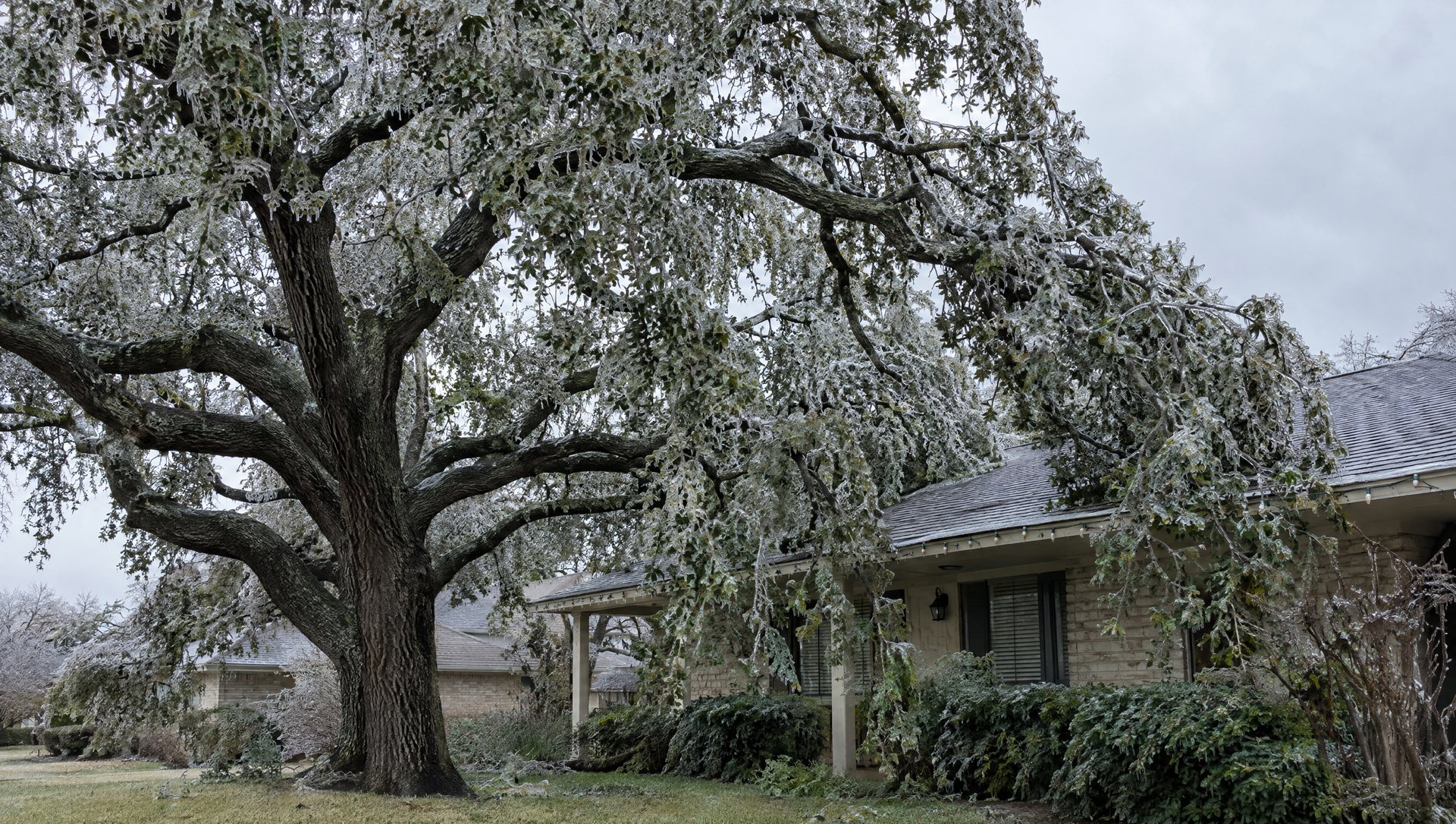
Austin doesn’t ice over often, but when it does, as in the February 2023 ice storm, the weight on live oak limbs brings branches down onto rooflines, wires and anything strung between trees. If ice is in the forecast, unplug displays that run through tree canopies. Don’t go up a ladder to knock ice off lights; wait for it to melt.
Your trees are part of the job
Wrapping a live oak means working in a tree, often with a pole or a ladder against the trunk. Two things to know:
- Oak wilt. Texas A&M Forest Service advises against pruning or wounding oaks from February through June, when sap beetles spread oak wilt spores to fresh wounds, and recommends painting any fresh wound on an oak right away at any time of year. If a branch breaks during install or takedown, paint the wound that day.
- Dead limbs. Before you put a ladder against a tree, look up for dead or hanging branches. They’re the ones that come down when the ladder shifts.
Heat on the equipment
October installs in the 90s are hard on cheap timers and plastic outdoor boxes. Mount timers and power supplies in the shade where you can, and keep them off hot metal.
If you’re planning when to hang lights around this weather, our Austin holiday lighting timeline lays out the season month by month.
Hazard 5: Fire Ants, Squirrels and the Damage Nobody Sees
Wildlife damage is the hazard people don’t think about until a GFCI keeps tripping for no obvious reason.
Fire ants in outlet boxes and timers
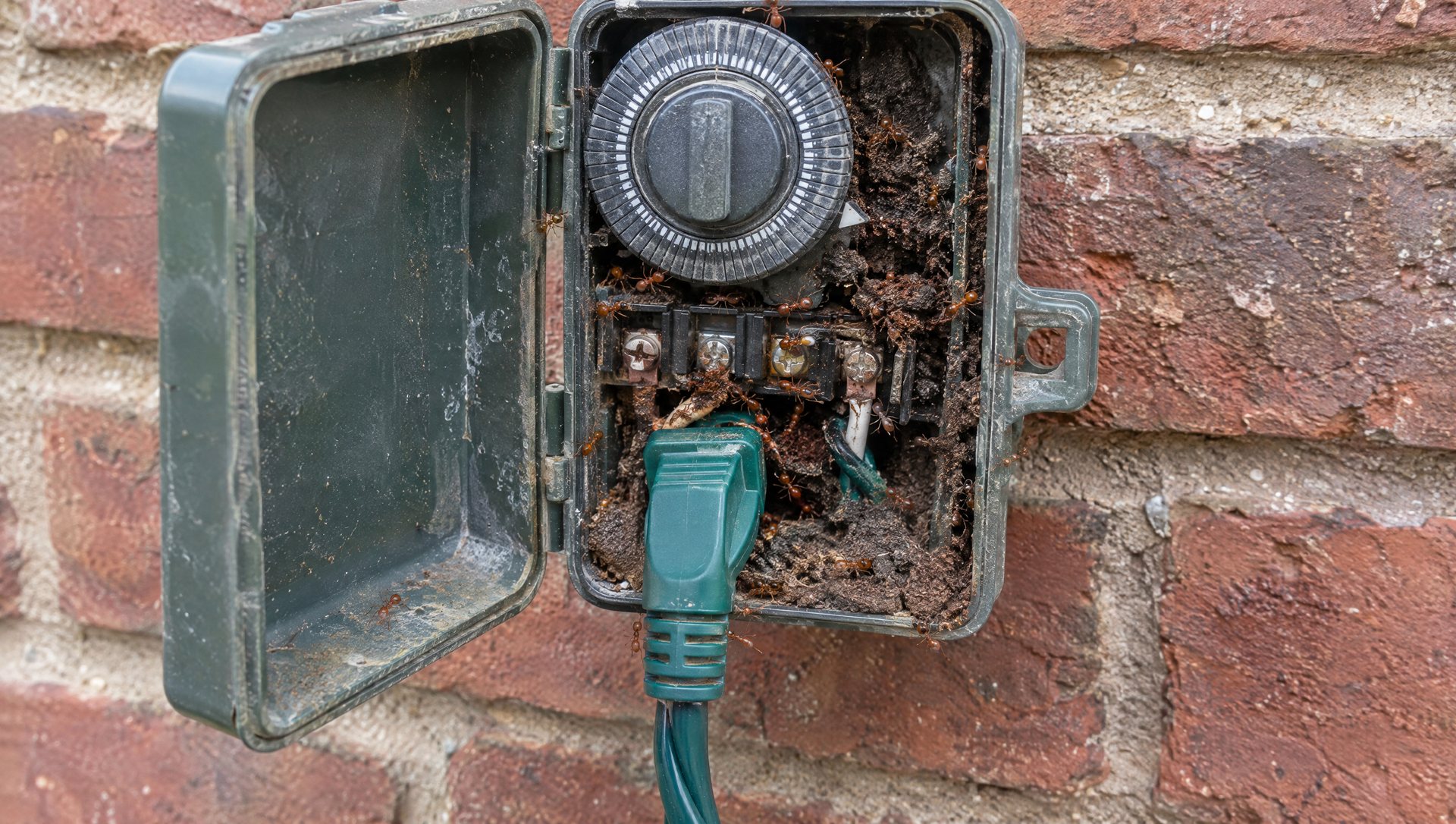
Fire ants move into outdoor electrical housings: outlet boxes, timer enclosures, pool and irrigation controllers, and the plastic bubble covers on outdoor outlets. Texas A&M AgriLife Extension notes they chew insulation, carry in soil that corrodes contacts, and can cause short circuits or interfere with switches.
- Open the outlet cover and timer before you plug in for the season. If you see ants or packed soil, don’t reach in. Turn off the breaker first.
- AgriLife’s guidance is that treating inside electrical equipment is a job for an electrician or licensed pest control operator, not a can of spray. Treat the mound nearby, then have the housing cleaned out.
- Keep connections and power supplies off the ground. A connector lying in mulch is an open invitation.
Squirrels and rats
Squirrels chew on cords along rooflines and in tree canopies, and roof rats travel the same gutter and fascia lines your lights follow. Chewed insulation on a wet night is a shock and short-circuit risk.
- Walk the display in daylight every week or two. Look for nicked insulation, missing bulbs and connectors that have been pulled apart.
- Replace a chewed string; don’t tape it. Electrical tape on a damaged holiday string doesn’t restore its listing or its weather resistance.
- If a GFCI starts tripping for no reason, unplug sections one at a time to find the damaged run.
Your own pets can create the same problems at ground level. Our guide to outdoor lighting options for pets covers keeping cords and fixtures out of reach of dogs that chew.
After the Lights Are On: Cords, Timers and Trip Hazards
Once the display is running, the hazards shift from the roof to the yard.
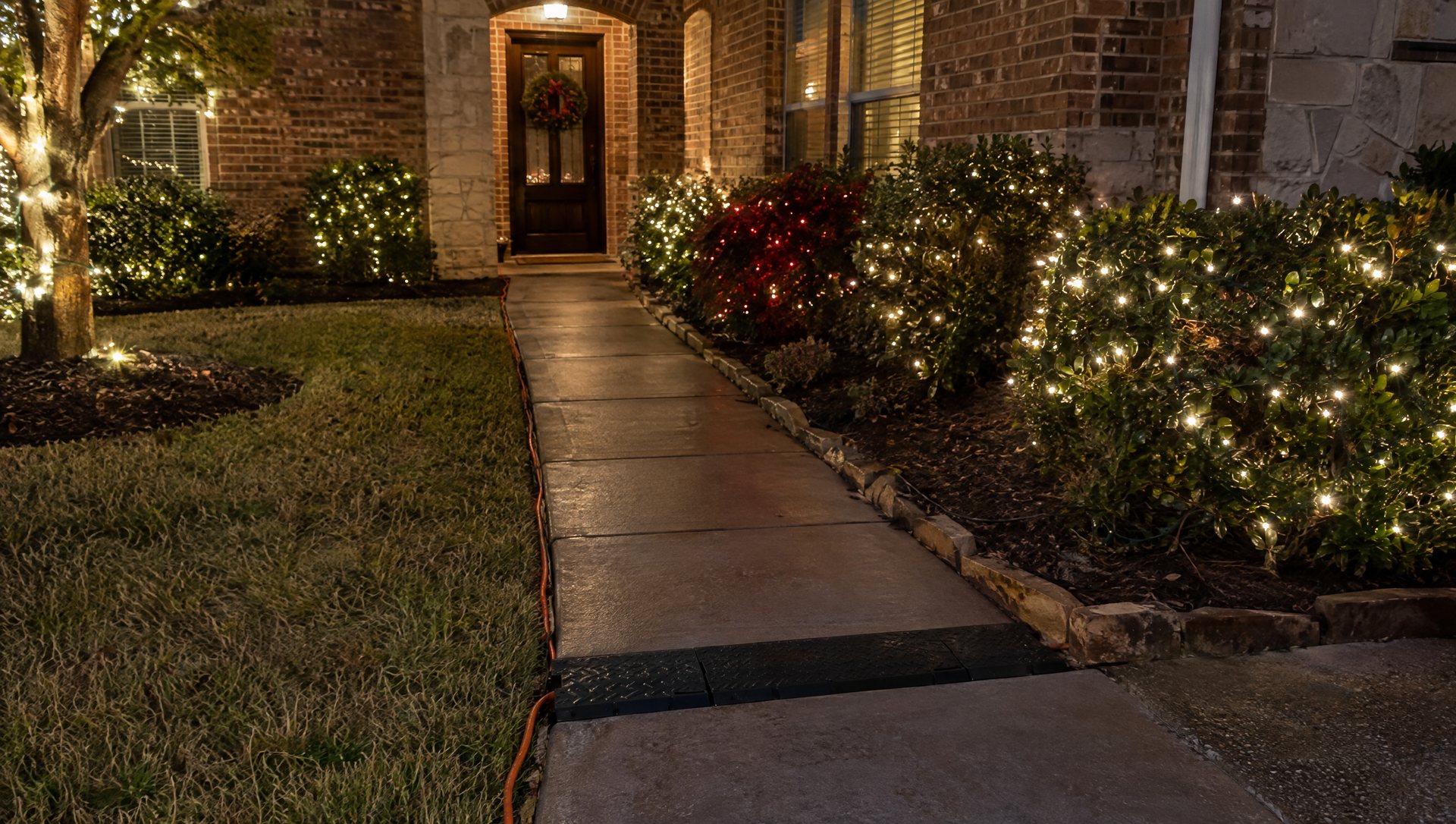
- Cords across walkways. A cord across the front walk is a trip hazard for every guest and delivery driver who arrives after dark. Route it around the walk, or bury it in a shallow slit in the lawn for the season. If it has to cross, use a ramped cord cover rated for outdoor use.
- Cords pinched in doors, windows and garage doors. Pinching damages insulation you can’t see. A garage door closing on a cord is a common one.
- Hot surfaces. Keep incandescent strings off dry mulch, cedar shakes and dry grass. LEDs run cool, but the transformer or power supply on a set can still get warm.
- Timers instead of memory. Leaving lights on all night just adds hours of wear and risk. Put every circuit on an outdoor-rated timer or smart plug and set an off time.
- Inspect before you store. At takedown, set aside any set with cracked sockets, brittle wire or a hot-looking plug. Damaged sets go in the trash, not back in the bin for next year.
A Pre-Install Checklist
Run through this before anyone climbs a ladder:
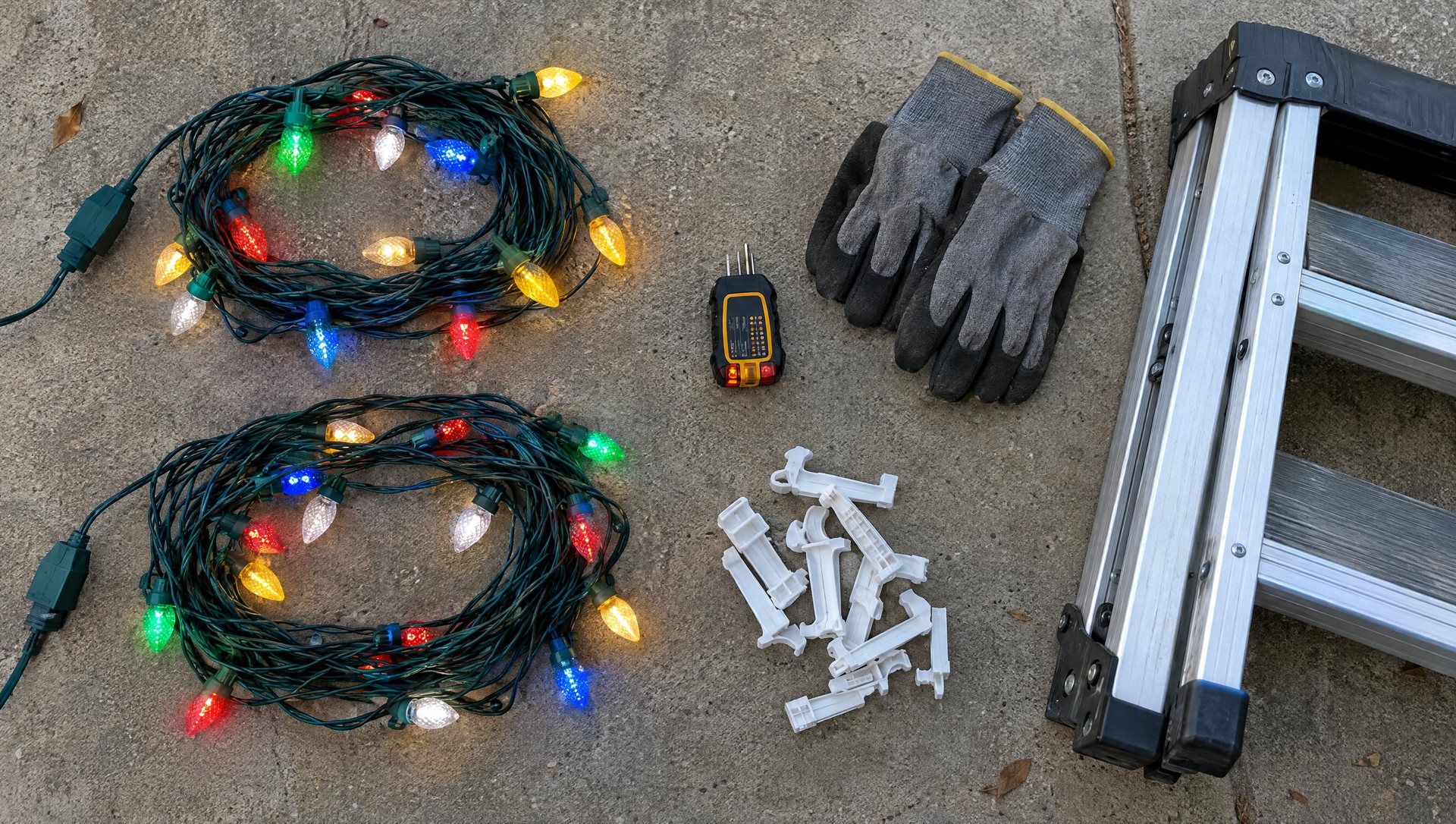
- Test every string on the ground, plugged into a GFCI outlet, and throw out damaged sets.
- Find out what else is on each outdoor circuit and add up the watts against the 80% limit.
- Press the test button on every GFCI you’ll use.
- Open outdoor boxes and timers and check for ants and soil, with the breaker off.
- Locate the service drop and keep ladders 10 feet away from it.
- Check the forecast for wind and rain, and check the roof for dew.
- Have a second person on site.
- Plan cord routes so nothing crosses a walkway or sits in a sprinkler pattern.
Plenty of homeowners decide the roof work isn’t worth the risk and hire it out, and some move to a permanent Christmas light installation so nobody has to climb every fall. If you’d rather keep your feet on the ground this year, see our Austin Christmas light installation service or call (737) 777-9099.
Sources
- U.S. Consumer Product Safety Commission, “Happy Holidays Start with Safety” news release (2023 holiday season injury estimates): https://www.cpsc.gov/Newsroom/News-Releases/2025/Happy-Holidays-Start-with-Safety-CPSC-Urges-Families-to-Cook-Decorate-and-Select-Toys-with-Care-This-Season
- CPSC Holiday Safety education center: https://www.cpsc.gov/Safety-Education/Safety-Education-Centers/Holiday-Safety
- OSHA 29 CFR 1926.1053, Ladders (angle, 3-foot extension, stepladder top step): https://www.osha.gov/laws-regs/regulations/standardnumber/1926/1926.1053
- OSHA 29 CFR 1910.333, overhead line clearances and nonconductive ladders: https://www.osha.gov/laws-regs/regulations/standardnumber/1910/1910.333
- NFPA 70, National Electrical Code: Articles 210.8 (GFCI), 210.19/210.20 (continuous loads), 406.9(B) (wet-location receptacle covers)
- Austin Energy residential rates: https://austinenergy.com/rates/residential-rates
- Texas A&M Forest Service, oak wilt prevention: https://tfsweb.tamu.edu/prevent-the-spread-of-oak-wilt-in-texas-this-spring
- Texas A&M AgriLife Extension, fire ants in electrical equipment: https://fireant.tamu.edu/manage/site