Office Christmas Decorations and Lighting: Three Offices, Three Plans
Good office Christmas decorations put one strong feature where visitors arrive, repeat a single motif across the street-facing windows, and light the entrance so the business is visible after a 5:30 pm sunset. What that looks like depends mostly on one thing people skip: who controls which part of the building.
A dental practice in a strip center, a suite on the eighth floor of a shared building and a standalone office on a busy street have very different freedoms. So instead of a long list of ideas that won’t all apply to you, here are three common Austin office types with a plan for each, then the rules that apply to all of them. It’s written for office managers, practice owners, property managers and facilities leads.
First, sort out who controls what
Most decorating arguments in December are really lease questions. Settle these before anyone orders anything.
| Area | Usually controlled by | Ask before you… |
|---|---|---|
| Inside your suite | You (within the lease) | Use open flame, live trees or ceiling hooks |
| Shared lobby, elevators, corridors | Property manager | Put anything outside your own door |
| Exterior walls, canopy, roofline | Landlord or property manager | Attach anything or run power outside |
| Parking-lot islands and street trees | Landlord, sometimes the city | Wrap a tree |
| Outlets, circuits, breaker panel | Landlord / building engineer | Plug a display into an exterior outlet |
| Fire alarms, sprinklers, exit signs | Building and fire code | Hang anything near them, ever |
If you’re a tenant, email the property manager a short plan with photos and get a written yes. If you’re the property manager, publish the building’s decorating rules to every tenant by early November, so nobody discovers them on December 3.
Plan 1: a medical or dental practice in a strip center
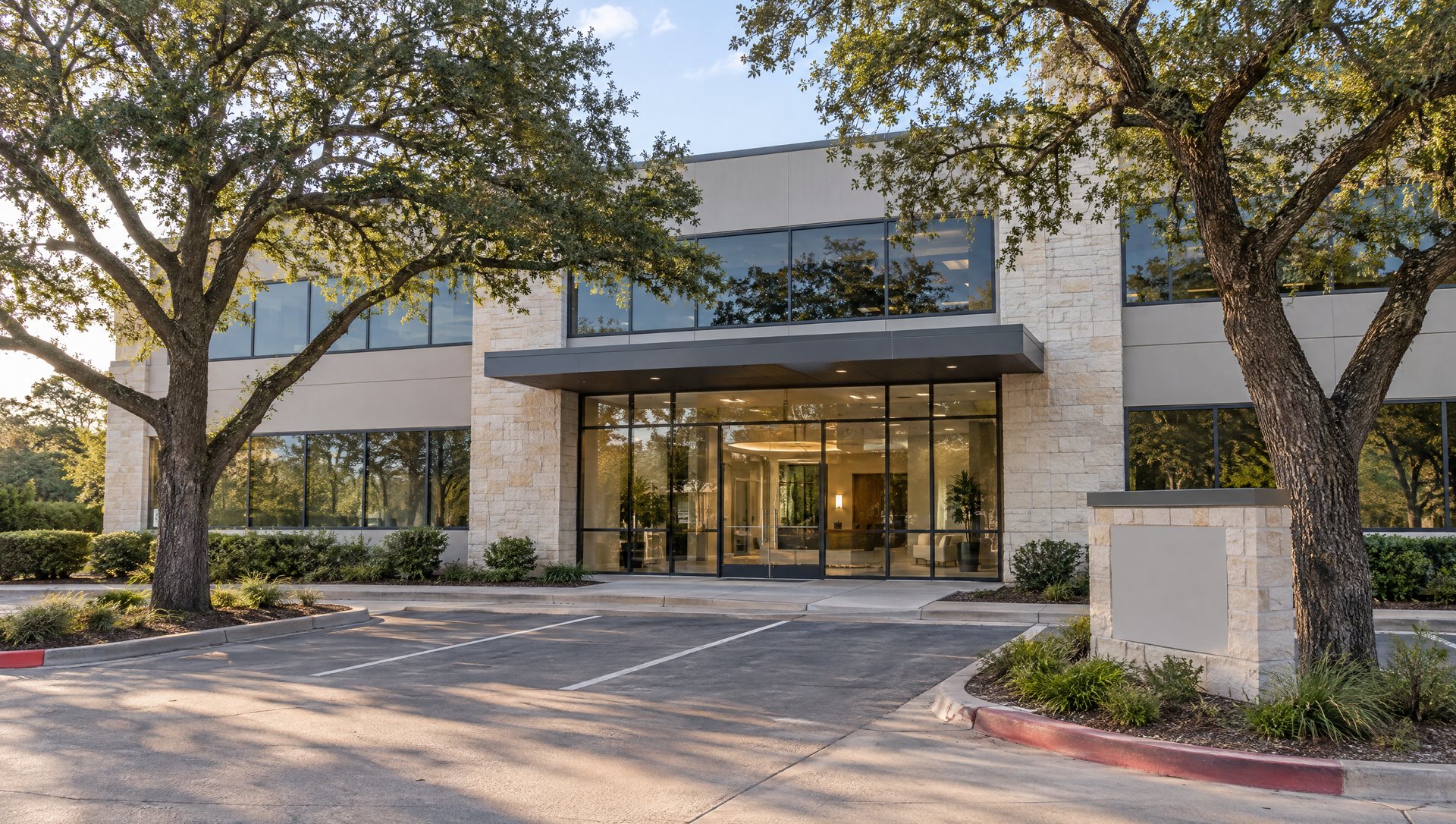
The setting: a ground-floor suite in a retail-style center, a glass storefront with the practice name on it, a small reception room, patients arriving between 7:30 am and 5:30 pm, and a parking lot with a few island trees.
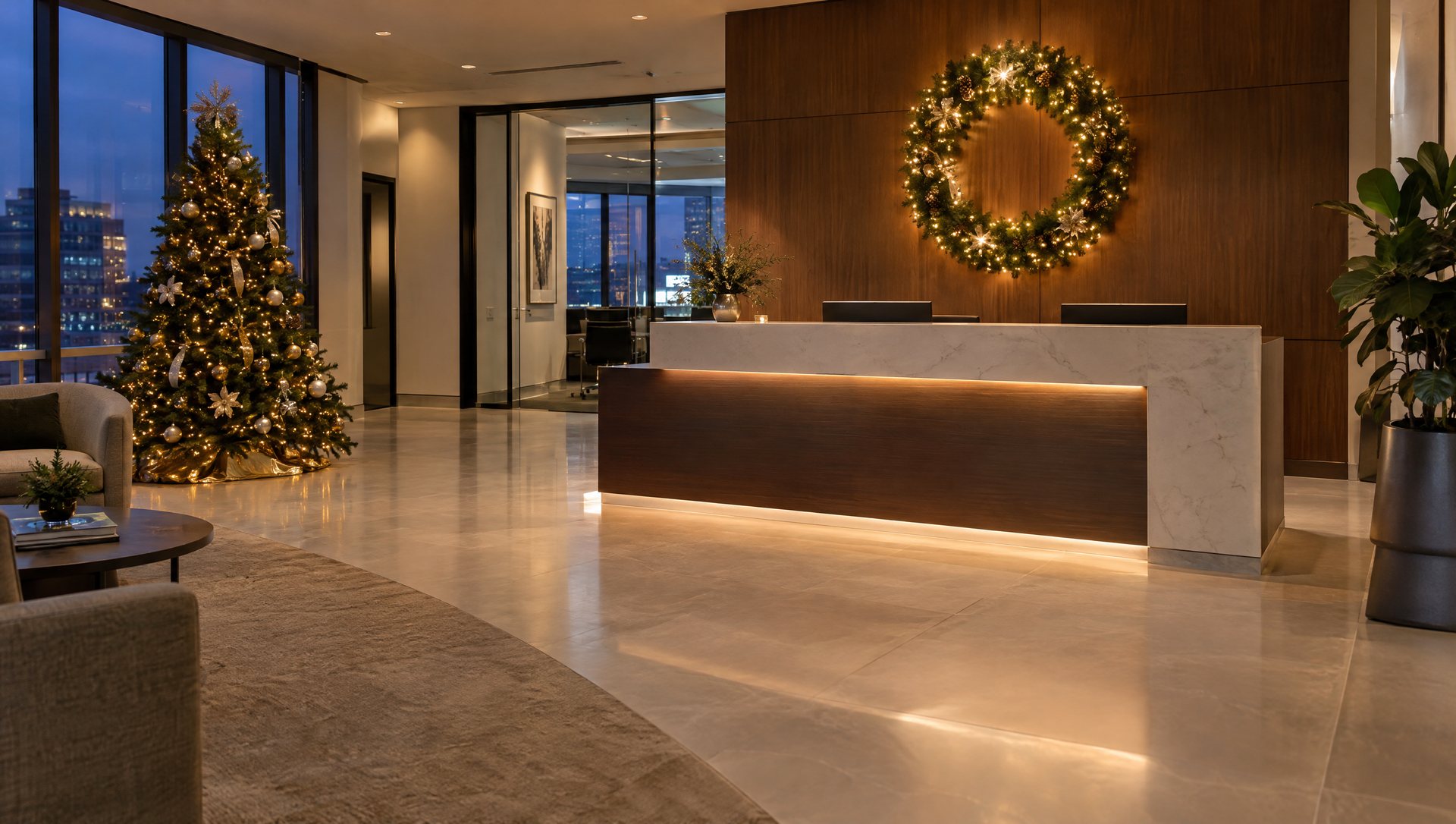
Inside. One focal feature behind or beside the front desk, not on the desk. A 30- to 36-inch lit wreath on an approved wall support works in a small reception room because it takes no floor space. Keep it clear of the practice name and any posted notices. If there’s room for a tree, a 6- to 7½-foot artificial tree in a corner away from the check-in line beats a tabletop tree on every counter.
Use an artificial tree here, and buy one labeled flame-retardant. Austin adopted the 2024 International Fire Code, with local amendments, in July 2025. The model code’s decorative-vegetation section prohibits natural cut trees in ambulatory care facilities and several other occupancy types, and requires artificial decorative vegetation to meet the NFPA 701 flame test. Ordinary business offices are not on the cut-tree list, but a practice where patients are sedated may be an ambulatory care facility; ask the building or your fire inspector rather than guessing.
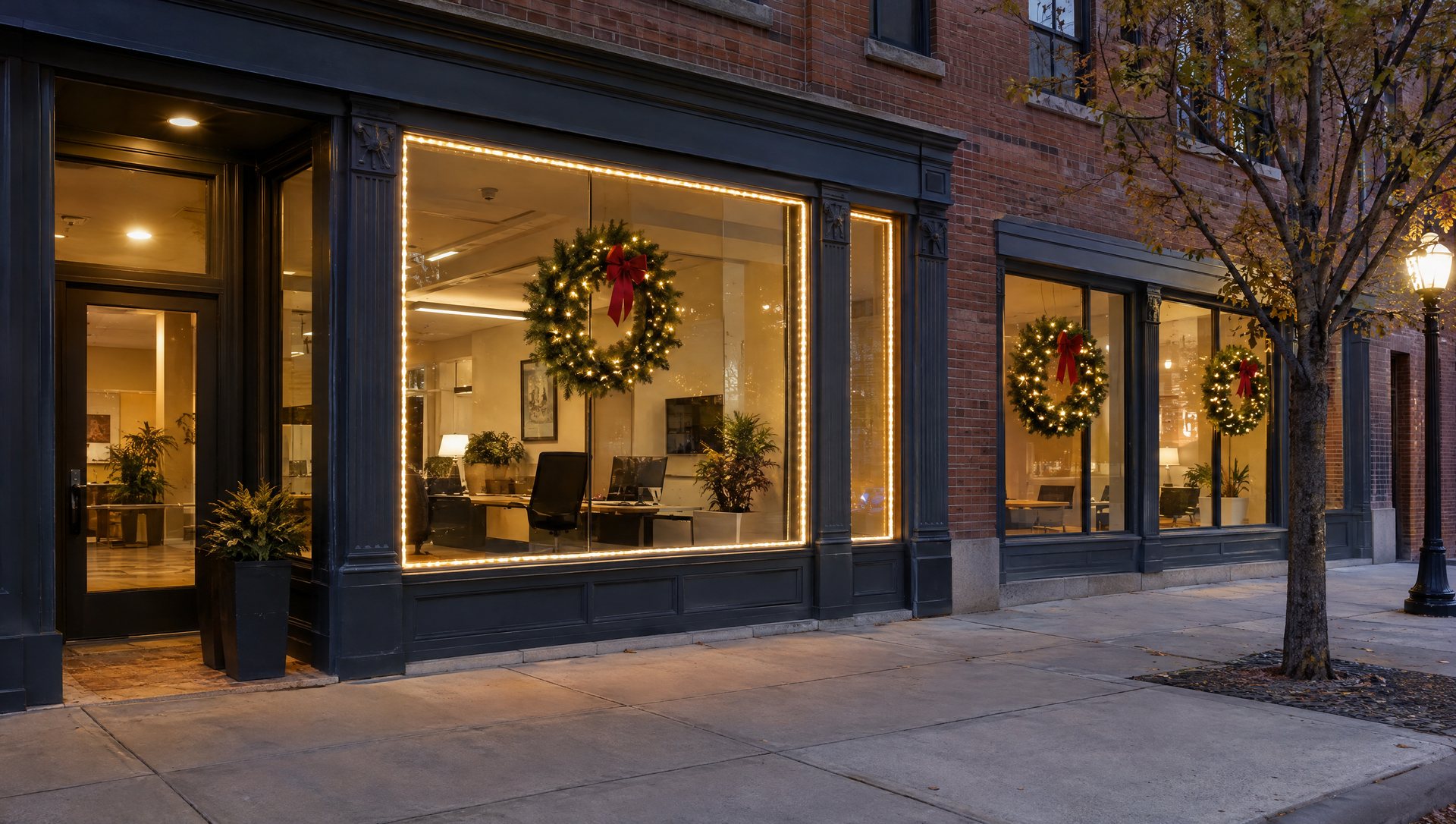
Windows. A storefront practice gets the most from its glass. Matching wreaths in two or three windows at one height, or a warm-white outline of the main window, reads from the parking lot. Keep the suite name and hours legible.
Outside. Ask the landlord about the island trees. A few wrapped trunks in a row along the drive look generous and tell patients which way the entrance is. In Austin those islands are often live oaks, and nothing goes into oak bark: the Texas A&M Forest Service lists fresh wounds as entry points for oak wilt.
The detail most practices miss: in late December, Austin’s sunrise is around 7:20 am. Patients and staff arriving at 7:30 are walking in at first light. A timer program that runs the exterior lights from about 6:30 to 7:45 am as well as from 5 pm into the evening gets the display seen by the people who actually use the building.
Plan 2: a suite in a multi-tenant office building
The setting: a suite on an upper floor of a shared building, a reception area visible from the elevator lobby, a few exterior-facing windows, and a property manager who controls everything outside your door.
Inside the suite. This is where your whole budget goes. One tree in reception, decorated in two colors (brand colors work), looks more polished than five small ones. A battery-lit garland across the front of the reception desk frames check-in; keep it off the counter surface where people sign and set things down. A giving tree with tags from a local toy or food drive decorates the room and gives the season a purpose.
Your entry door. Ask the property manager before you hang anything on the corridor side. A wreath on a door is usually fine. Anything mounted on the corridor wall is a different matter: under the 2010 ADA Standards, objects with a leading edge between 27 and 80 inches above the floor can protrude no more than 4 inches into a circulation path. Plenty of full wreaths are deeper than that.
Windows. From the street, upper-floor windows read as small squares of light. Matching wreaths, or a single warm-white string just inside each window you can see from the road, repeat well. Before committing, sit at the nearest desk: if a decoration turns into a glare on someone’s monitor, move it.
The building exterior is the property manager’s project, not yours. If you are the property manager, see Plan 3.
Plan 3: a standalone office or storefront
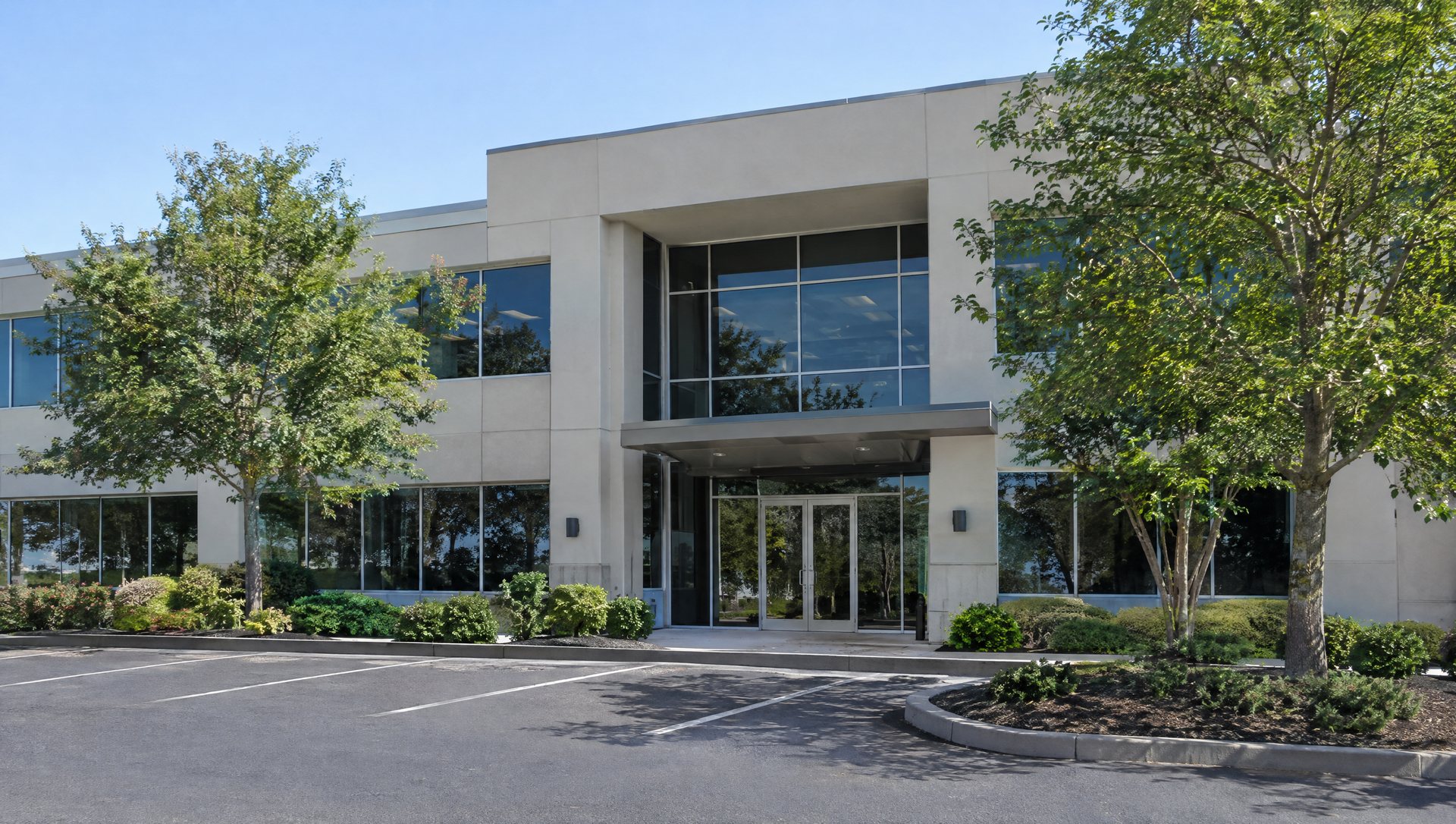
The setting: a single-story or two-story building you own or lease whole, frontage on a road, its own parking and landscaping. This is where exterior lighting pays off most.
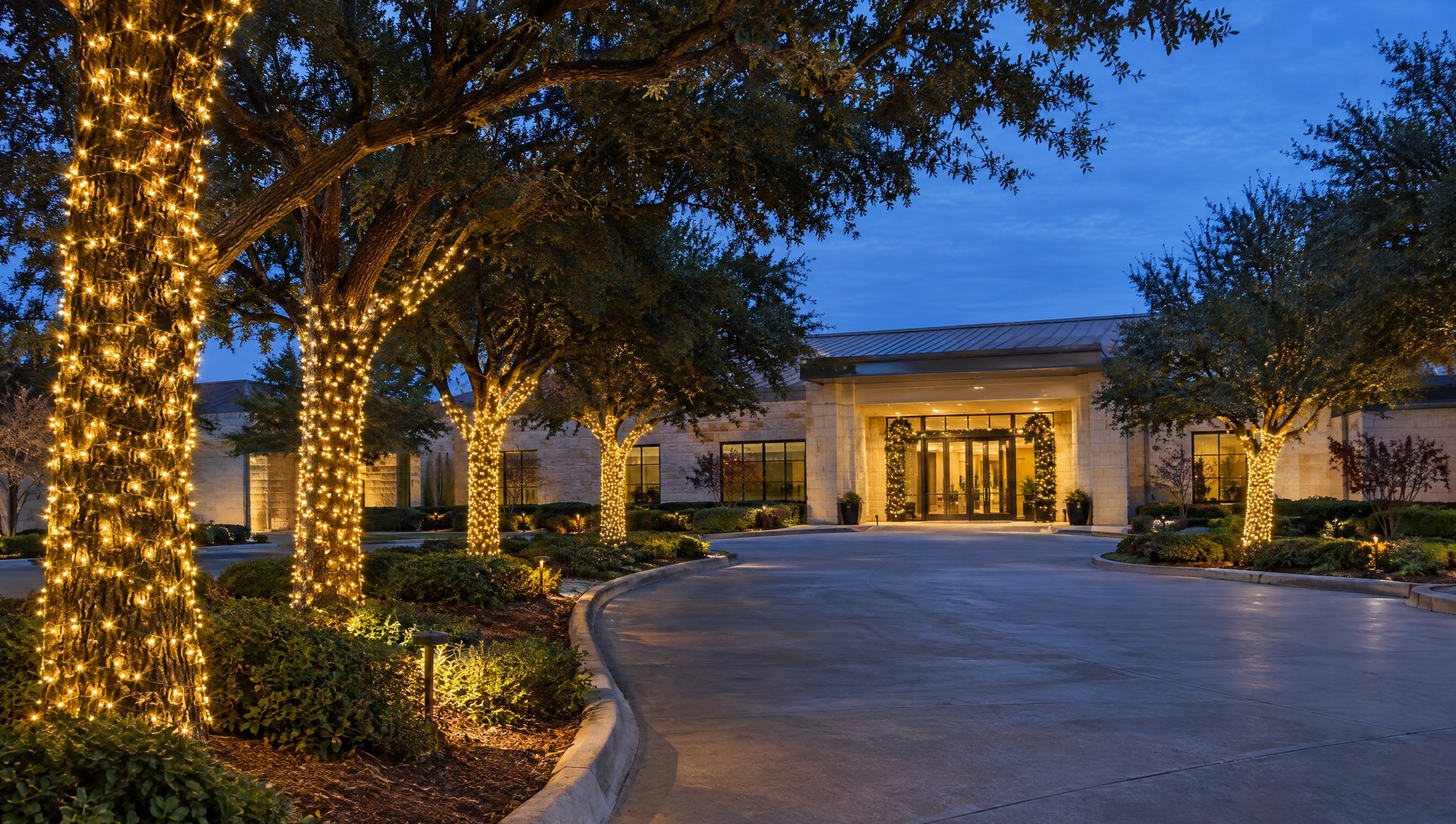
Roofline or canopy. A warm-white outline along the roofline or the entry canopy makes the business visible from the road for the whole evening commute, which in December happens after dark. One clean line beats a busy mix.
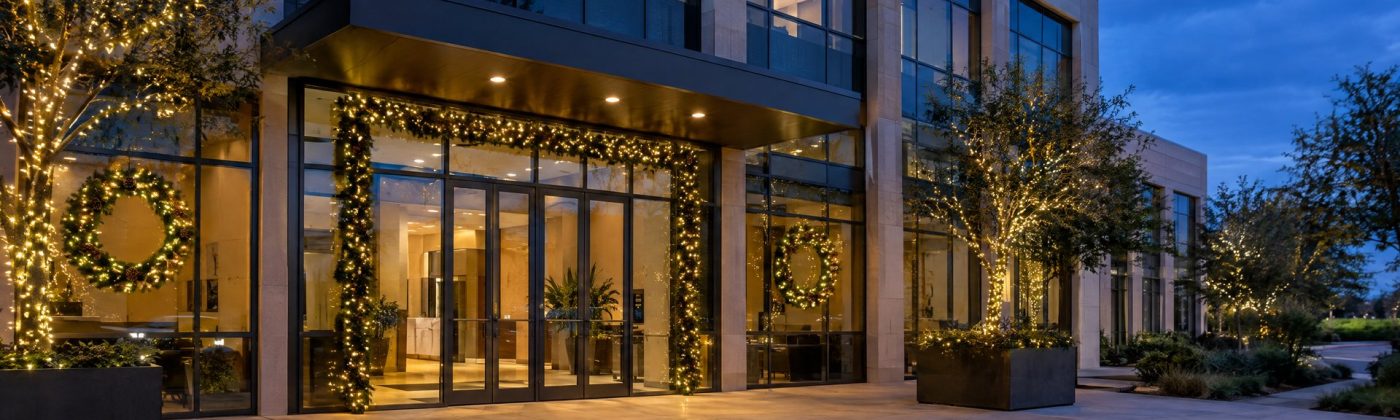
The entrance. Lit garland around the main door frame and a wreath on each fixed glass panel is the classic commercial look, and it tells first-time visitors where to go. Our door wreath and garland guide covers sizing for wide commercial doors.
Trees along the arrival route. A line of wrapped trunks along the drive or walk creates rhythm; one broad tree can anchor a pedestrian entrance. We use 5mm wide-angle LED mini lights on trees. Be specific about scope: which trees, how high up the trunk, and whether limbs are included all change the price.
The sign. If the monument sign is lit, decorate around it, not over it. A wreath that hides half the business name defeats the point.
More exterior ideas that read well at night, most of which translate to commercial buildings, are in our outdoor Christmas decorations guide.
Team spaces: where staff actually see the decorations
Clients see reception. Staff see the break room, the hallway to it and their own desks, all day for a month.
- A door or cubicle decorating contest. Give each team a small budget and a week, and judge by vote at the holiday party.
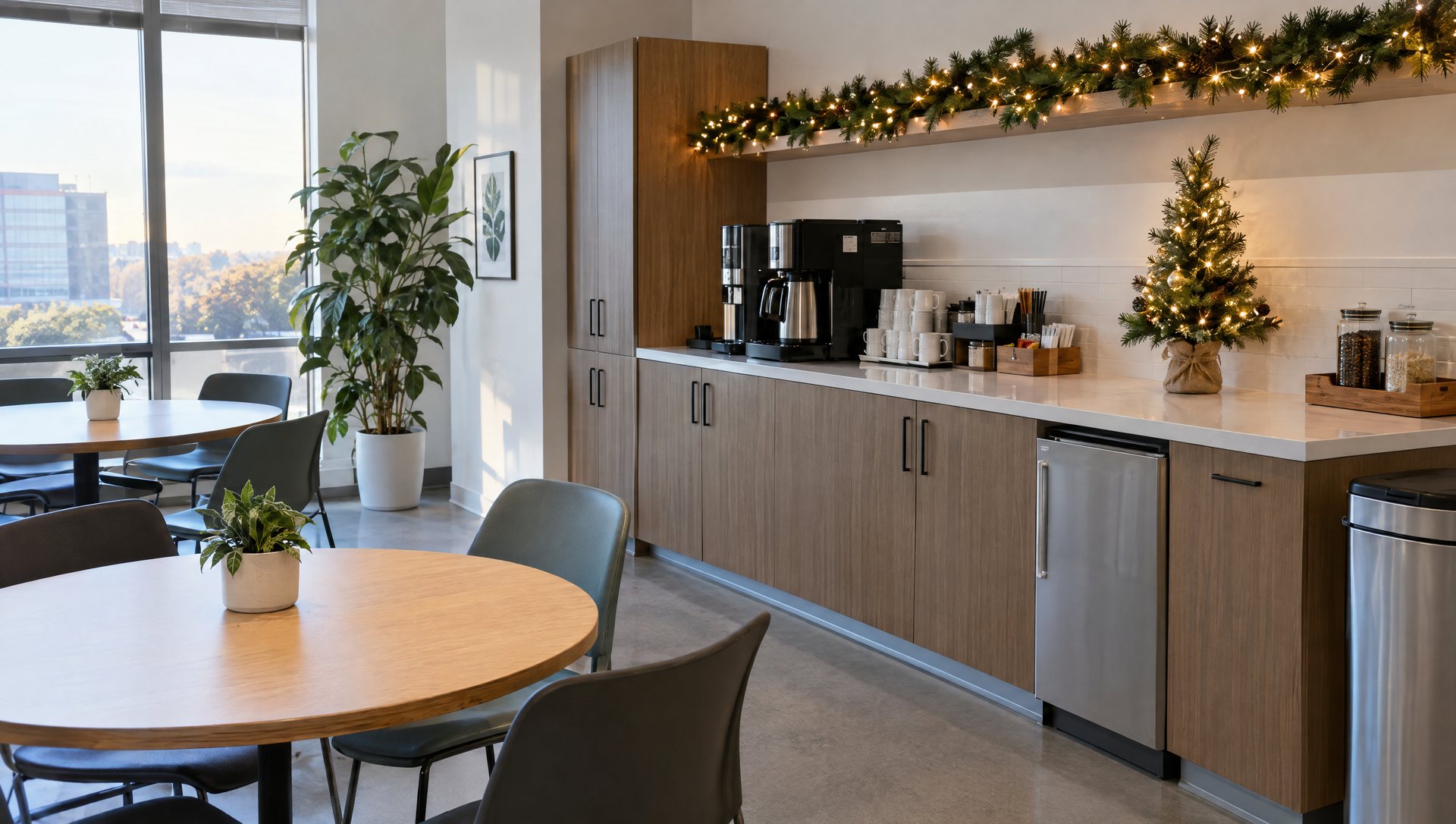
- The break room. One garland over the coffee area and a small tabletop tree are enough.
- Desk lights by the rules. Many workplaces restrict personal string lights and extension cords. If yours allows them, battery LED fairy lights avoid the cord question entirely.
- A photo corner. Garland and warm lights against a plain wall, in a side room, not in the lobby walkway.
Keep participation optional, and decide together what the office wants to celebrate: a winter palette, a Christmas display and several holiday traditions are different choices. If you include another tradition’s symbols, ask someone who keeps that tradition to look at the plan.
Whoever brings in a tree also names who switches its lights off every night.
What has to stay clear
These aren’t style choices.
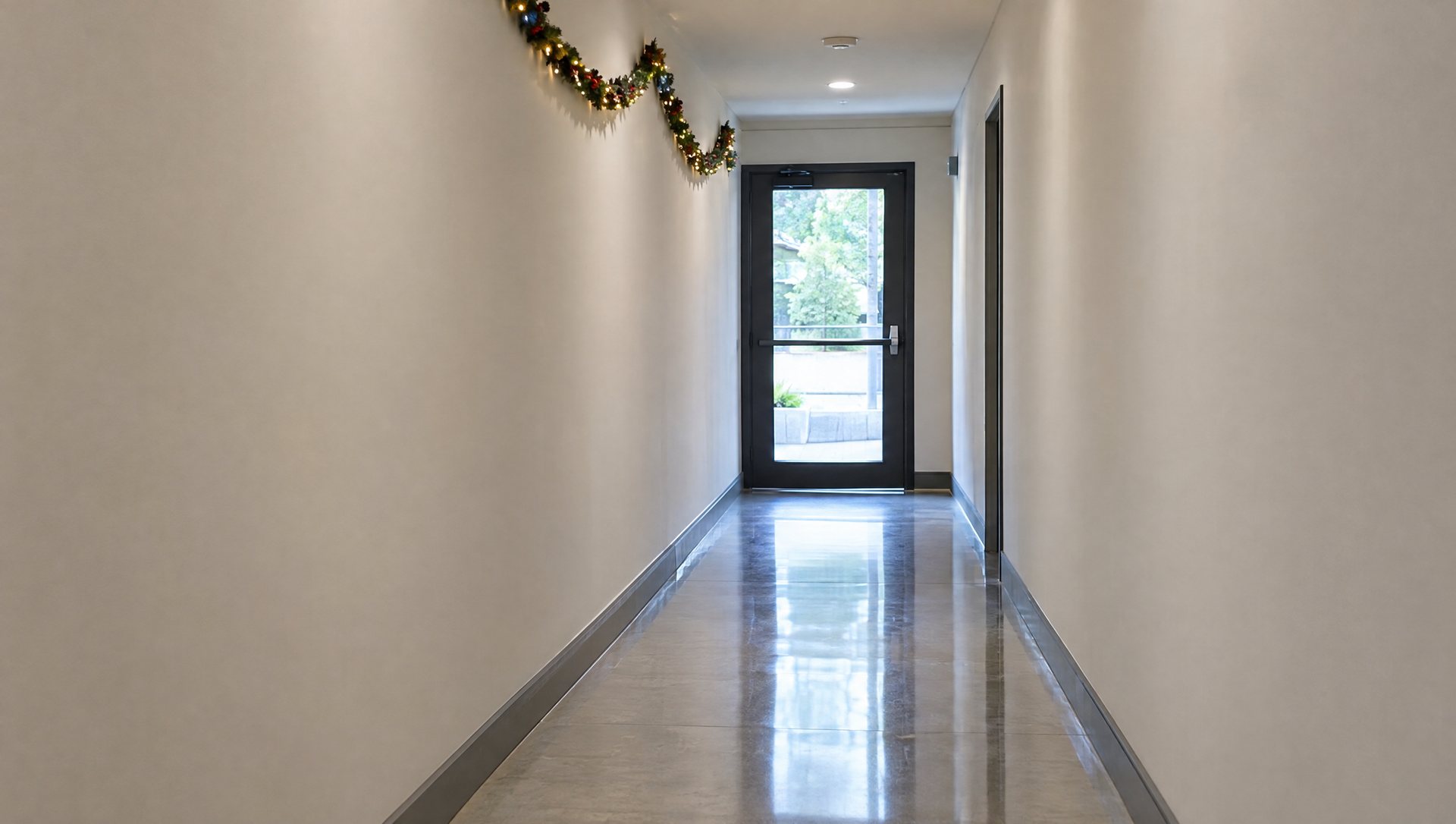
- Exit routes. OSHA’s exit-route rules require exit routes to be free and unobstructed, and free of decorations that obscure the visibility of the exit door. Exit signs stay visible.
- Walking width. The 2010 ADA Standards set 36 inches as the minimum clear width of an accessible route. A tree in a corridor or a lobby display that narrows the path below that is a problem, not a centerpiece.
- Fire equipment. Nothing on or hanging from sprinkler heads, sprinkler pipes, alarm devices or extinguisher cabinets. Nothing from the ceiling grid without facilities approval.
- Signage. Suite numbers, posted notices and door signs stay readable.
Your building’s exact requirements depend on its occupancy and the fire marshal, so let the facilities lead check rather than copying clearances from photos online.
Power, timers and the nightly shutoff
Have facilities name the approved outlets and cord routes before anything is ordered. Then:
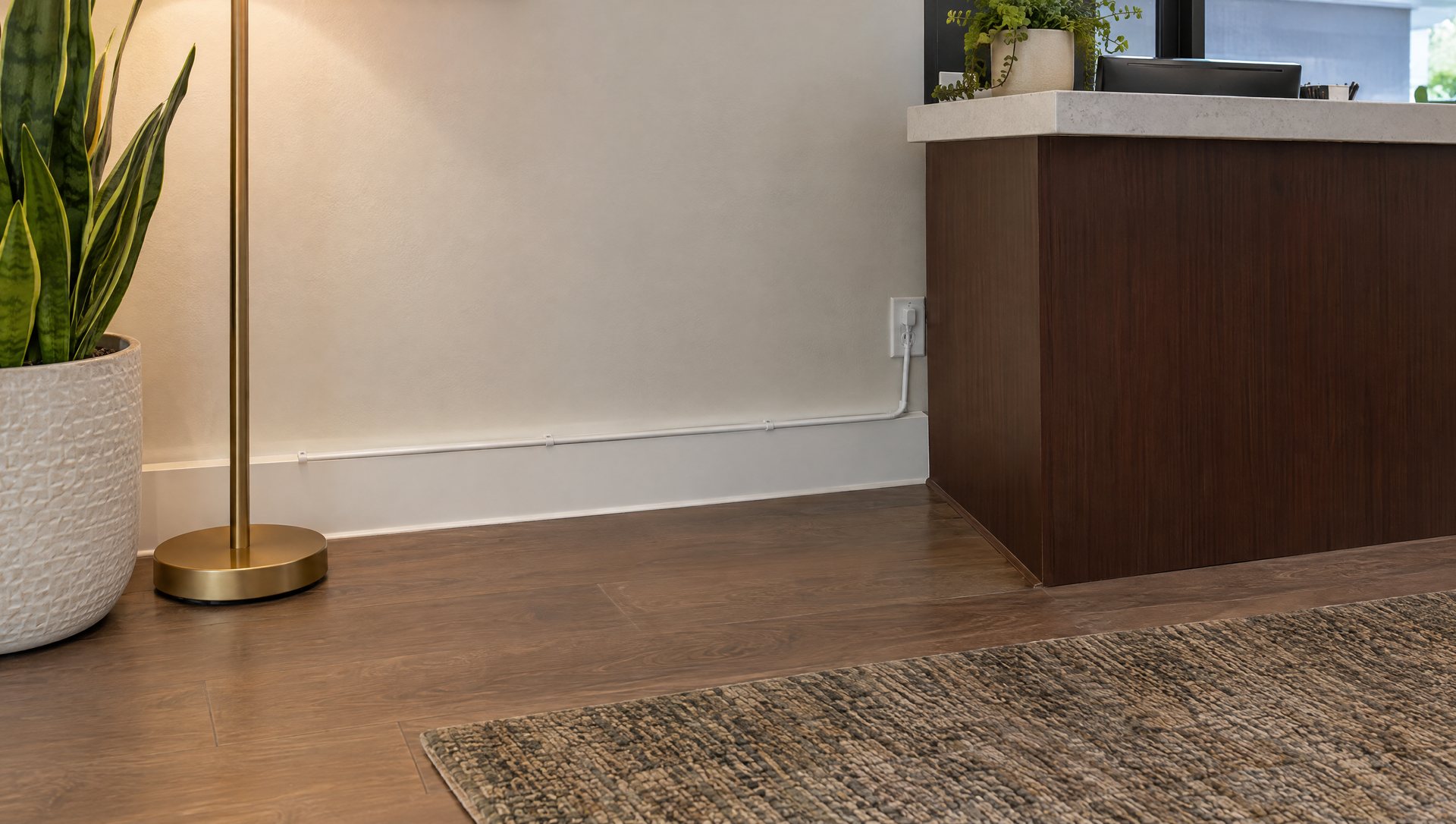
- No cords through doors, under rugs or across the cleaning crew’s path.
- Indoor sets stay indoors. Exterior work needs outdoor-rated equipment, even under a covered entrance.
- UL Solutions advises inspecting lights for damage, not overloading outlets and not linking power strips together.
- New outlets or circuits are a licensed electrician’s job. We install plug-in lighting only.
- Nobody finishes high work standing on a chair or a desk.
Put every display on a timer and test the off cycle yourself. The Electrical Safety Foundation recommends turning decorations off when no one is there, and an indoor tree has no reason to run through an empty holiday weekend. Exterior lights are different: their job is to be seen after hours. A sensible program is dusk to about 10 pm, plus the early-morning cycle from Plan 1 if people arrive before sunrise. Our post on leaving lights on all night covers the reasoning.
What a good exterior lighting proposal says
Whoever you hire, ask for a scope another person could check the finished job against without a verbal tour: