


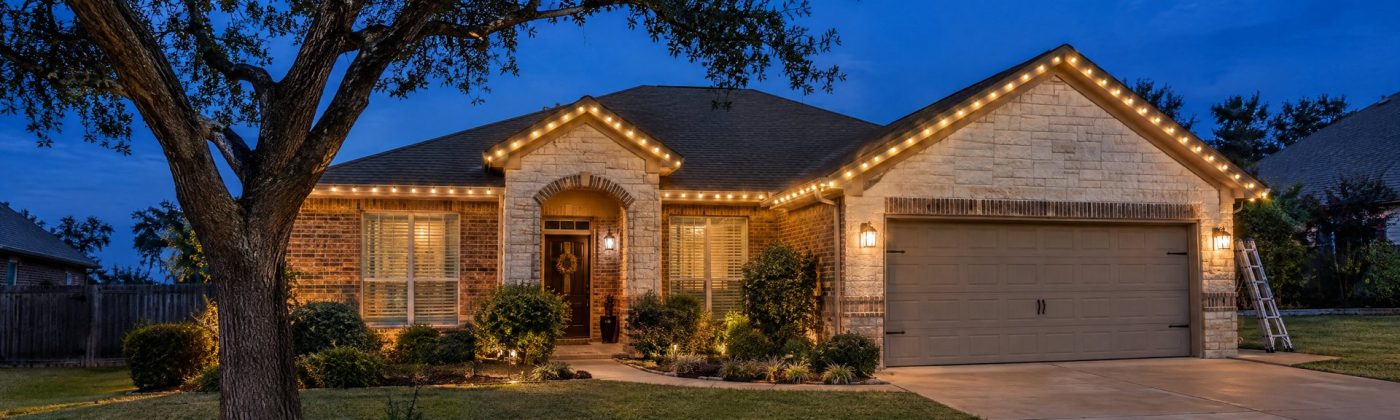
DIY vs. Professional Christmas Lights: The True Cost Over 3 Years
In our example, DIY Christmas lights on a 150-foot one-story front roofline cost about $503 over three seasons with a ladder you own, or about $983 if you buy one (regular retail prices, checked October 2026). Hiring a professional for full service costs about $1,500 to $4,500 over those three seasons at Austin-area installers’ published prices, held flat. DIY costs less in cash, but only if you enjoy the work, have the time, can do it safely and know which lights to buy. Hiring makes sense once you value your hours, want a neat cut-to-fit look, or the job needs a second story or a big tree.
| Question | Answer |
|---|---|
| What job does the example price? | A 150-foot one-story front roofline, C9 bulbs on 12-inch spacing, regular October 2026 retail prices before tax |
| What does DIY cost in season one? | About $389 in pro-grade materials, or about $869 with a new 24-foot ladder and stabilizer (example) |
| What does DIY cost over three seasons? | About $503 with a ladder you own, about $983 if you buy one (example) |
| What does hiring a professional cost over three seasons? | About $1,500 to $4,500 at a flat price, from five Austin-area installers’ published roofline prices (checked October 4, 2026) |
| Is a professional cheaper in year two? | Only if you own the lights. Leased lights cost about the same each year |
| What if I own the lights and pay only for labor? | About $1,065 to $1,853 over three seasons, takedown not included (example) |
| Are store-bought lights cheaper? | About the same over three seasons (example). Pro-grade pulls ahead after that |
| How long does DIY take? | No study measures it. Angi says several hours to a weekend, before takedown. A two-person pro crew takes 3 to 4 hours (installer guide, March 2026) |
This page is for Austin homeowners deciding whether to hang their own lights this season or hire it out. For one season’s prices, see what Christmas light installation costs in Austin; this page runs the same job forward three seasons.
Is it cheaper to put up your own Christmas lights over three years?
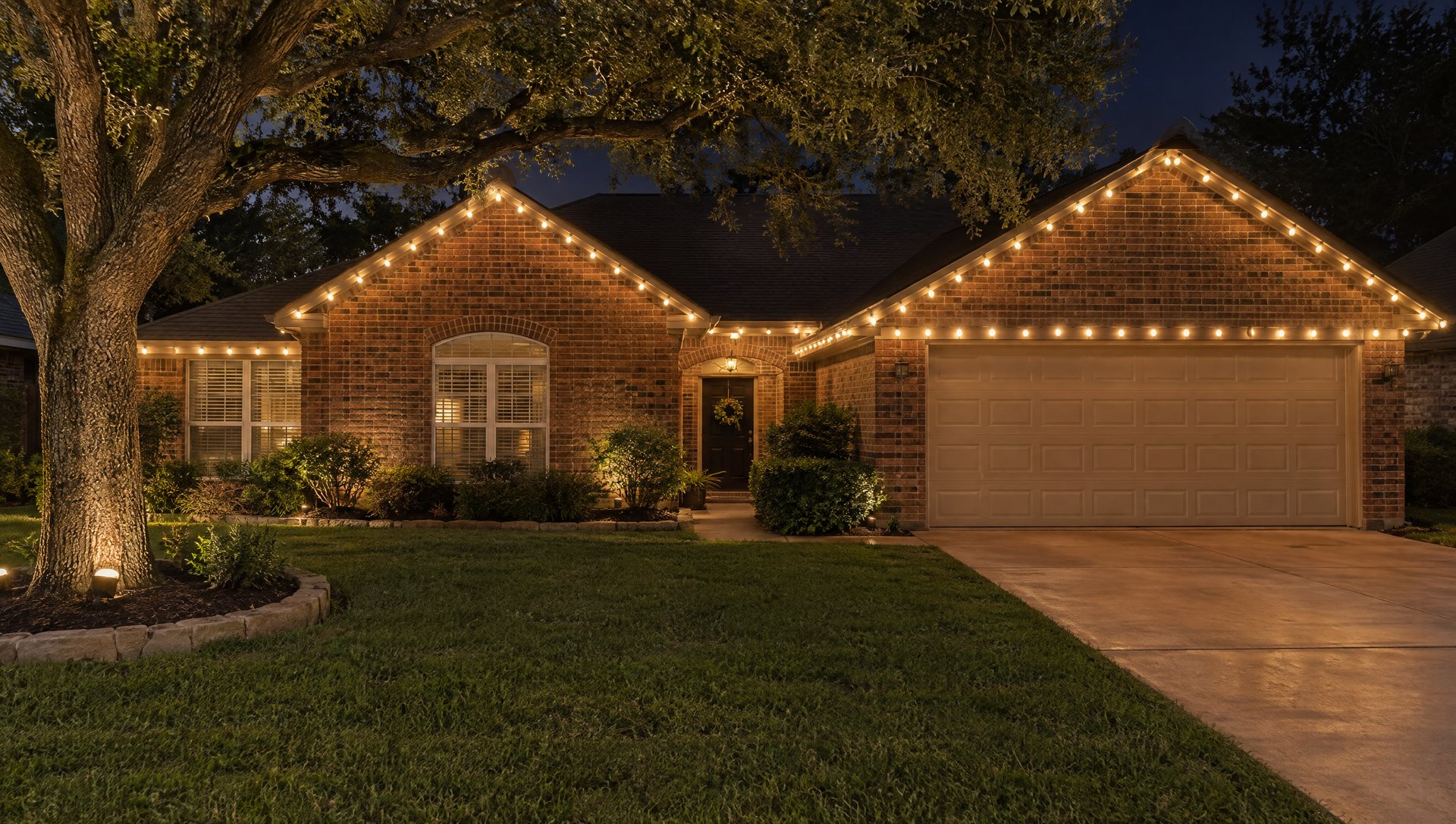
Yes, on cash, for a simple one-story roofline. The big difference is whether you buy the lights once or pay for them every season. DIY and install-only buy them once, then pay for small replacements. Full service at a flat price costs the same each season.
| Option (150-ft one-story roofline) | Season 1 | Season 2 | Season 3 | 3-season total |
|---|---|---|---|---|
| DIY, pro-grade, own ladder (example) | $388.74 | $56.90 | $56.90 | $502.54 |
| DIY, pro-grade, buy ladder (example) | $868.78 | $56.90 | $56.90 | $982.58 |
| DIY, store-bought, own ladder (example) | $287.75 | $42.94 | $226.86 | $557.55 |
| Install-only ($1.25 to $3 per ft, your lights) | $576 to $839 | $244 to $507 | $244 to $507 | $1,065 to $1,853 |
| Full service, Austin-area prices | $500 to $1,500 | $500 to $1,500 | $500 to $1,500 | $1,500 to $4,500 |
| Full service, HomeGuide ($5 to $12 per ft) | $750 to $1,800 | $750 to $1,800 | $750 to $1,800 | $2,250 to $5,400 |
Assumptions behind the table:
- Regular retail prices from early October 2026, before tax and shipping. Add $480.04 to the store-bought row if you need the ladder.
- Replacement allowances are our assumptions: a pack of bulbs and a pack of clips a season for pro-grade; for store-bought, a spare string and clips in season 2, then all-new strings in season 3.
- Install-only leaves out takedown. Austin-area full-service prices include lights, takedown and storage, held flat. Third-party rates were checked October 2026.
- Electricity is the same in every row. Your hours get their own section.
What does DIY cost in the first season?
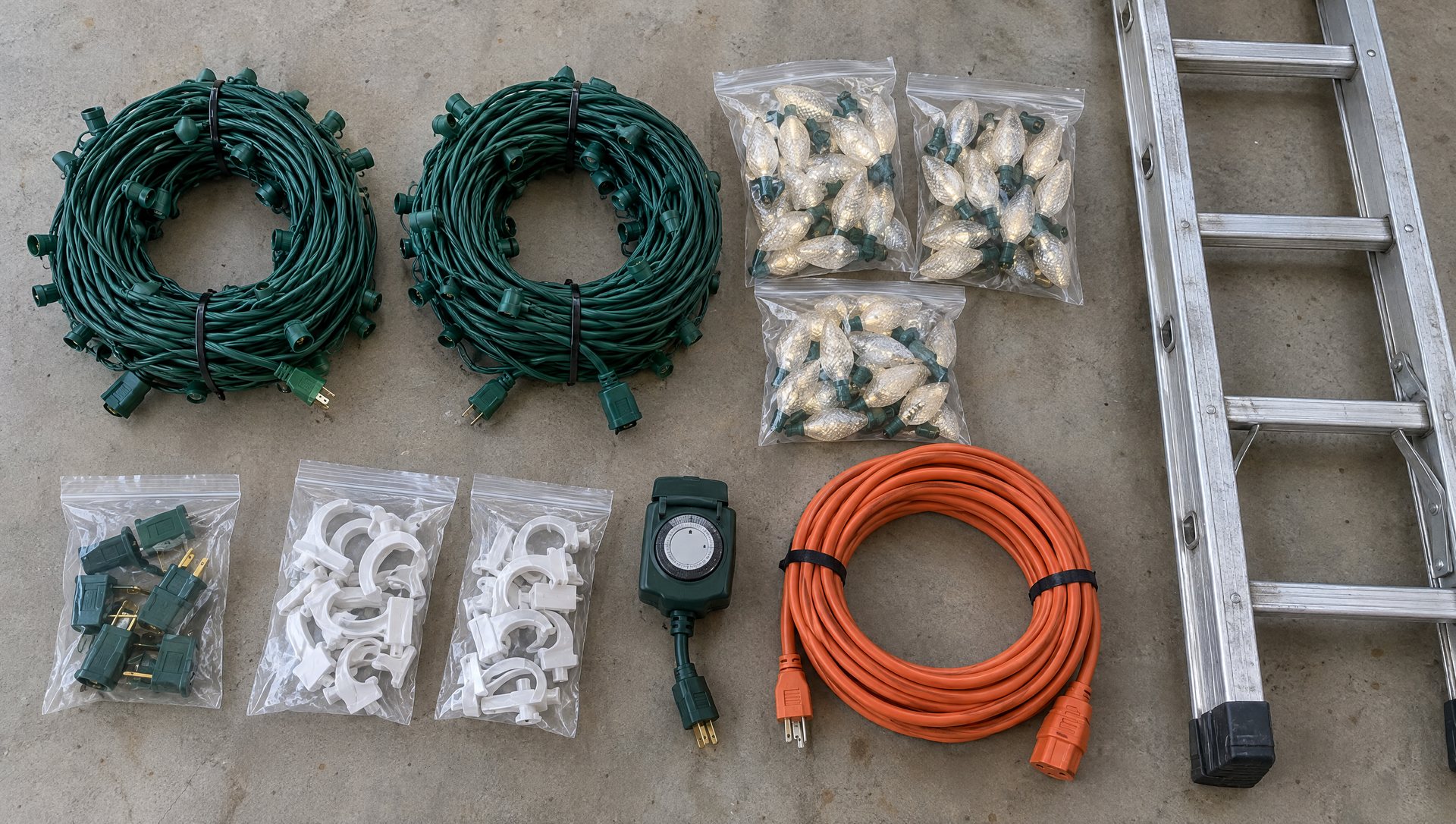
A first DIY season for a 150-foot one-story roofline costs about $389 in pro-grade materials, or about $869 with a ladder. The example uses what an installer would buy: empty C9 socket wire with LED retrofit bulbs screwed in.
| Example item | Math | Cost (Oct 2026) |
|---|---|---|
| C9 socket wire, 12-inch spacing | 2 x 100-ft cords at $55.50 | $111.00 |
| Male slide-on plugs | 1 bag of 5 at $8.50 | $8.50 |
| LED C9 retrofit bulbs, warm white | 6 packs of 25 at $31.40 | $188.40 |
| Clips | 2 packs of 100 at $19.95 | $39.90 |
| Outdoor digital timer | 1 at $20.95 | $20.95 |
| 50-ft 16-gauge extension cord | 1 at $19.99 | $19.99 |
| Materials | $388.74 | |
| 24-ft ladder (225-lb rating) and stabilizer | $389.99 + $90.05 | $480.04 |
| Season 1, ladder bought | $868.78 |
Check that the extension cord is rated for outdoor use; the store page did not say. Several cut runs also need female plugs or short jumpers, which the example leaves out. This runs higher than our one-season cost post because you buy two full 100-foot cords and plugs, not a share of a 1,000-foot spool. For why we use C9s at all, see our guide to C9 Christmas lights.
The ladder is the biggest single cost. Gable peaks usually call for an extension ladder, and its duty rating has to cover you plus everything you carry, per the American Ladder Institute.
What does DIY cost in seasons two and three?
DIY seasons two and three cost only what breaks, about $57 a season in our example: one pack of 25 bulbs at $36.95 and one pack of 100 clips at $19.95. That allowance is our judgment, not a published figure.
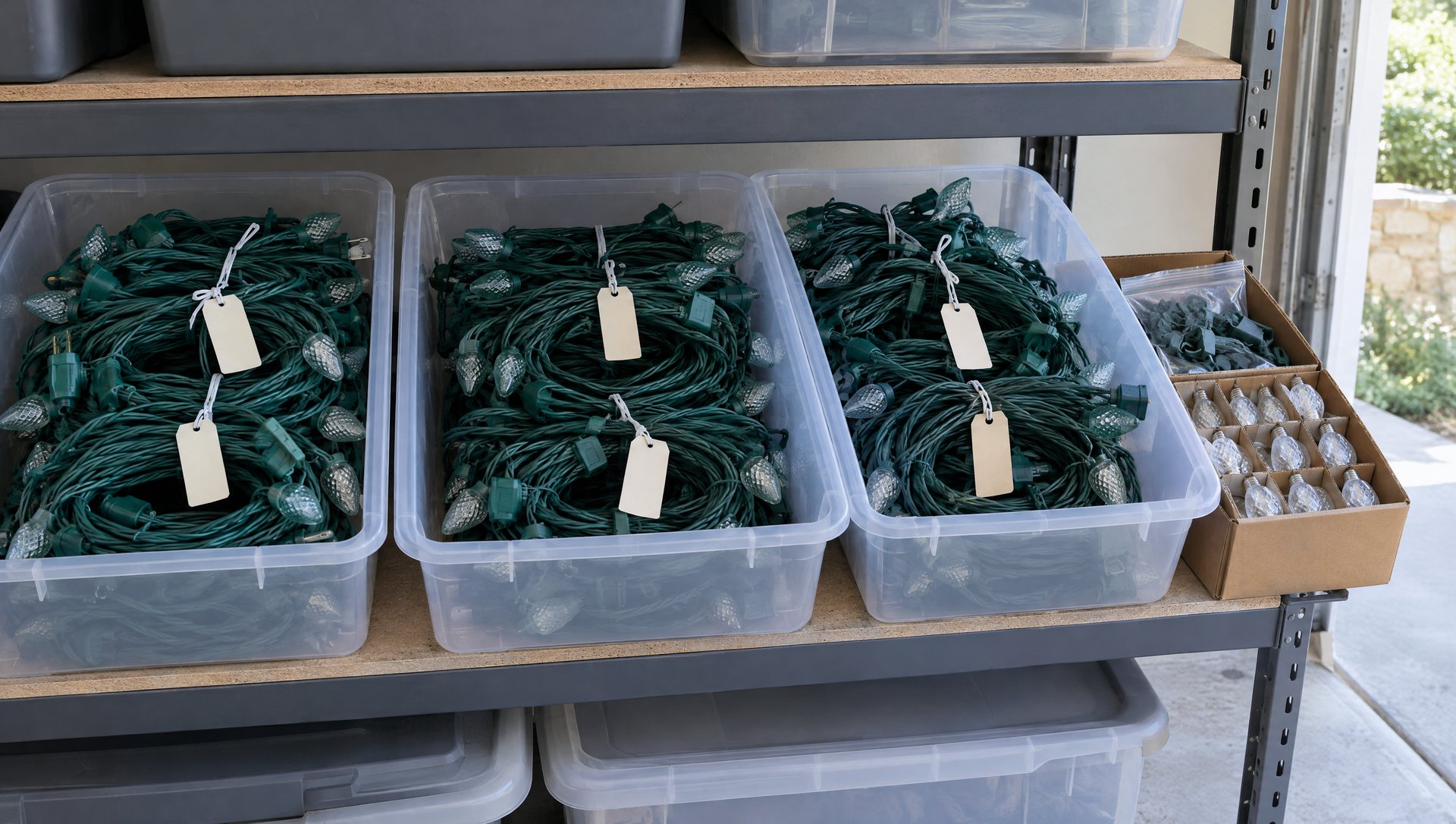
How you take the lights down in January decides whether it stays that low. A pro supplier’s takedown and storage guide says most damage happens at takedown, mostly from ripping strings down. Its advice:
- Take lights down one set at a time, unplugging each from the next. Do not pull them off.
- Label each cut run with where it goes. Wire cut to one roofline only fits that roofline.
- Let them dry fully, then store them in the house or garage, not the attic.
Labeled runs also go back up faster next year. Our New Year takedown guide walks through the whole job.
Are store-bought or pro-grade lights cheaper over three seasons?
Store-bought and pro-grade lights cost about the same over three seasons: about $558 against about $503 in our example. That assumes the store-bought strings get replaced in season 3. If they last all three seasons, store-bought drops to about $374.
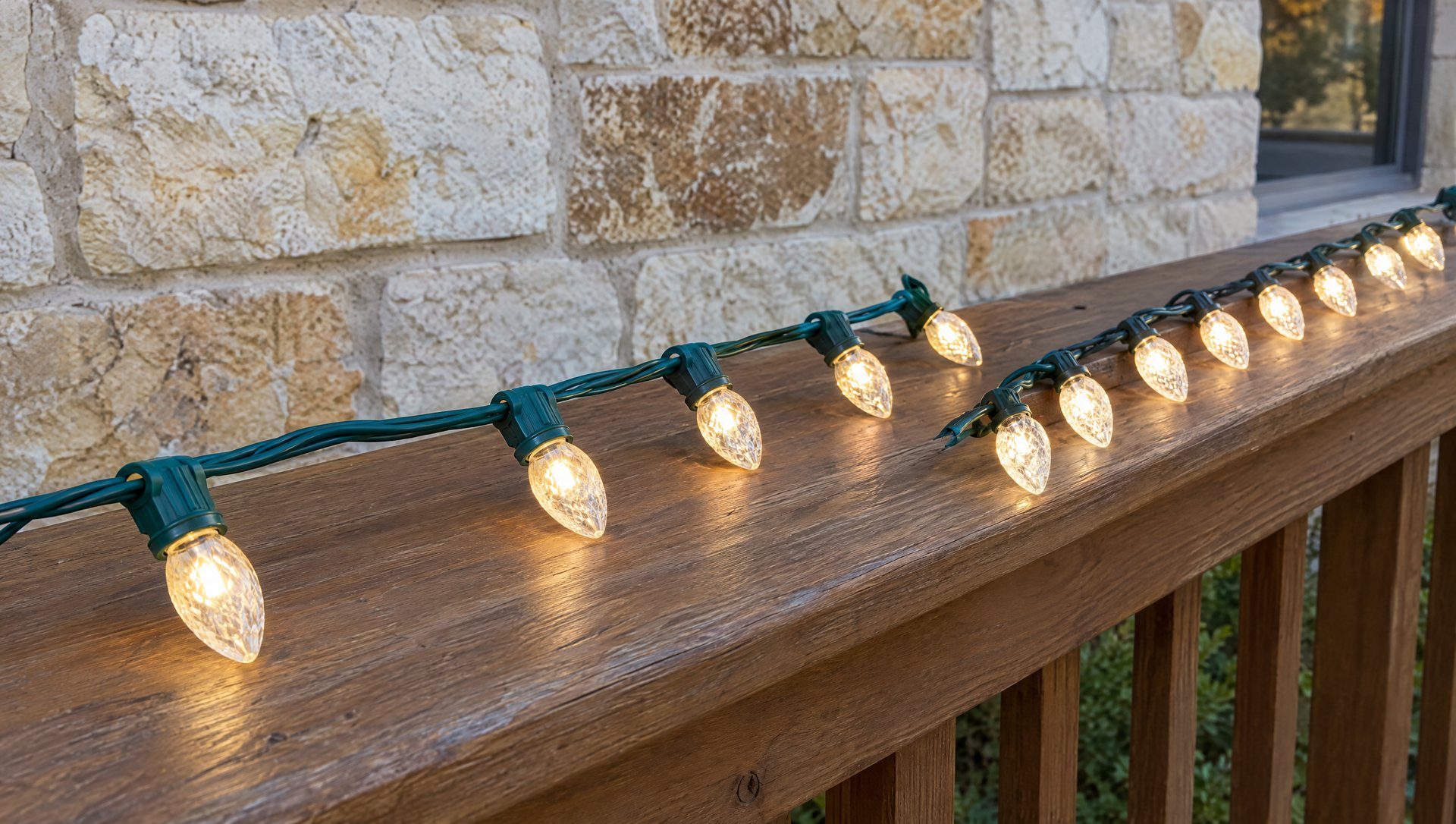
The store-bought version uses 9 prelamped 17-foot C9 strings (153 feet) at $22.99 each, regular price, from an online retailer’s C9 string listing (checked October 2026). The bulbs sit every 8 inches and cannot be removed, a different look. Fixed-length strings also can’t be cut to fit a run, so extra wire ends up bunched at a corner or hanging between sections; pro-grade wire is cut to each run.
One pro supplier’s comparison of retail and commercial lights puts retail sets at about 2 to 3 seasons, sometimes less than one. For pro-grade sets taken down each year, that article and its newer support page give about 5 to 7. These are supplier estimates, not test results.
Example, five seasons: about $616 for pro-grade and about $827 for store-bought, replaced in seasons 3 and 5.
What does professional installation cost over three seasons?
Professional full-service installation costs about $1,500 to $4,500 over three seasons for a front roofline in the Austin area, if the price stays flat. Five Austin-area installers’ own price pages, checked October 4, 2026, show roofline-only jobs at about $500 to $1,500 a season and minimums of $450 to $500, with lights, takedown and storage included.
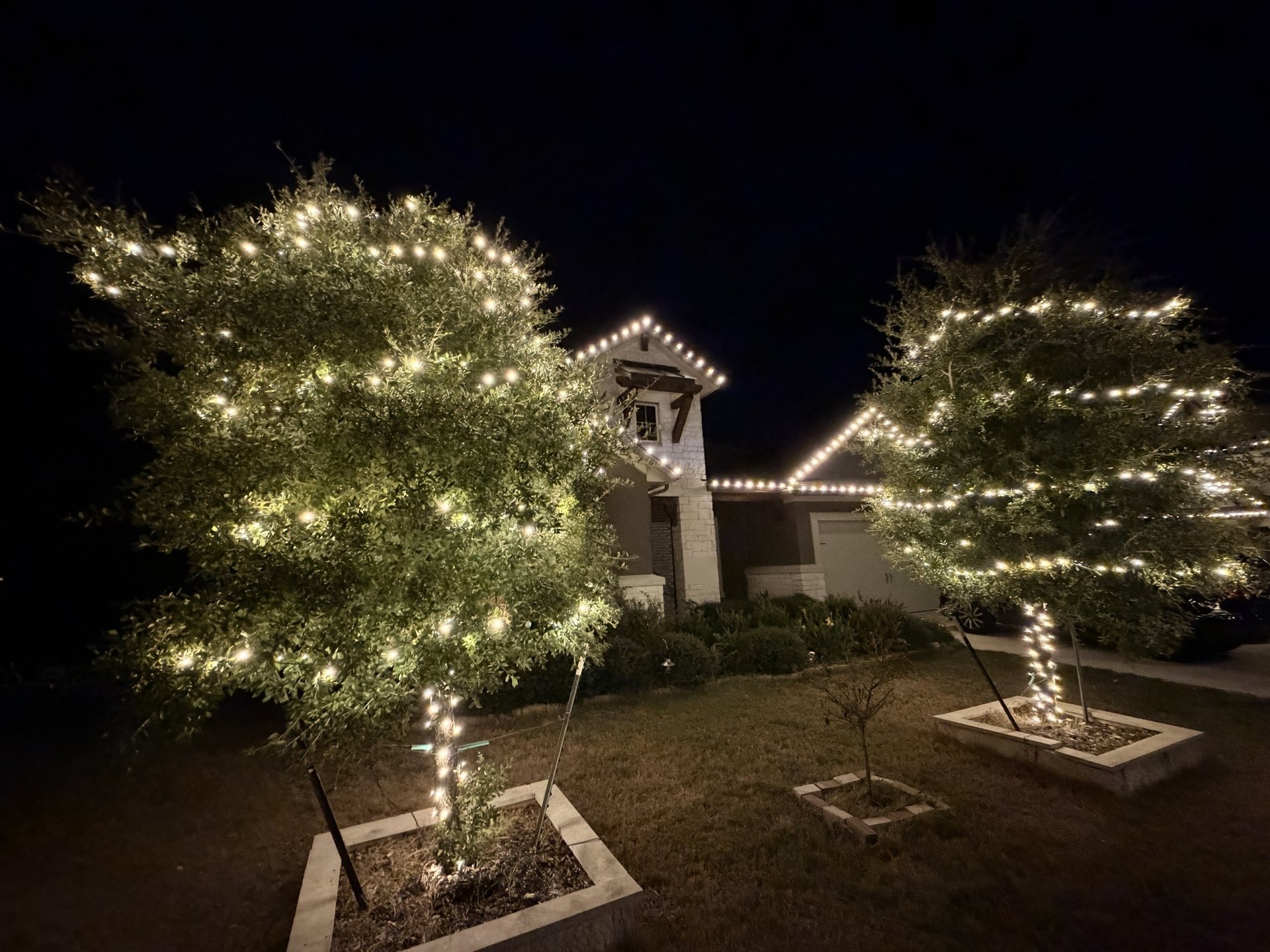
HomeGuide’s cost guide (October 2025 national figures, checked October 2026) runs higher: $5 to $12 per foot, or $2,250 to $5,400 over three seasons for 150 feet. Angi’s Austin page (checked October 2026) shows an average near $301. By our comparison, its Austin figures equal its national numbers times 0.68, so they are a modeled adjustment, not a survey of Austin installers. Budget from installer prices. For where a hired price goes, see why Christmas light installation is so expensive.
Is professional installation cheaper the second year?
Whether year two costs less depends on who owns the lights.
- Lease. The installer supplies and keeps the lights, and the price stays about the same each year. The Austin-area packages above work this way; one calls itself a rental service.
- You own the lights. You pay for them once. Later years cost labor only, or a returning-customer price.
Two out-of-state installers publish how this plays out. One serving Salt Lake City, Denver and Boise wrote in September 2025 that buying your lights might mean about $800 the first year, then $300 to $400. A Salt Lake City installer wrote in October 2025 that year two is 20% off a first-year bill under $1,000 and 30% off one over $1,000. These are single-company policies; we found no published year-two price from an Austin installer.
Ask every installer the same three questions: who owns the lights after the season, what year two costs, and whether sales tax is included.
How Sapien handles this
Sapien leases the lights: we supply them, install them, look after them through the season and take them down between January 2 and 15. We re-quote every season, so a returning customer’s price reflects that year’s scope. More on who supplies and keeps the lights.
Can I buy my own lights and pay someone to hang them?
Yes: install-only means you own the lights and pay for labor, which Thumbtack’s national price page and Angi’s hire-a-pro guide (July 2026) both put at $1.25 to $3 per foot as of October 2026, about $188 to $450 a season for 150 feet. With the example’s pro-grade lights, three seasons come to about $1,065 to $1,853, takedown not included. Install-only fits a narrow case: you own good lights and want to hand off the ladder.
How long does DIY take, and what is that time worth?
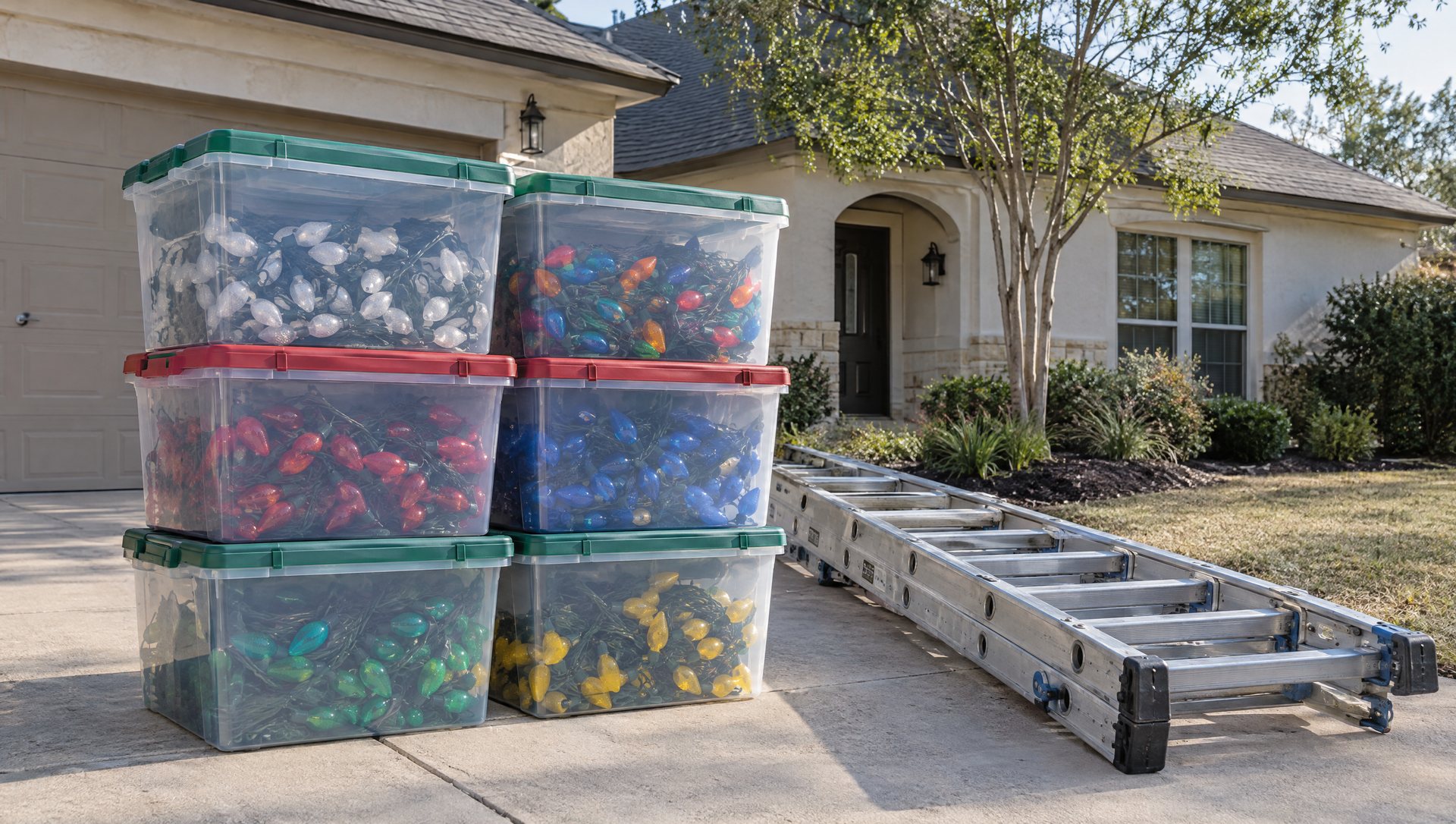
DIY receipts leave out your hours, and no study measures how long a homeowner takes. Angi’s cost guide (May 2026) says a full DIY display takes several hours and sometimes a weekend, not counting takedown. A pricing guide written for installers, Christmas Lights HQ’s (March 2026), puts an average home at 3 to 4 hours for a two-person crew.
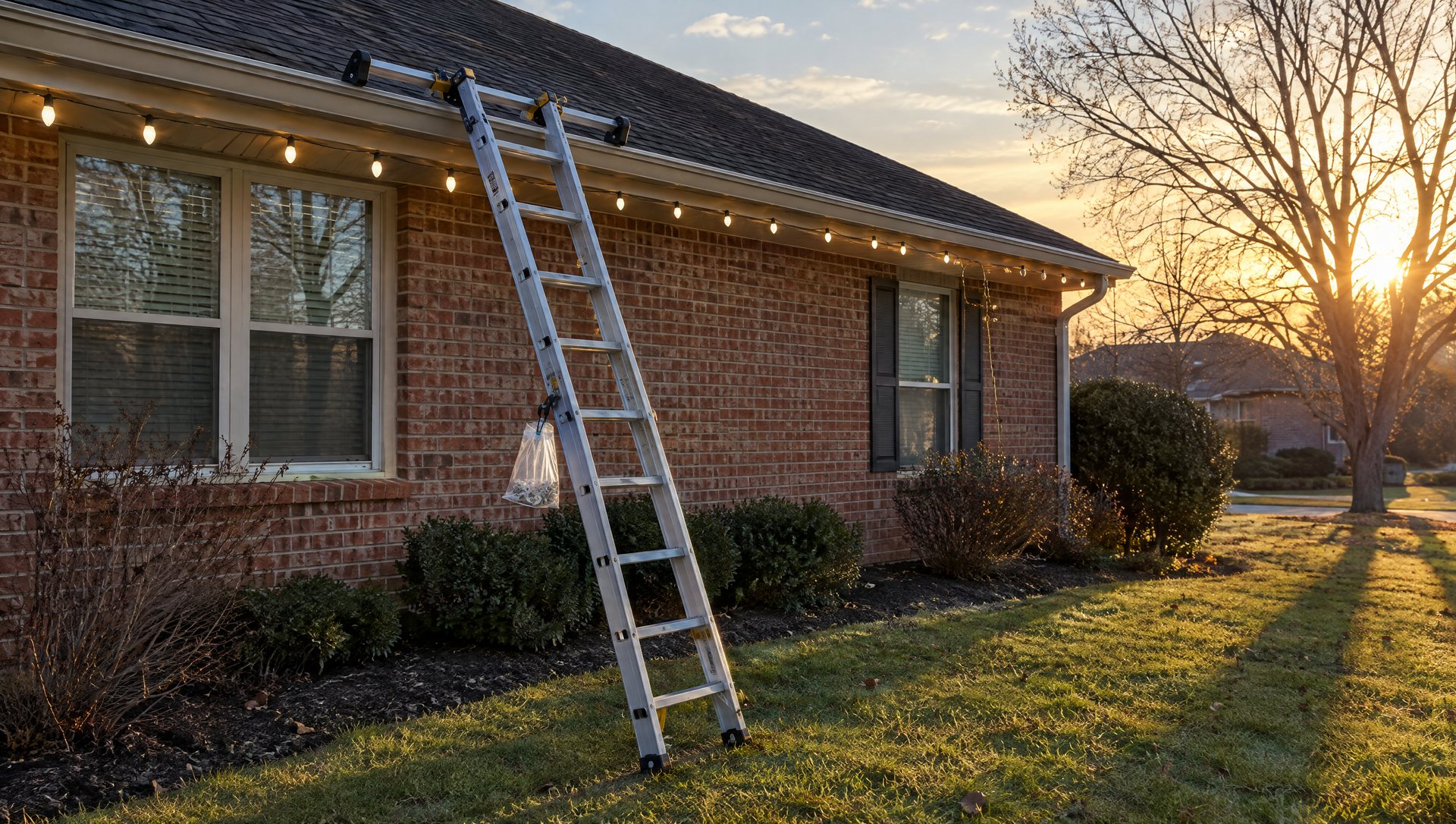
Example: say measuring, hanging, fixing dark sections, takedown and repacking take you 12 hours a season. That is our assumption; change it to fit your house.
| Example, 36 hours over 3 seasons | At $25 an hour | At $50 an hour |
|---|---|---|
| Value of your time | $900 | $1,800 |
| DIY pro-grade, own ladder ($502.54), plus time | $1,402.54 | $2,302.54 |
| DIY pro-grade, buy ladder ($982.58), plus time | $1,882.58 | $2,782.58 |
At $50 an hour, or with a ladder bought, DIY lands inside the Austin full-service range. At $25 an hour with a ladder you own, it comes in just under it. If you enjoy the day on the ladder, price those hours at zero, and follow our step-by-step guide to hanging Christmas lights outside.
Does electricity change the answer?
Electricity does not change the answer: it costs the same whether you hang the lights or an installer does, as long as the bulbs match.
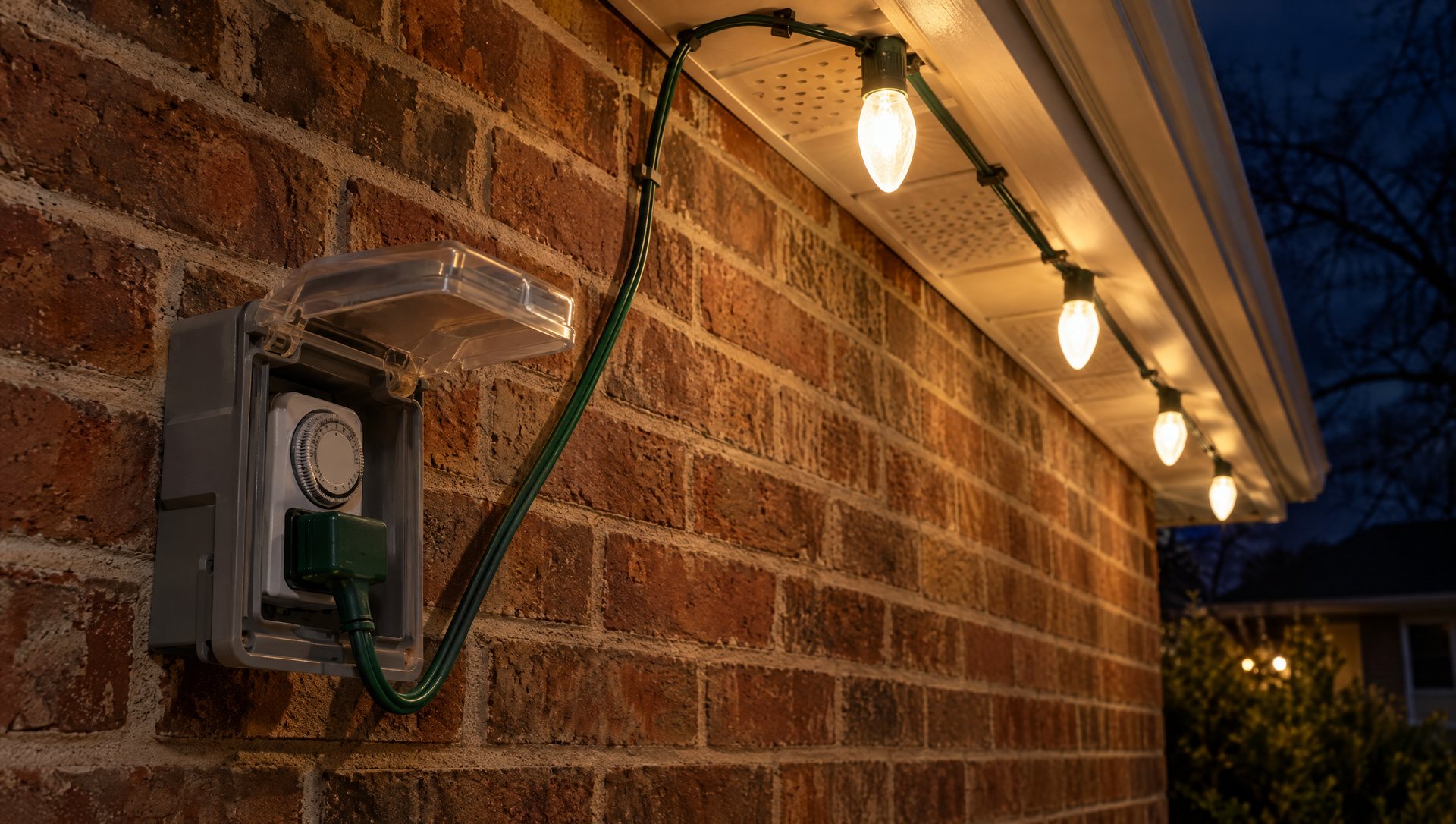
Example: a typical LED C9 retrofit bulb draws about 0.6 to 1 watt, so 150 bulbs draw about 90 to 150 watts. Run 6 hours a night for 45 nights, that is about 24 to 41 kWh. On Austin Energy’s fiscal 2027 rates, one more kWh costs about 12.3 to 14.9 cents for most homes inside the city limits (our math, tax included). That is about $3 to $6 a season, or about $2 with the 0.4-watt bulbs priced above. With 7-watt incandescent bulbs it would be about $35 to $42. Outside the city, or on PEC or Georgetown power, use the rate on your bill. More on the difference in our LED vs. incandescent comparison.
Costs that do not show up on a receipt
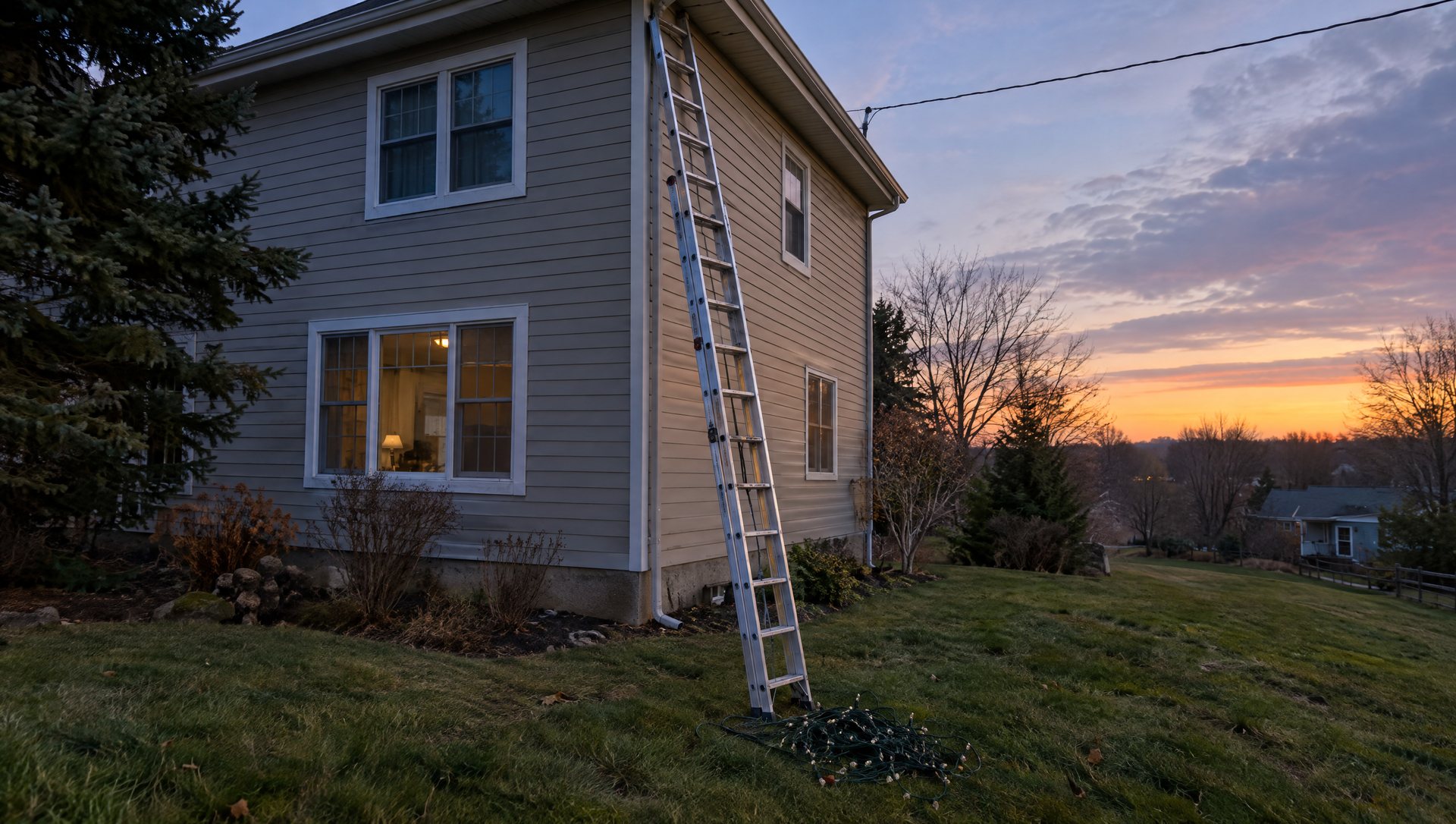
- Outlets. Adding an outdoor outlet is electrical work. Texas Occupations Code chapter 1305 requires an electrician’s license for it, with a narrow exemption for owners working on their own home. Inside Austin, the city’s electrical code also requires a permit, pulled by an electrical contractor or by an owner-occupant under a homestead permit. Angi’s Austin page puts the job at $154 to $373 (checked October 2026). The cost lands in both columns, because Sapien installs plug-in lighting only. Call a licensed electrician.
- Risk. The Consumer Product Safety Commission’s latest estimate is about 14,900 emergency-room visits for holiday decorating injuries from November 1, 2022 to January 31, 2023, nearly half from falls. That covers all decorating. In the DIY column the ladder risk is yours, twice a season. If you hire, ask for a certificate of liability insurance before anyone sets a ladder. Sapien is fully insured.
Stop and call a professional if the job needs you on the roof itself, if the ladder cannot sit on firm, level ground, if it is windy, or if you, the ladder or the lights cannot stay 10 feet from an overhead power line, the distance in Austin Energy’s safety guidance. Our light installation safety guide covers the rest.
How trees and second stories change the math
Second stories widen DIY’s cash lead and make the work riskier. Big trees can make DIY cost more outright.
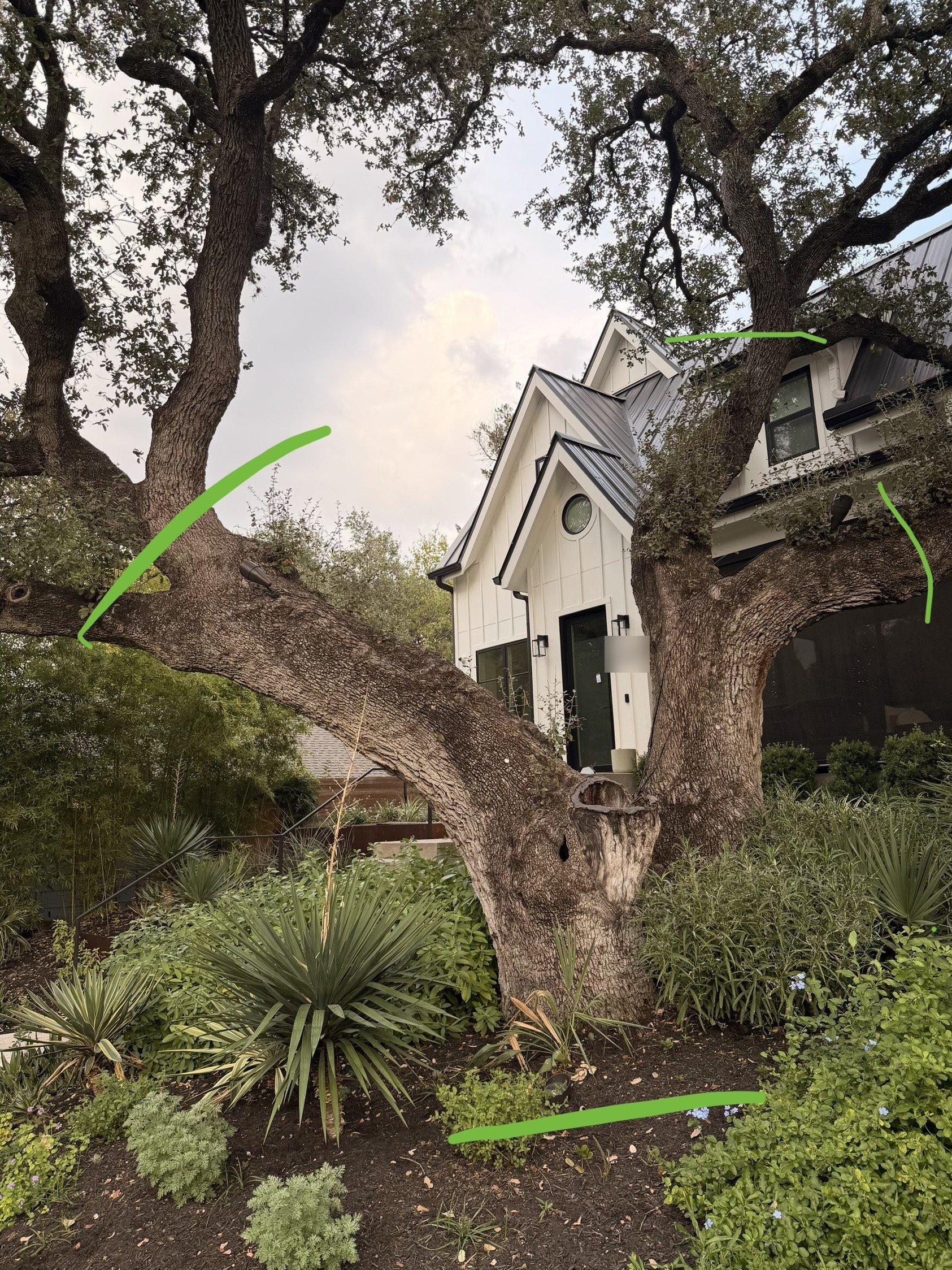
Second stories. A 28-foot ladder is $449.99 at the same chain, about $60 more (October 2026). Thumbtack’s price page says most installers charge about twice as much for a second story. So hiring roughly doubles, while DIY gains $60 of ladder and a full story of height.
Trees. A trunk wrap spirals lights up the trunk to the first big limb; a trunk-and-limb wrap carries the spiral out along the main limbs. Davey Tree’s formula is height divided by wrap spacing, times circumference, so trunk girth drives the footage.
Example, a big live oak: a trunk 24 inches across is about 6.3 feet around. Wrapped every 3 inches for 10 feet to the first limb, that is 40 wraps x 6.3 feet, about 251 feet. Add the 10% one supplier recommends: about 276 feet, more than the whole roofline. That is 12 of a pro supplier’s 23.3-foot 5mm strings at $19.95 (October 2026), or $239.40. Check the tag’s maximum-sets number before plugging twelve end to end. More on lighting live oaks.
That trunk is ladder work. Limbs out of ladder reach need a lift, and you would be the one running it. Dozr’s Austin listing showed a 36-foot towable boom lift at $478 a day as of October 2026, before delivery fees. A day up and a day down is $956 a season, $2,868 over three. The wrap has to come off every year: Davey Tree says a spiral left on will eventually girdle the branch.
For comparison, Sapien’s typical 2026 price to wrap a large oak’s trunk is $500 to $1,000 a season, $1,750 to $3,000 for a very large oak with several branches wrapped, and up to about $5,000 for a very tall oak or a maximum wrap that needs a boom lift. Each price is confirmed from photos of the tree. For per-tree prices, see what it costs to wrap a tree.
When is hiring a pro worth it?
DIY wins on cash only for a small group: the job is a one-story eave you can reach from a ladder on firm, level ground, and you enjoy the work, have the time, know which lights to buy and don’t mind the extra tools and several Home Depot trips. The three-season gap is then about $1,000 to $4,000 in your favor with a ladder you own, or about $500 to $3,500 if you buy one, before your hours.
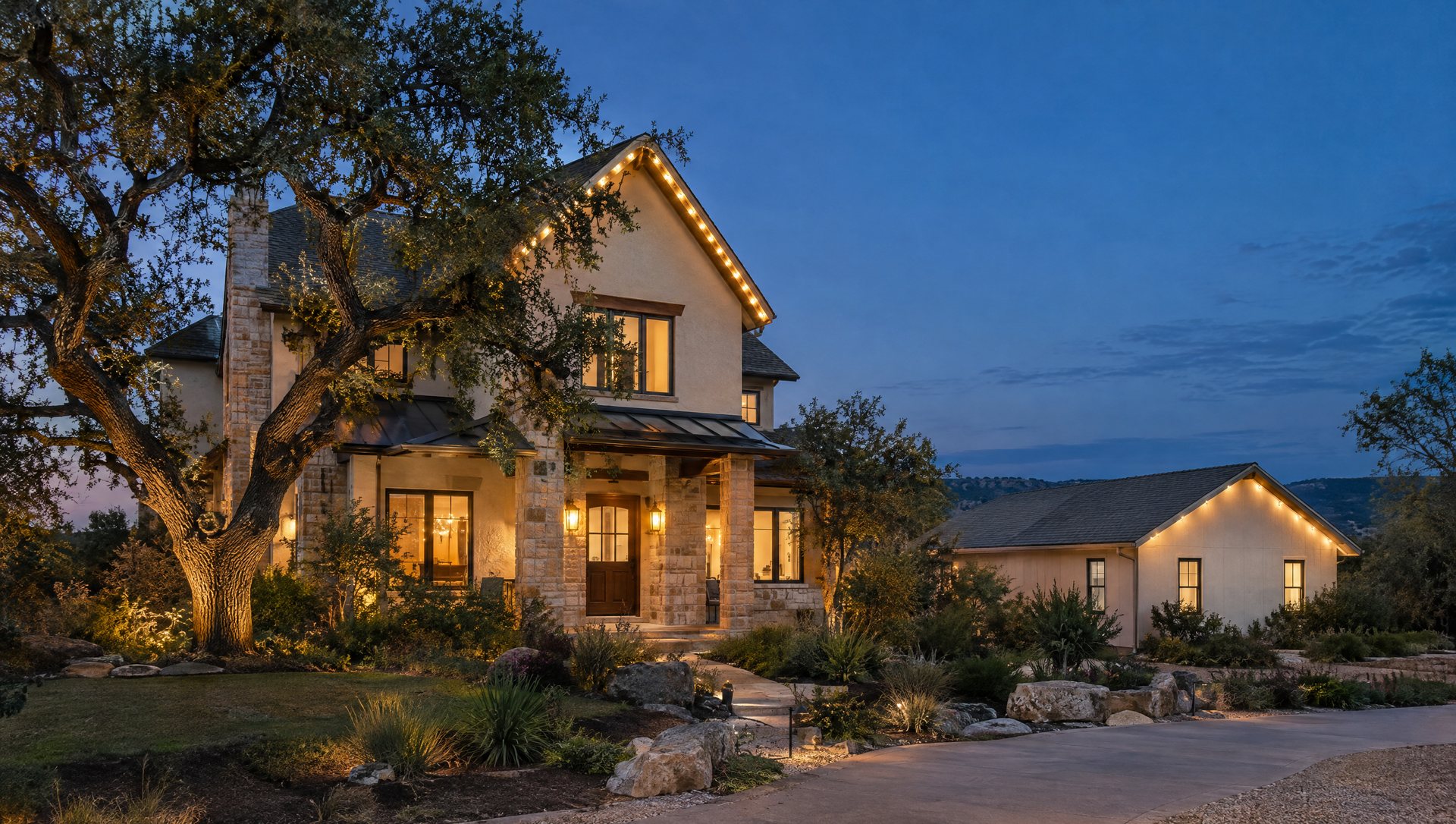
Hiring wins when the run needs roof access, a second story or a lift, when your hours are worth more than the gap, when you have no dry place to store lights, or when you want the clean, cut-to-fit look of commercial lights hung by a pro.
What we would not do
- Take on a lift-height tree wrap yourself. The lift alone outruns many hired roofline prices.
- Book a pro for just a porch rail and two bushes without asking about the minimum. Published Austin-area minimums run $450 to $500 (checked October 2026), so add the roofline or a tree to the same visit to get the most from it.
- Run lights from an outdoor outlet without GFCI protection. The National Fire Protection Association’s tip sheet says to have a qualified electrician add it.
What about permanent lights?
HomeGuide’s permanent-lights guide (September 2024, checked October 2026) puts permanent track lighting at $20 to $40 per foot installed, or $3,000 to $6,000 for 150 feet. Published lifespans conflict, so we give no payback period; see our permanent Christmas light cost guide.
To set a hired price against your own math, text a few daytime photos of the front of your house to (737) 777-9099, or use the contact page. Tell us which parts you want lit and the date you want them on, and we’ll quote from the photos. Jobs start at $500; what the service covers is on our Christmas light installation in Austin page.
Frequently asked questions
Can I rent a ladder instead of buying one?
We found no published Austin ladder rental rate, so renting is not in the table. If a rental yard near you rents extension ladders, compare two days of rent a season against the $480 purchase.
Should I buy next year’s lights on after-Christmas clearance?
Yes, if it is the grade you would buy at full price. Our tables use regular prices, so clearance only lowers your DIY total.
Can I hire someone just to take my lights down?
Yes. National cost guides put removal-only jobs at $100 to $400 (HomeAdvisor, June 2026, checked October 2026). The Austin-area full-service prices we checked in October 2026 already include takedown and storage; install-only labor rates usually do not. More on Christmas light removal service.
Sources
- HomeGuide: Christmas light installation cost (full-service $5 to $12 per foot, national; October 1, 2025)
- HomeGuide: Permanent Christmas lights cost (permanent per-foot and 150-ft range; September 17, 2024)
- Angi: How much does Christmas light installation cost? (DIY time, minimum fees; updated May 3, 2026)
- Angi: Christmas light installation cost in Austin (Austin average, outdoor outlet cost; updated November 19, 2025)
- Angi: Hire someone to put up outdoor Christmas lights (install-only per-foot rate; updated July 9, 2026)
- Thumbtack: Christmas light installation prices (install-only rate, second-story pricing; updated April 13)
- HomeAdvisor: Cost to install holiday lighting (removal-only range; updated June 19, 2026)
- Christmas Lights HQ: Christmas light installation pricing guide (advice to installers; crew time; March 30, 2026)
- Austin Energy: Residential rates (fiscal 2027 rates used in the electricity example)
- Austin Energy: Safety on the job (10 feet from overhead power lines)
- U.S. Consumer Product Safety Commission: release 25-049 (decorating injury estimate and falls share; November 19, 2024)
- Texas Occupations Code chapter 1305 (electrician licensing, sections 1305.151 and 1305.003)
- City of Austin Code chapter 25-12, article 4: Electrical Code (permits for new electrical work; homestead permits)
- NFPA: Outdoor electrical safety tip sheet (GFCI protection by a qualified electrician; 2016)
- American Ladder Institute: Ladders 101 (duty ratings)
- Davey Tree: How to safely hang outdoor lights (trunk-wrap formula)
- Davey Tree: Is it OK to keep outdoor tree lights on year round? (spiral wraps girdle branches; December 19, 2022)
- Christmas Light Source: How many light strings do I need to wrap my tree? (10% allowance; November 29, 2021)
- Christmas Light Source: Warm white C9 LED bulbs (LED C9 wattage example)
- Dozr: Towable boom lift rental in Austin (daily lift rate; opened October 4, 2026)
- Christmas Designers: C9 cord, 12-inch spacing, 100 ft (wire price; plugs sold separately)
- Christmas Designers: Male slide-on plugs, SPT-1 (plug price)
- Christmas Designers: C9 LED retrofit bulbs, bag of 25 (bulb price tiers; about 0.4 W per bulb)
- Christmas Designers: Clips (clip prices)
- Christmas Designers: Timers (timer price)
- Christmas Designers: 70-light 5mm wide-angle LED string (tree-wrap string price and length)
- Christmas Lights Etc: C9 LED prelamped light set (store-bought string price, length, spacing)
- McCoy’s Building Supply: Extension ladders (24-ft and 28-ft ladder prices)
- McCoy’s Building Supply: Werner AC78 ladder stabilizer (stabilizer price)
- McCoy’s Building Supply: Extension cords (50-ft cord price)
- Christmas Designers: Tips for taking down and storing Christmas lights (takedown damage, labeling runs, storage; January 17, 2023)
- Christmas Designers: Retail vs commercial Christmas lights (seasons of service)
- Christmas Designers support: Year-round lighting expectations (5 to 6 seasons with yearly takedown)
- Five Austin-area installers’ own price pages, opened October 4, 2026, and two out-of-state installers’ pricing posts (September 28 and October 20, 2025) on year-two pricing. We do not name or link other installers.
About the author. Rick Safeman owns Sapien Lighting & Installation in Austin, Texas.