


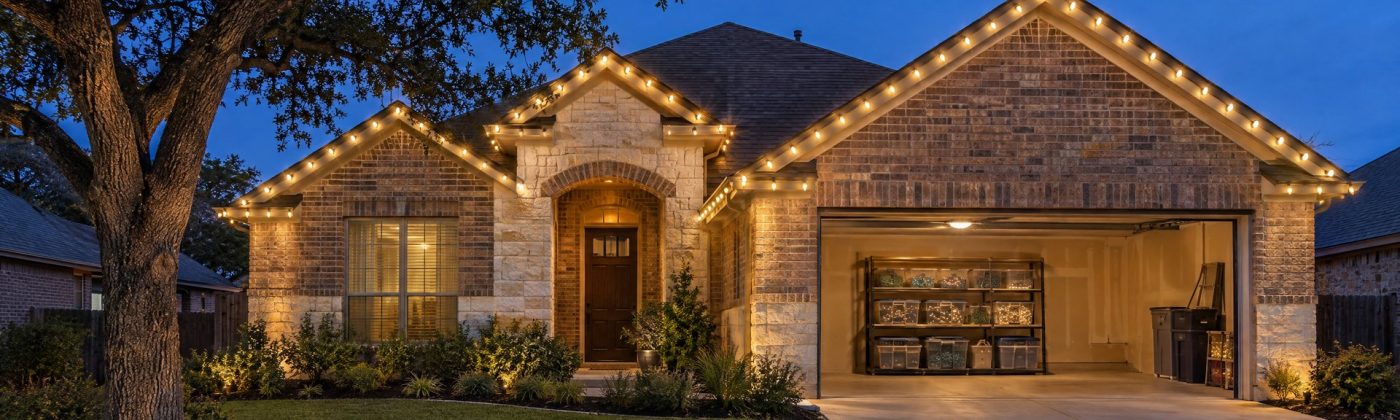
Do Christmas Light Installers Provide the Lights, or Do I Buy Them?
Usually, yes. Most full-service Christmas light installers supply the lights as part of a seasonal service, take them down after the holidays and keep them. Some sell you the lights instead, and some will hang lights you already own for a labor-only price. Every Austin-area installer we found publishing prices in October 2026 supplied the lights and included takedown and storage. Before you pay a deposit, get in writing who owns the lights in January.
| Question | Short answer |
|---|---|
| Do Christmas light installers provide the lights? | Most full-service installers do, and the lights are part of the seasonal price. All five Austin-area installers we found publishing prices did, checked October 4, 2026. |
| Who owns the lights after takedown? | Whoever the contract says. When the installer supplies and leases them, the installer keeps them. When you buy them, they are yours. |
| What does install-only cost? | $1.25 to $3 per linear foot with your own lights (Thumbtack and Angi, checked October 2026). |
| How much do installer-supplied lights add? | $0.50 to $2 per linear foot on top of install-only labor (Thumbtack, checked October 2026). |
| Is takedown included? | In every Austin-area published package we checked. Where it is not, removal-only runs $100 to $400 per job in national cost guides (HomeAdvisor and HomeGuide, checked October 2026). |
| Will an installer hang lights I already own? | Some will and some won’t. Outdoor-rated sets in good condition are the most likely to be accepted. Ask before you plan around them. |
| Who replaces a strand that dies mid-season? | Usually whoever owns the lights, unless the contract says otherwise. |
| Is buying the lights cheaper? | Not clearly. In our example for a 150-foot roofline, owning cost $521.50 to $784 the first season and $187.50 to $450 each later season if you take the lights down yourself. Installer-supplied lights cost $262.50 to $750 a season on Thumbtack’s figures and $750 to $1,800 on HomeGuide’s. |
| How does Sapien handle it? | Every Sapien install includes commercial-grade lights, clips, in-season repairs and takedown January 2 to 15. Lights you already own: yes, if they are pro-grade and working; we test them first. |
This guide is for anyone who can’t tell whether an installation quote buys lights, rents them, or only pays for labor, or who has a garage full of strands already. If you are still at the price stage, start with what Christmas light installation costs in Austin.
- Three ways installers handle the lights
- Who owns the lights after the season?
- How much cheaper is install-only?
- Lease or buy: is it cheaper to own your Christmas lights?
- Will an installer hang lights I already own?
- Does Christmas light installation include takedown?
- Who replaces lights that fail mid-season?
- Ten questions to settle in writing
- How Sapien handles this
Three ways installers handle the lights
Christmas light installers handle the lights in one of three ways. They supply the lights and keep them, they sell the lights to you, or they hang lights you supply. The model decides who owns the lights in January, who stores them, who pays when a strand fails, and what year two costs.
The installer supplies and keeps the lights (leasing)
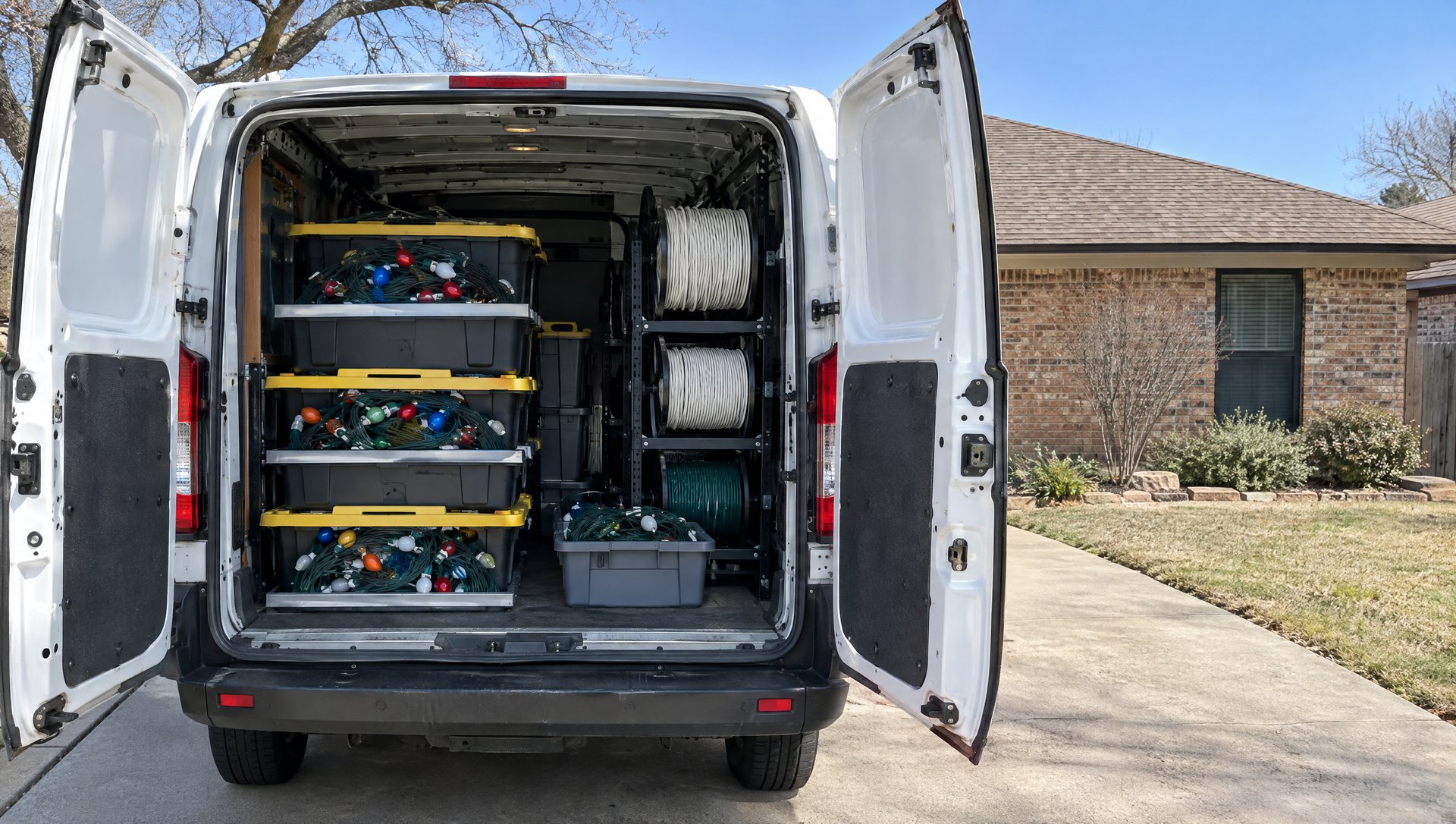
The installer brings its own lights, hangs them, fixes them during the season, takes them down and keeps them, all for one seasonal price. Installers usually call this leasing or renting; one Austin-area installer calls it a rental outright. An installer marketplace, Curbstead’s lease-vs-buy guide, describes it the same way, with the installer owning the strands. This is the model behind most published Austin prices.
You buy the lights from the installer
The installer sells you lights, usually cut to fit your roofline, and you own them. The first year costs more because you pay for the product. Later years cost less because you pay mostly for labor. You also carry storage and failures, unless the contract shifts them to the installer.
A variant is the buy-out. One North Texas installer publishes terms where you commit to three years, pay about 30% more than its lease price in year one and about 10% less in years two and three, and own the lights after year three. Storage and bulb replacement are included for those three years. After that, it charges $200 per service trip.
You supply the lights and the installer hangs them
You buy the lights and pay the installer for labor, usually called install-only. The lights, their storage and their failures are yours from day one. Not every installer offers it, and those that do may set rules on what they will hang.
| Model | Who owns the lights in January | Who stores them | Who pays when a strand fails | Cost over the years |
|---|---|---|---|---|
| Installer supplies and keeps (leasing) | Installer | Installer | Installer, if in-season service is included | Same kind of price each season |
| You buy from the installer | You | You, unless storage is in the contract | You, after any warranty | High first year, lower later years |
| Buy-out after set years (one published example) | Installer, then you | Installer during the term | Installer during the term | Higher first year, lower later years, then labor only |
| You supply, they install | You | You | You | Your lights once, then labor each season |
Who owns the lights after the season?
The contract decides who owns the lights after the season. Words like “service”, “rental” or “lights included” do not settle it by themselves: “lights included” can mean the lights are rented for the season or sold to you. Only a line saying who owns the lights after takedown settles it.
If the quote does not say, ask before you pay anything, and get the answer in the quote or contract, not a text message. How to choose a Christmas light installer lists the other lines a written quote should carry.
Why do most installers keep the lights?
Most installers keep the lights for two reasons. Leasing brings the same customers back each year, and runs cut to one house are easy to rehang on that house.
A lighting supplier writing for installers, Thunder Lighting Supply (August 2025), says leasing brings recurring revenue but lower first-year profit, while selling brings higher first-year margins and leaves the customer to store the lights. A pricing guide written for installers, Christmas Lights HQ (March 2026), says its recommended full-service rates include lights, clips, installation, takedown and storage, with the installer keeping the materials.
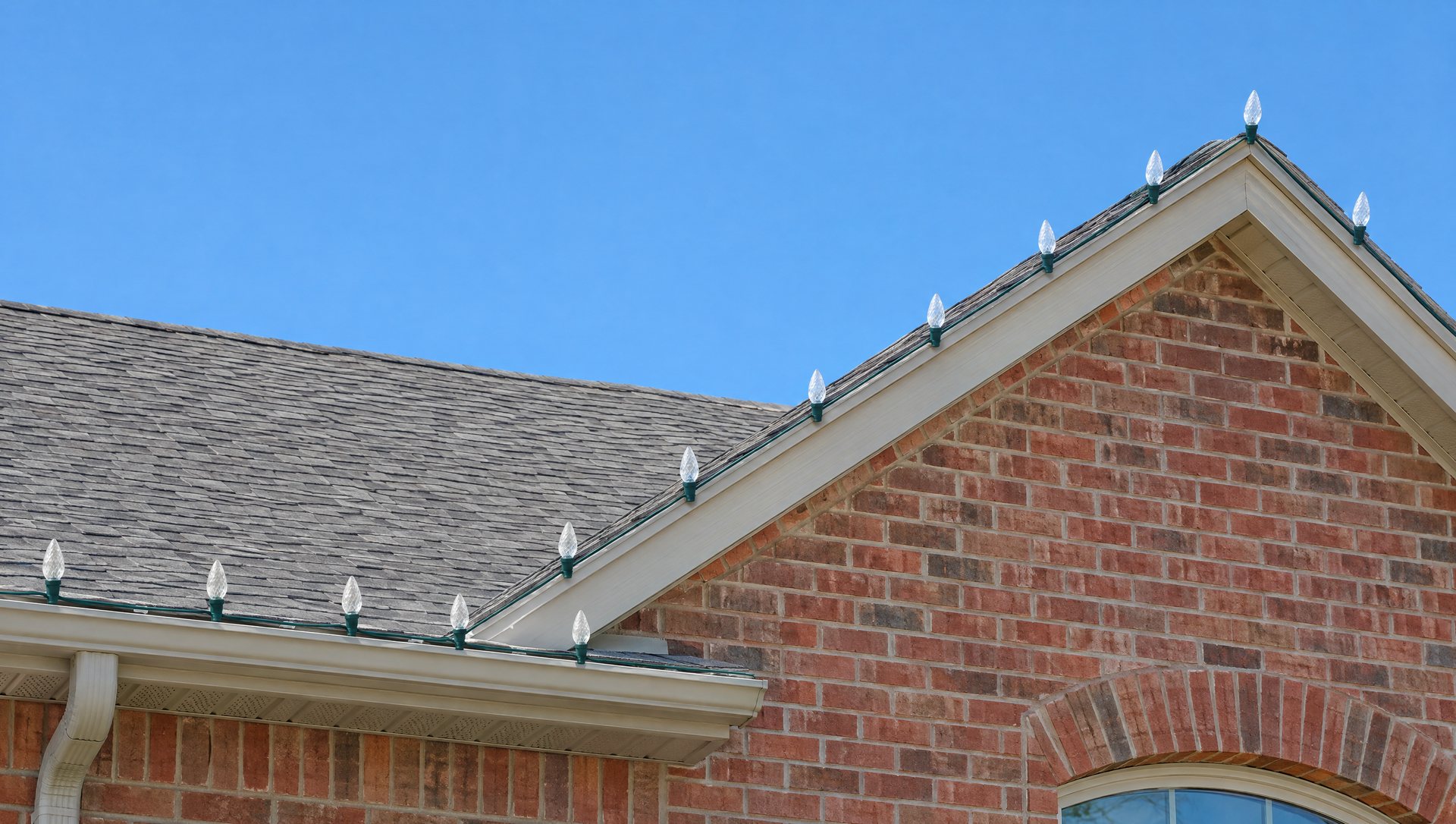
Professional roofline lights are often cut to length for each run of the roof, with plugs added where needed, per Christmas Lights Etc’s commercial LED page. A run cut for your gutter line fits your gutter line. An installer who keeps the runs can label them, test them and bring them back. The C9 Christmas lights guide explains the bulb most rooflines use.
Installers also prefer to maintain sets they know. On mini and 5mm LED strings, commercial-grade sets are one-piece, with the bulb sealed into the socket, and retail sets are usually two-piece with removable bulbs, per Christmas Designers’ comparison of retail and commercial lights. Large C7 and C9 bulbs screw into their sockets on retail and pro sets alike.
How much cheaper is install-only?
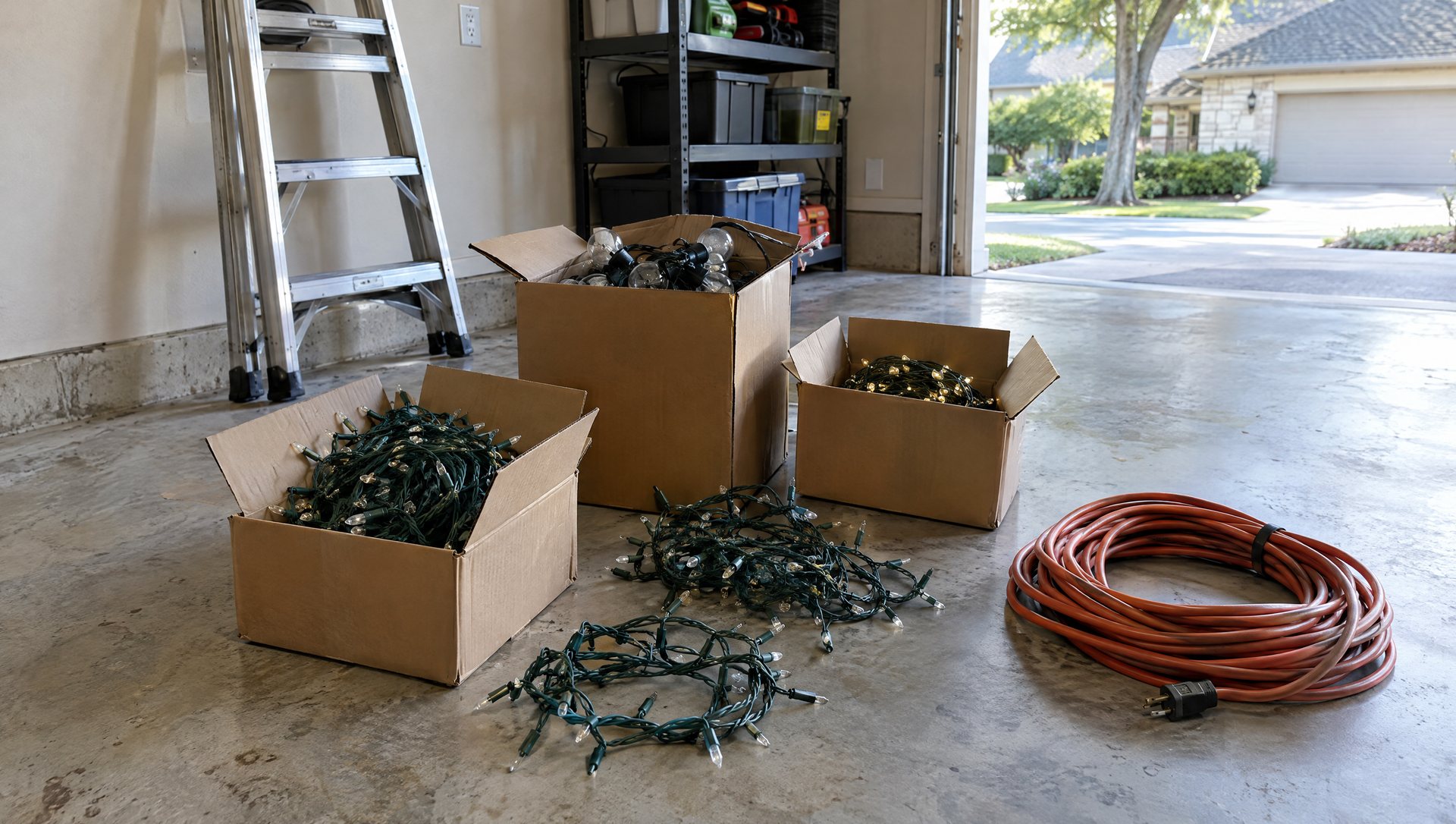
Install-only costs less each season because you supply the lights. Thumbtack (checked October 2026) puts installer-supplied lights at $0.50 to $2 per linear foot on top of labor. Full service, with takedown, storage and in-season repairs, costs more than that. None of the figures below is Sapien’s price.
| What the price covers | Published figure | Source, checked October 2026 |
|---|---|---|
| Labor only, your lights | $1.25 to $3 per linear foot | Thumbtack’s national price page; Angi’s hire-a-pro guide |
| Installer-supplied lights, added | $0.50 to $2 per linear foot | Thumbtack |
| Lights, setup and removal | $2.50 to $7 per linear foot | HomeAdvisor |
| Installed, national | $5 to $12 per linear foot | HomeGuide |
The clearest side-by-side we found is a San Antonio installer’s published price list (undated, opened October 2026). For the front roofline of a 2,000 to 2,999 square foot home, it lists $329 to $429 to hang the customer’s lights and $829 to $929 with LED C9 lights supplied. Each range runs from one-story to two-story. Supplying the lights adds $500. The same company publishes a separate takedown list, so with any installer, ask whether takedown is in the install price.
Angi’s Austin cost page (as of October 2026) lists $170 to $408 to rent lights from an installer and $0.27 to $1.36 per foot for lights bought through one. Those are Angi’s national figures scaled down (its national rental range of $250 to $600 becomes $170 to $408), not a survey of Austin installers. The Austin-area installers that publish prices set full-service minimums of $450 to $500 as of October 2026. Sapien’s minimum job is $500.
Lease or buy: is it cheaper to own your Christmas lights?
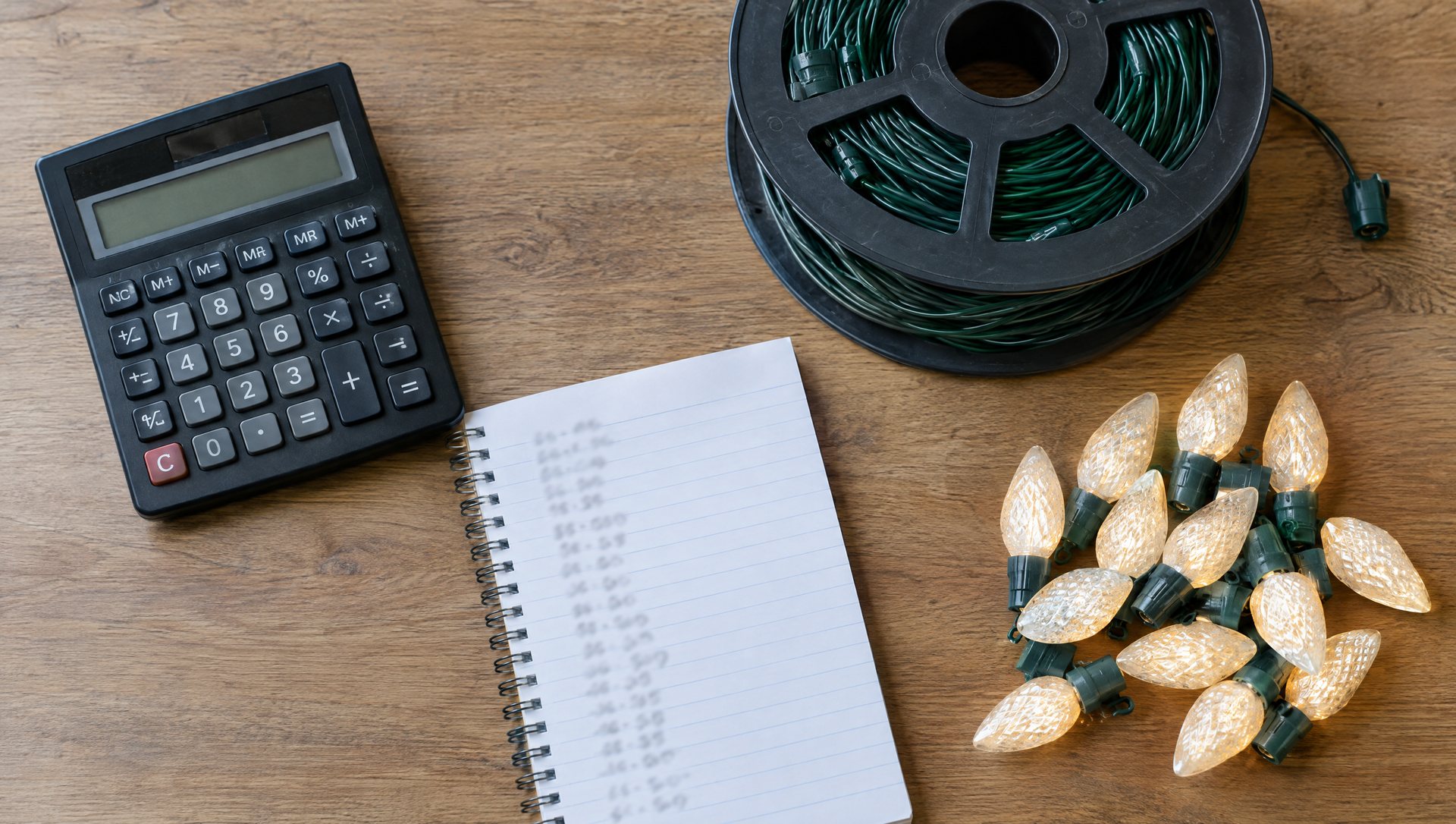
Buying your own Christmas lights can cost less each season after the first, but only when the lights last and someone handles takedown and storage. The cost guides price one season at a time, and the example below does the same. No third-party source we found tracks year-two pricing, so the example holds the full-service price flat. It is an example, not a quote.
| Example: 150-ft one-story roofline | Year 1 | Each later year |
|---|---|---|
| A. Installer’s lights, HomeGuide rate | $750 to $1,800 | $750 to $1,800 |
| A2. Installer’s lights, Thumbtack rates | $262.50 to $750 | $262.50 to $750 |
| B. Your lights, install-only, you take them down | $521.50 to $784 | $187.50 to $450 |
| C. B plus paid removal | $621.50 to $1,184 | $287.50 to $850 |
This table compares one season at a time; DIY vs professional Christmas lights cost runs the full three-year math.
Example inputs, before tax and shipping:
- Materials, about $334 once, from an online pro-lighting supplier’s regular prices on October 4, 2026: 150 feet of C9 socket wire (about $64, prorated from a 1,000-foot spool), 150 warm white C9 LED bulbs ($188.40), two 100-packs of clips ($39.90) and a timer ($20.95). Plus a 50-foot 16-gauge extension cord ($19.99 at a Texas building-supply chain; buy one marked for outdoor use).
- Row A: HomeGuide’s installed rate, $5 to $12 per foot.
- Row A2: Thumbtack’s install-only rate plus its $0.50 to $2 per foot for supplied lights. It does not say whether takedown or storage is included.
- Rows B and C: Thumbtack’s install-only rate, $1.25 to $3 per foot. Row C adds removal-only at $100 to $400 per job (HomeAdvisor and HomeGuide).
All third-party rates were checked October 2026. The materials figure runs low. A homeowner usually buys a full spool, and someone still has to cut the wire to each run and add plugs. The example also leaves out replacement bulbs, storage space, sales tax and your time. Row B assumes you do the January takedown yourself, which is ladder and roof work, and that an installer will hang lights you bought.
The example shows two things. First, the answer depends on whose numbers you use. On HomeGuide’s rate, owning looks far cheaper. On Thumbtack’s own figures (row A2), the two models land in the same range. HomeAdvisor’s rate for lights, setup and removal ($2.50 to $7 per foot) puts a season at $375 to $1,050, in the same range as row C. Austin-area full-service packages also include storage, and four of the five we checked list in-season maintenance; rows B and C leave both to you. Those installers’ published minimums of $450 to $500 a season mean a 150-foot Austin roofline won’t price at the low end of row A2.
Second, a buy-out costs slightly more over the first three years. On the North Texas installer’s percentages, three years cost about 1.3 + 0.9 + 0.9 = 3.1 times its lease price, against 3.0 for leasing. Example: at $1,000 a season, the buy-out totals $3,100 against $3,000, and then you own the lights.
How long the lights last decides the rest. Suppliers put retail-grade LED sets at about 2 to 3 seasons, per Christmas Designers and Creative Displays. For commercial sets, Creative Displays says about 6 to 8 years; Christmas Designers’ newer estimate is 5 to 6 seasons for a top-quality set taken down each year, and 12 to 18 months if left up year-round (Christmas Designers support). It calls “up to 20 years” claims hype.
Will an installer hang lights I already own?
Some installers will hang lights you already own and some won’t. Ask before you plan around your own strands, and bring the tag information and the age of the sets.
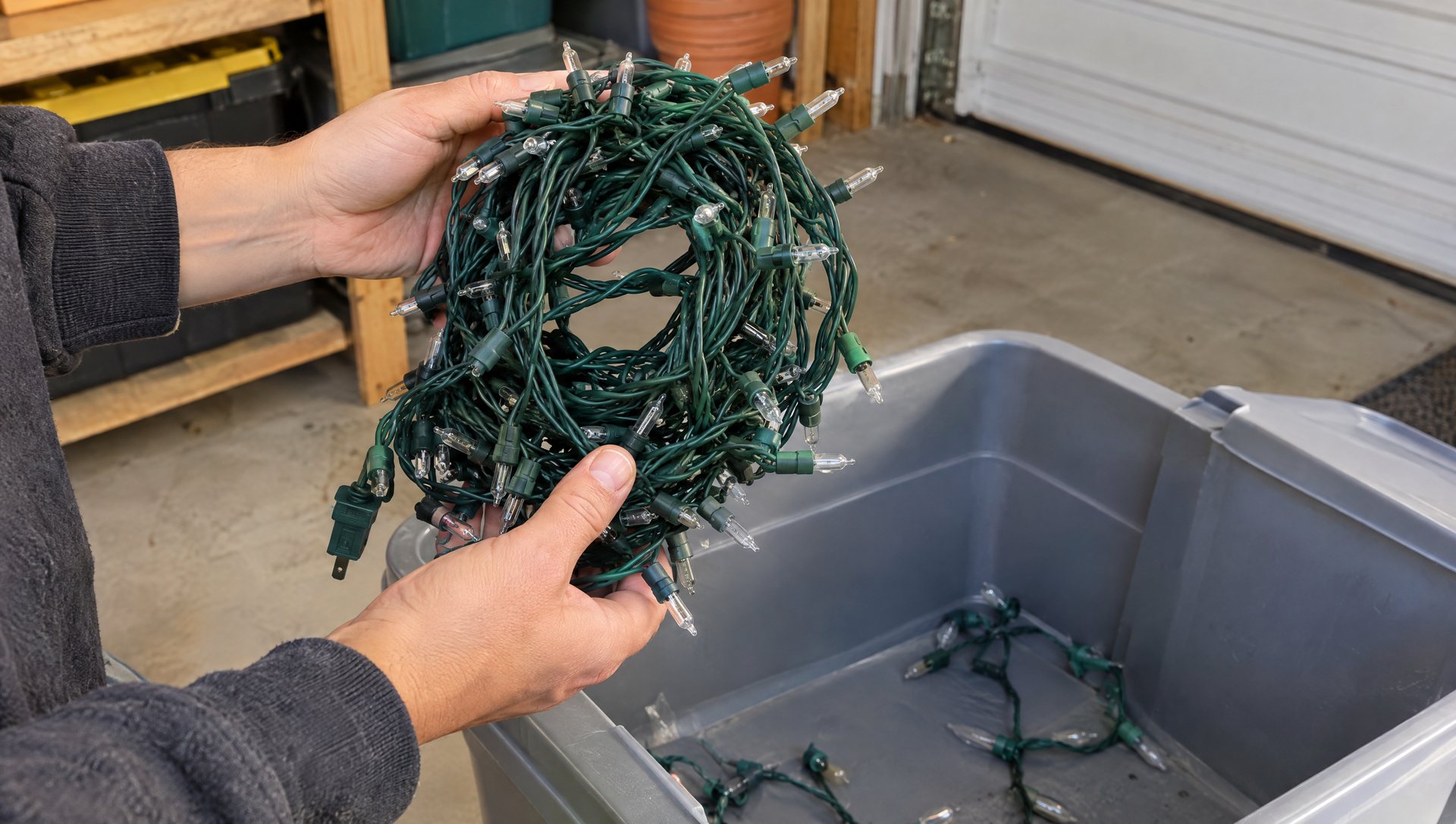
Installers who decline usually have three reasons. They can’t vouch for a set’s age or condition. Retail mini-light sets are usually two-piece, with bulbs that can work loose and let water into the socket. And their in-season service promise can’t cover a product they didn’t choose. One installer in Utah, Colorado and Idaho says in its published terms that lights not bought from it void its warranty.
Fit is a fourth reason. Retail strings come in fixed lengths with fixed spacing, so on a roofline they leave slack or gaps at corners, where a cut-to-length run ends where the roof does. Long chains of retail sets also run into the “maximum sets connected” limit on the tag. And whites from different brands or years often don’t match: The Christmas Light Emporium explains that LEDs are sorted into color bins and drift as they age. If you are choosing a white, see colored vs white Christmas lights.
Installers who accept customer lights may set conditions, such as outdoor rating, a certain grade, or no repairs during the season. Ask who pays if one of your strands dies in December. If an installer turns your lights down, use them where you can reach from the ground, such as a porch rail or a bush.
How to check your own lights before you ask
Check your lights before you ask, because a damaged or indoor-only set should not go outside at all. The first three checks come from safety bodies, the last two from suppliers.
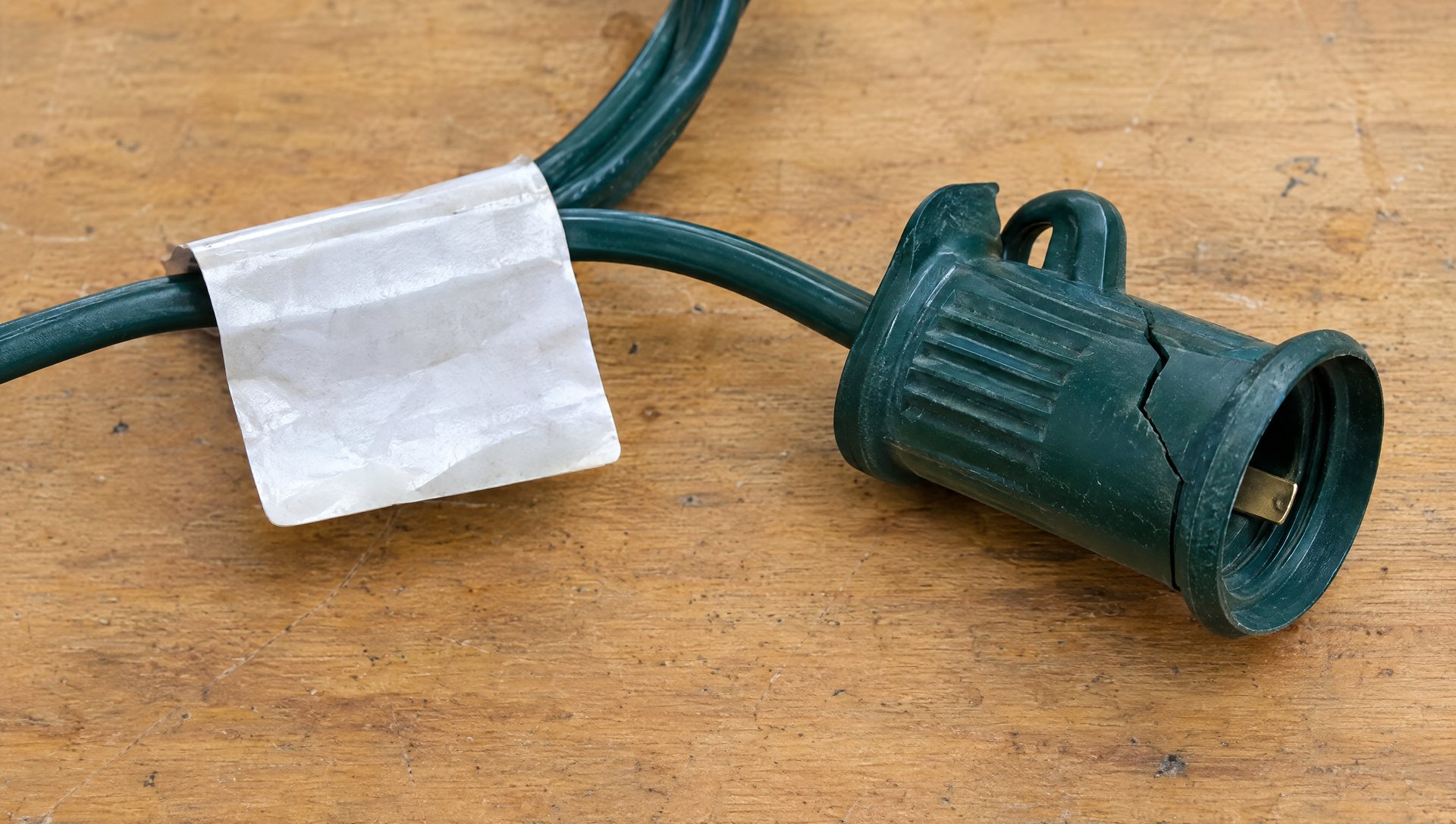
- Read the tag. On UL-listed light strings, a green holographic label means indoor use only, and a red one means indoor or outdoor use, per the UL Solutions bulletin on decorative lighting strings. ETL and CSA marks use their own wording, so read the tag for “outdoor”.
- Check that it is meant for outdoors. NFPA’s winter holiday safety tip sheet notes that some lights are made only for indoor use, and ESFI says anything electrical used outdoors should be marked for outdoor use.
- Inspect every set, new or old. The Consumer Product Safety Commission’s holiday decoration safety tips say to look for broken or cracked sockets, frayed or bare wires and loose connections, and to throw out damaged sets. A Christmas light tester speeds up finding dead bulbs.
- Know the grade. On mini-light and 5mm strings, bulbs you can pull out usually mean a two-piece retail set, and a sealed one-piece string is commercial-style construction. Large C7 and C9 bulbs screw into their sockets on retail and pro sets alike, so for those, judge the wire, the sockets and the tag.
- Know the age. If a retail set has already been through two or three seasons, suppliers’ estimates say it is near the end of its life.
If your plan needs a new outdoor outlet or circuit, that is a job for a licensed electrician, not a light installer. Texas exempts holiday lighting from its electrician licensing law only up to the power source, under Texas Occupations Code section 1305.003, and the Texas Department of Licensing and Regulation (TDLR) licenses electricians. Sapien installs plug-in seasonal lights only and does not add outlets or circuits.
Does Christmas light installation include takedown?
Christmas light installation usually includes takedown when the installer supplies the lights. Each of the five Austin-area installers whose published prices we checked in October 2026 included takedown and storage.
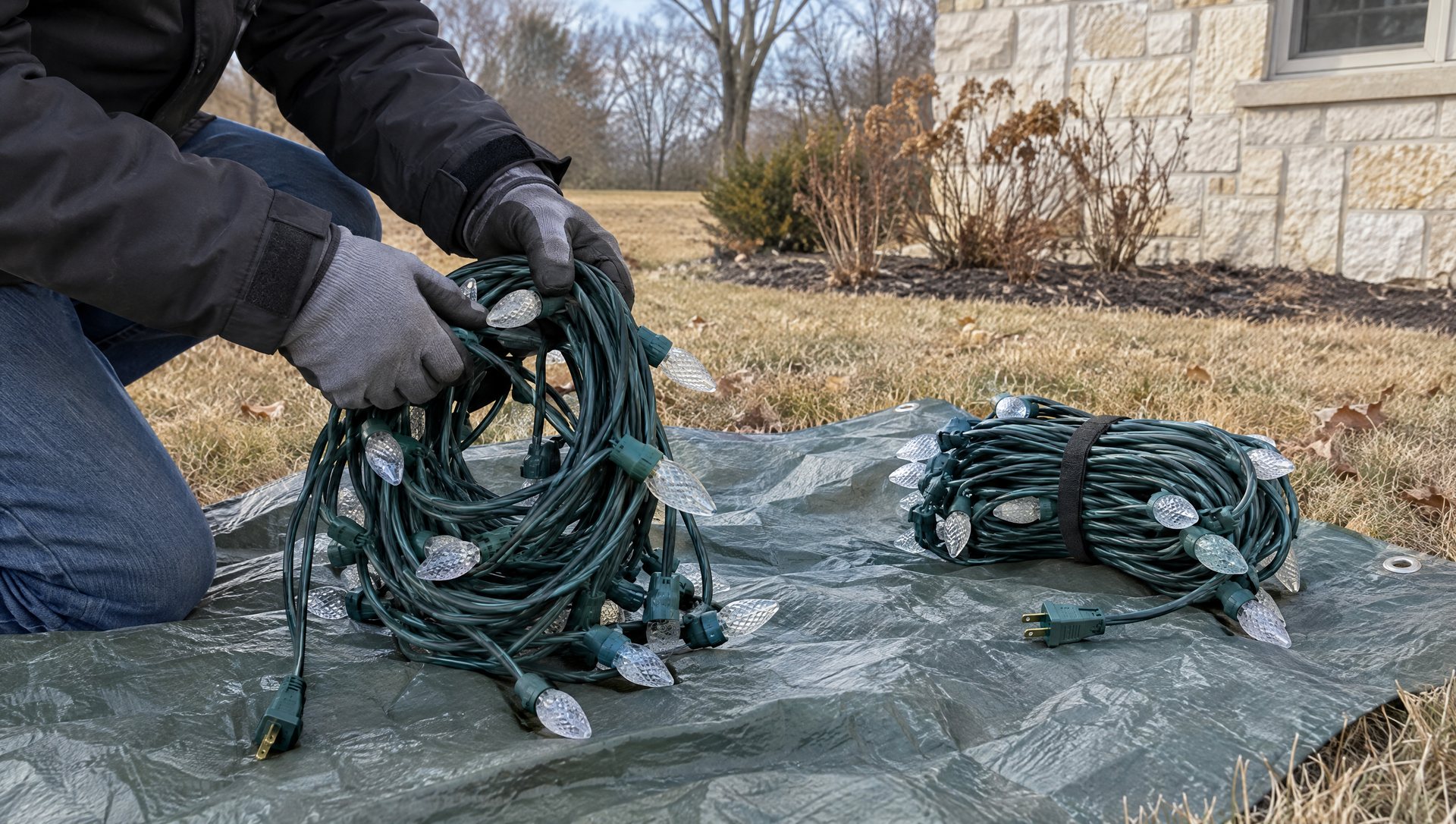
When takedown is not included, national guides put removal-only at $100 to $400 per job (HomeAdvisor and HomeGuide, checked October 2026). HomeAdvisor also gives about $0.50 per linear foot. HomeGuide says many installers return two to four weeks after New Year’s Day. Sapien also takes down lights it did not install; that usually runs around 20% of what the install would cost, but it varies widely, so we quote it from photos. More on hiring this out in Christmas light removal service.
Get the takedown window in writing, and check it against your HOA. January 15 was the published removal date last season in some Austin-area communities, such as Circle C Ranch in its 2026 HOA calendar, and it is the date in Teravista’s association FAQ. That is a community rule, not a state or city law; your association’s current rules are what apply to your home. The January takedown guide covers the timing, and what happens on install and takedown day covers the day itself.
Where do the lights go between seasons?
Between seasons the lights go to whoever owns them. Installer-owned lights go to the installer’s storage. Lights you own come back to you, or stay with the installer if storage is in the deal.
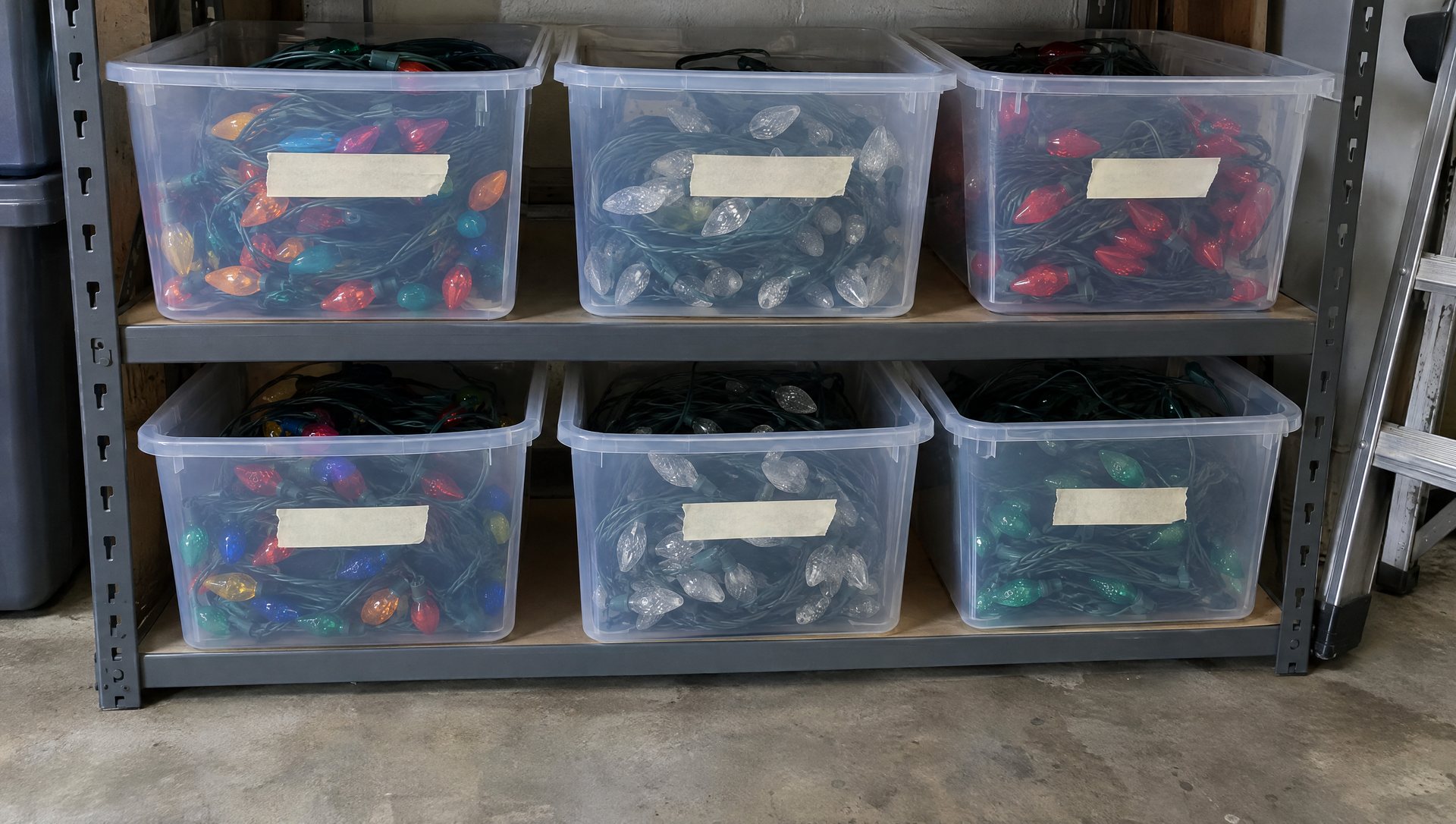
Storage fees vary, and the national cost guides we checked don’t publish one. One installer in Utah, Colorado and Idaho stores customer-owned lights at no separate charge while the customer keeps booking. A customer who skips a season must collect them, pay $60 for a year of storage, or let them be recycled, and lights not claimed by December 15 are recycled. A San Antonio installer’s takedown list charges $30 per storage bin, which reads as the cost of the bin, not a yearly fee. These are single companies, shown as examples of terms to look for.
If you store lights yourself, keep them dry and out of the attic. Christmas Designers’ takedown and storage tips say to store them in the house or garage, and Christmas Light Source prefers an interior closet to an attic, where heat and pests can damage wiring. In Austin, where attics get hot, that matters. Wind loosely and leave the male plug outside the coil so you can test the set next fall. NFPA’s Christmas tree safety tip sheet also says to bring outdoor lights inside after the holidays.
Do you get the same lights back next year?
Only if the installer keeps your runs for your house. Some installers keep custom runs labeled for each house; others reuse stock across houses. A pro supplier’s takedown guide tells installers to label each run with where it starts and what it covers, such as the gutter line or ridge, because cut line fits only its own run (Christmas Designers, January 2023). If you want the same look each year, ask which way your installer works.
Should the same company install and take down the lights?
The crew that hangs the lights is the one most likely to take them down without damage. A pro supplier says most damage to Christmas lights happens at takedown, mainly from ripping strings off (Christmas Designers). The installer who hung the lights knows which way the clips release, where the runs join, and how each run is labeled.
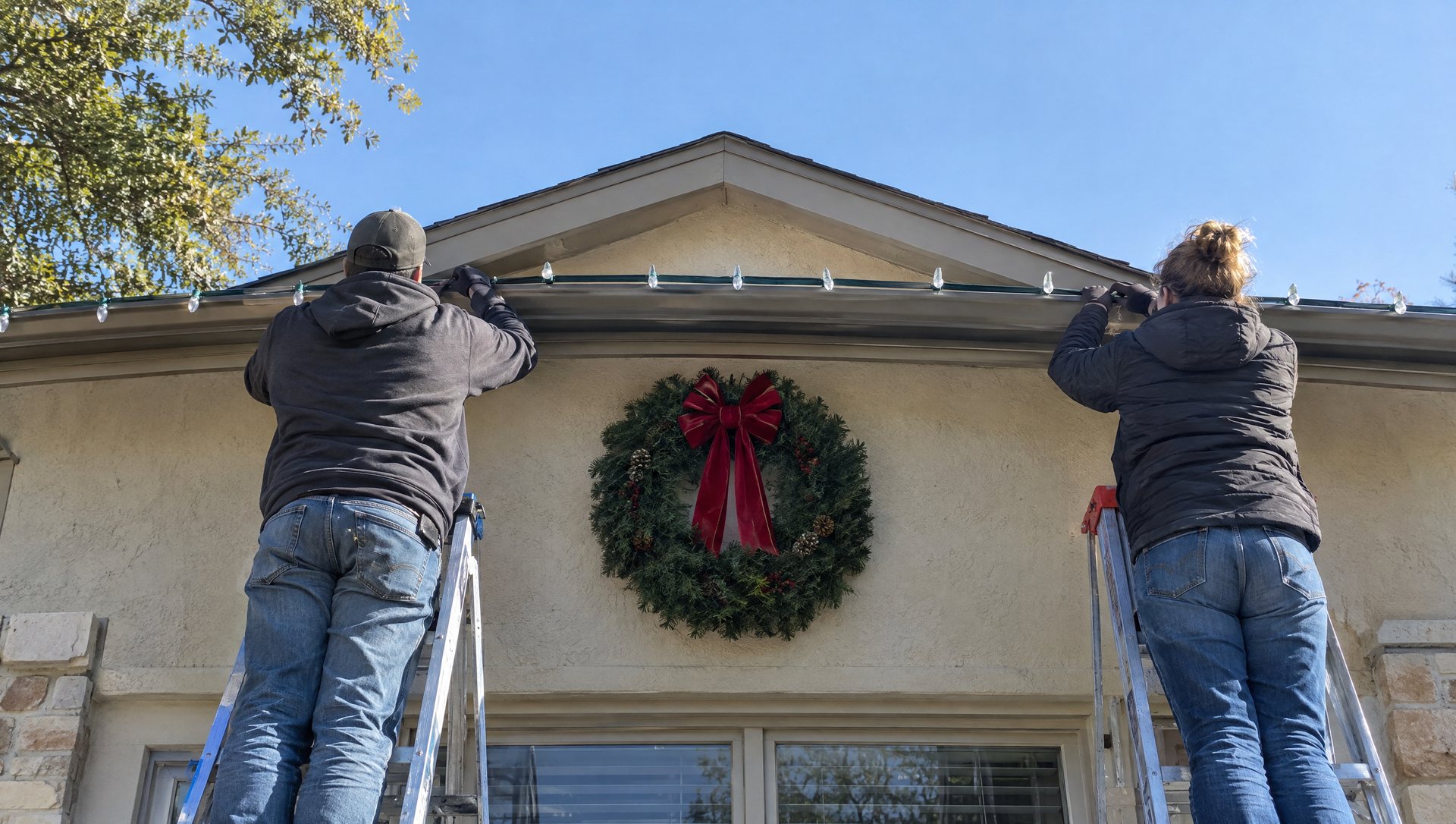
This matters most when you own the lights. If one company installs and another removes, nobody is clearly responsible for a strand broken in January. Agree up front that the same company does both, or that the remover answers for takedown damage.
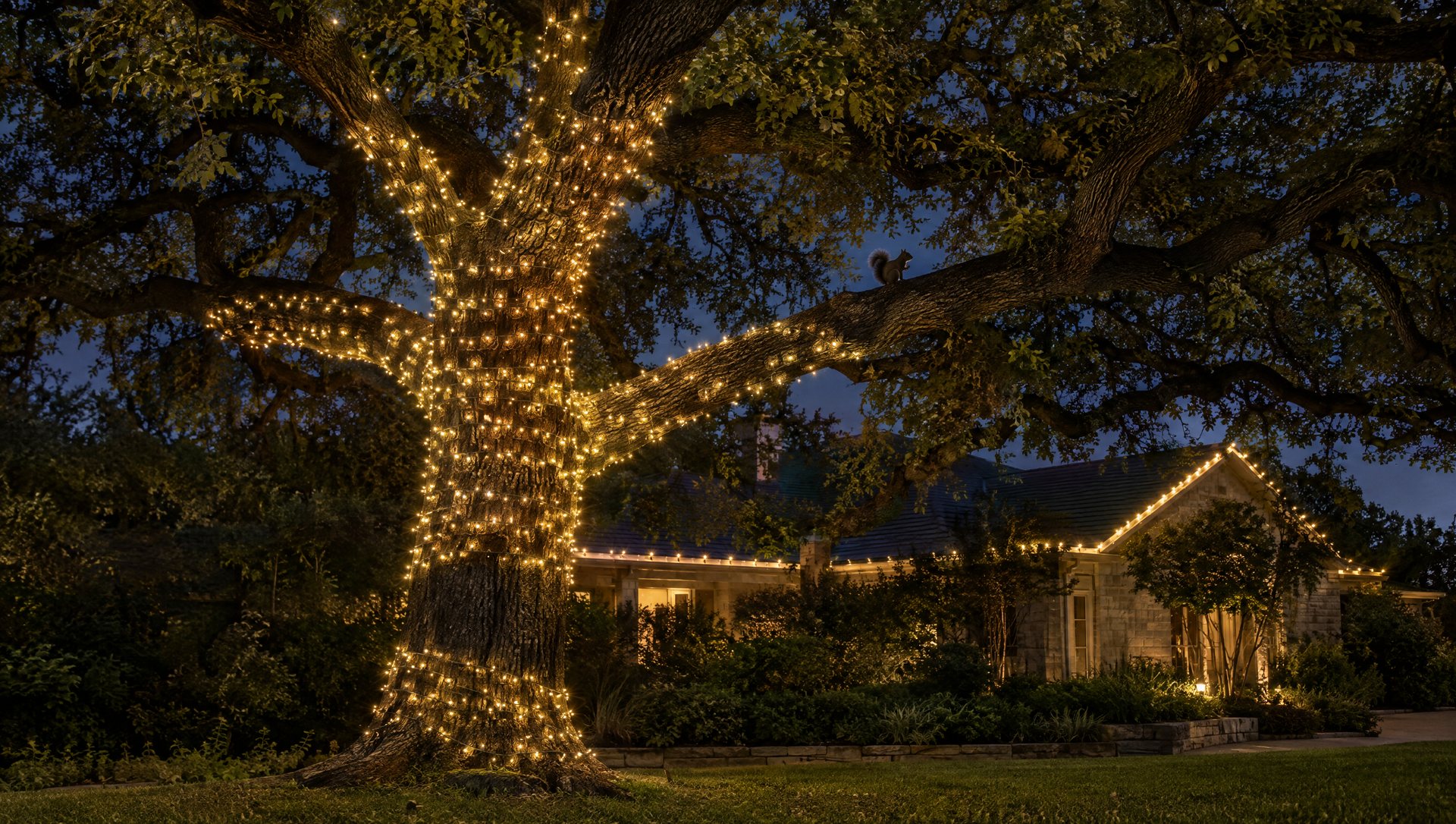
Trees make the case clearest. A trunk wrap covers the trunk only, and a trunk-and-limb wrap continues out the main limbs. Either way, the lights should come off every year, whoever owns them. Wire left around a trunk or branch cuts into the bark as the wood thickens and can kill the branch or the tree, the Morton Arboretum explains. A Davey Tree arborist says a wrap left in place starts to girdle the tree two to three years on (Davey’s Talking Trees podcast, November 2023). No source gives a safe number of months.
That applies to Christmas lights on live oak trees and on a crape myrtle (also spelled crepe myrtle) alike. Tree lines also change what “lights included” costs, because a wrapped trunk can take far more string than its height suggests. Our guide to what tree wrapping costs explains how girth, limb count and spacing set the footage.
Who replaces lights that fail mid-season?
Whoever owns the lights usually replaces them when they fail mid-season, unless the contract says otherwise. With installer-owned lights, in-season service is usually part of the price: four of the five Austin-area installers whose packages we checked in October 2026 listed in-season maintenance.
When you own the lights, the installer may charge for a service visit, and the replacement strand is on you. One North Texas installer’s buy-out terms, for example, add a $200 service charge per trip once its three-year term ends. Pro-grade bulbs and strings carried warranties of one to three years, or three seasons, as listed by Christmas Lights Etc and other suppliers in October 2026. A warranty covers the product, not the trip to fix it.
Tree strands take the most wear, because they wrap bark and sit where squirrels travel. Texas A&M AgriLife Extension’s leaflet on tree squirrels notes that urban squirrels may gnaw electrical wiring. Ask whether tree lights are reused or replaced each season. If a section goes dark on lights you own, why Christmas lights flicker or go out walks through the usual causes.
Ask three things. Who pays for the replacement light? Who pays for the visit? And how soon does someone come out?
What happens to the lights if I move or switch installers?
Ownership decides what happens when you move, switch installers or want a new look. With installer-owned lights, moving or changing the design is usually simple: you stop the service, or you ask for a new design next season. That makes leasing the easier model for anyone who likes to change colors, because you are not retiring lights you paid for.
With lights you own, the runs were cut to your roofline and may not fit the next house. If they sit in the installer’s warehouse and you switch companies, you need a way to get them back. One New York installer’s lease-vs-buy explainer warns that owned lights can end up stuck in a former installer’s warehouse. Get retrieval terms in writing before you sign.
If you skip a season, ask what happens to lights the installer is holding for you, and for how long. The Utah, Colorado and Idaho installer above, for example, has customers who skip a season collect their lights, pay $60 for a year of storage, or let them be recycled.
What does a deposit cover?
A deposit holds your install date and, in some cases, pays for materials. The Texas Attorney General’s home improvement guidance says most contractors ask for part of the cost before work begins. It also warns that scammers ask for full payment in advance, and says not to pay in full until the work is done and inspected. The Federal Trade Commission gives the same advice and notes that some states limit down payments.
Ask what the deposit buys. If the installer keeps the lights, the deposit is a booking payment, and the cancellation terms decide whether you get it back. If you are buying the lights, ask whether you own them if you cancel before install day.
Ten questions to settle in writing
Get these ten answers in the quote or contract before you pay a deposit.
- Who owns the lights, clips and timer after takedown?
- Where are the lights stored between seasons, and is storage in the price?
- When does takedown happen, and does it cover tree wraps?
- Who pays for a light that fails mid-season, and who pays for the visit?
- Can I supply my own lights, and what changes if I do?
- What happens to the lights if I move, cancel or skip a year?
- What will year two cost, roughly?
- If there is a buy-out, when do I own the lights and what does service cost after that?
- Is sales tax included in the quoted price?
- What does it cost to change colors or the design next year?
When we’d tell you not to buy the lights
Our calls, as installers:

- If you plan to sell within a couple of seasons, we’d skip buying. Lights cut to this roofline may not fit the next one.
- If you have no dry, cool place indoors for a few bins, we’d skip buying. An Austin attic is the wrong place for them.
- We wouldn’t stretch a retail set across a two-story roofline to save money. Retail sets last fewer seasons, and the second story is the hardest place to replace one.
- We wouldn’t hang an indoor-only set outside, or any set with cracked sockets, at any price.
- We wouldn’t sign a multi-year buy-out without knowing what service costs after the term ends.
- We wouldn’t leave tree wraps up year-round, whoever owns them.
How Sapien handles this
Here is how Sapien handles the lights, so you can hold our answers to the same questions above.
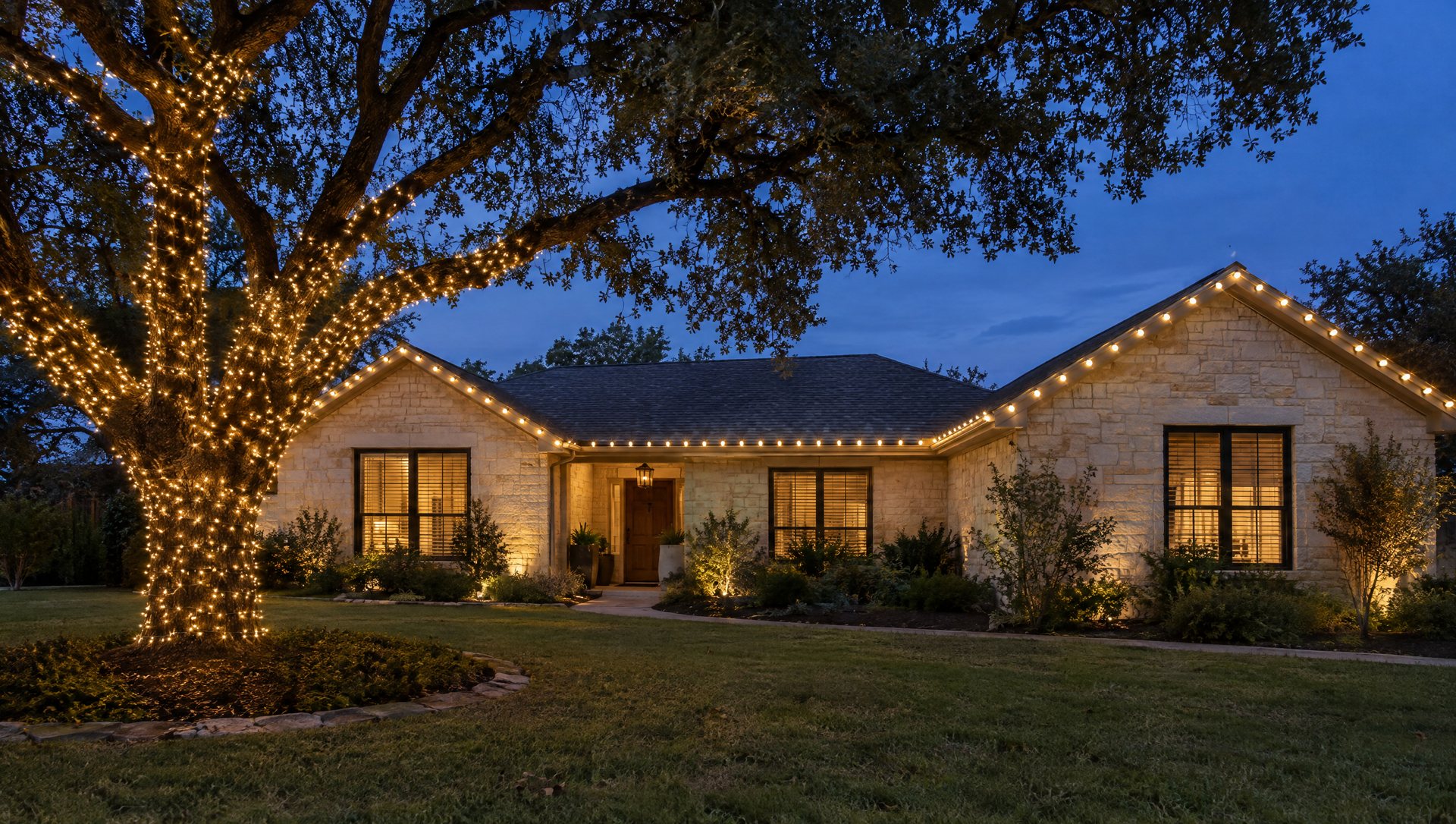
- What every install includes: a custom design, commercial-grade lights and clips, installation, repairs if anything goes dark during the season, and takedown in January.
- Takedown: January 2 to January 15.
- Lights you already own: yes, if they are pro-grade and working. We test them first, and sets that are dead or retail-grade get replaced or declined.
- Who owns the lights: Sapien. Our lights are leased: we supply them, look after them through the season and take them back at takedown, so there’s nothing for you to buy or store.
- Year two: we re-quote every season, so a returning customer’s price reflects that year’s scope.
- Deposit and payment: a 50% deposit books your install date, and the balance is due after the lights are up.
- Minimum job: $500.
- Electrical: plug-in seasonal lighting only. If you need a new outlet, that is a licensed electrician’s job.
For anything not on this list, such as what happens if you move or skip a season, ask us when you request a quote and get the answer on the quote.
To get a quote, text a few daytime photos of the front of your house to (737) 777-9099 or use the contact page, and say which parts you want lit and when. If you already own outdoor lights, mention them and include a photo of the tag.
Frequently asked questions
Do installers supply the clips, timers and extension cords too?
Full-service rates usually cover the lights, clips, installation, takedown and storage, according to one pricing guide written for installers (Christmas Lights HQ, March 2026). Timers, cords, wreaths and garland vary by company, so ask for each by name on the quote. A new outdoor outlet is an electrician’s job, not part of a light installation.
Do installers supply the lights for tree wrapping?
Ask, because a wrapped trunk takes far more string than its height suggests, so whether tree lights are supplied changes the quote. Get the coverage (trunk only, or trunk and main limbs) and who keeps the tree lights written on the quote.
Is permanent lighting a way to own the lights?
Yes. Permanent track lighting is a fixed purchase that you own and that stays up all year. It is a different product with a different price, covered in our guide to permanent Christmas light installation.
Sources
- Curbstead: lease vs buy Christmas lights (what each model includes; undated)
- A New York installer’s lease-vs-buy explainer (buy model, savings point varies, retrieval when switching; September 17, 2026). Not named or linked.
- Thunder Lighting Supply: leasing vs selling holiday lights (a supplier’s view for installers; August 15, 2025)
- Christmas Lights HQ: pricing guide for installers (full-service rates include lights, clips, takedown, storage; installer keeps materials; March 2026)
- Christmas Lights Etc: commercial LED Christmas lights (custom-length line with slide-on plugs)
- Christmas Designers: retail vs commercial Christmas lights (one-piece vs two-piece LED strings; seasons of service)
- Creative Displays: pro-grade vs retail Christmas lights (seasons of service; July 2021)
- Christmas Designers support: year-round lighting expectations (5 to 6 seasons with yearly takedown; lifespan claims)
- Christmas Lights Etc: LED Christmas lights guide (string and bulb warranties as listed October 2026)
- The Christmas Light Emporium: warm white vs pure white vs cool white (LED color bins; older and newer whites can differ)
- Thumbtack: Christmas light installation prices (install-only rate and supplied-lights add-on; checked October 2026)
- Angi: hire a pro to hang Christmas lights (install-only rate; checked October 2026)
- Angi: Christmas light installation cost in Austin (rental and bought-through-installer figures; as of October 2026)
- HomeAdvisor: holiday lighting installation cost (lights-setup-removal rate; removal-only; updated June 2026, checked October 2026)
- HomeGuide: Christmas light installation cost (installed rate; removal-only; removal timing; checked October 2026)
- UL Solutions: bulletin on decorative lighting strings (green and red label colors)
- NFPA: winter holiday safety tip sheet (indoor-only lights)
- Electrical Safety Foundation International: outdoor decoration safety tips (outdoor marking)
- Consumer Product Safety Commission: holiday decoration safety tips (inspecting and discarding damaged sets)
- NFPA: Christmas tree safety tip sheet (bring outdoor lights inside after the holidays)
- Texas Occupations Code section 1305.003 (holiday lighting exemption stops at the power source)
- Circle C HOA: 2026 calendar of events (January 15 removal date, 2025-26 season)
- Teravista Community Association: FAQ (January 15 removal date)
- Christmas Designers: tips for taking down and storing Christmas lights (takedown damage, labeling runs, storage; January 2023)
- Christmas Light Source: can I store Christmas lights in the attic? (attic heat and pests; June 2023)
- Morton Arboretum: caring for trees as you light your landscape (girdling)
- Davey Tree, Talking Trees podcast (girdling two to three years on; November 30, 2023)
- Texas A&M AgriLife Extension: controlling tree squirrels in urban areas (squirrels may gnaw electrical wiring; leaflet L-1914)
- Texas Attorney General: how to avoid home improvement scams (partial payment up front; full payment warning)
- Federal Trade Commission: how to avoid a home improvement scam (payment up front; state down-payment limits)
- Price and terms pages of five Austin-area installers, a San Antonio installer’s price list, a North Texas installer’s lease-vs-buy terms and a Utah, Colorado and Idaho installer’s terms, opened October 2026. Not named or linked. Materials prices in the example come from an online pro-lighting supplier and a Texas building-supply chain, seen October 4, 2026, also not linked.
About the author. Rick Safeman owns Sapien Lighting & Installation in Austin, Texas.