


Outdoor Thanksgiving Decorations and Fall Porch Lighting: An Austin Planner
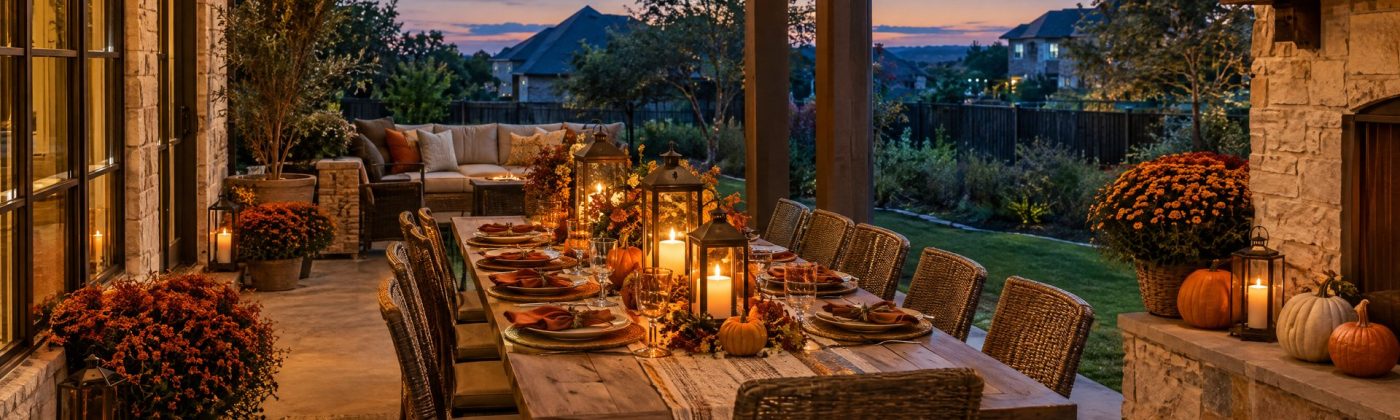
The best outdoor Thanksgiving decorations are the ones that still work after dark: a lit wreath, one generous pumpkin group, lanterns along the walk, and warm string lights over the patio if you eat outside. On Thursday, November 26, 2026, the sun sets in Austin at about 5:30 pm, so most of your guests will see your porch by lamplight, not daylight.
That one fact changes what’s worth buying. A harvest sign and a basket of gourds look great at noon and vanish at 6 pm. A wreath with a warm-white string, a lantern by the step and a lit patio carry the whole evening. So this isn’t a list of 40 ideas. It’s a planner, working backward from the moment your first guest walks up the drive, with the ideas placed where they pay off.
Early November: pick a palette that outlasts the turkey
Start with warm white light and natural pumpkin colors. That pairing is hard to get wrong, and it has a second job: warm white is also the base of most Christmas displays, so anything you light now can stay lit into December.
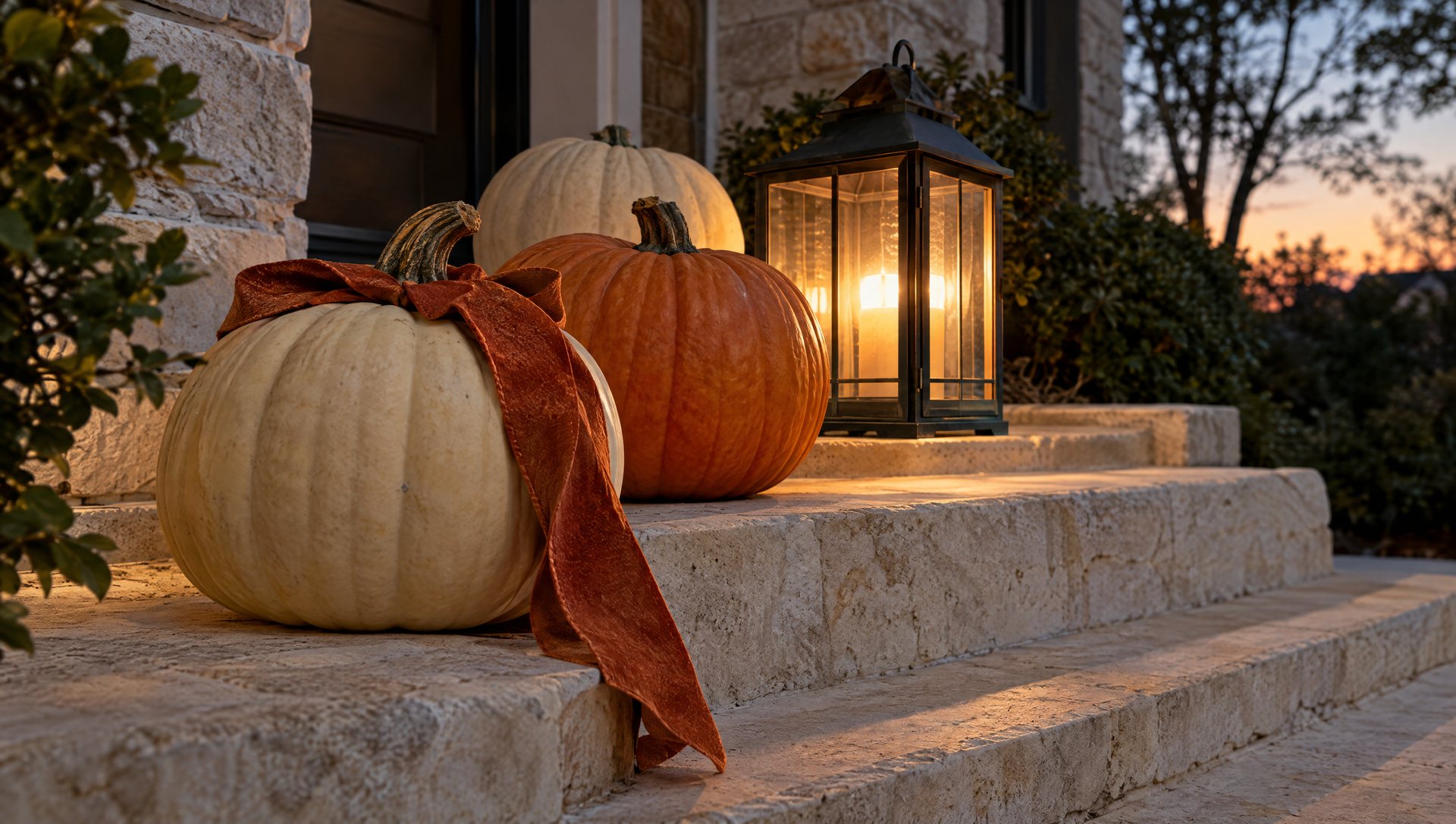
From there, choose one direction:
- Harvest: orange and green pumpkins, rust or deep-green ribbon, wheat, dried corn. Repeat orange in several objects, but keep the light itself one warm color.
- Quiet: cream and white pumpkins, plain stone or black planters, eucalyptus, one warm light source. It’s easier to live with on a limestone or white-brick front, where bright orange can look loud.
- Texas: cotton stems, magnolia leaves, inland sea oats (a native grass whose seed heads go bronze in fall) and a few pumpkins in a galvanized tub. It looks like here, not like a catalog photo from Vermont.
Skip cool white. Under bluish light, pumpkins go gray and a porch starts to look like a parking garage. Before you buy a whole strand, switch one on beside a real pumpkin at dusk and look.
The week before: build the front door around one lit piece
Guests judge the house from the door, and at 6 pm the door is lit by whatever you put there. Make one piece the light source and let the rest sit in its glow.
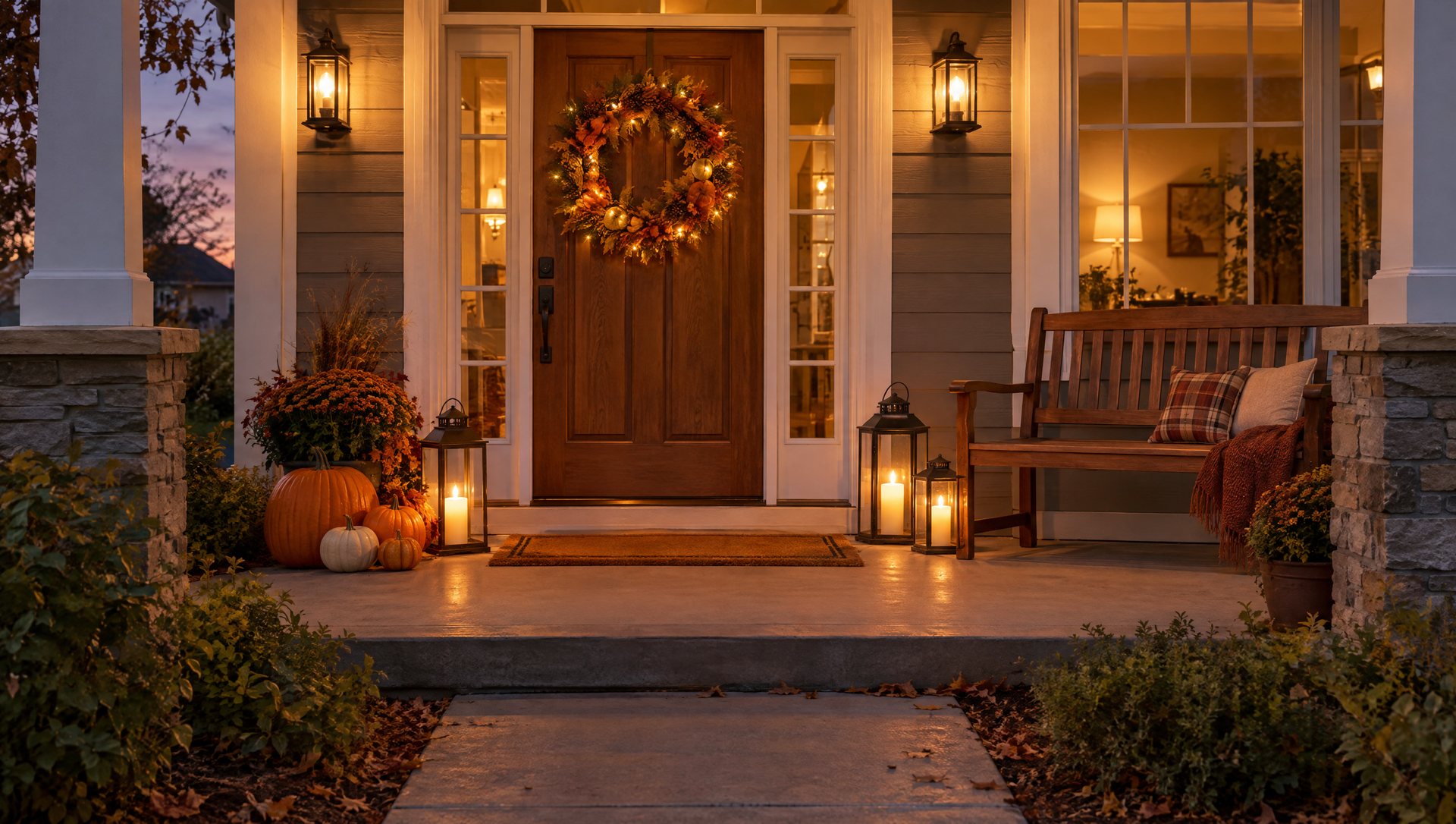
A lit fall wreath. Magnolia, eucalyptus, dried wheat or a grapevine base, with a battery warm-white string woven through. It’s the single highest-value piece on a Thanksgiving porch because it reads in the dark when everything else has gone flat. On a standard 36-inch door, about 24 inches across is the usual starting size. Our door decorations guide covers sizing and hanging in more detail, and the same hanger carries a Christmas wreath a week later.
One generous pumpkin group. Cluster pumpkins in graduated sizes on one side of the door, biggest at the back. One abundant group looks deliberate. A pumpkin on every step looks scattered and becomes a trip hazard for someone carrying a pie in the dark. Mismatched pumpkins? Group by color instead of size.
Lanterns with LED candles. Two large lanterns, or three at different heights on one side, give the porch a flicker without an open flame. Many battery candles have a built-in daily timer, which means you set them once and stop thinking about them.
Planters with a light inside. Swap the summer annuals for mums, ornamental kale or cabbage, which handle an Austin winter, and tuck a warm-white battery string into the foliage. Set the battery box on the soil surface, not down where water collects.
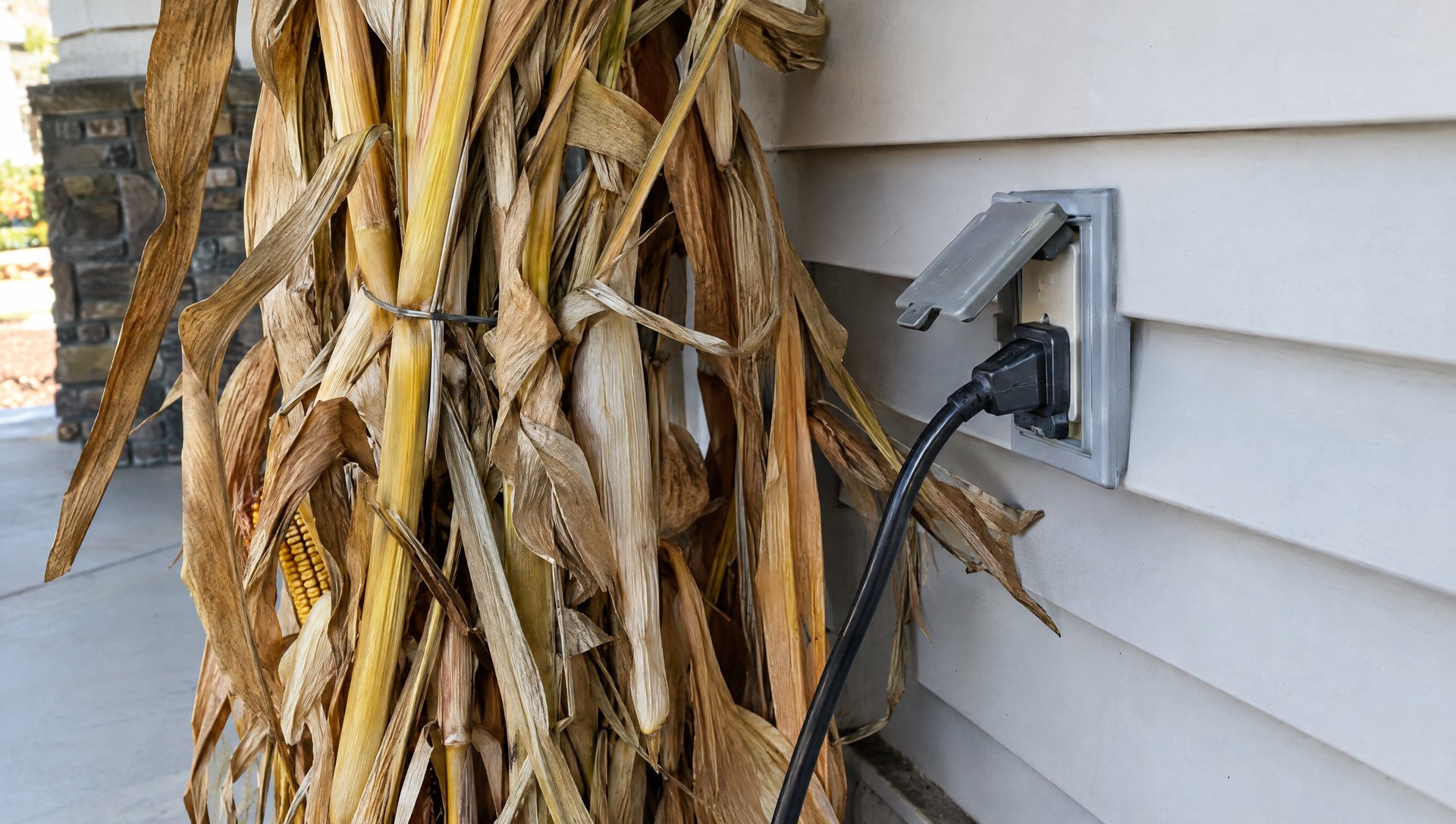
Cornstalks on the columns. Tie a bundle to each porch column for height. If you add lights to them, use cool-running LEDs and keep every plug and controller out of the dry stalks.
The small stoop. A narrow stoop is finished with a wreath and one planter. Put the planter on the side opposite the door swing, then test it: open the door fully while carrying something bulky. If you have to turn sideways, move it.
Our front porch lighting guide picks up from here once the fall pieces come down.
The week before: light the walk and one tree
A porch can be beautiful and still leave guests guessing at the walk. The path from the curb or driveway is the part most Thanksgiving decorating skips, and it matters more than any porch prop.
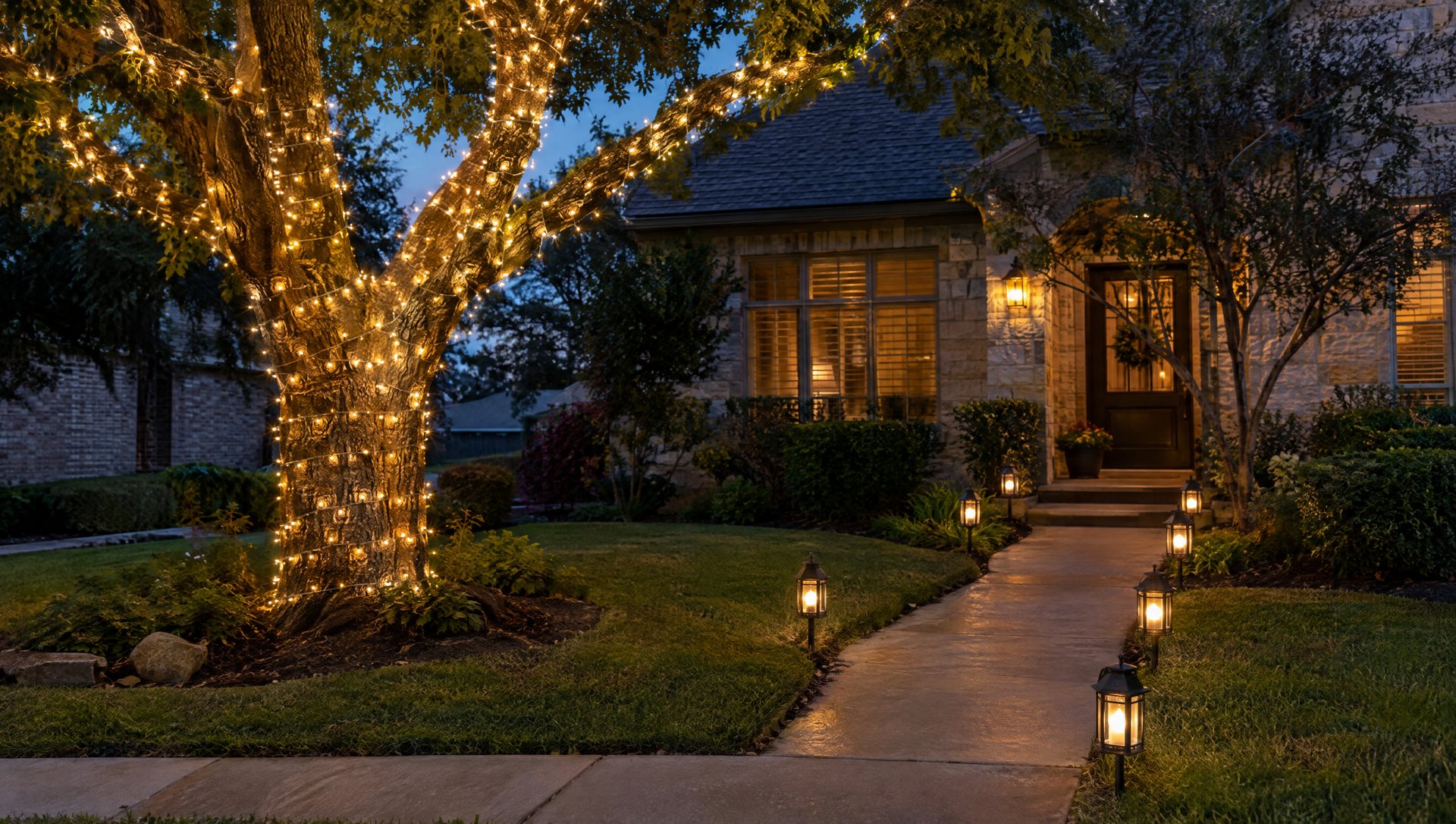
Lanterns or stake lights to the door. A short line of lanterns or warm stake lights along the walk tells people where to go. Set them back from the edge so a foot doesn’t catch them, and space them evenly enough to read as a path rather than random dots. Our pathway and driveway lighting guide has setback and spacing numbers.
Light the steps, not the faces. Low light at step level shows edges. A lantern at eye level just shines in people’s eyes and hides the step below it.
One warm-white trunk wrap. If the porch is crowded with chairs, deliveries and a dog bed, let a tree carry the light. Choose by sightline, not size: a crape myrtle near the approach often shows more than a big live oak hidden behind the roof. A warm-white wrap looks right for Thanksgiving and simply stays for Christmas, which makes it the most efficient light you’ll buy this fall.
Two days out: put the pumpkins out, not before
Austin’s late November is mild. The normal high at Camp Mabry on November 26 is 68°F with a low of 47°F, and the record high for the date is 86°F. Pumpkins notice. In a warm stretch, real pumpkins soften faster here than they would up north, especially in afternoon sun or sitting on damp concrete.
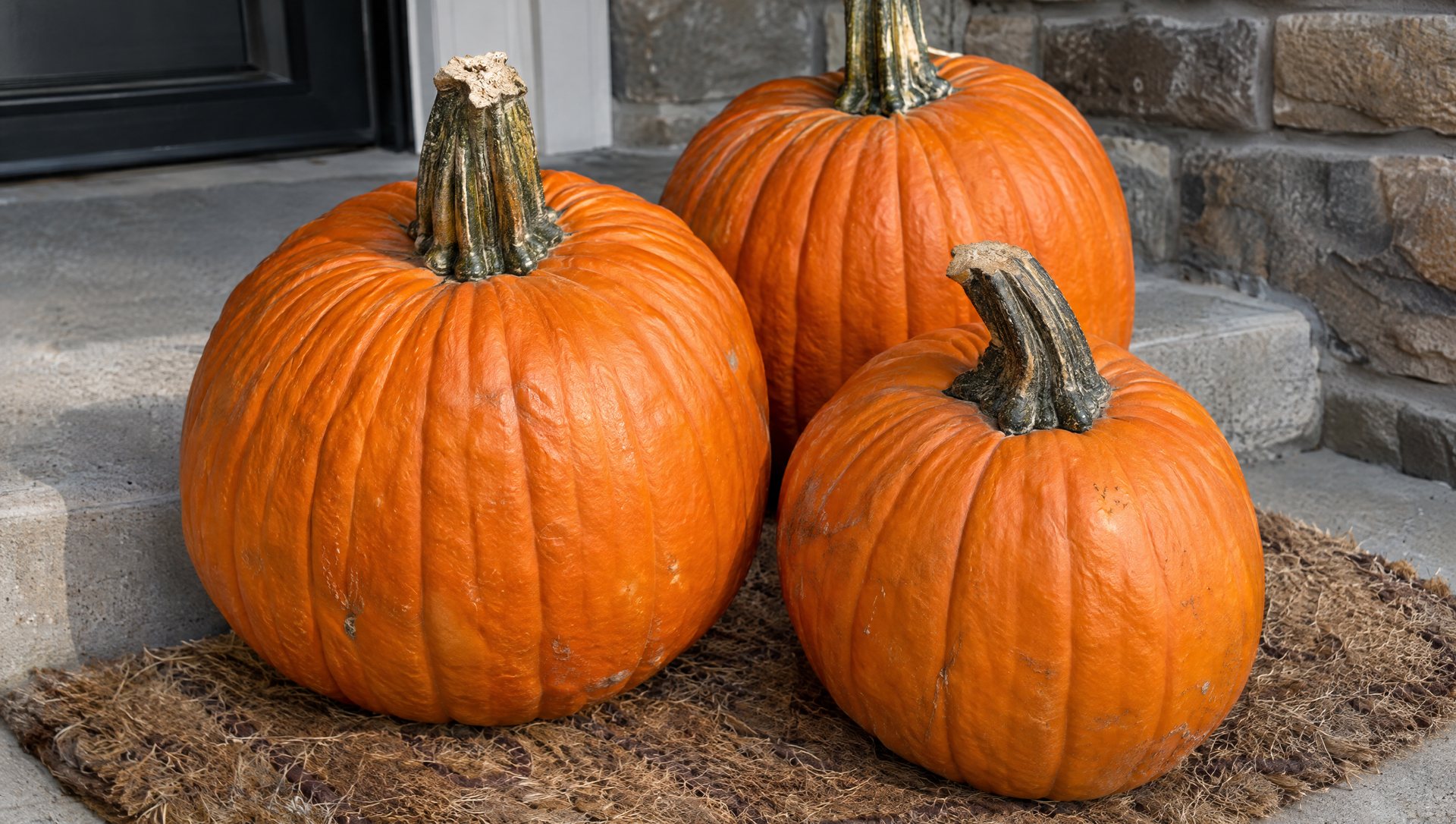
So the timing rule is simple: the pumpkins you bought for October don’t have to be the ones at the door on Thanksgiving. Buy fresh ones for the front steps late in the month, keep them whole (a carved pumpkin won’t last), and set them on a dry mat or a wood board so their bottoms stay dry. Check the group the morning of the dinner and pull anything soft or leaking.
Faux pumpkins are the better choice for any arrangement you want to last from October into December, especially inside a lit planter or on a sunny west-facing porch. Mix the two: faux at the base, a few real ones on top where people can see the stems.
Thanksgiving afternoon: string the patio for dinner outside
This is the Austin advantage. With a normal evening low in the upper 40s, plenty of years let you eat outside, or at least have dessert and coffee there. Patio lighting is what makes that work after 5:30.
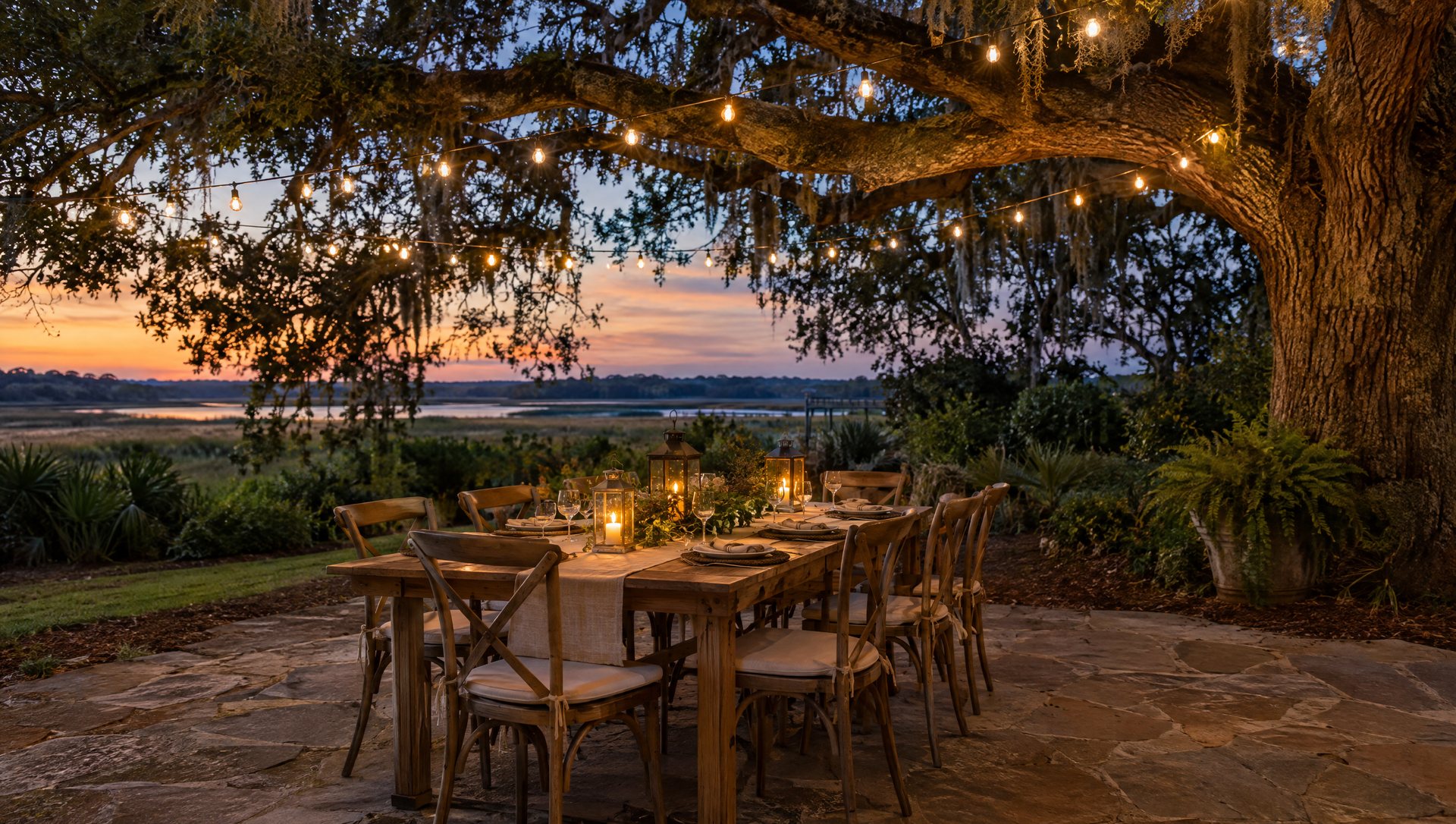
Bistro string lights over the table. Warm-white café lights in parallel runs or a zigzag above the table, high enough that the tallest guest won’t touch them: around 8 to 9 feet is comfortable. A worked example for a 12-by-16-foot patio:
- Three runs along the 16-foot length, spaced about 4 feet apart across the 12-foot width
- 3 × 16 feet = 48 feet, plus about 10% for a gentle sag: roughly 53 feet
- Add the distance from the outlet to the first anchor, say 10 feet
- That’s two 48-foot strings, connected end to end within the limit printed on the box, with a few feet to tuck away
Anchor to the fascia, a pergola or posts made for the job. On the open side of a patio, a post set in a heavy planter works. For any span longer than about 20 feet, run a steel guide wire first and hang the lights from it, so the string isn’t carrying its own weight. Never tie off to a tree limb that moves in the wind.
LED bistro bulbs are worth it here. They run cool and draw a fraction of what old incandescent globes did, so two strings won’t trouble the outdoor outlet you’re also using for the porch.
Light on the table. Dried leaves, wheat and paper napkins sit very close to a candle flame on a fall table. LED candles in glass hurricanes give you the same glow without the risk, and they don’t blow out in a north breeze.
Uplight the nearest tree. One warm-white spotlight at the base of a tree near the patio gives the yard depth. Without it, diners sit in a lit box facing a black wall of yard.
If a norther blows in
The same NWS records show a low of 24°F on this date, so plan for the year dinner moves inside. Nothing you hung is wasted. Leave the patio strings and the tree uplight on anyway: seen through a back window or sliding door, they turn a dark yard into the view from the dining table.
Wind is the bigger problem than cold. Lightweight lanterns tip over, so weight their bases with a few stones or pull them back against the wall. Bistro strings that swing in gusts tug at their anchors and plugs; that’s what the guide wire is for. If rain comes with the front, lift every outdoor connection off the patio surface before dark, and if a GFCI trips mid-dinner, unplug the outdoor strings and deal with it in the morning rather than in the rain.
5 pm: walk up to your own front door
Do this half an hour before guests arrive, with everything switched on. Start at the curb, walk to the door as a guest would, then walk back out to the car.
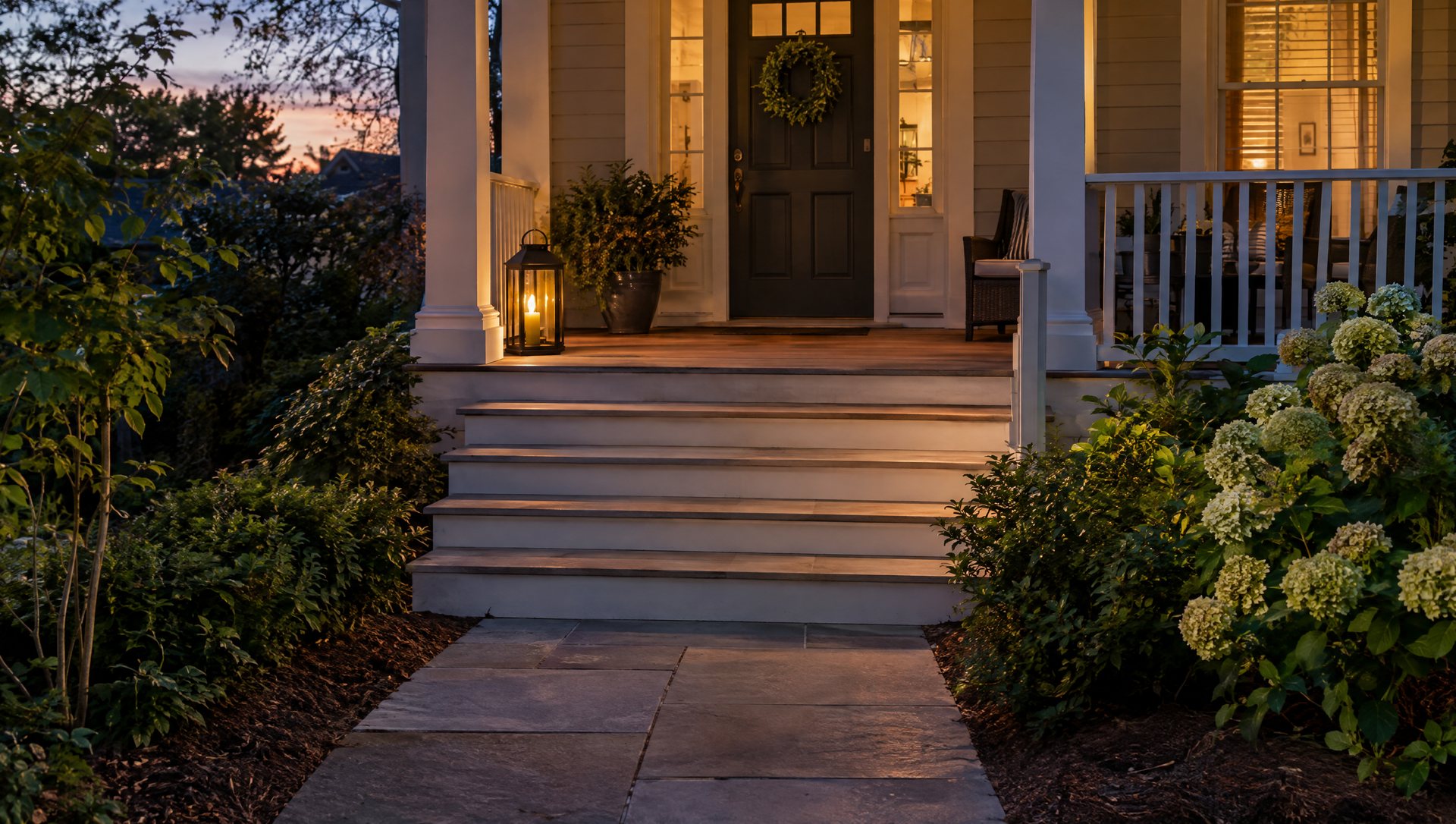
- Can you see every step edge?
- Does any lantern shine straight into your eyes?
- Does the wreath hide the house number or the doorbell?
- Does garland or a cornstalk brush someone carrying a dish?
- Do the door and storm door both open fully?
- Is any cord crossing the walk? If so, reroute it. Don’t hide it under the doormat or a rug; the Electrical Safety Foundation warns against running cords under rugs, and a doormat is the outdoor version.
Then check the electrical side. Every string and extension cord outside should be outdoor-rated. A covered porch isn’t automatically dry: wind-driven rain reaches the edge, and a battery pack on the porch floor sits right where water collects, so lift it onto a rail or shelf. Keep lights and plugs out of hay, dried stalks and leaf piles. If the plan needs an outlet that isn’t there, that’s a licensed electrician’s job, not an extension cord through a window.
Most fixes are free: slide a lantern sideways, turn a spotlight down, or take away the one object closest to the walking line.
Friday: the switch to Christmas
Thanksgiving is Thursday, November 26, 2026, and plenty of households make the switch on Friday the 27th. There’s no Austin rule about it. If you have an HOA, the Texas State Law Library notes that your association’s governing documents set its rules, so check them for any date limits. Our Austin holiday lighting timeline lays out when people here usually start, and our Thanksgiving weekend plan covers the lights-on weekend itself.
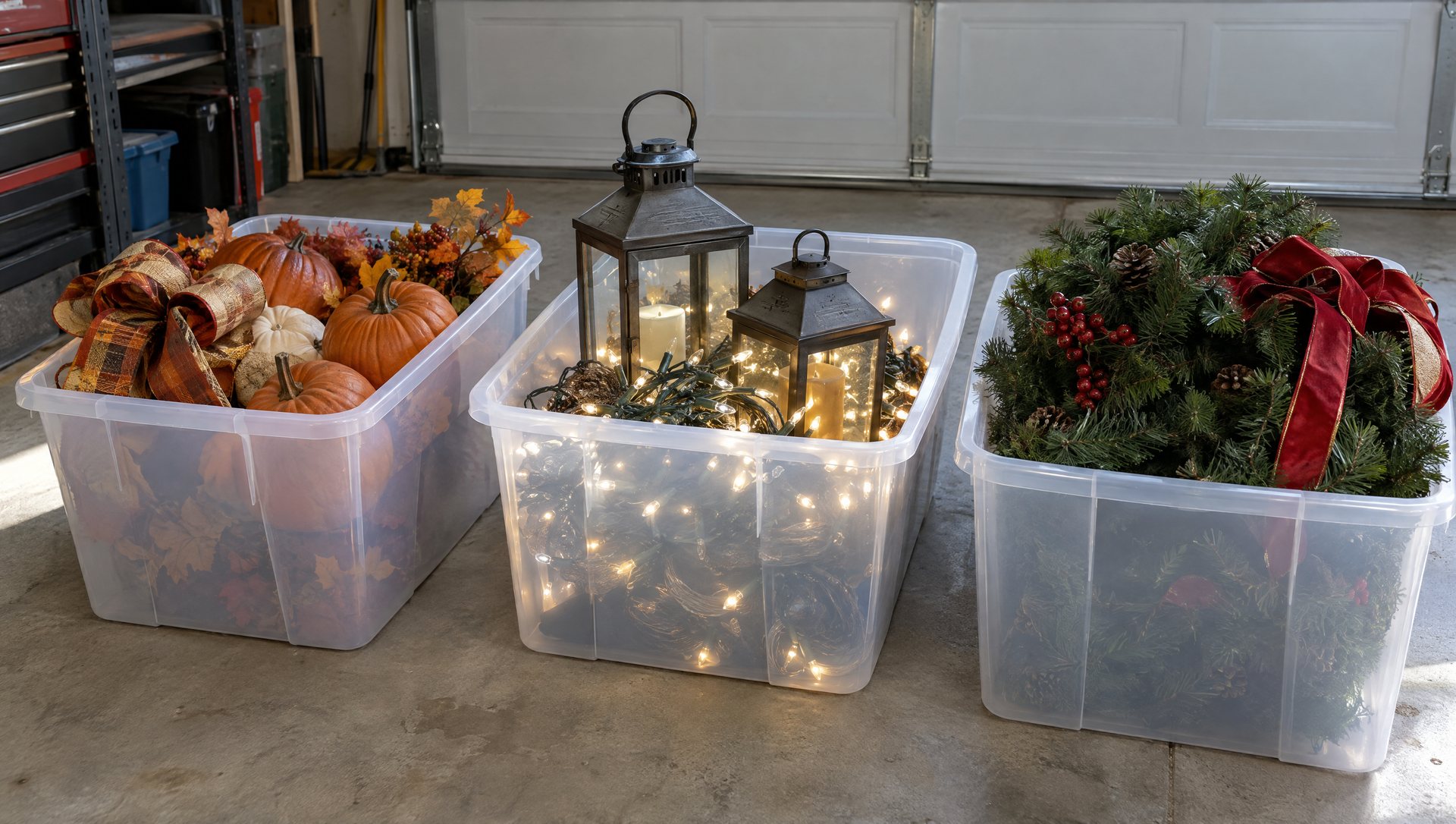
The switch goes fast if you packed for it in advance. Label three boxes before Thanksgiving:
- Leaving: fall ribbon, pumpkins, harvest signs, cornstalks, wheat
- Staying: warm-white strings, lanterns, LED candles, plain planters, the wreath hanger, the trunk wrap, the patio lights
- Arriving: evergreen accents, outdoor ornaments, red or plaid ribbon, a Christmas wreath
Photograph the finished fall porch before you pack it away. Next October starts from that photo instead of a blank porch.
If you’re having Christmas lights installed, they don’t have to wait until the pumpkins are gone. We can install before Thanksgiving and set the timer to start on the night you choose, so the install date and the lights-on date don’t have to match. Until then, the warm-white base carries both seasons.
What we’d skip
- Cool-white or color-changing strings on a fall porch. Pumpkins and wood tones need warm light.
- A pumpkin on every step. One group by the door, steps clear.
- Real candles in a centerpiece of dry leaves and wheat.
- Hay bales packed around plugs and controllers. Dry, dusty and hard to inspect.
- Lights tied to a moving tree limb over the table.
- Daylight-only decor as your main spend. Signs, gourds and baskets disappear by 6 pm.
- Roof or high ladder work for Thanksgiving. If part of the plan needs it, that’s the part to hand to an installer like our Austin seasonal lighting crew.
Want the Christmas lights up and waiting on a timer before the turkey? Text a daytime photo of the front of your house to (737) 777-9099 or use our contact page.
Sources
About the author. Rick Safeman owns Sapien Lighting & Installation in Austin, Texas.