


The 8 Most Overlooked Lighting Mistakes Costing Homeowners Thousands
Every year, homeowners make the same costly lighting mistakes that compromise safety, waste energy, and drain their wallets. Simple lighting decisions can lead to thousands in repair costs, medical bills, and insurance claims. Here are the most dangerous and expensive lighting mistakes you need to avoid.
Mistake #1: Installing Traditional Christmas Lights Every Year

The biggest lighting mistake homeowners make is the annual ritual of wrestling with tangled Christmas lights, only to throw them away after one season. This seemingly harmless tradition costs families hundreds of dollars annually and creates serious safety hazards.
Traditional Christmas lights fail within 1-2 seasons, forcing homeowners to buy new strings every year. A typical house requires 800-1,200 feet of lights, costing $150-$300 annually just for basic replacement. Over a decade, that’s $3,000 in throwaway lighting.
The real danger lies in the installation process. Climbing ladders multiple times a year dramatically increases the risk of falls. Emergency room visits for ladder falls can be substantial, with residential accidents frequently resulting in serious injuries.
Smart permanent Christmas lights solve both problems. These systems are installed once and last 10-15 years, paying for themselves within 3-4 seasons. More importantly, they eliminate the need for dangerous annual installations. Modern permanent lights offer millions of color combinations and custom animations. They also work for every holiday – Halloween orange, Fourth of July red-white-blue, or Valentine’s Day pink.
Curious about permanent Christmas lights? Learn more from our top articles:
- Complete Guide to Permanent Christmas Light Installation
- What No One Tells You About Permanent Christmas Lights
The technology allows homeowners to create sophisticated displays with smartphone apps, including music synchronization and automated schedules. Instead of spending December weekends on ladders, families can design holiday displays from their couches.
Lighting Mistake #2: Wrong Light Fixtures in Wet Areas
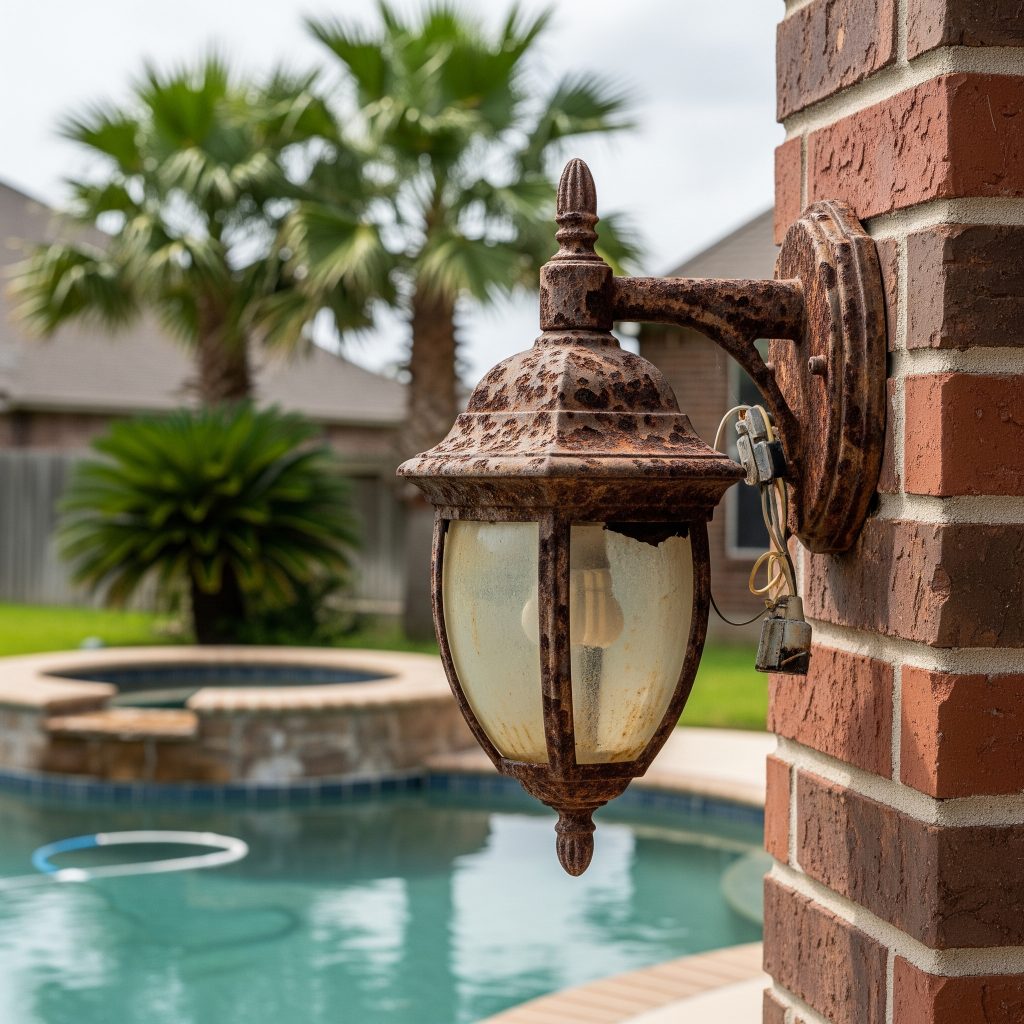
One of the most dangerous mistakes homeowners make is installing standard fixtures in wet locations without proper IP ratings or GFCI protection. This seemingly minor oversight creates deadly electrocution hazards and costly rewiring projects.
Homeowners often install ceiling fans directly over shower stalls, thinking the enclosed fixture provides adequate protection. When moisture penetrates non-rated fixtures, corrosion happens fast. Water and electricity don’t negotiate – they kill.
Outdoor lighting presents even greater risks. Every outdoor fixture without GFCI protection is a potential killer, especially when landscaping moisture becomes steeped in electrical pathways. “Waterproof” fixtures can fail catastrophically during storms, sending deadly current through wet decking and railings.
The financial impact extends beyond fixture replacement. When moisture damage occurs, entire electrical circuits require rewiring. Water damage ceiling repairs cost between $45 and $55 per square foot, including labor and materials, not just the $50 cost of a proper fixture. Insurance companies often deny claims for code violations, leaving homeowners responsible for the full repair cost.
Proper wet location fixtures carry IP ratings that specify their moisture resistance. IP44 ratings protect against water splashing, while IP65 ratings handle direct water jets. GFCI protection should be standard for all outdoor fixtures, cutting power within milliseconds if ground faults occur.
Lighting Mistake #3: Insufficient Task Lighting

Single overhead fixtures create dangerous shadow zones exactly where people work with sharp tools, hot surfaces, or navigate stairs. This lighting mistake leads to more injuries than any other residential hazard.
Kitchen islands with single pendant lights exemplify this problem. That attractive fixture creates knife-edge shadows precisely where homeowners chop vegetables. The brain perceives the space as well-lit, but hands work in darkness. The shadow falls exactly where sharp blades meet fingers.
Stair lighting presents even greater dangers. Single-point stair lighting creates a deadly optical illusion where steps literally disappear mid-descent. Your eyes adjust to the bright top, then can’t see the shadowed bottom steps. Homeowners can tumble downstairs they’ve used for years because evening lighting transforms familiar steps into invisible hazards.
Basement workshops suffer from similar problems. Single overhead fixtures create shadows that hide saw blades, drill bits, and sharp edges. Power tools become invisible hazards when body positioning blocks light. Workshop injuries from poor lighting frequently involve serious cuts requiring medical attention.
The medical costs are staggering. According to research published in the American Journal of Emergency Medicine, more than 24 million Americans have been treated for stair-related injuries over a 23-year period. Emergency room visits for fall injuries in older adults alone cost approximately $20 billion annually according to recent studies. Kitchen accidents from inadequate lighting frequently involve severe cuts requiring surgery.
Proper task lighting requires multiple light sources at different angles. Kitchen islands need under-cabinet lighting plus overhead fixtures. Stairs require lights at top, bottom, and middle points. Workshops need perimeter lighting plus adjustable task lights at each workstation.
Lighting Mistake #4: Not Shielding Outdoor Lighting Fixtures

Unshielded outdoor lighting creates light pollution, increases energy costs, and can violate local ordinances. More importantly, it fails to provide effective illumination where you actually need it.
Many homeowners install powerful floodlights or decorative fixtures without considering light direction. Unshielded fixtures scatter light in all directions, wasting energy and creating glare that actually reduces visibility. The bright light destroys night vision, making it harder to see into shadowed areas where security threats might lurk.
Light trespass becomes a serious issue when unshielded fixtures illuminate neighboring properties. Homeowners can face legal action from neighbors whose bedrooms are flooded with unwanted light. Some municipalities now fine residents for excessive light pollution.
The energy waste is significant. Without outdoor light shields, unshielded fixtures typically require higher wattages to achieve the same ground-level illumination as properly shielded alternatives. This increases electrical costs and reduces fixture lifespan due to excessive heat buildup.
Proper outdoor lighting uses fixtures with cutoff angles that direct light downward. Full-cutoff fixtures eliminate upward light entirely, while semi-cutoff fixtures allow minimal upward light for accent purposes. Dark-sky compliant fixtures reduce light pollution while providing better security illumination.
Shield designs also protect fixtures from weather damage. Unshielded bulbs suffer direct exposure to rain, snow, and UV radiation, requiring frequent replacement. Shielded fixtures extend bulb life and reduce maintenance costs.
Lighting Mistake #5: Ignoring Color Temperature Consistency
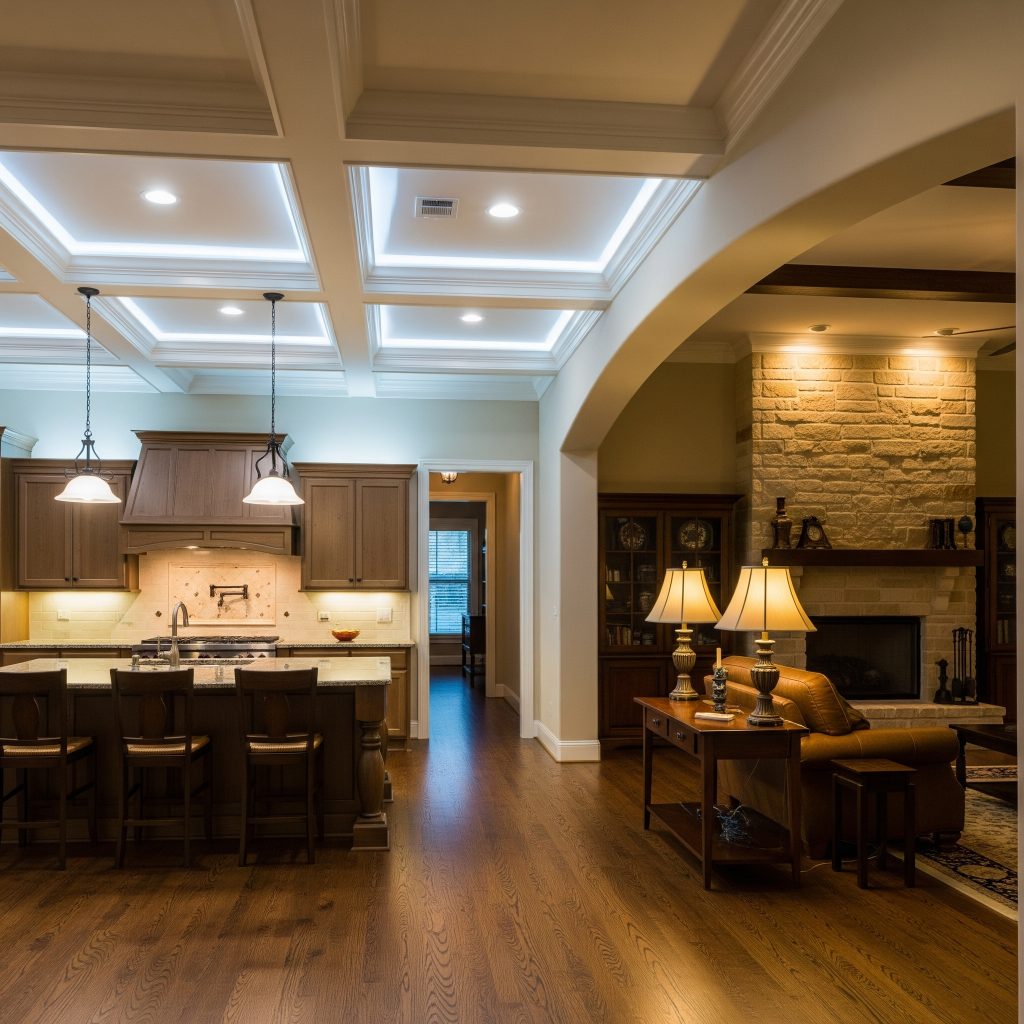
Most homeowners mix different color temperatures throughout their homes without understanding how this affects comfort, productivity, and even health. This mistake creates jarring transitions between rooms and can disrupt circadian rhythms.
Color temperature, measured in Kelvin, affects how spaces feel and function. Warm light (2700K-3000K) promotes relaxation and comfort, while cool light (4000K-6500K) enhances focus and alertness. Problems arise when homeowners randomly select bulbs without considering their color temperature.
Homes where the kitchen uses cool white LEDs (5000K) while adjacent dining rooms use warm incandescent bulbs (2700K) create visual discomfort. Moving between these spaces creates jarring transitions and makes color perception difficult. Food preparation becomes challenging when ingredients appear different colors under varying light temperatures.
The health implications are serious. Cool light in bedrooms and living areas can suppress melatonin production, disrupting sleep patterns. Conversely, warm light in offices and workspaces reduces alertness and productivity. Curious about how to optimize your lighting? Learn more about optimizing circadian lighting for home.
Fixture quality compounds this problem. Cheap LED bulbs often have poor color rendering, making colors appear washed out or unnatural. High-quality LEDs with CRI ratings above 90 reproduce colors accurately, but cost more upfront.
Consistent color temperature throughout connected spaces creates visual harmony and supports natural biological rhythms. Bedrooms and living areas should use warm light to promote relaxation, while kitchens and offices benefit from cooler light that enhances focus.
Lighting Mistake #6: Overlooking Dimmer Compatibility

The switch to LED lighting has created widespread dimmer compatibility issues that most homeowners don’t understand. Installing LEDs with incompatible dimmers causes flickering, buzzing, premature failure, and potential fire hazards.
Traditional incandescent dimmers use phase-cut technology that works by chopping portions of the electrical waveform. LEDs require constant current to function properly, making them incompatible with many older dimmers. When incompatible dimmers are used with LEDs, the lights flicker, buzz, or fail to dim smoothly.
More seriously, incompatible combinations can cause LEDs to overheat, potentially starting fires. House fires have occurred where cheap LED bulbs paired with old dimmers overheated and ignited nearby materials. The combination creates electrical stress that manufacturers never intended.
The flickering problem affects more than comfort. Rapid light fluctuations can trigger headaches, eye strain, and even seizures in sensitive individuals. Children and elderly people are particularly susceptible to these effects.
LED-compatible dimmers use different technology to provide smooth, flicker-free operation. These dimmers cost more than traditional models but prevent the problems associated with incompatible combinations. Some LEDs also work better with specific dimmer brands, requiring research before purchase.
Smart dimmers offer additional benefits, allowing remote control and scheduling. However, they require neutral wires that many older homes lack, potentially requiring rewiring to install properly.
Lighting Mistake #7: Inadequate Bathroom Ventilation Lighting
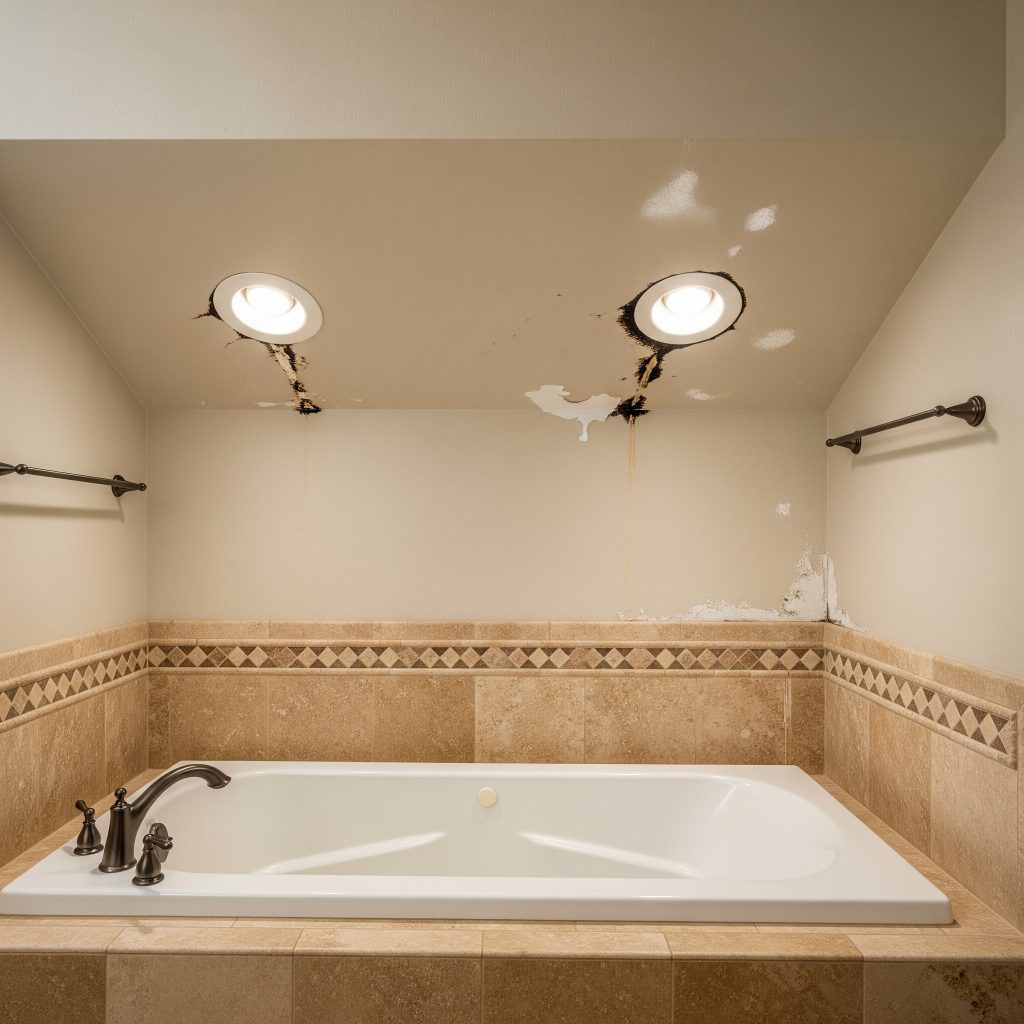
Bathroom lighting mistakes extend beyond fixture selection to include inadequate ventilation coordination. When bathroom lighting and ventilation systems work poorly together, moisture damage can lead to expensive repairs.
Many homeowners install attractive bathroom fixtures without considering how steam and humidity affect electrical components. Standard fixtures in bathrooms with poor ventilation fail quickly due to moisture infiltration. The humid environment causes corrosion, electrical shorts, and premature bulb failure.
Recessed lights in bathroom ceilings present particular problems. Without proper vapor barriers, humid air enters the ceiling cavity, potentially causing mold growth and structural damage. Bathroom ceiling moisture damage can lead to steep and expensive repairs when left undetected.
The lighting-ventilation relationship is crucial. Bathrooms need adequate exhaust fans to remove moisture quickly, but many homeowners install undersized fans that can’t handle the load. When ventilation is inadequate, even properly rated fixtures suffer from excessive exposure to humidity.
Proper bathroom lighting requires IP-rated fixtures designed for humid environments, plus adequate ventilation to remove moisture quickly. Exhaust fans should move at least 1 CFM per square foot of bathroom space, with higher ratings for bathrooms with showers or tubs.
Timer controls help ensure ventilation runs long enough to eradicate moisture. Many homeowners turn off exhaust fans too quickly, leaving humidity in the air to condense on fixtures and surfaces.
Lighting Mistake #8: DIY Permanent Christmas Light Installation

The final major lighting mistake involves DIY installation of permanent Christmas lighting systems. While these systems offer significant advantages over traditional lights, improper installation creates serious safety hazards and voids manufacturer warranties.
Permanent Christmas lights require precise installation to function properly and safely. The systems use low-voltage wiring that must be properly connected and weatherproofed. DIY installations often fail at these critical connection points, causing system failures and potential electrical hazards.
Roof work presents obvious dangers, but homeowners underestimate the complexity of permanent light installation. These systems require careful planning to ensure even spacing, proper drainage, and adequate support. DIY installations can fail within months due to inadequate mounting or poor wire management.
The electrical connections demand expertise that most homeowners lack. Permanent systems use specialized connectors and controllers that require proper installation techniques. Improper connections can cause flickering, color inconsistencies, or complete system failure.
Professional installation ensures proper mounting, weatherproofing, and electrical connections. Experienced installers understand how to work safely at height while managing complex wiring systems. They also provide warranties that cover both materials and workmanship.
The cost difference between DIY and professional installation is often smaller than homeowners expect. Professional installers buy materials at wholesale prices and complete installations efficiently. When DIY installations fail, the cost of repairs plus professional reinstallation often exceeds the original professional installation cost.
More importantly, professional installation ensures safety and reliability. Permanent Christmas lights represent a significant investment that should provide years of trouble-free operation. Proper installation protects that investment while ensuring family safety during operation.
Conclusion
These lighting mistakes cost homeowners thousands of dollars annually through energy waste, premature replacements, property damage, and medical bills. The solutions often cost less than the problems they prevent, making proper lighting installation one of the best investments homeowners can make.
Smart permanent Christmas lights eliminate annual installation dangers while providing superior holiday displays. Proper wet location fixtures prevent electrocution hazards and costly rewiring projects. Adequate task lighting prevents injuries that can cost tens of thousands in medical bills.
The key is understanding that lighting affects safety, comfort, and costs in ways that extend far beyond the initial purchase price. Investing in proper lighting systems pays dividends through reduced energy bills, fewer injuries, and increased property values.
Professional consultation can help homeowners avoid these expensive mistakes while creating lighting systems that enhance both safety and enjoyment of their homes.