


Circadian Lighting for Home: What the Research Supports and How to Set It Up
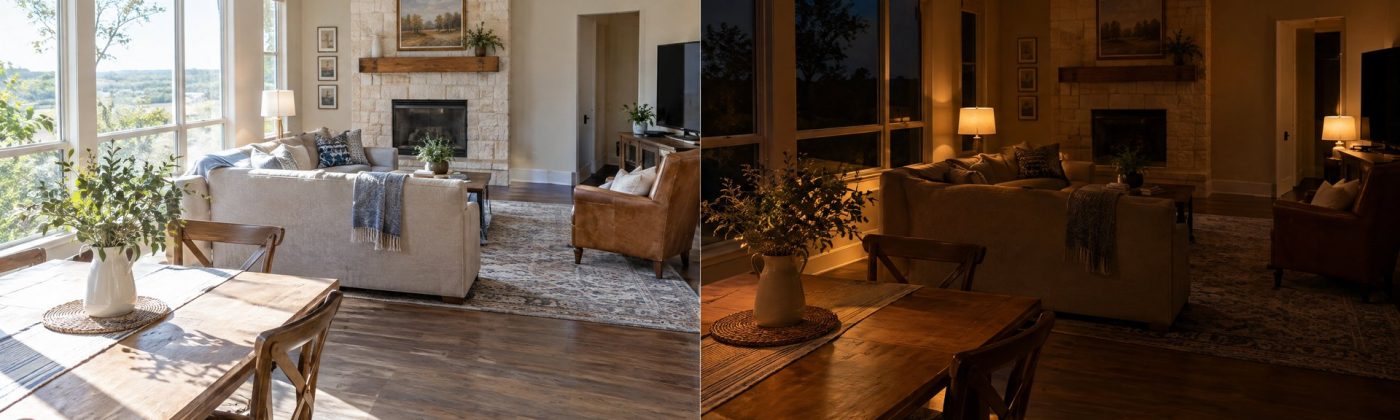
Circadian lighting for home comes down to one idea: bright light during the day, dim and warm light in the evening, and as close to dark as you can get while you sleep. The products marketed around that idea range from useful to pointless. This guide explains what the research actually measured, turns it into numbers you can check with a phone, and walks through a setup for each room.
A note on scope: lighting supports healthy sleep timing. It does not treat insomnia, depression or any other condition. If sleep is a real problem, talk to a doctor; the light changes below are reasonable to make alongside that, not in place of it.
How light sets your body clock
Your body runs on a roughly 24-hour cycle, the circadian rhythm, that times sleep, hormone release, body temperature and more. The National Institute of General Medical Sciences describes light as the main cue that keeps that clock lined up with the actual day.
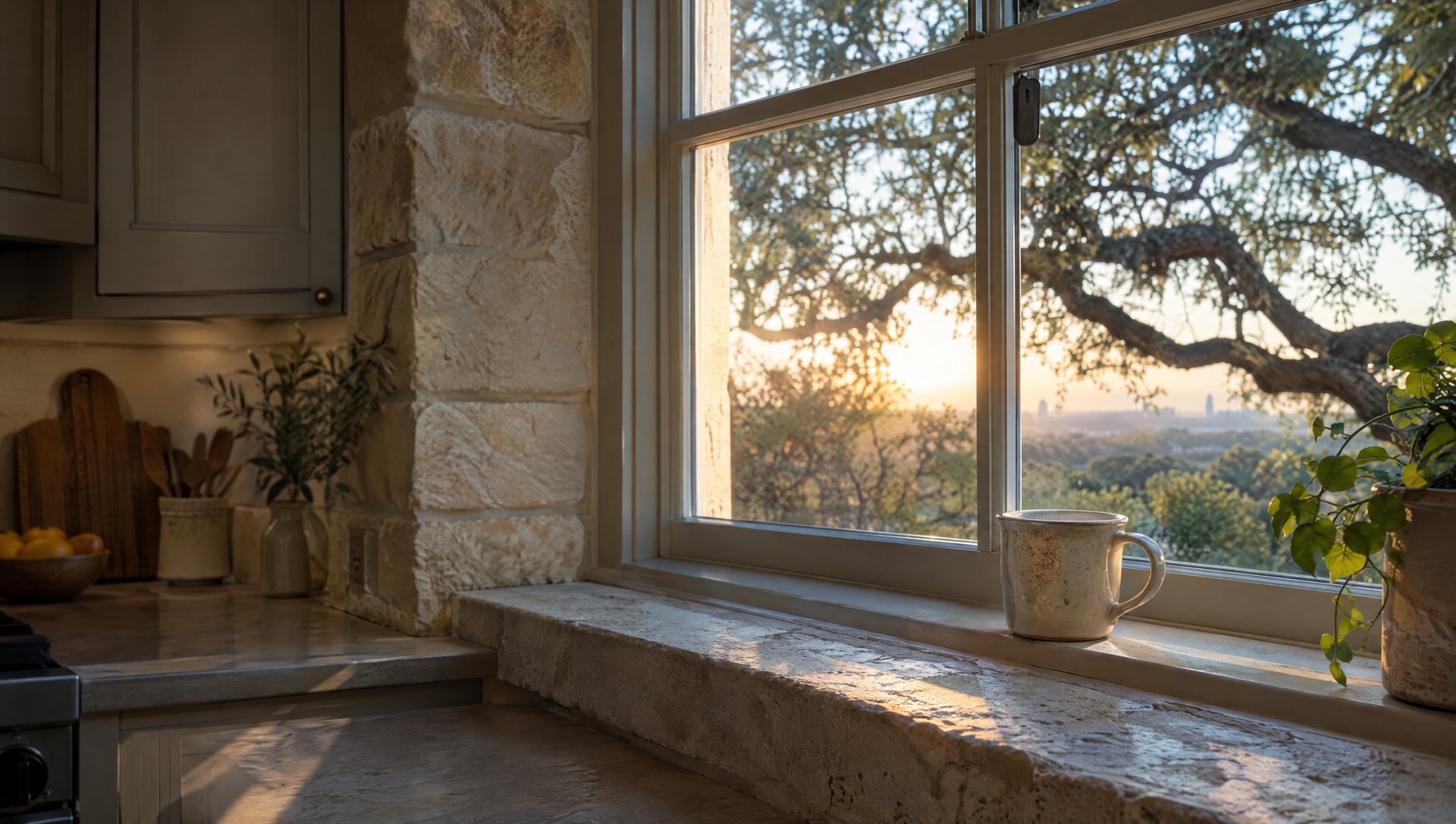
The eye has two jobs here. Rods and cones handle vision. A third group of cells, intrinsically photosensitive retinal ganglion cells, contain a pigment called melanopsin and report overall brightness to the brain’s master clock. Berson and colleagues identified these cells in 2002. Melanopsin is most sensitive to short-wavelength, blue-cyan light, which is why “blue light” gets the attention. The more useful way to think about it is melanopic light: how strongly a given light stimulates those cells.
Three findings matter for a house:
- Ordinary room light in the evening has an effect. In a 2011 study by Gooley and colleagues, 116 healthy young adults spent the eight hours before bed in either typical room light (under 200 lux) or dim light (under 3 lux). Room light delayed the start of melatonin in 99% of participants and shortened the melatonin period by about 90 minutes.
- People vary a lot. A 2019 study by Phillips and colleagues found the group needed only about 25 lux of evening light to cut melatonin by half. Individual sensitivity ranged from roughly 6 lux to 350 lux, a more than 50-fold difference. Your partner may be fine under the same lamp that keeps you up.
- Color matters, but so does brightness. Harvard researchers found that 6.5 hours of blue light suppressed melatonin about twice as long as green light of similar brightness and shifted the rhythm about twice as far (roughly 3 hours versus 1.5).
The numbers: what the 2022 expert recommendations say
In 2022, a group of circadian and sleep scientists published consensus recommendations for indoor light in PLOS Biology (Brown and colleagues). The recommendations are written for healthy adults and measured at eye level in the vertical plane, about where your eyes are when seated. They use a unit called melanopic EDI (melanopic equivalent daylight illuminance), in lux.
| Time | Recommendation (melanopic EDI at the eye) |
|---|---|
| Daytime | At least 250 lux |
| Evening, starting at least 3 hours before bed | No more than 10 lux |
| Sleep environment | No more than 1 lux (up to 10 lux if you need to see to move around) |
That evening number sounds strict. The paper points out that common warm white LEDs (2,700 to 3,000K) have low melanopic output, so many homes already meet it at normal evening brightness. A wearable-sensor study it cites found that evening light in real homes was already at or below 10 lux melanopic about half the time.
Kelvin is only part of the story
Color temperature (Kelvin) is the number on the box, and it is a useful shortcut: lower is warmer and less stimulating. It is not the whole picture, because two bulbs at the same Kelvin can differ in their blue content, and brightness counts as much as color. The PLOS Biology paper uses a ratio called melanopic DER to convert ordinary lux to melanopic lux:
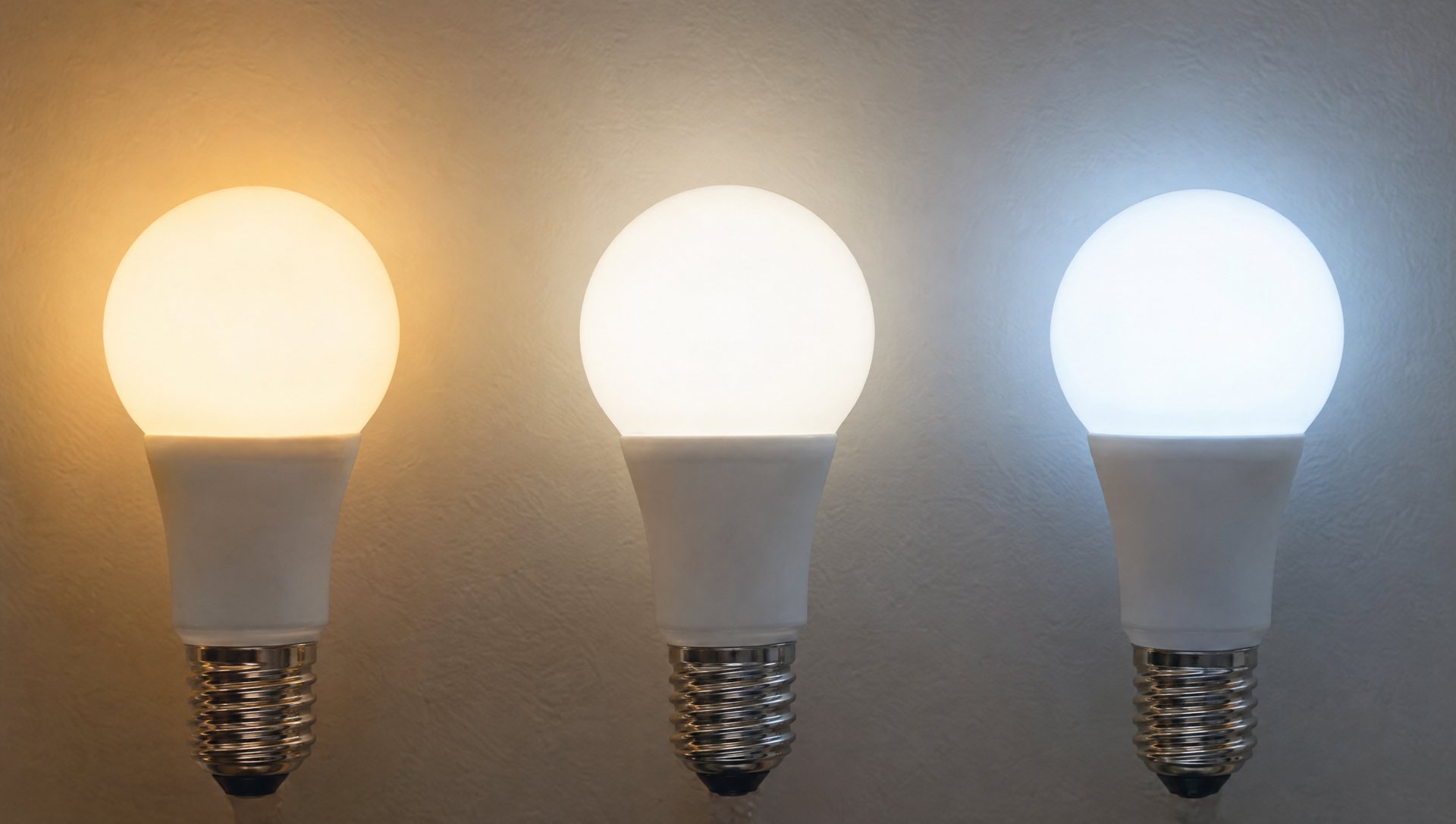
- Warm white LED (2,700 to 3,000K): below 0.35
- Typical 3,000 to 4,000K sources: below 0.6
- Off-the-shelf 6,500K tunable LED: about 0.83
- Daylight: 1.0 by definition
Worked example: checking your own rooms
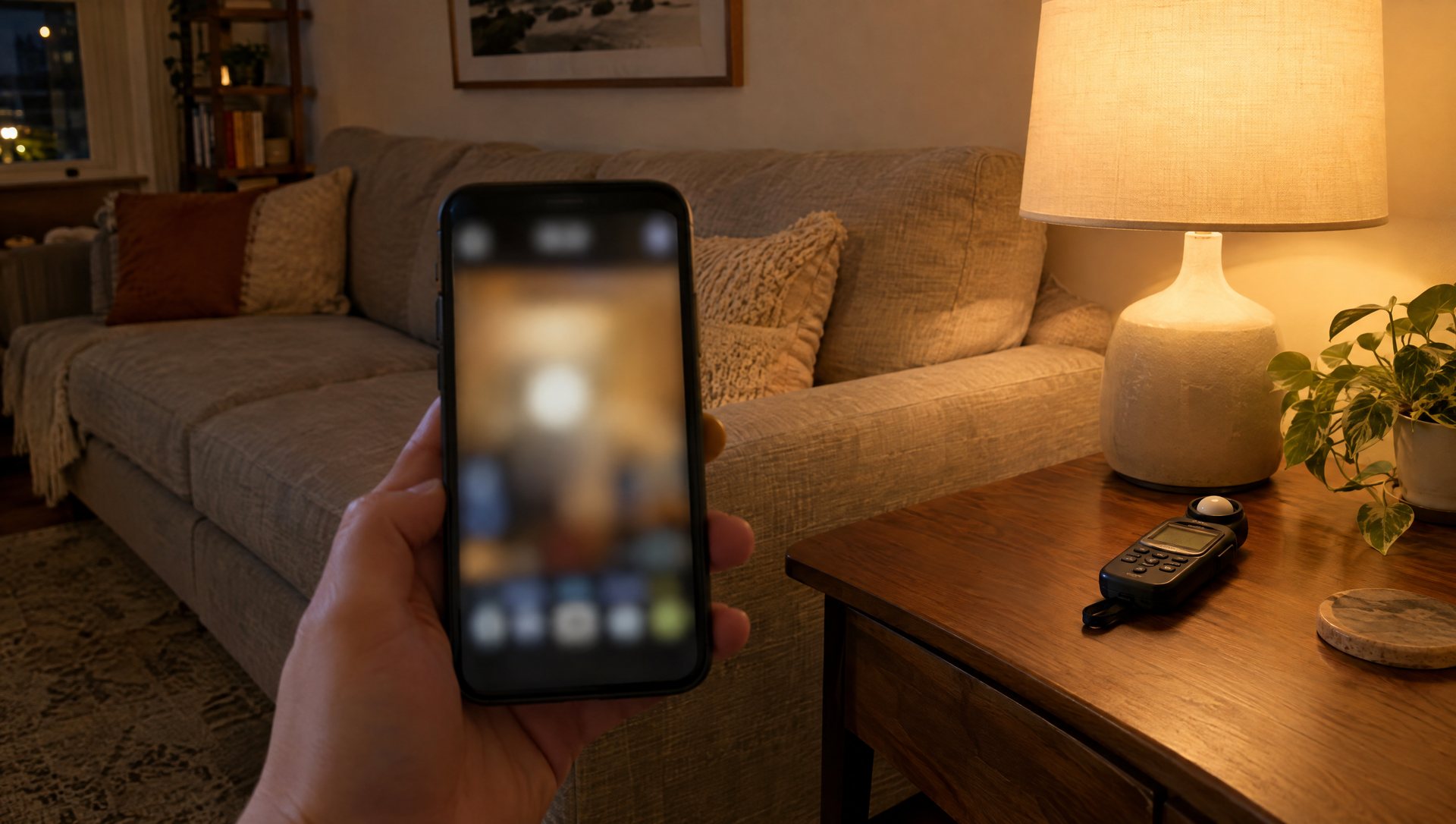
You can estimate your rooms with any light meter app. Hold the phone at eye height, screen facing the direction you normally look, not up at the ceiling. The app reads ordinary (photopic) lux. Then:
Evening target of 10 melanopic lux:
- 2,700K LEDs (DER about 0.35): 10 ÷ 0.35 = about 29 lux at your eyes is the ceiling.
- 4,000K LEDs (DER about 0.6): 10 ÷ 0.6 = about 17 lux.
Same goal, but warm bulbs let you keep the room nearly twice as bright.
Daytime target of 250 melanopic lux:
- 4,000K (DER about 0.6): 250 ÷ 0.6 = about 420 lux at your eyes.
- 6,500K tunable (DER about 0.83): 250 ÷ 0.83 = about 300 lux.
Most living rooms with ceiling cans read well under that at eye level. That is the real gap in most homes: days that are too dim, not evenings that are too blue.
These conversions are approximate because the DER figures are upper bounds and phone sensors are rough. They are good enough to tell 15 lux from 150.
A day of circadian lighting in an Austin house
Morning: get the brightest light early
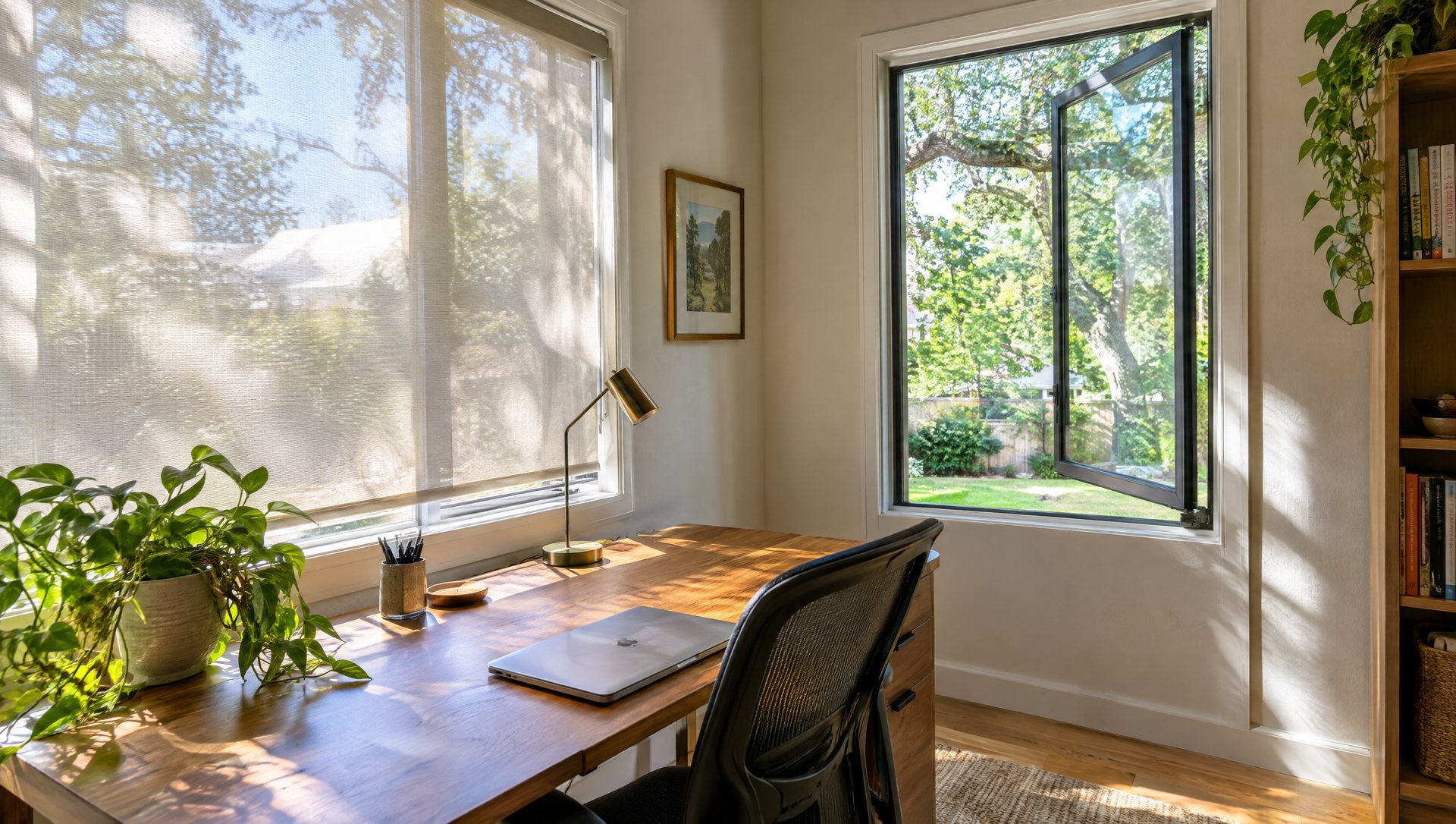
The easiest high-melanopic light is outdoors. Austin mornings are the right time for it anyway: a walk before the heat builds or coffee on the porch beats any bulb. Inside, open the east-facing blinds first thing and put the breakfast table or desk near a window.
Austin’s day length swings from about 14 hours around the June solstice to about 10 hours in late December. Sunrise is as late as about 7:25 to 7:30 am in early January. Those dark winter mornings are where bright, cooler indoor light at breakfast earns its keep.
Daytime: fight the closed-blinds problem
Here is the Austin-specific trap. From May through September, west and south windows get closed against the heat, and the house runs all day in a dim, curtained light that the body clock reads as dusk. Better options:
- Solar screens or light-filtering shades on the hot windows instead of blackout panels, so daylight still comes in.
- Keep the north and east windows open to the view. They bring in light without much heat.
- Brighter task and wall lighting in the rooms you work in. Neutral 3,500 to 4,000K is a reasonable daytime choice, aimed so it lights walls and faces, not just the floor.
Evening: dim and warm, starting about three hours before bed
If bedtime is 10:30, the shift starts around 7:30. In June that is still daylight, since the sun sets around 8:35 pm, so lower the blinds on the bright side of the house in the late evening too. Then:
- Switch from overhead cans to lamps at or below eye level with 2,700K or warmer bulbs.
- Dim to roughly the 20 to 30 lux range at your eyes.
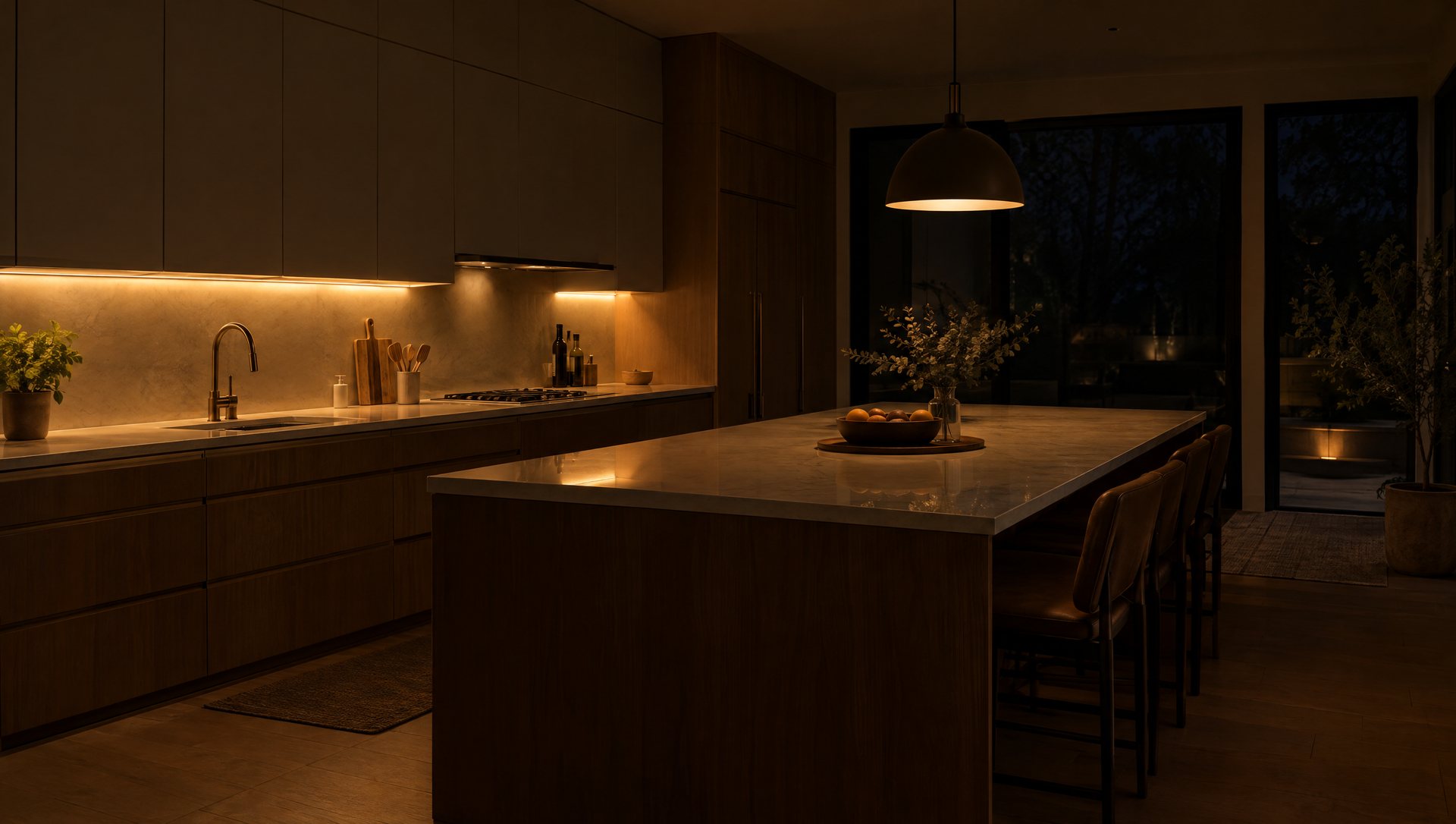
- Turn off the cool-white kitchen task lights once dinner is done.
Screens count as light too. The Harvard guidance is to avoid bright screens for two to three hours before bed. If you do use them, turn the brightness down and use the warm night-shift setting.
Night: dark, with a safe path
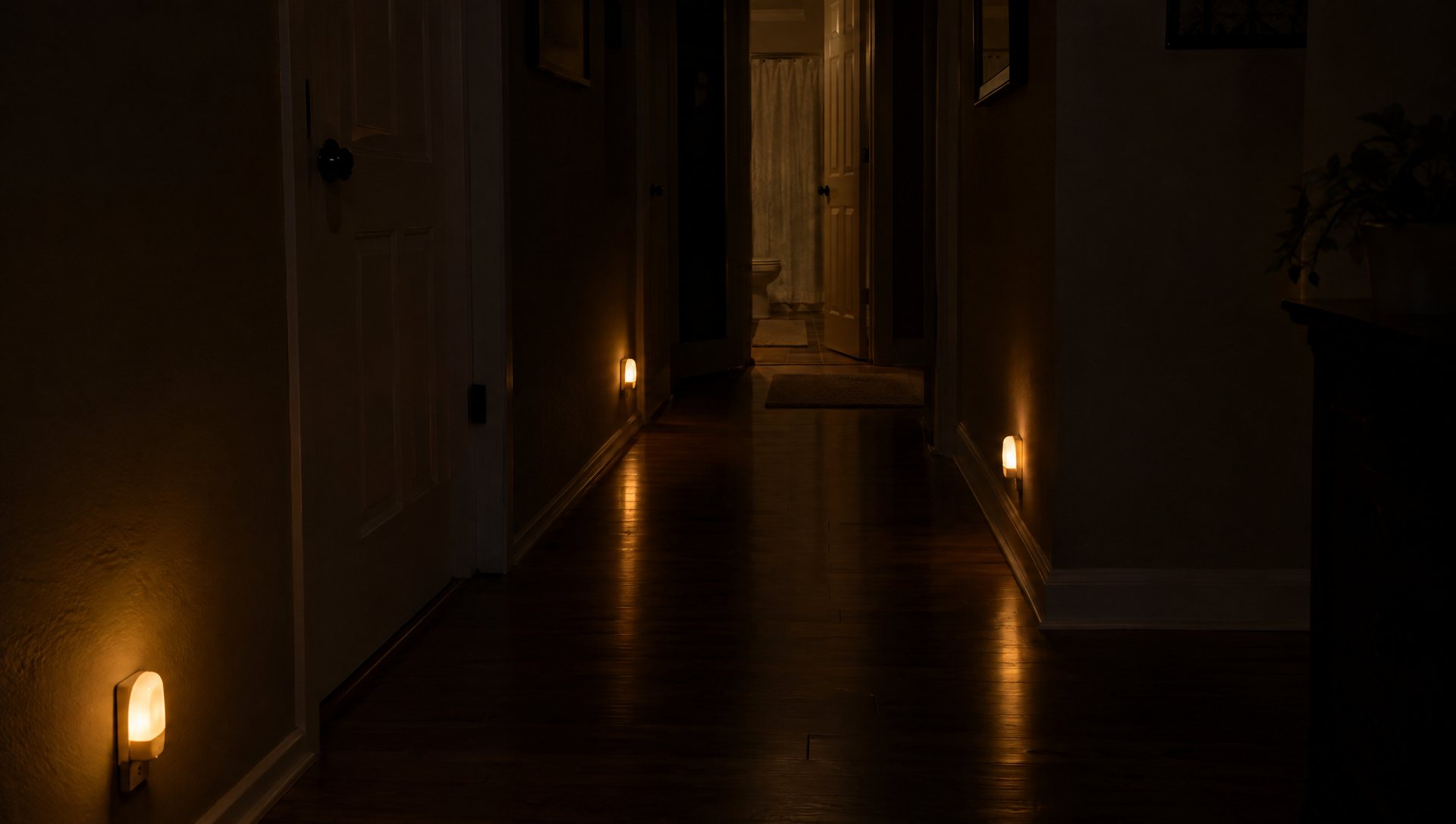
Aim for a bedroom dark enough that you cannot read in it. For bathroom trips, use dim, warm or red-amber night lights placed low, near the floor or under a vanity, rather than switching on the overhead light. The PLOS Biology paper notes that older adults may need more light at night to move safely, and safety comes first. Put the path lights in, just keep them low, warm and dim.
Room-by-room setup
| Room | Daytime | Evening | Notes |
|---|---|---|---|
| Kitchen | Bright, 3,500 to 4,000K under-cabinet and ceiling | Ceiling off; one warm pendant or under-cabinet strip on low | Under-cabinet strips do the work; they light the counter, not your eyes |
| Home office | Highest light in the house: window plus 4,000K wall or desk lighting | Leave the room, or switch to a warm desk lamp | Face the window side-on to avoid screen glare |
| Living room | Open blinds; lamps optional | 2,700K lamps, dimmed; overheads off | The most common evening problem is 4,000K cans on full |
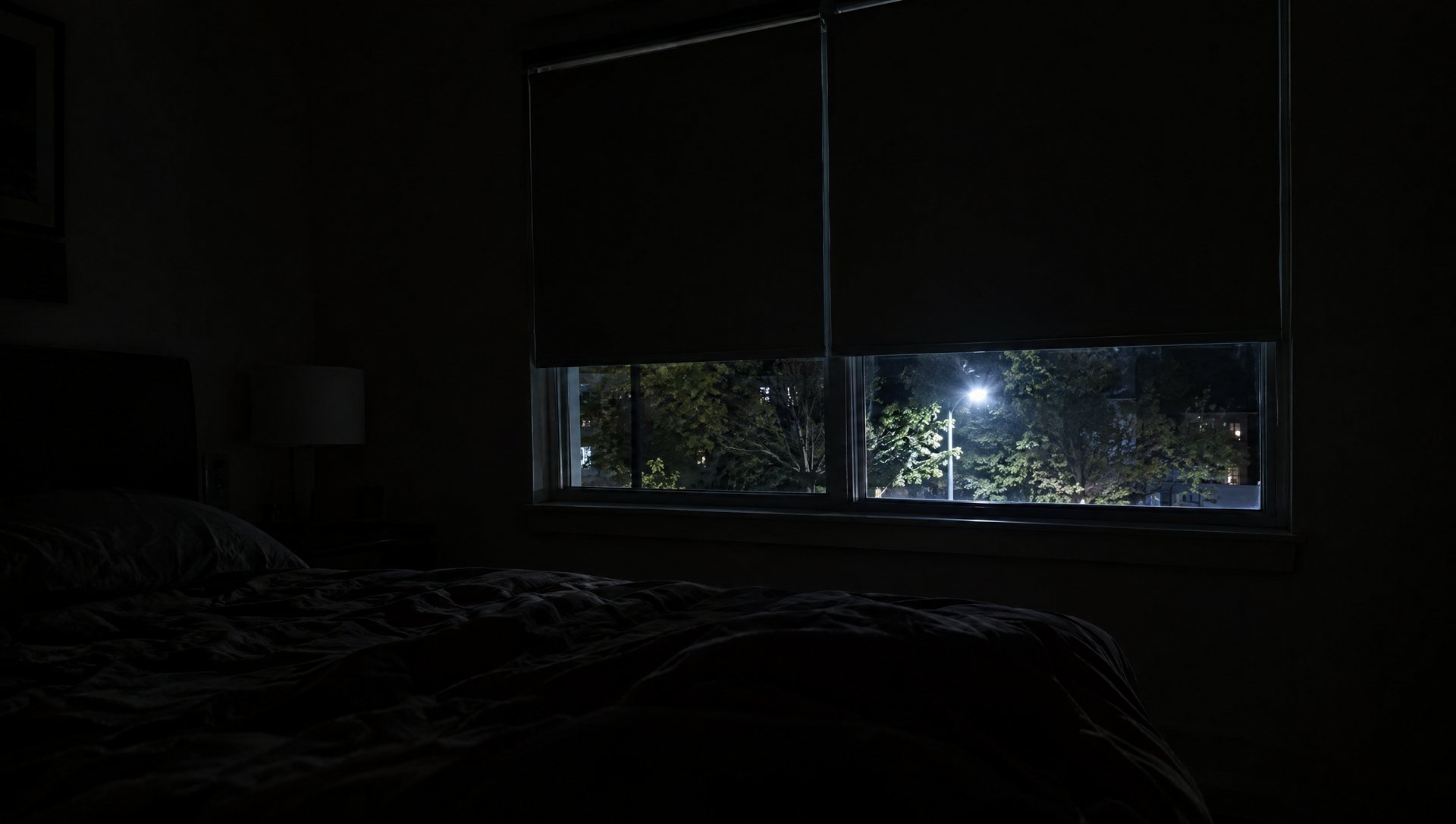
| Bedroom | Daylight from windows | 2,200 to 2,700K bedside lamps on low | Blackout shades if a streetlight or neighbor’s flood gets in |
| Bathroom | Bright vanity lighting | Separate dim night light for after bedtime | Fixtures in showers must be rated for wet locations |
| Hallways and stairs | n/a | Low step or plug-in path lights, warm | Avoid motion lights that snap to full brightness at 2 am |
Tunable bulbs, simple bulbs, and what to skip
Worth it
- Dimmers on the lights you use after dark. This is the single most useful change. Make sure the LED bulbs are rated as dimmable and compatible with the dimmer, or they will flicker or buzz.
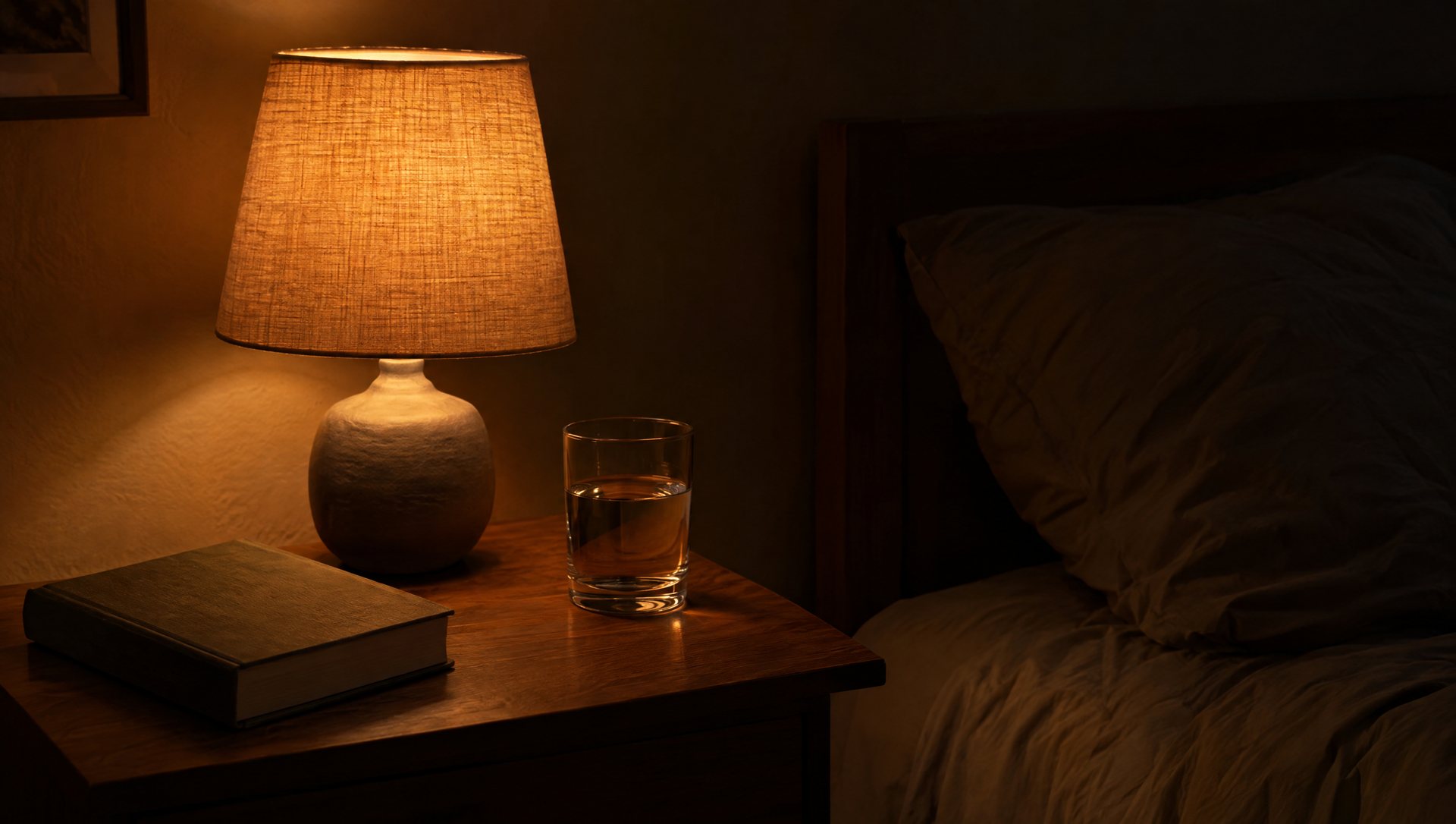
- Warm 2,700K (or 2,200K) bulbs in lamps you use in the evening. They are cheap and do most of the work.
- Tunable-white smart bulbs in the one or two rooms where you spend both day and evening. Philips Hue White Ambiance, for example, adjusts from 2,200K to 6,500K and can follow a schedule. Tunable bulbs are convenient, not magic. A 6,500K bulb that is too dim does little during the day, and a 2,200K bulb on full in a white room can still be bright at night.
- Daylight. It is free, and no indoor product comes close to it.
Skip or don’t expect much
- Himalayan salt lamps for sleep: there is no good evidence. A salt lamp is just a dim warm lamp, which is fine, but any dim warm lamp does the same.
- Red light therapy panels marketed for sleep: these are a separate product category with separate claims, not something circadian lighting guidance recommends. A dim red night light, which Harvard does suggest, is a different thing.
- The claim that red light “boosts melatonin”: red light does not raise melatonin. It simply suppresses it less than blue or white light at the same brightness.
- Blue-light-blocking glasses as a fix: a 2023 Cochrane review of 17 trials found they may not reduce eye strain from computer use and that their effect on sleep is unclear. Dimming the room does more.
- Colored cellophane or fabric over lamp shades: an older version of this article suggested this. Don’t. It can be a fire hazard against a hot bulb or shade, and it is unnecessary when 2,200K bulbs exist.
Light from outside counts too
A circadian plan inside can be undone by a streetlight or a neighbor’s floodlight shining into the bedroom. In 2016 the American Medical Association advised communities to use outdoor LED lighting of 3,000K or lower, properly shielded, partly out of concern for sleep. Lighting industry groups pushed back that color temperature alone does not predict nonvisual effects. Both sides agreed that shielding and good aim matter.
For your own house:
- Keep porch and landscape lights warm (2,700 to 3,000K), shielded, and on a timer or motion sensor, so they are not lighting your own bedroom window or your neighbor’s.
- Use blackout shades where a streetlight or a neighbor’s flood reaches the bedroom.
Our guides on outdoor light shields that cut glare and what light trespass is cover the outdoor fixes. If the problem is a street light, Austin street lights: the good, the bad and the ugly explains who to call. The same warm, low, shielded approach makes patios more comfortable at night too; see deck and patio lighting mistakes.
The three-step version
If you change nothing else:
- Get bright light early. Open the blinds and spend time near windows or outdoors in the morning.
- From about three hours before bed, switch to warm lamps on low and turn off the overheads.
- Make the bedroom dark, with dim, low, warm night lights only for the path to the bathroom.
That covers most of what the research supports, and it costs a few dimmers and warm bulbs. For more on everyday lighting errors, see the most overlooked home lighting mistakes. If you are rethinking the outdoor lighting around the house as well, you can book a lighting design call.
Sources
- Brown TM, Brainard GC, Cajochen C, et al. “Recommendations for daytime, evening, and nighttime indoor light exposure to best support physiology, sleep, and wakefulness in healthy adults.” PLOS Biology 20(3): e3001571 (2022). https://journals.plos.org/plosbiology/article?id=10.1371/journal.pbio.3001571
- Gooley JJ, Chamberlain K, Smith KA, et al. “Exposure to room light before bedtime suppresses melatonin onset and shortens melatonin duration in humans.” Journal of Clinical Endocrinology & Metabolism 96(3): E463 to E472 (2011). https://pmc.ncbi.nlm.nih.gov/articles/PMC3047226/
- Phillips AJK, Vidafar P, Burns AC, et al. “High sensitivity and interindividual variability in the response of the human circadian system to evening light.” PNAS 116(24): 12019 to 12024 (2019). https://pmc.ncbi.nlm.nih.gov/articles/PMC6575863/
- Berson DM, Dunn FA, Takao M. “Phototransduction by retinal ganglion cells that set the circadian clock.” Science 295: 1070 to 1073 (2002).
- Harvard Health Publishing, “Blue light has a dark side” (updated July 24, 2024). https://www.health.harvard.edu/staying-healthy/blue-light-has-a-dark-side
- National Institute of General Medical Sciences, Circadian Rhythms fact sheet. https://nigms.nih.gov/education/fact-sheets/Pages/circadian-rhythms
- Singh S, Keller PR, Busija L, et al. “Blue-light filtering spectacles for children and adults.” Cochrane Database of Systematic Reviews (2023), CD013244. https://www.cochrane.org/CD013244/
- LEDs Magazine, “Medical society issues LED street light CCT guidance” (AMA, June 2016), and NEMA’s response via EC&M. https://www.ledsmagazine.com/articles/2016/06/medical-society-issues-led-street-light-cct-guidance.html
- TechCrunch, “Philips Hue releases new connected light bulbs for different shades of white light” (2,200 to 6,500K range). https://techcrunch.com/2016/03/14/philips-hue-releases-new-connected-light-bulbs-for-different-shades-of-white-light
- Austin sunrise, sunset and day length calculated with the NOAA solar position equations for 30.27°N, 97.74°W.