


Colored vs White Christmas Lights: Which Looks Better Outside?
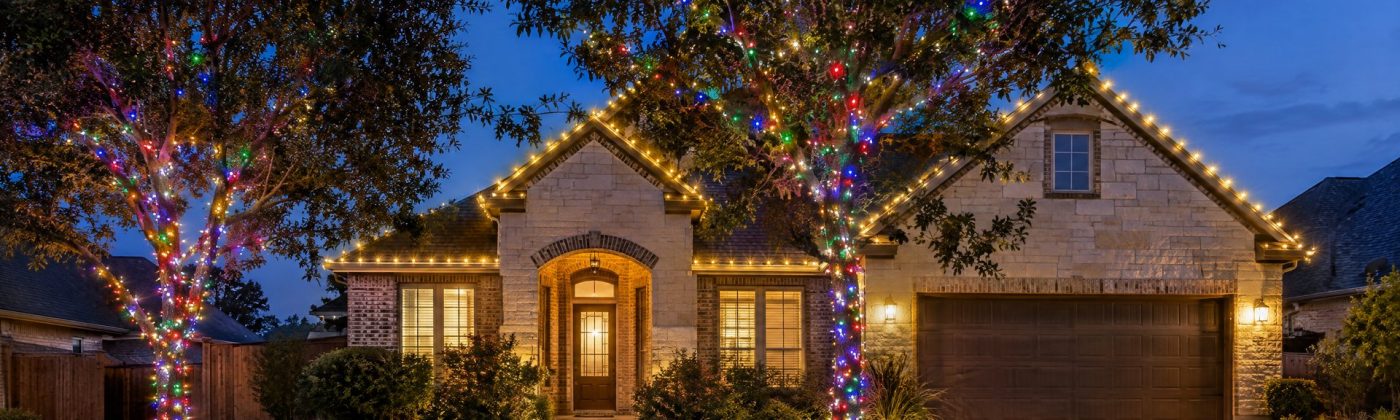
Warm white looks better on the roofline of most Austin homes. Colored lights look better on trees, shrubs and houses with a playful, retro character, where the color itself is the point. Our favorite combination is a warm white roofline with one colored feature. What looks worst is not either choice; it’s alternating the two along the same house.
That’s the short answer. The rest of this guide is the reasoning, worked through on five kinds of houses you see all over Austin, so you can make the call for yours instead of taking our word for it.
Why warm white usually wins on the roof
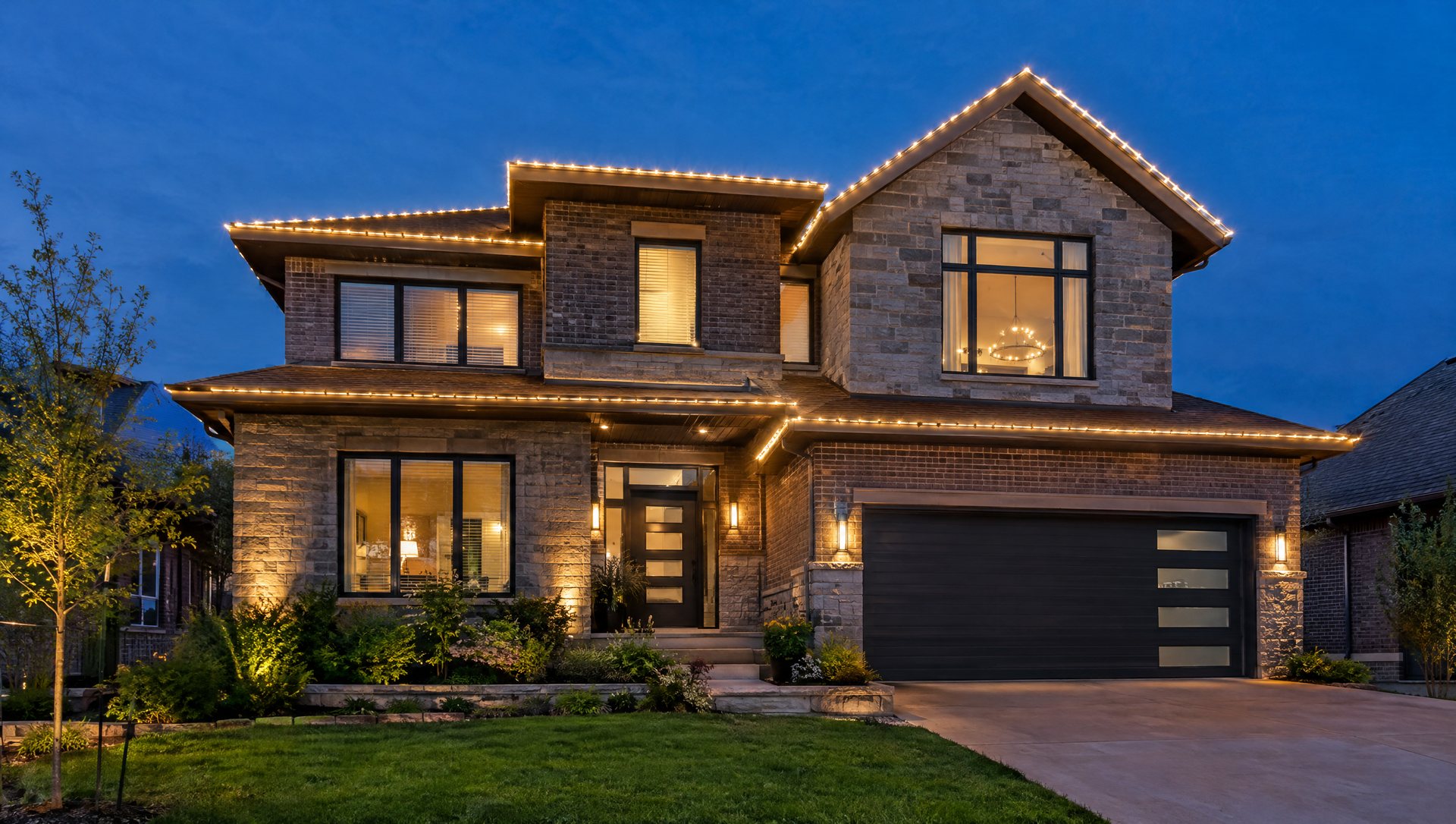
A roofline display is a drawing. After dark the house disappears, and the bulbs draw its outline back in: the peaks, the eaves, the porch, the step down to the garage. The cleaner the line, the better the drawing.
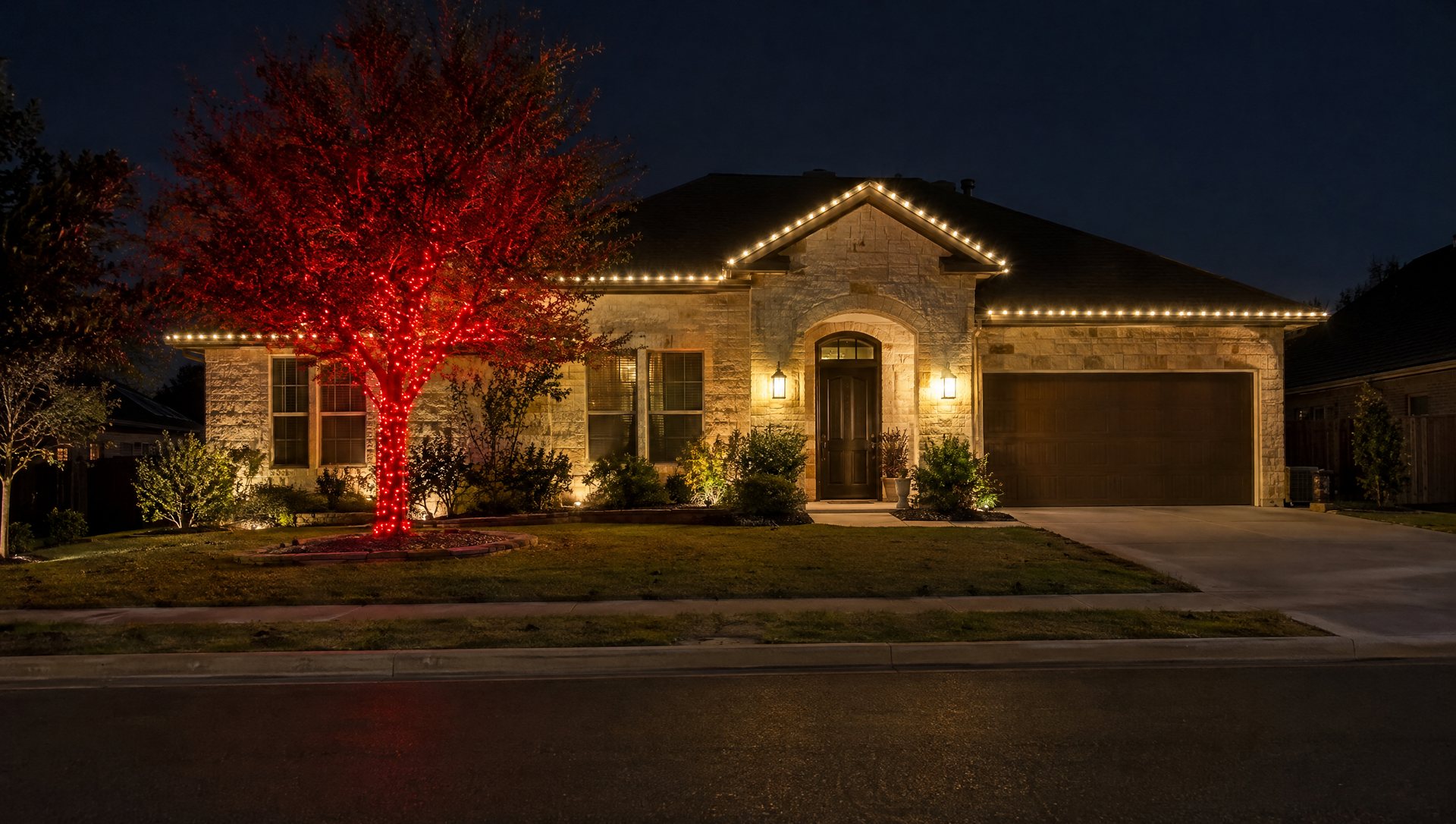
Warm white draws a clean line because every point on it is the same color. Your eye follows the shape, not the bulbs. Multicolor draws the same outline, but the eye goes to the colors first and the shape second. On a house with an interesting roofline, that’s a loss.
Warm white also gets along with whatever the house is made of. Cream limestone, red brick, painted siding, dark stone and stucco all bring their own colors. A warm white line sits on top of all of them. A multicolor line competes with some of them: red bulbs on red brick lose contrast, and green bulbs in front of dark shrubs vanish.
And warm white ages well. A warm white roofline put up ten years ago doesn’t look dated. That’s not true of every color trend.
None of that makes colored lights tacky. A precise, evenly spaced multicolor roofline is cheerful and looks deliberate. What looks cheap is mismatched strings, uneven spacing and three different whites along one gutter, and those problems happen in any palette.
Five Austin houses, five calls
Here is how we’d think it through on the houses we see most. Find the one closest to yours.
The one-story limestone ranch
Cream or tan limestone, a long low roofline, maybe a gable over the entry, a big live oak in front. Common across older central and northwest Austin neighborhoods.
Our call: warm white roofline, and spend the color budget on the tree. Warm white on cream stone is the most flattering combination there is for this house; the stone glows slightly under it. The long, low roofline has little vertical drama, so the live oak is the feature. Wrap the trunk and main limbs in warm white for a classic look, or make the tree the one colored element if the household wants color.
The two-story brick in the suburbs
Red or brown brick, multiple gables, a tall entry, often in a newer subdivision.
Our call: warm white everywhere on the house. The roofline is the show here: all those peaks and level changes read beautifully as a white outline from the street. Red multicolor bulbs on red brick lose much of their punch. If you want color, put it in the landscaping in front of the house, where it reads against dark foliage instead of brick.
The modern build: stucco, metal roof, flat planes
White or gray stucco, standing-seam metal, flat or shed roofs, big windows. Increasingly common in Mueller, East Austin infill and the newer suburbs.
Our call: warm white, kept spare. Modern houses look best with fewer, cleaner lines. Outline the strongest edges, not every edge. Multicolor fights the architecture here more than anywhere else. If the house is very cool-toned (white stucco, dark metal), a neutral white can work, but don’t mix it with warm white on the same house.
The 1950s ranch or cottage
Painted siding, a small porch, shutters, maybe a picture window. The kind of house that already looks like a vintage Christmas card.
Our call: this is the house where multicolor wins. Vintage-style multicolor C9s along the eaves suit the era of the architecture. The house isn’t trying to show off a complex roofline; it’s trying to look warm and familiar, and color does that. Keep the sequence strictly repeating and the spacing even, and it will look like 1958 in the best way.
The Hill Country stone house with big trees
Rough stone, metal accents, a deep porch, several mature oaks, often on a large lot west of town.
Our call: warm white on the house, and let the trees decide. On a big lot, the trees are often the most visible thing from the road. Warm white on the house and trunks gives you a calm, rustic look. If you want color, pick one prominent tree and light it in a single color (red is the classic choice) rather than multicolor; at 100 feet, a single color reads as a clear shape, while mixed bulbs blur into a vague glow.
How color behaves from the street
Most people pick bulbs from a box at arm’s length. Your neighbors see them from 40 feet or more, and that changes things.
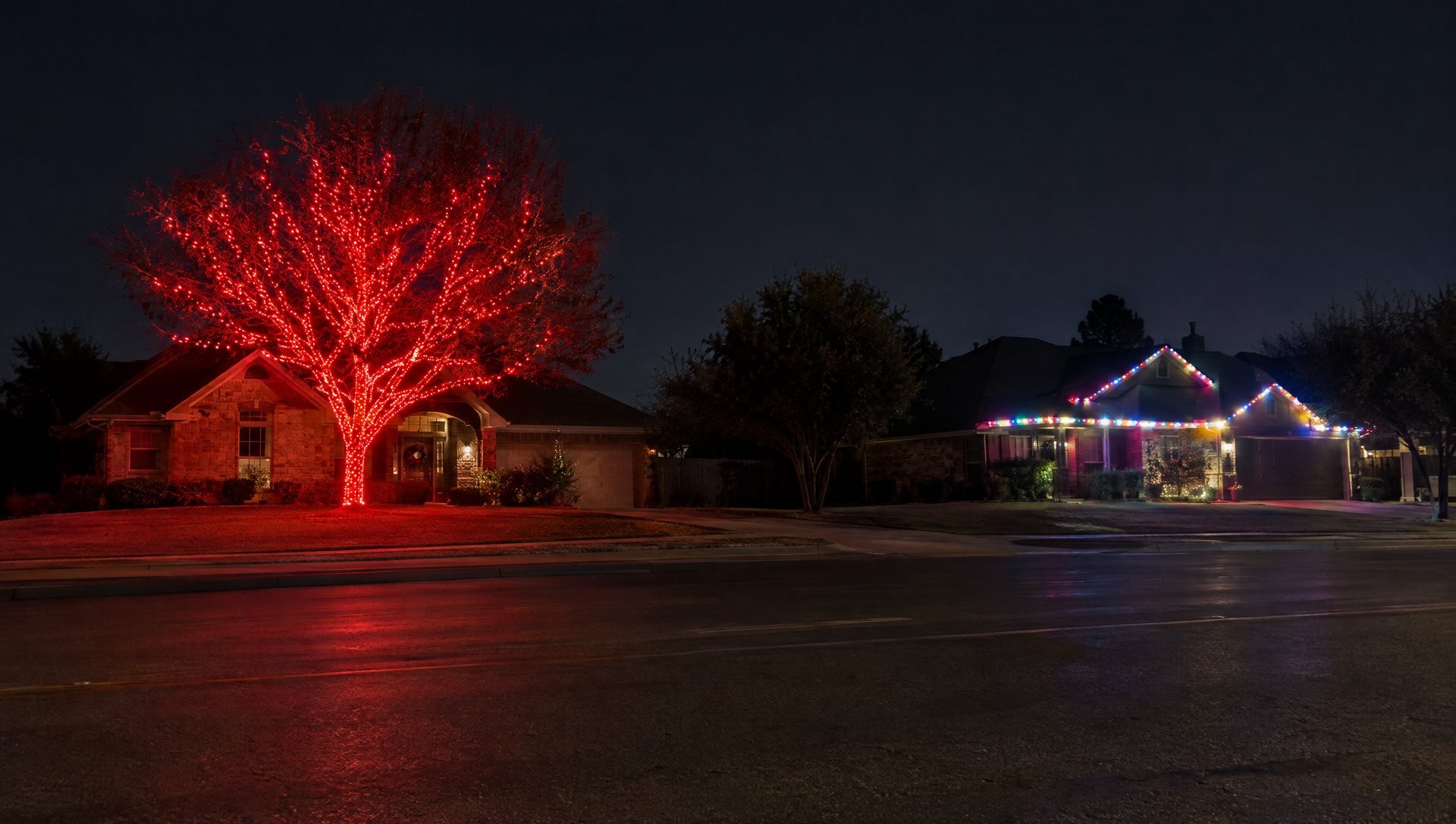
Multicolor blends with distance. Up close, you see red, green, blue, orange and yellow bulbs. From across the street, a closely spaced multicolor run softens into a cheerful mixed glow. That’s part of its charm, and it’s why spacing and sequence matter: an even repeat blends evenly, while a random mix looks lumpy.
Single colors hold their shape. An all-red tree or an all-blue roofline reads as a clear shape from far away. If you want a color that carries from the street, a single color usually beats multicolor.
Background matters. Color needs contrast. Green bulbs disappear into dark shrubs; red loses punch on red brick; blue against a dark night sky is striking but can feel cold on a big area. Warm white has contrast against almost everything after dark.
Not every “multicolor” is the same. Multicolor sets vary by brand. One multicolor LED C9 pack mixes red, blue, green, yellow and orange, while some sets use only four colors. If you’re adding to an existing run, buy from the same product line, or the new section will look different.
White isn’t one color either
“White” on a Christmas light box covers a range. Warm white LED bulbs are typically sold around 2700K to 3000K; one commercial warm white C9 set, for example, lists 3000K. Cool or pure white sits much higher on the scale and looks bluer, closer to moonlight or a store display.
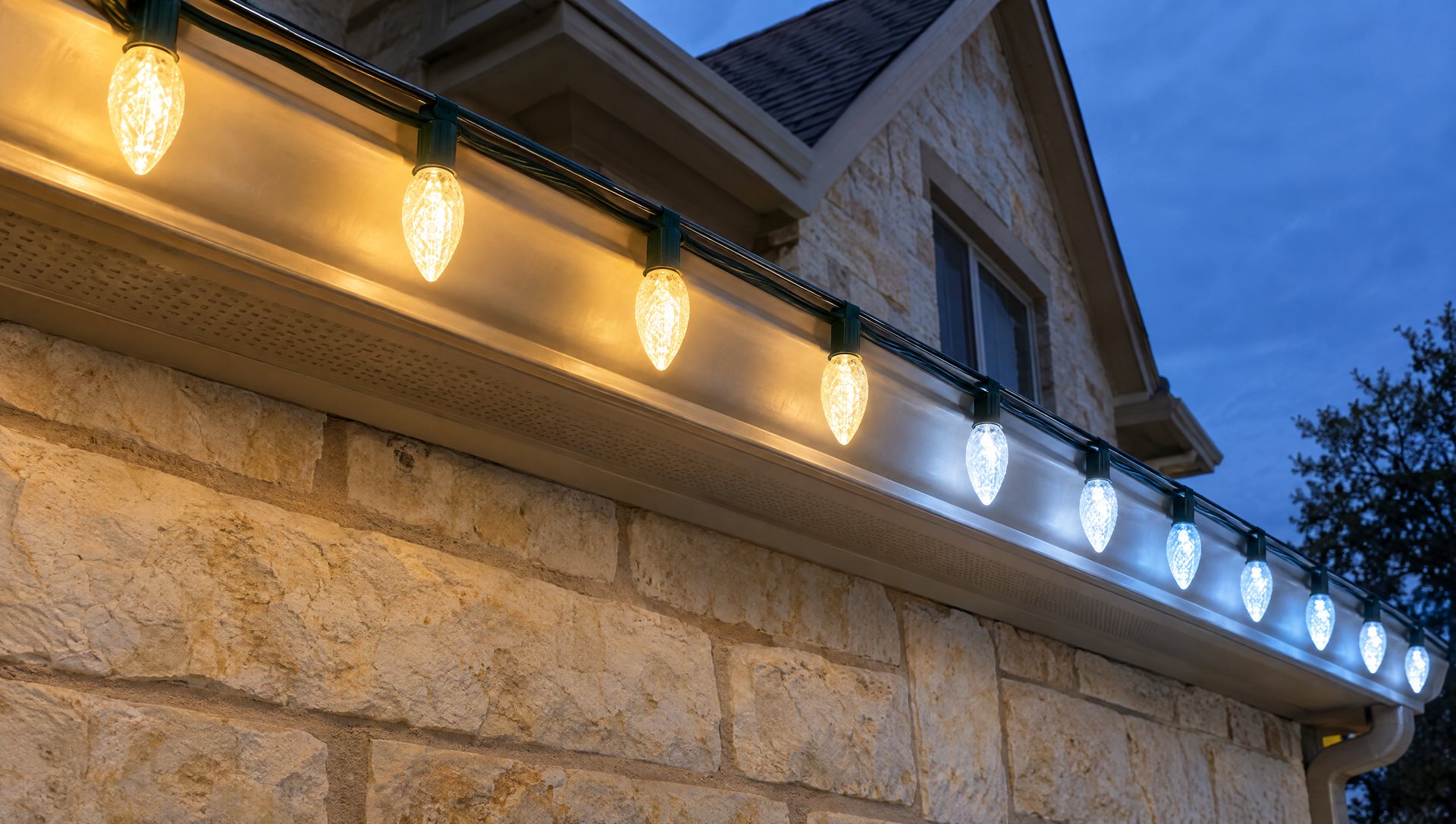
On a house, the mistake isn’t picking one over the other. It’s mixing them. Two products both labeled “warm white” can look visibly different side by side, and warm and cool white together on one roofline look like a repair. Buy each continuous run from one product, in one order, and keep a few spares from that order.
For most Austin homes, we’d choose warm white. It flatters stone and brick and looks like the incandescent lights people grew up with. Cool white suits a strongly modern house or a blue-and-white scheme; our blue and white lighting ideas cover that look.
When colored lights are the right call
Warm white is the safe default, not the only good answer. Pick color when:
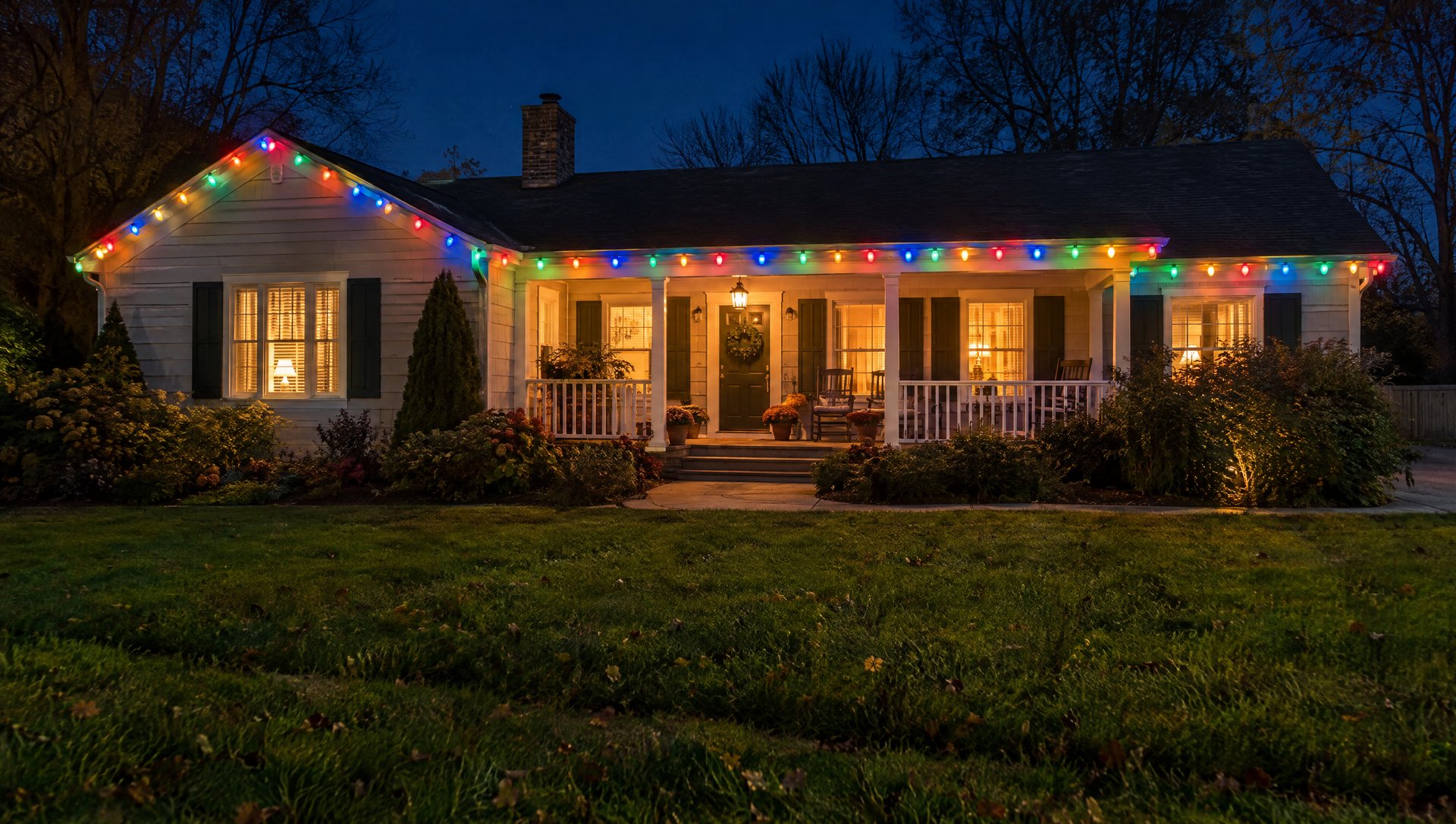
- The house has vintage character. A cottage, a 1950s ranch or a Craftsman bungalow can wear multicolor C9s naturally.
- Kids are the audience. For a lot of families, multicolor is what Christmas looked like growing up. That’s a perfectly good reason.
- The feature is a tree or shrubs. Irregular shapes don’t need a clean outline, so color costs you nothing and adds depth.
- Every house on your block is white. Yours will be the one people remember.
- You’ll commit to it. Color only works when you decide where it goes. Keep a consistent sequence on each run and leave some areas dark so the color has room to breathe. Leftover strings in random colors thrown on every bush is how multicolor got its bad reputation.
Three mixed layouts that work
You can have both, as long as each color has its own job.
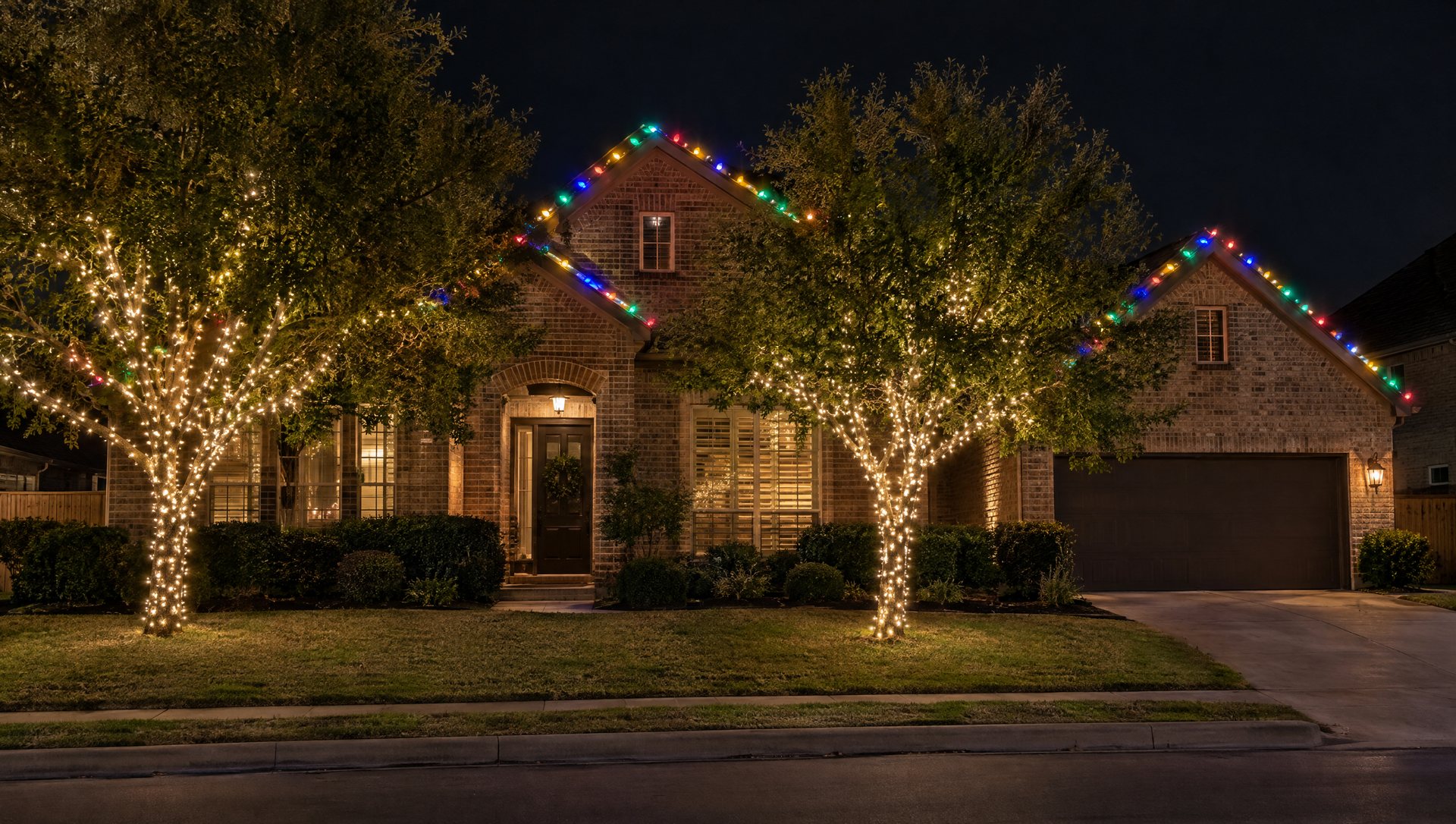
Multicolor roofline, white trees. The roofline brings the color and a bold outline; warm white mini lights on the trees show off the branch structure underneath. Don’t add a third color on the shrubs.
White house, one colored tree. Outline the house or just the entry in warm white, then make one tree the color feature: red, blue or multicolor. Leave the shrubs between them dark so the tree stands apart. A tree is also the easiest place to try a color you’re unsure about, since you’ve only committed one feature.
Color at the door only. For a first try at color: white roofline, colored wreath or garland at the front door. If you tire of it in a week, you’ve changed one doorway. Our front porch plans show how to keep a porch from turning into a third design.
The one layout that never works
Alternating styles section by section: white on one eave, colored on the next, a cool white tree beside a warm white porch, a multicolor bush beside a red one. It usually happens because every person in the house got one feature, or because the lights came out of the storage bin in whatever order they were packed.
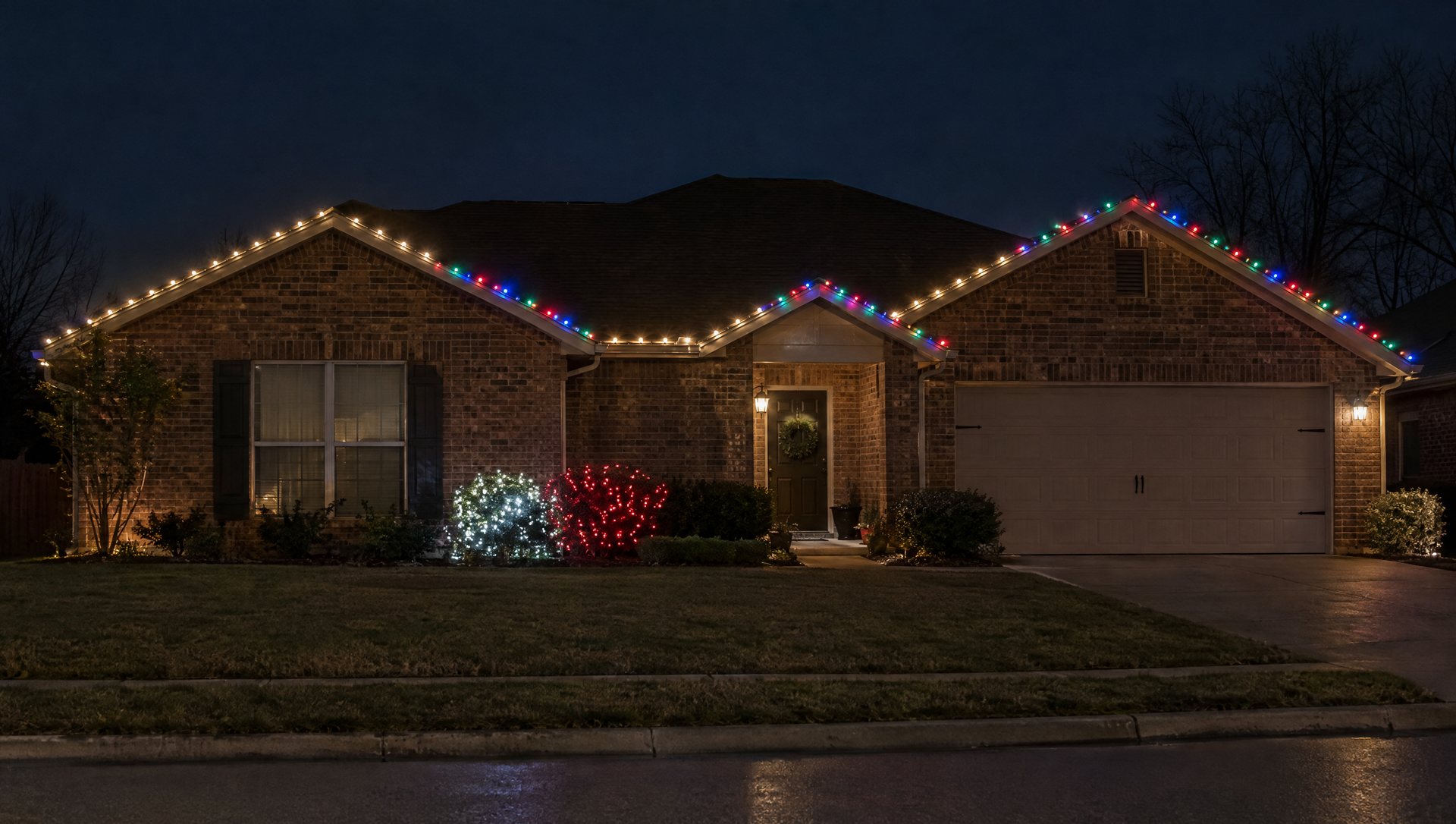
From the street, it doesn’t read as a design. It reads as a house that ran out of matching lights. If you have mixed strings, sort them first, then assign each palette to a whole feature: one color plan for the roof, one for the trees, one for the door. Our list of common lighting mistakes covers the other ways a display goes sideways.
If your household can’t agree
Have each person pick two photos they love and point to the exact thing they like in each one. Usually, one person wants the nostalgia of color and the other wants a tidy installation, and those aren’t actually in conflict. A precise multicolor roofline is both nostalgic and tidy. A white front with a colored side-yard tree gives each idea its own place.
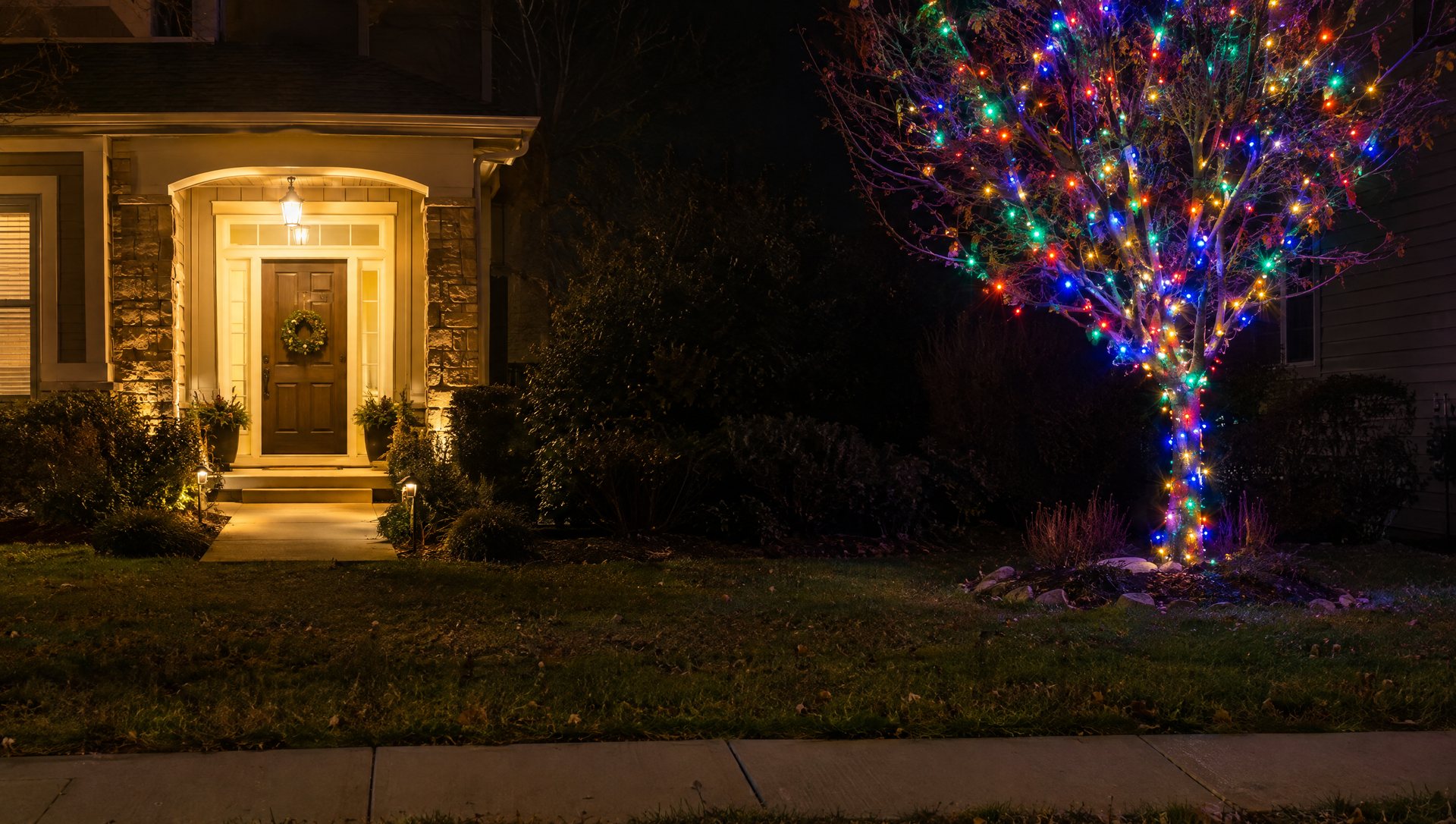
If that still doesn’t settle it, alternate years. A screw-in C9 roofline can switch from warm white to multicolor by changing bulbs, not the whole string, as long as the replacement bulbs fit the same socket. Our C9 guide explains the socket sizes.
Test before you buy the whole roofline
Buy one string or a handful of bulbs, clip them up temporarily and look at them after dark from across the street, not from the porch. Photograph the white and colored samples together in the same shot, because phone cameras shift the white balance from photo to photo and can make the same bulb look different. Then trust your eyes over the photo.
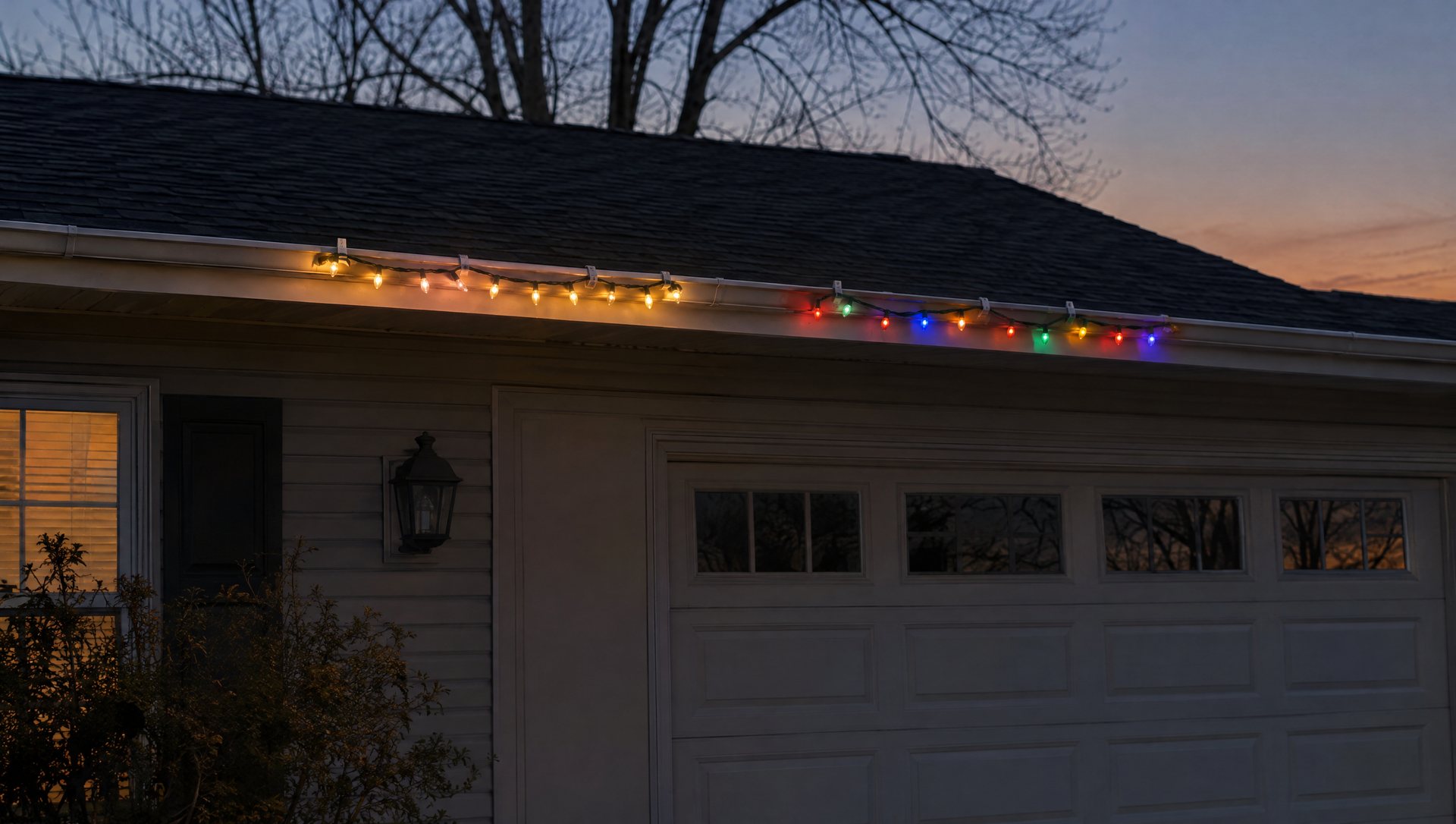
Do it on a night with your porch light and any landscape lights on. Those fixtures have their own color, and a cool white bulb next to a warm porch light can look worse than you’d expect.
Don’t forget the daytime view
Your lights hang on the house for six weeks or more of daylight, and in daylight the bulbs are off but everything else shows.
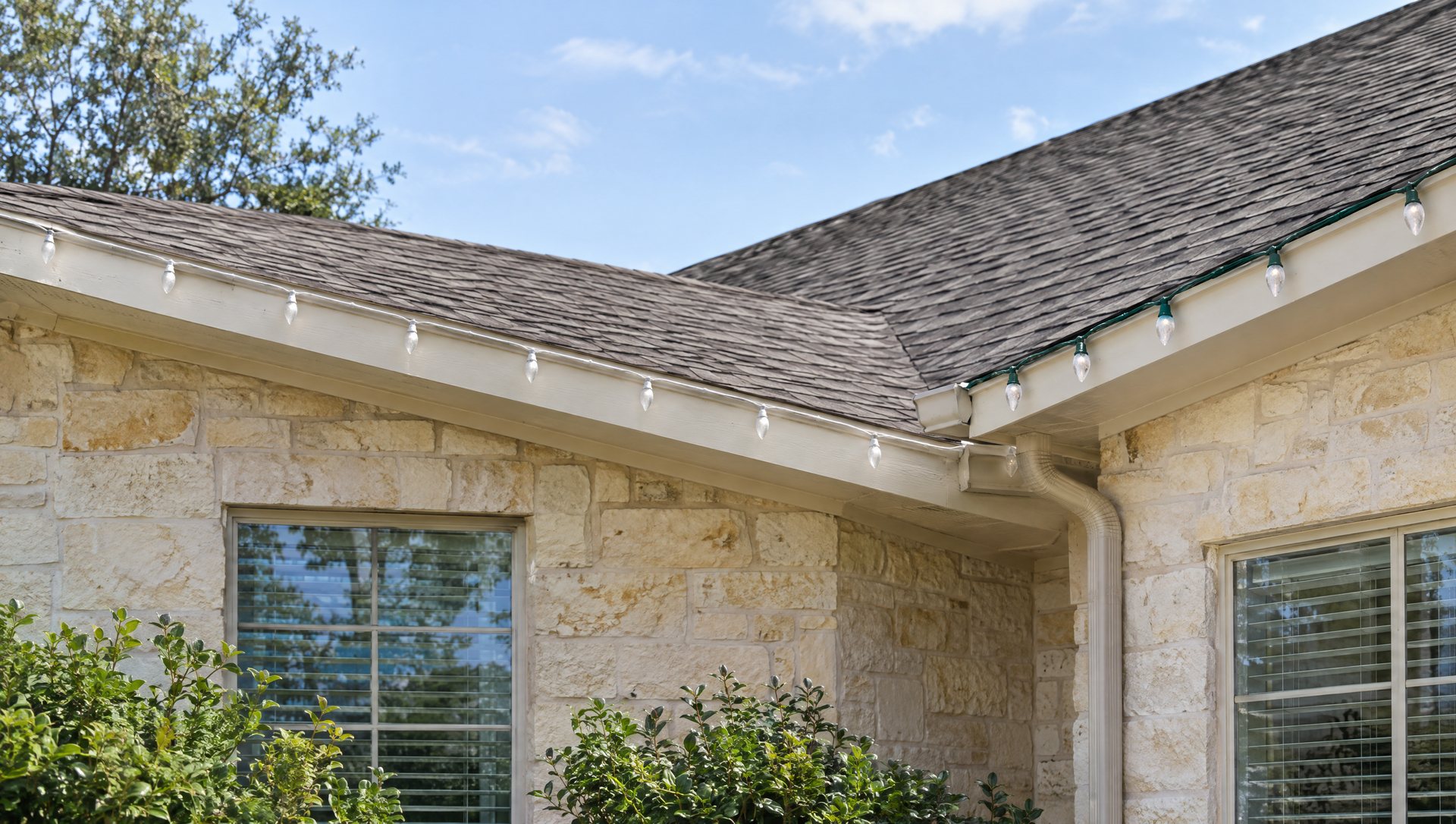
- Wire color matters more than bulb color. Green wire on cream limestone or white trim stands out all day. White wire on white trim nearly disappears. Choose the wire to match the surface it sits on.
- Colored bulbs show in daylight. A multicolor roofline is visible as color all season; warm white bulbs on matching wire nearly vanish by day. If daytime curb appeal matters, that’s a point for white.
- Clip angle shows too. Bulbs clipped at different angles look messy in daylight even if they’re perfect at night.
What about color-changing lights?
A color-changing system lets you run warm white most nights and switch to multicolor or red and green when you want. It ends the argument, though it is a bigger investment and takes more setup, so ask an installer what’s involved for your house.
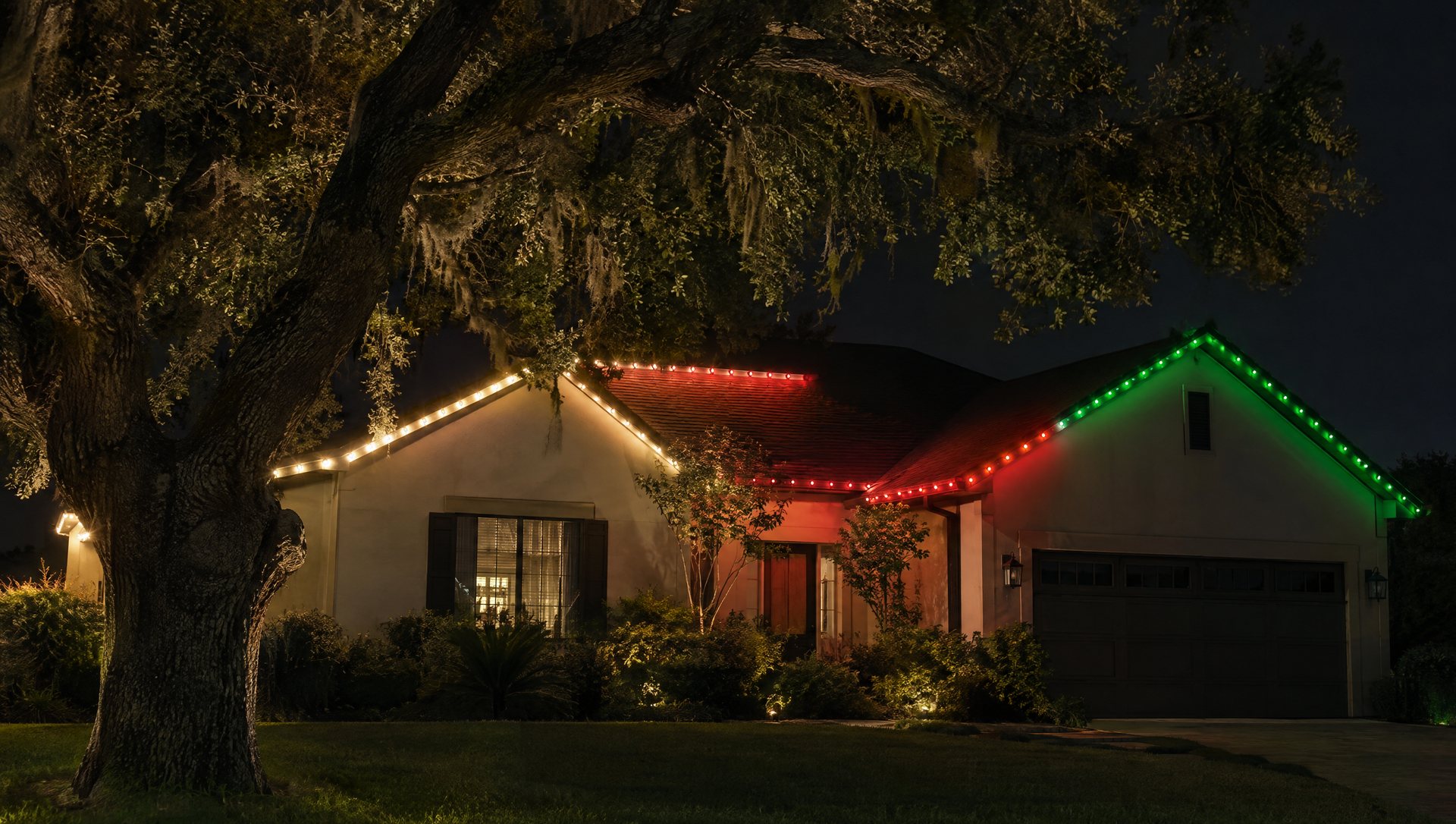
If you go that way, set one everyday scene you actually like as the default, probably warm white, and use the rest for occasions. A house that changes color every three seconds all season is the alternating-styles problem on a timer.
Still undecided? Text a daytime photo of the front of your house to (737) 777-9099 or use our contact page, and we’ll tell you which way we’d go and why.
Sources
About the author. Rick Safeman owns Sapien Lighting & Installation in Austin, Texas.