


Can You Leave Christmas Lights On All Night?
You can leave Christmas lights on all night, and most of the time nothing will happen. You still shouldn’t: the U.S. Consumer Product Safety Commission’s advice is to turn off lights on trees and other decorations when you go to bed or leave the house, and that applies to LEDs, indoor trees and outdoor displays alike.
The rest of this guide is the why and the how. Why the line sits at bedtime rather than at “when the bill gets big.” What all night actually costs on an Austin Energy bill, with the math shown. And how to set up a timer so the lights go off without anybody remembering, plus the handful of things that mean a display should be off right now, schedule or not.
Why bedtime is the line
The CPSC’s holiday decoration sheet is blunt about it: “Turn off all lights on trees and other decorations when you go to bed or leave the house. Lights could short and start a fire.” The Electrical Safety Foundation says the same thing in different words: turn decorations off when you leave home and when you are sleeping.
The numbers behind that advice are small but real. The National Fire Protection Association reports that from 2020 to 2024, U.S. fire departments responded to an average of 143 home fires a year that started with Christmas trees, and electrical distribution or lighting equipment was involved in two in five of them. Nearly one in four were started by lamps or bulbs. Decorations other than trees started an estimated 835 home fires a year.
None of that means your display is dangerous. It means the failures that do happen are electrical, and an electrical fault is far less dangerous when somebody is awake to smell it, see the GFCI trip, or notice a string go dark. The hours between midnight and 6 a.m. are the only stretch of the day when nobody in the house would notice anything. Turning the display off for those hours removes the risk from exactly the window where it would do the most damage. It costs you nothing you would have seen anyway.
LEDs lower the risk; they don’t remove it
LED strings run cool and draw a fraction of the power of incandescent sets. A 50-bulb LED C9 string, per the Home Accents Holiday use and care guide, uses bulbs of about 0.6 watt each and draws a quarter of an amp. A traditional C9 bulb is 7 watts. That is a real safety improvement, and for a roofline it is the only bulb we’d hang today.
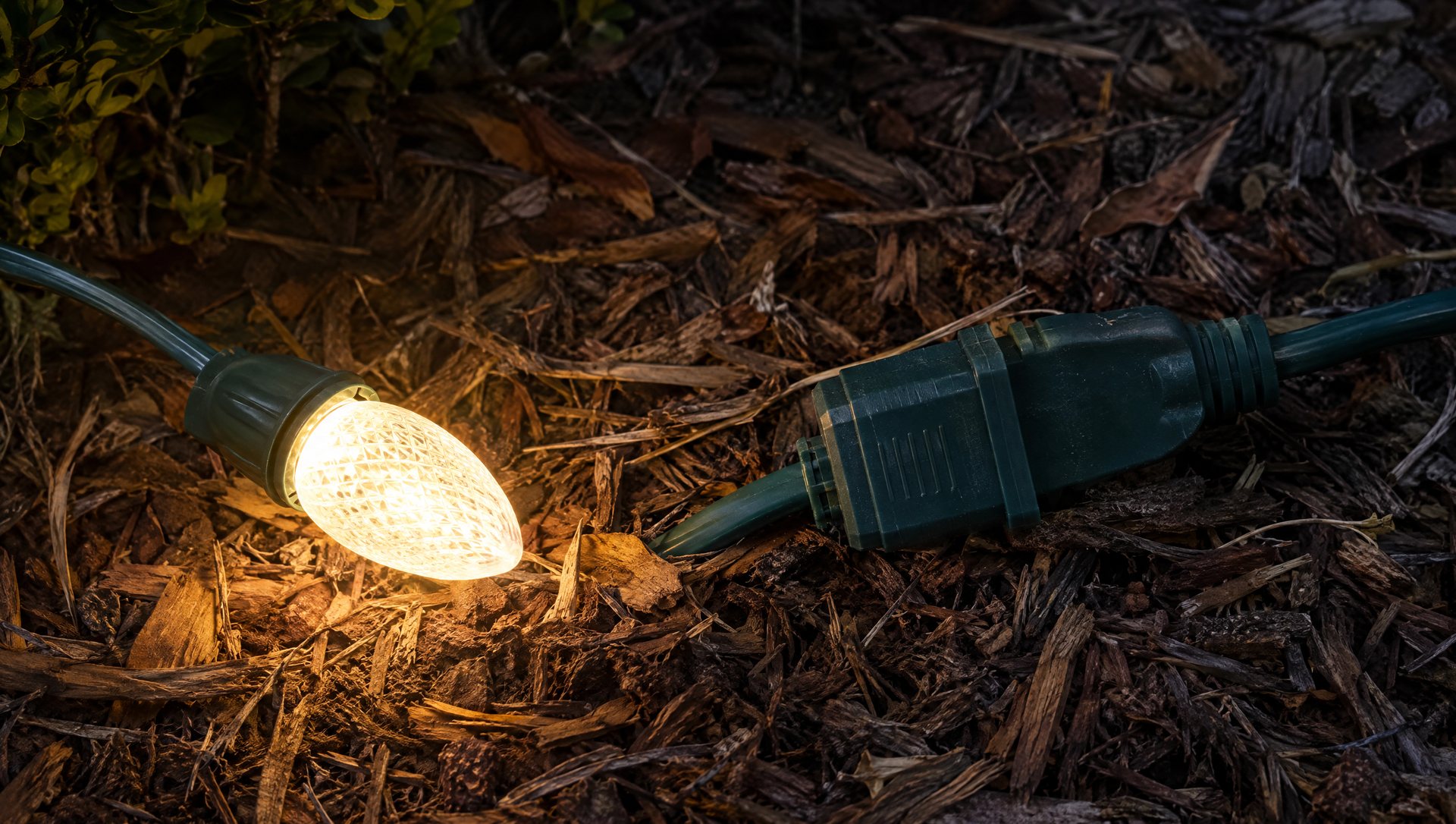
But the bulb is the least likely part of an outdoor display to fail. On outdoor displays, problems almost always start in the boring parts:
- Plug-to-plug connections lying in the grass, where sprinklers, dew and a December rain collect.
- Extension cords pinched in a door or window frame, or run under a doormat where they get walked on.
- Indoor-rated power strips and adapters pressed into outdoor service.
- Cheap timers and smart plugs rated for less load than what is plugged into them.
- Strings chained past the “connect up to” limit on the tag. Low wattage makes people assume the limit doesn’t matter. It is a limit on the wire and the fuse, not a suggestion based on the bulbs.
An LED display that is cool to the touch can still have a wet connection sitting in a puddle at 3 a.m. So the rule doesn’t change with the bulb type: LED or incandescent, indoors or out, off at bedtime. If you are still deciding what to buy, our LED versus incandescent comparison goes through brightness, color and cost side by side.
What all night costs on an Austin Energy bill
For LEDs, very little. For incandescent, enough to notice. Here is the math with every input shown, so you can rerun it for your own display.
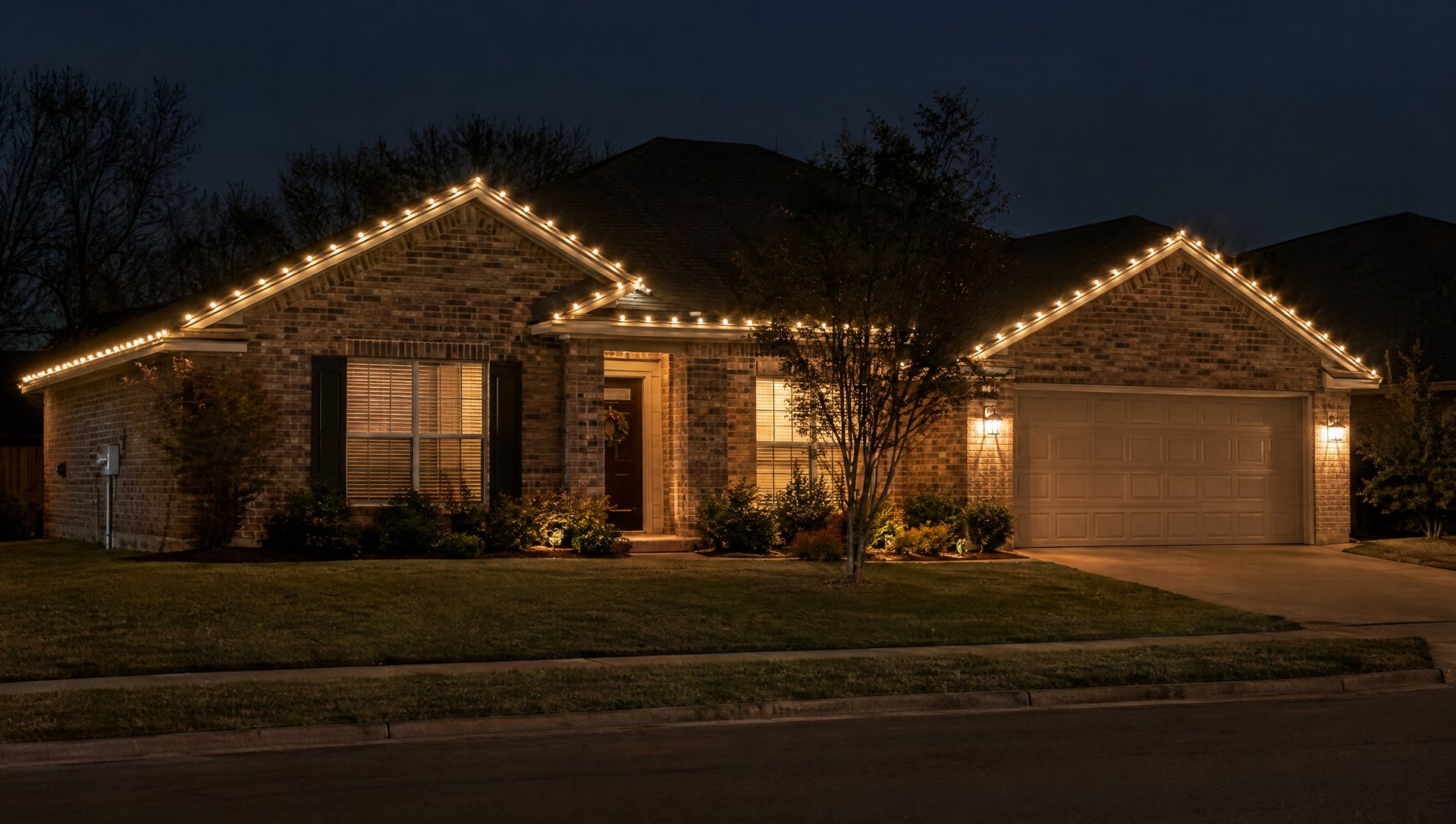
The inputs. A roofline of 200 C9 bulbs, run for the eight overnight hours from 11 p.m. to 7 a.m., for 30 nights. That is the extra cost of “all night” on top of a normal dusk-to-11 schedule.
The rate. Austin Energy’s residential rates inside the city limits stack four per-kWh pieces: an energy charge that rises by tier, a power supply adjustment of 3.912¢, a regulatory charge of 1.799¢, and community benefit charges totaling 1.097¢. Added together, each extra kWh costs about:
| Monthly use tier | Energy charge | All-in per kWh |
|---|---|---|
| 0–300 kWh | 4.872¢ | about 11.7¢ |
| 301–900 kWh | 5.395¢ | about 12.2¢ |
| 901–2,000 kWh | 7.901¢ | about 14.7¢ |
| Over 2,000 kWh | 11.428¢ | about 18.2¢ |
The result.
| 200-bulb C9 roofline | Watts | Extra overnight kWh (8 h × 30) | Extra cost at 12.2¢–14.7¢ |
|---|---|---|---|
| LED C9, about 0.6 W per bulb | 120 W | 28.8 kWh | about $3.50–$4.25 |
| Incandescent C9, 7 W per bulb | 1,400 W | 336 kWh | about $41–$49 |
The formula is watts ÷ 1,000 × hours × rate. Swap in your own bulb count and wattage from the box or the tag.
The tier trap. Austin’s tiers are the reason a big incandescent display hurts more than the raw kWh suggests. Say your household would use 850 kWh in December without lights. Add 336 kWh of overnight incandescent load and you are at 1,186 kWh, so the last 286 kWh are billed in the third tier at about 14.7¢ instead of 12.2¢. Leaving an LED display on overnight barely moves you; leaving a 1990s-style C9 roofline on overnight can move you up a tier.
Austin Energy customers outside the city limits pay a different rate schedule, and Pedernales Electric Cooperative members are on a different utility entirely. Pull the per-kWh figure off your own bill and plug it in.
The takeaway: with LEDs, the bill is not a reason to turn the lights off. Safety is.
Set a timer that actually shuts off
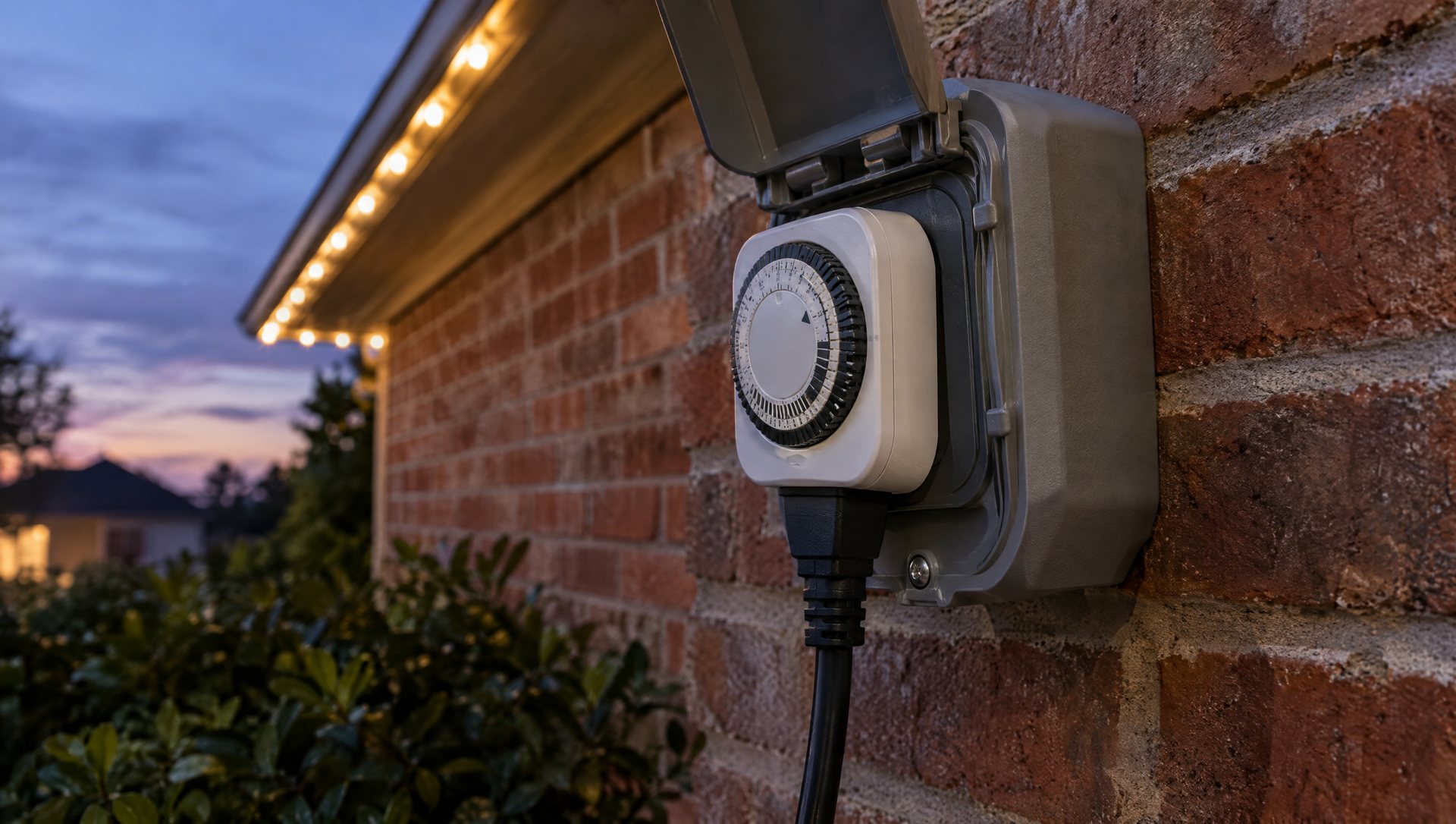
A timer turns “remember to unplug the lights” into something that happens whether or not anyone remembers. Here is what the schedule looks like in Austin, using sunrise and sunset times for the city:
| Date | Sunset | Sunrise | Dusk to 11 p.m. | Dusk to dawn |
|---|---|---|---|---|
| December 1 | 5:31 p.m. | 7:08 a.m. | about 5.5 hours | about 13.5 hours |
| December 21 | 5:36 p.m. | 7:22 a.m. | about 5.4 hours | about 13.8 hours |
| January 1 | 5:42 p.m. | 7:26 a.m. | about 5.3 hours | about 13.7 hours |
So “dusk to dawn” runs the display about two and a half times longer than “dusk to 11,” and every one of the extra hours is an hour nobody is watching it.
What to buy:
- An outdoor-rated timer with a rating higher than the total load plugged into it. Read the box; a heavy-duty outdoor timer is commonly rated 15 amps, and lighter ones less.
- A photocell with an “on for X hours” setting, or a plain clock timer. Avoid using the “dusk to dawn” setting, which is the all-night mode with a nicer name.
- Smart plugs only if the schedule runs locally. Some apps keep the schedule in the cloud; if the Wi-Fi drops or the power blinks, the plug may sit in whatever state it was last in. Test it by turning your router off for a minute.
Where to put it: in a dry, sheltered spot, off the ground, with the photocell facing open sky and away from your own lights. A photocell that can see the roofline will switch the display off as soon as it comes on, then back on, all evening.
How to check it: watch the first night. Confirm the lights come on near dusk and go off at the time you set. If you have more than one zone, such as the roofline on one timer and the trees on another, check each one. After any power outage, check the clocks again; a mechanical timer that lost two hours will happily keep the lights on until 1 a.m.
Our step-by-step hanging guide covers where the timer goes in the overall plan, including how many strands each outlet can carry.
Walk the circuit before you trust any schedule
A timer only decides when the display runs. It doesn’t decide whether the display is safe to run. Before you set the schedule and stop thinking about it, walk the whole circuit once, in daylight, from the wall to the last bulb.
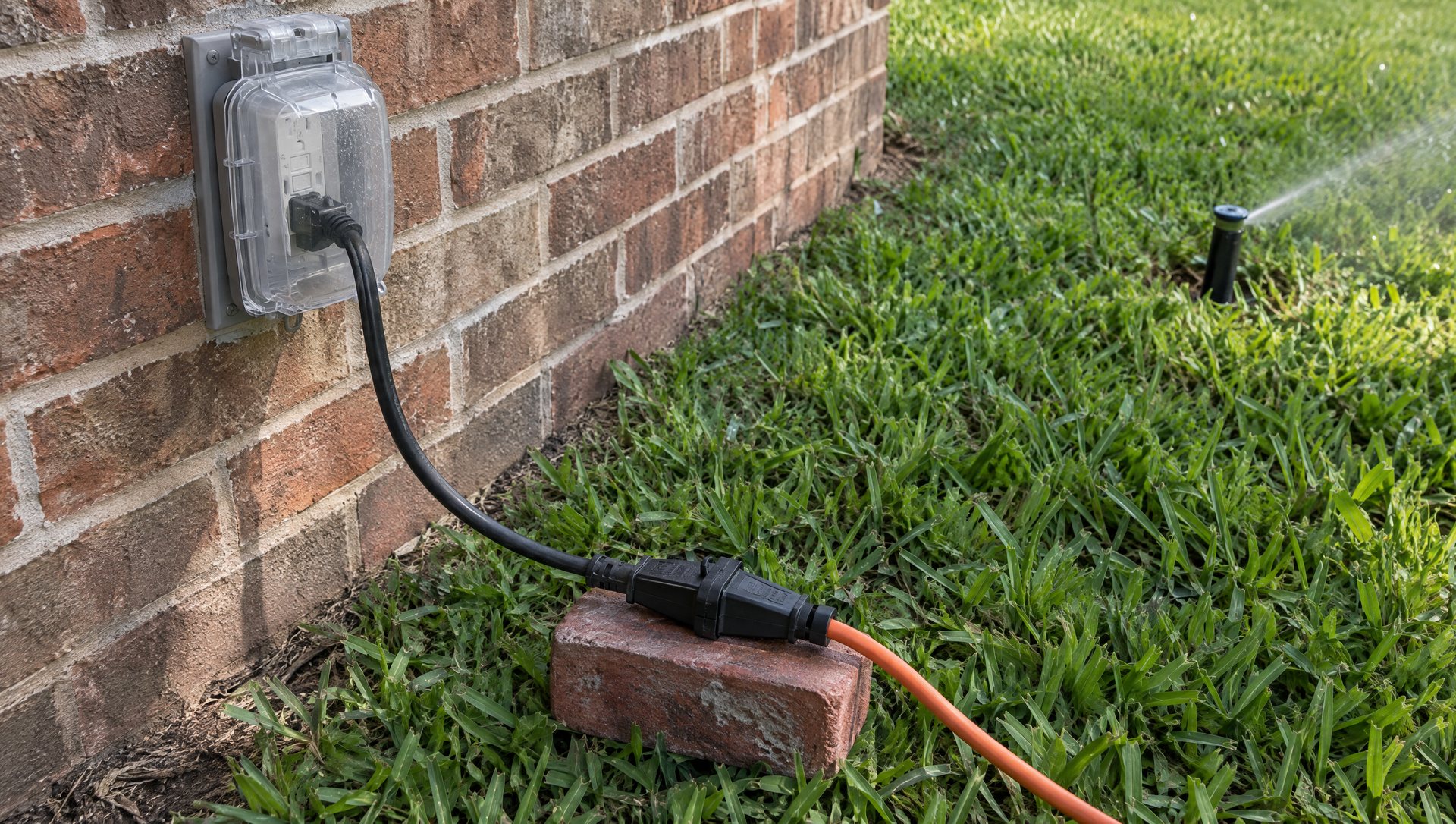
- The outlet. Exterior outlets should be GFCI protected. Press TEST, confirm the power cuts, press RESET. If TEST does nothing, the protection isn’t working; get an electrician before you plug in a display.
- The cover. An in-use (“bubble”) cover lets the outlet stay closed and shed rain with plugs in it. A flat flip cover propped open by a plug is collecting water.
- The first cord. Outdoor-rated, no splices, no tape repairs, nothing pinched in a door or gate.
- Every connection on the ground. This is the big one in Austin. Under the city’s watering rules, automatic sprinklers run only in the early-morning and evening hours on your watering day, which puts them squarely in the overnight window. A plug-to-plug connection in the turf gets soaked right when nobody is watching. Lift connections onto a brick, a stake or a short piece of pipe, or wrap them in a weatherproof connection box, and point sprinkler heads away from them.
- The strings. Cracked sockets, crushed or nicked wire, a cut bulb lens. Squirrels chew wire, especially under big oaks. Retire damaged strings; don’t tape them.
- The math. Total watts on each outlet, and the number of strings chained end to end versus the limit on the tag.
If anything on that list fails, fix it before the first night. A good timer on a bad circuit just schedules the problem.
Indoor trees, live trees and inflatables
Indoor trees get the same advice as everything else: off at bedtime. A live cut tree is the one that should make you most strict about it. Indoor heat dries a tree out, and a dry tree burns fast; the NFPA points out that 30 percent of Christmas tree fires happen in January, when trees have been up and drying for weeks. Water it every day, and if the needles shed when you brush a branch, it is time for the tree to go to the curb.
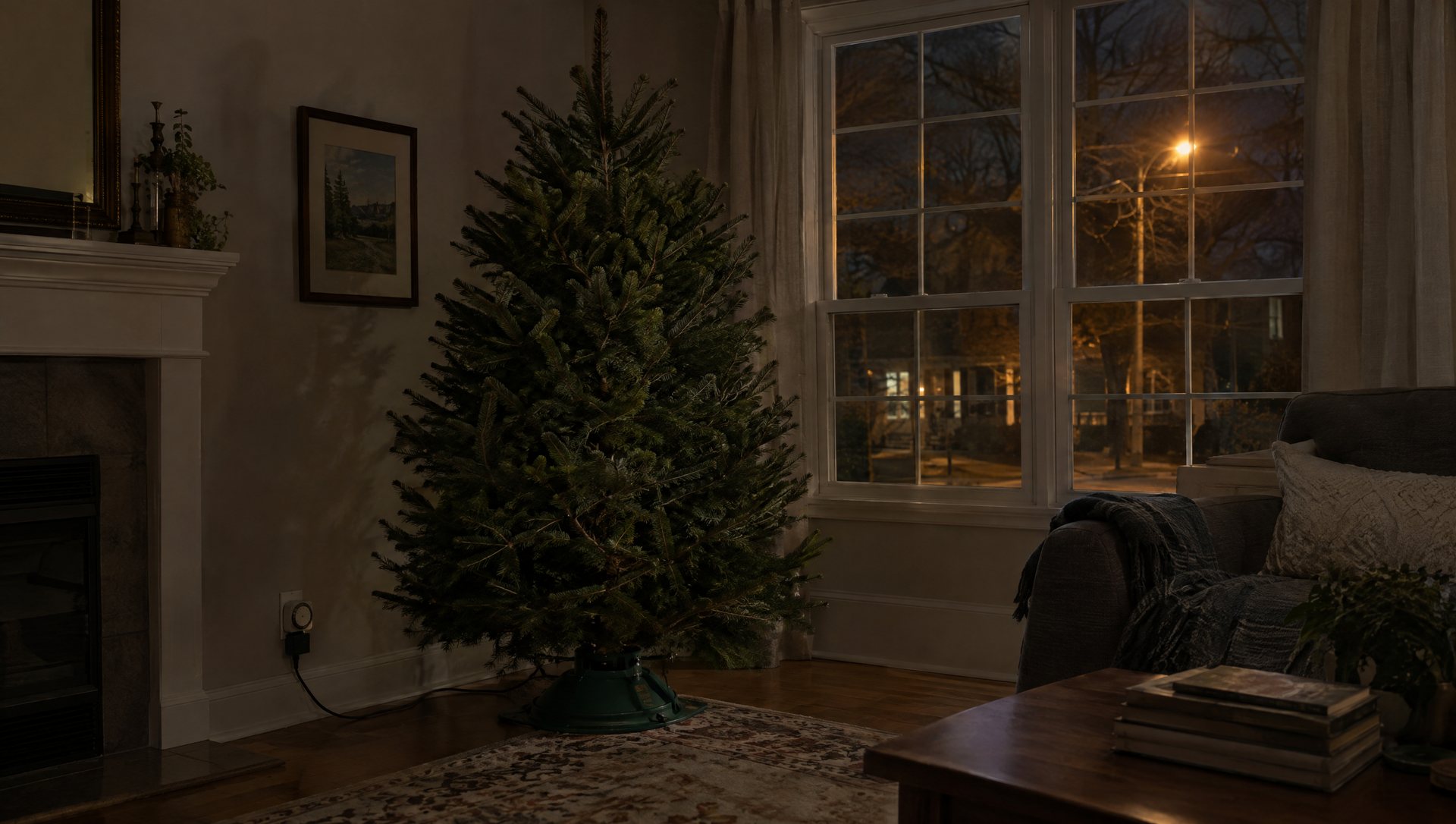
Artificial pre-lit trees often come with a foot switch or a remote. That is convenient, but put the tree on a plug-in timer too, so a forgotten switch doesn’t mean an all-night run.
Inflatables are the exception people ask about. The blower has to run to keep them up, so “off at night” means they deflate onto the lawn. That’s fine; it’s what they are designed to do. Put them on the same timer as the lights. If a deflated inflatable sitting on wet grass bothers you, take it as a reminder to check that its plug is off the ground and its cord isn’t running through a sprinkler zone.
Parties, trips and neighbors
Hosting a party? Leave everything on while people are up. When you override the timer, set a phone reminder to put it back in auto mode before bed. The most common way a display ends up running all night is a party override nobody switched back.
Traveling over the holidays? Turn the display off for the trip, or let the timer keep its normal evening hours. Never set it to all night “so the house looks occupied.” Holiday lights are not a security system, and an empty house is the worst place for an unattended fault. If you’re gone longer than a few days, unplug the display at the outlet.
Neighbors? A roofline or tree wrap close to a property line can shine straight into somebody’s bedroom. An 11 p.m. off time heads off most of those conversations before they start. If your HOA has holiday lighting rules, check them before you program a late schedule.
Up all season is not the same as on all night
A lot of people who search this question are really asking something else: can the lights stay up? Yes. A display can stay installed for the whole season and still be switched off every night. Leaving the lights hung is not the risk; leaving them powered while you sleep is.
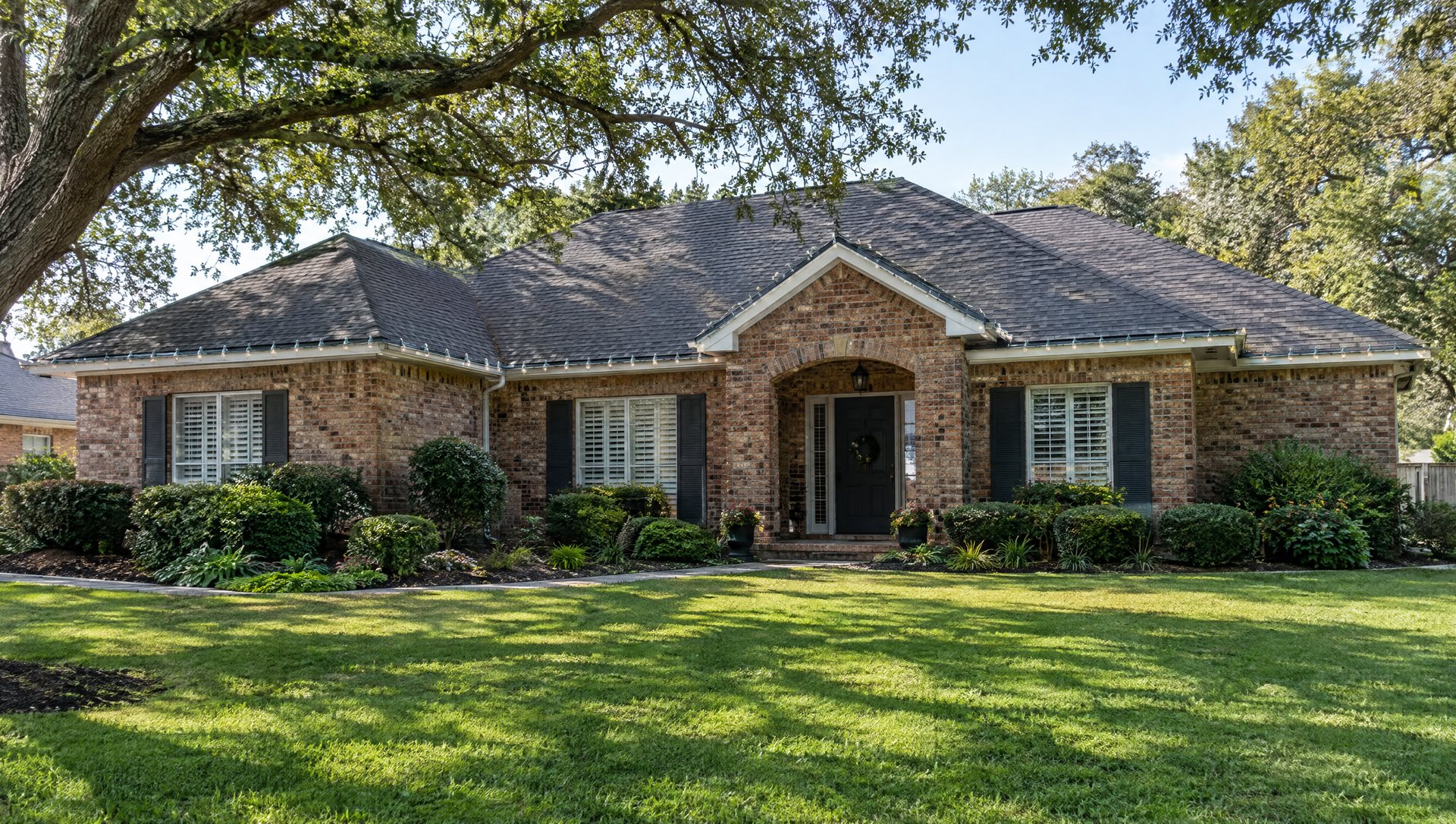
Our seasonal installs stay up through the holidays and come down in our January takedown window, January 2 to 15. Seasonal lights are not built to stay up all year, though. If you want lights you never take down, that is what permanent lighting is for, and those systems still run on a schedule.
Turn it off right now if you see this
No schedule is the right schedule for equipment that is failing. Shut the display off, and leave it off until you’ve found the cause, if you see:
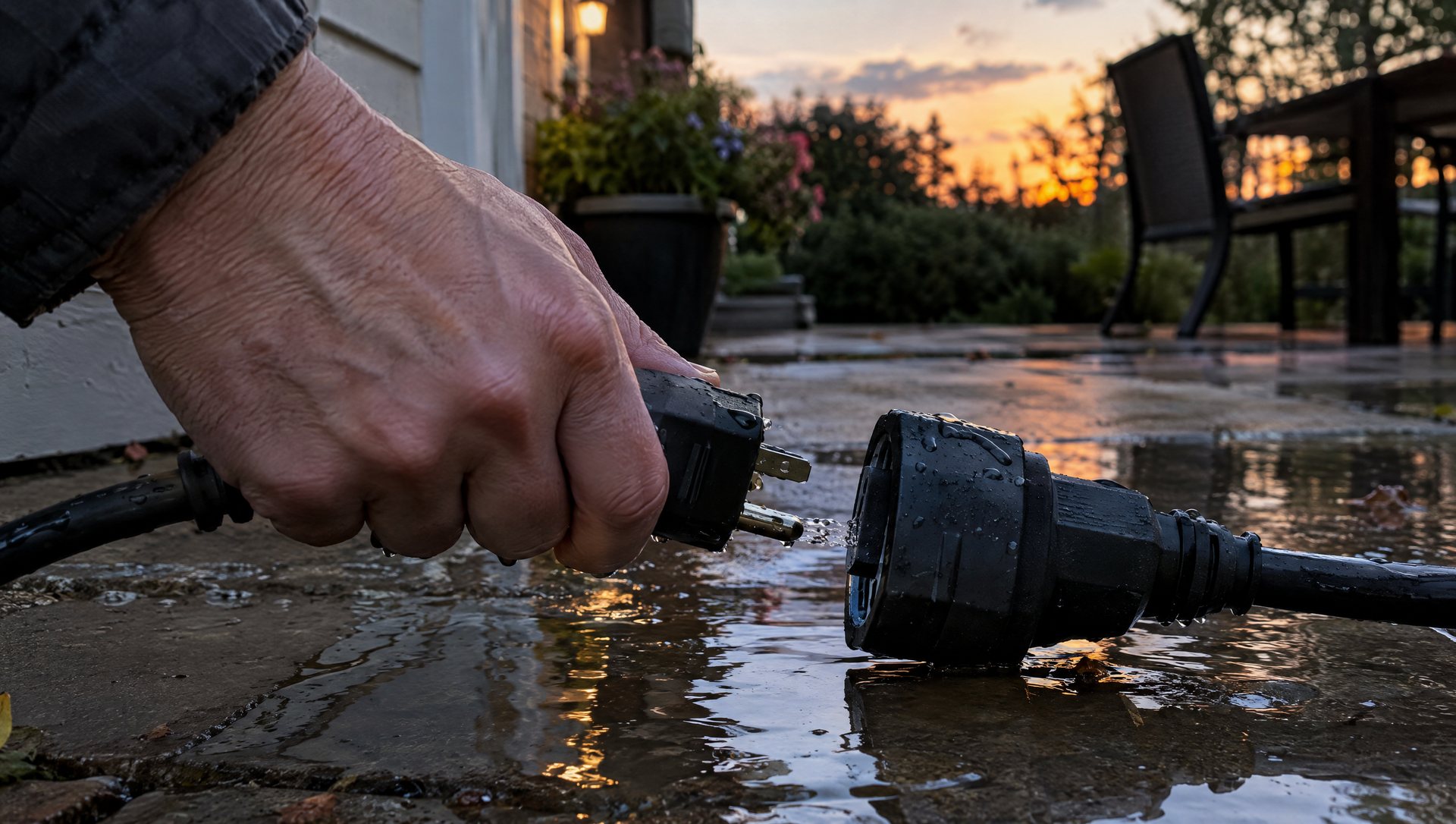
- A burning or hot-plastic smell near a plug, cord or timer.
- A cracked, melted or scorched plug, or a socket that is discolored.
- Sparking or buzzing at any connection.
- Water inside a plug, socket or connection box.
- A GFCI or breaker that trips twice. Reset it once, from a dry spot. If it trips again, leave it off and look for the wet connection, usually at ground level, often after rain or a sprinkler cycle.
- A string that is warm along the wire, not just at the bulbs, which can mean too many strings chained together.
Flickering, a half-dark string or a blown fuse are usually smaller problems, but they are still reasons to unplug and look before the next night. Our guides to flickering lights and Christmas light fuses walk through the fixes. For the broader ladder-and-cord checklist, see our light installation safety guide.
If you’d rather have the off time programmed when the display goes up, text a few daytime photos of the front of your house to (737) 777-9099 or use the contact page, and our Austin Christmas light installation crew will set the timer with the install.