


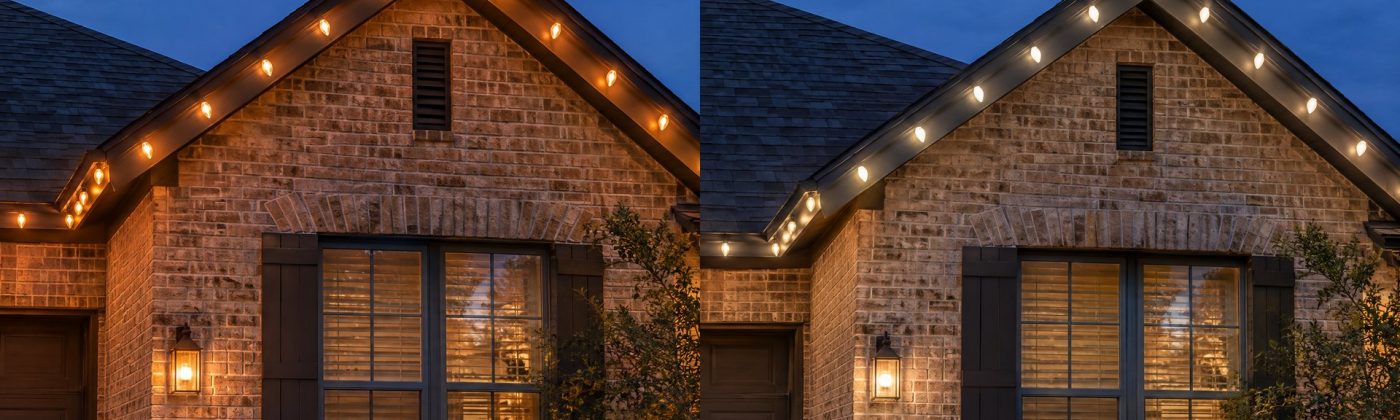
LED vs Incandescent Christmas Lights: Which to Buy, With Austin Numbers
Buy LED for anything new you put outside. An LED C9 draws about 0.8 watts to an incandescent C9’s 7, so the same roofline uses roughly a ninth of the power, runs cool, and leaves room on the circuit for the trees.
That is the verdict for most Austin houses. The more useful question is what to do with the incandescent sets already in your garage, and the answer there depends on the bulb size, the shape the sets are in, and how close your display comes to tripping a breaker. Below are the numbers, then four real-world situations and what we’d do in each.
The short version, in watts
Everything else in this comparison follows from one line of the spec sheet: watts per bulb.
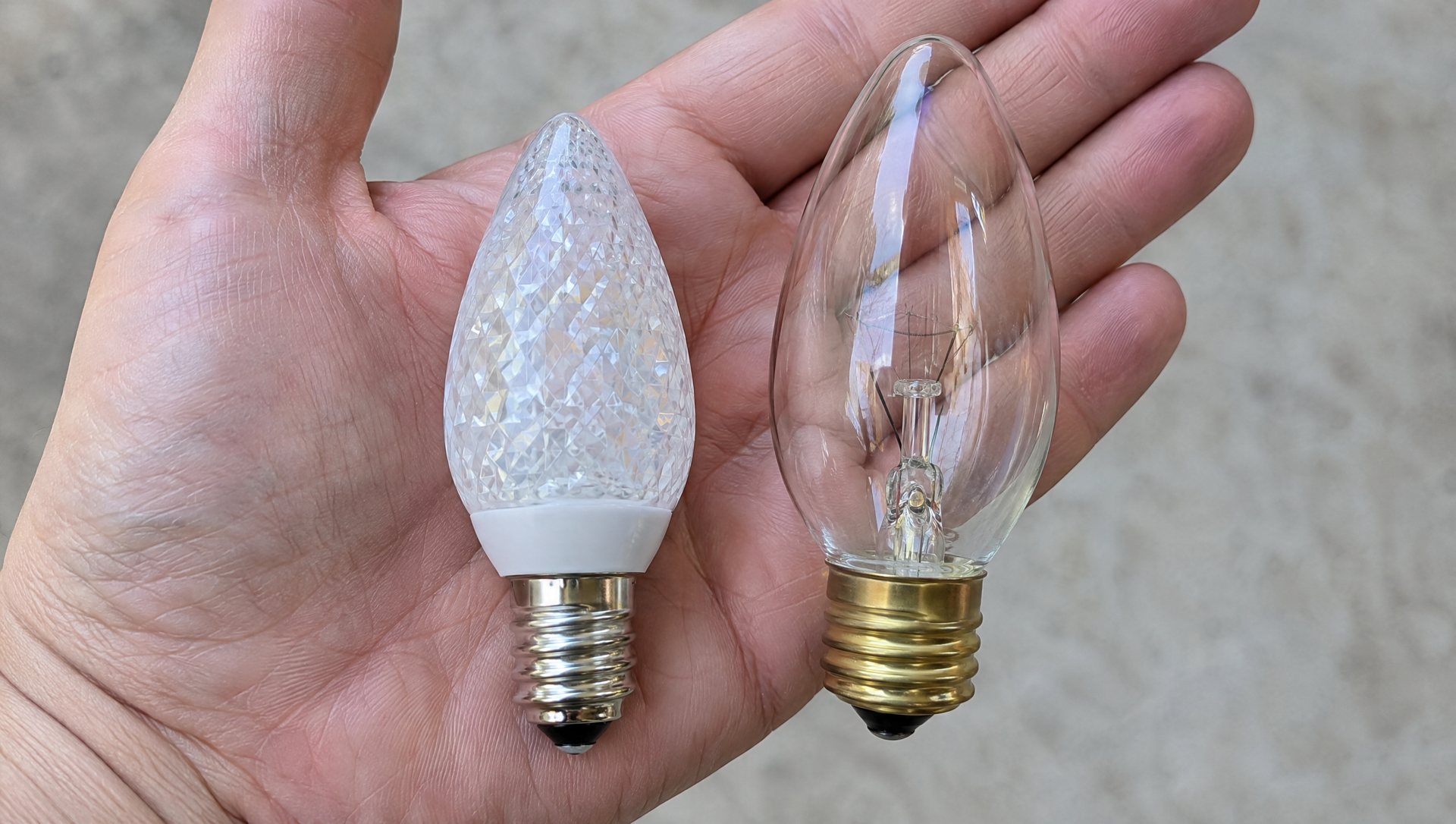
| Bulb | Incandescent | LED |
|---|---|---|
| C9 (roofline bulb, E17 base) | 7 W | about 0.8 W |
| C7 (smaller screw-in, E12 base) | about 5 W | usually under 1 W |
| Mini light | about 0.4 W (a 100-count set is typically rated near 40 W) | about 0.05 to 0.1 W (5mm wide-angle) |
The Department of Energy puts LED holiday strands at about 70 percent less energy than incandescent strands. On big bulbs the gap is wider: LED C9s from a major commercial supplier are rated about 0.8 watts against 7 for incandescent, close to 90 percent less. Current 100-count 5mm wide-angle LED sets list about 4.8 to 9.6 watts per string. We use 0.07 watts a bulb in the math below.
Don’t trust the shape name. A “C9” can be anything from a 0.5-watt LED to a 10-watt incandescent. The watts printed on the box or the bulb are what you plan with.
What your display costs to run in Austin
The formula is short: watts ÷ 1,000 × hours on × your rate per kWh.
Our inputs: six hours a night (about 5:30 to 11:30 pm) for 40 nights, so 240 hours. Christmas lights sit on top of everything else your house uses, so the rate that matters is the one on your last kilowatt-hours, not your average. Under Austin Energy’s residential rates, as checked October 2026, the energy charge plus the power supply adjustment (3.912¢), community benefit charges (1.097¢) and regulatory charge (1.799¢) come to:
- Tier 2 (301 to 900 kWh a month): about 12.2¢ per kWh
- Tier 3 (901 to 2,000 kWh): about 14.7¢
- Tier 4 (over 2,000 kWh): about 18.2¢
| Display | Load | kWh per season | Tier 2 | Tier 3 |
|---|---|---|---|---|
| 150 incandescent C9s | 1,050 W | 252 | $30.75 | $37.07 |
| 150 LED C9s | 120 W | 28.8 | $3.51 | $4.24 |
| 2,000 incandescent minis | 800 W | 192 | $23.43 | $28.24 |
| 2,000 LED 5mm minis | 140 W | 33.6 | $4.10 | $4.94 |
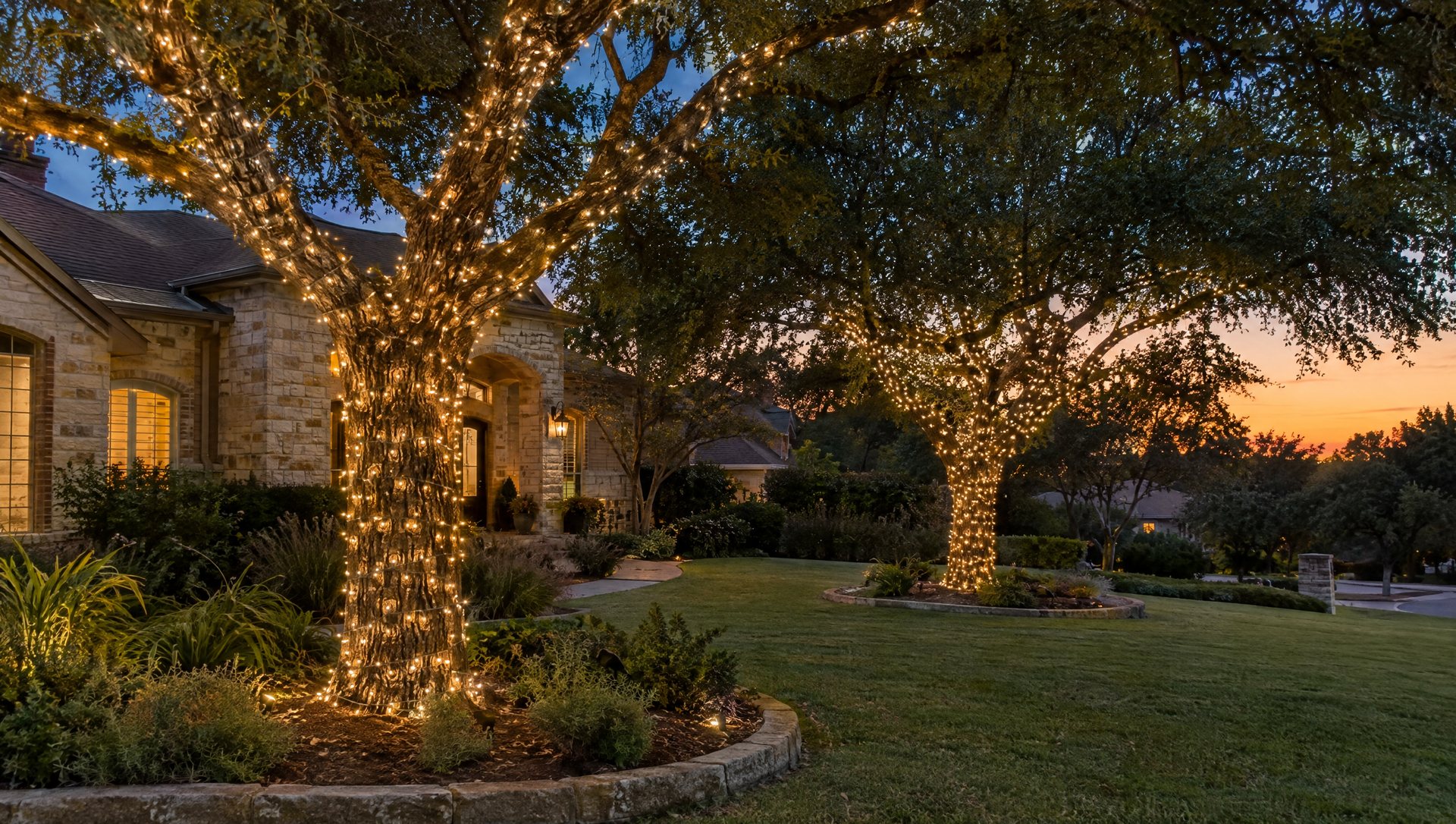
Two thousand minis is not an extreme number. A large live oak with its trunk and main limbs wrapped can take that many or more.
The more useful way to read the table is per bulb. Swapping one incandescent C9 for an LED saves 6.2 watts, which over a 240-hour season is about 1.5 kWh, or about 22 cents a season at the Tier 3 rate. Swapping one mini saves about a penny. Keep those two numbers in mind; they settle most of the decisions below.
One Austin wrinkle: the tiers apply to your whole month. If your December bill normally lands a little under 900 kWh, a big incandescent display (250 to 350 kWh a season, so roughly 200 or more a month) can push your last few hundred kWh into Tier 3. LEDs rarely move you a tier.
Four houses, four answers
The verdict changes with what you already own. Here is how we’d call it on the situations we see most.
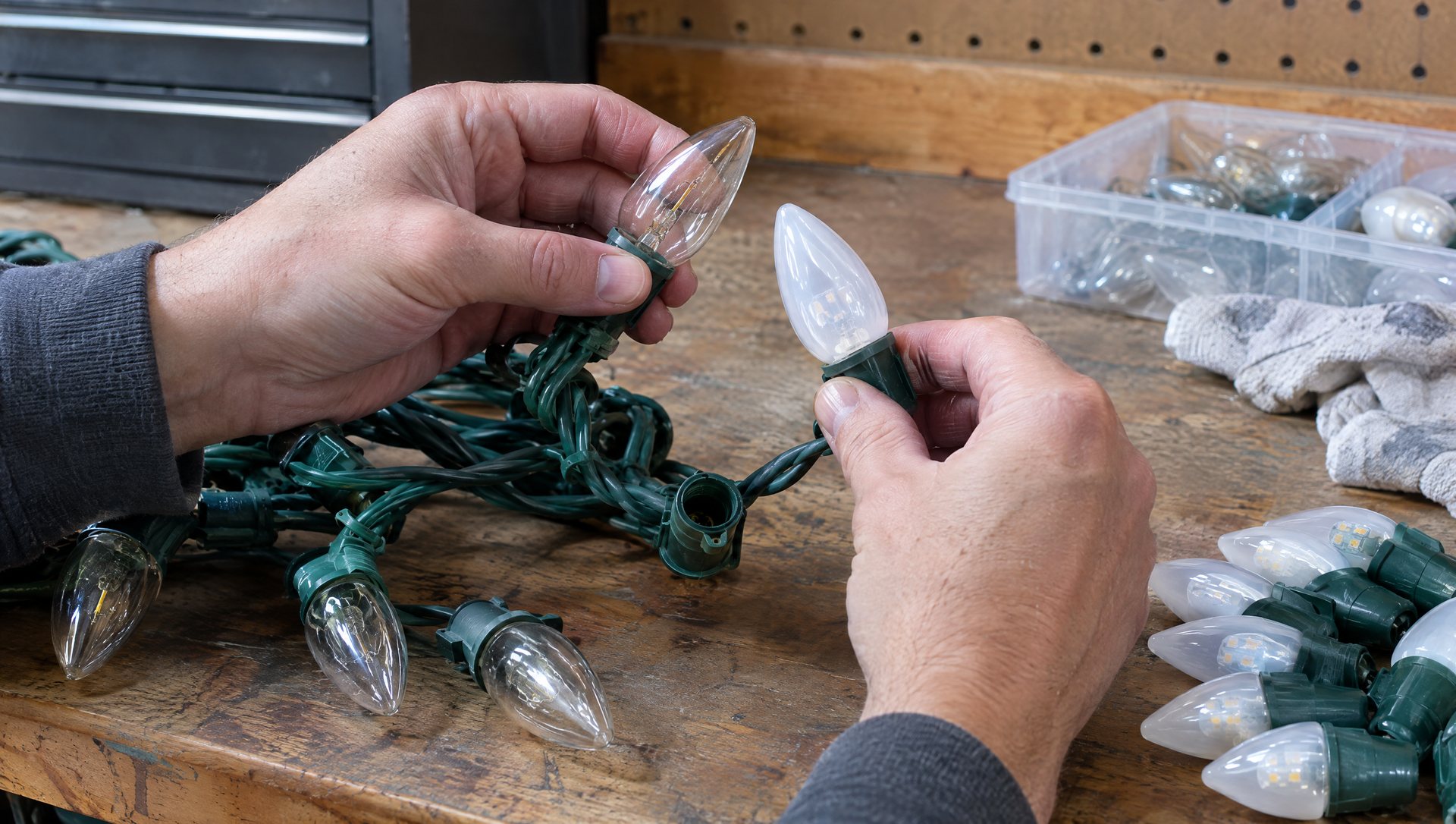
A bare house buying everything new
Say a single-story ranch with 120 feet of roofline and one good live oak out front. At 12-inch spacing that’s 120 C9s, plus about 1,500 minis on the oak.
- All incandescent: 840 W on the roof plus 600 W on the tree = 1,440 W. That’s the entire continuous capacity of a 15-amp circuit, before a single porch light or garage freezer. About $51 a season at Tier 3.
- All LED: 96 W plus 105 W = 201 W, about $7 a season. The whole display fits on one outlet with room to spare.
When you’re buying anyway, LED costs only the price difference up front, and the first season’s savings start paying it back immediately. There is no case for new incandescent on a display this size.
A 1990s incandescent C9 roofline that still works
This is the common one. The socket wire is fine, the bulbs mostly light, and you like how it looks.
You don’t need new wire. C9 LED retrofit bulbs use the same E17 base and screw straight into incandescent C9 sockets. The math is per bulb: each one saves about 22 cents a season at Tier 3, so a retrofit bulb pays for itself in roughly 4½ seasons for every dollar it costs. A $1 bulb is worth swapping; a $3 bulb on energy alone is a 13-year payback and not worth it unless you also need the load headroom (next scenario).
Check the old wire before you invest in it. Stiff, cracked or sun-faded insulation on an old SPT-1 cord is a reason to replace the whole run, not re-bulb it.
A display that keeps tripping the breaker
Here LED is a fix, not an upgrade. A typical household 15-amp circuit should carry no more than about 1,440 watts of continuous load (80 percent of its 1,800-watt capacity), and outdoor outlets often share a circuit with the garage, a fridge or a bathroom.
Swap the biggest load first. Converting 150 incandescent C9s drops the roofline from 1,050 W to 120 W, freeing almost 930 watts. Converting 500 incandescent minis frees only about 165 W. Roofline first, every time.
If the trips continue after the load drops, it’s water, not watts: a connection sitting in a wet bed or a damaged cord. Our flickering and tripping guide walks through finding it.
A porch you want to look like 1965
A front porch with 25 incandescent C7s costs about $4.40 a season at Tier 3. LED would save under $4. If those bulbs give you the look you want and the sets are sound, keep them. The money is trivial at that scale, and close up is where the filament glow is most noticeable.
Just keep them on their own zone (see mixing, below) and inspect the cord every year.
Load: the reason that matters more than the bill
For most houses the energy bill is not what makes LED worth it. Capacity is.
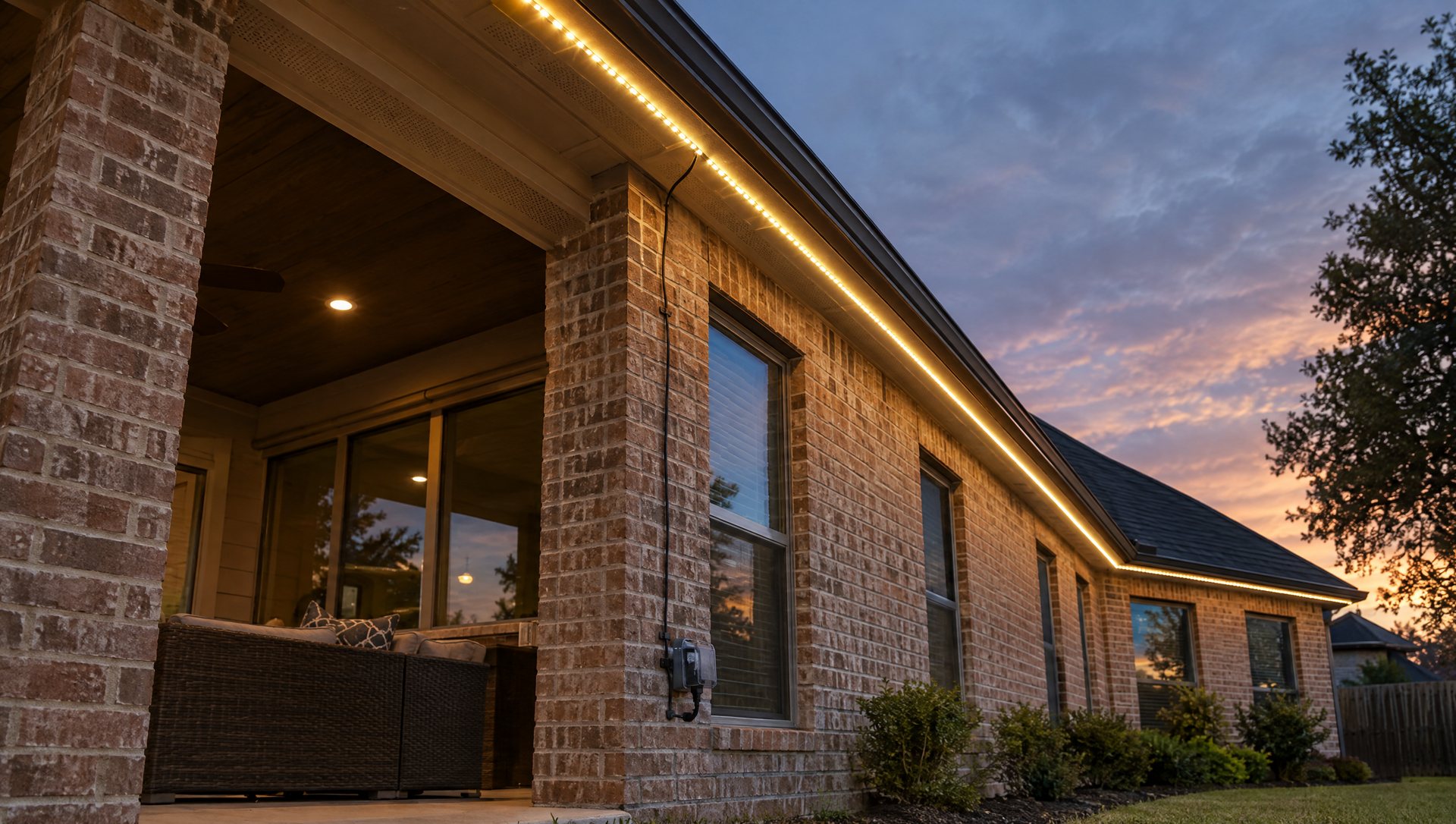
Every link in the chain has a limit, and you follow the lowest one. Pre-made C9 stringers with fused plugs commonly cap a run at about 960 watts. Every set prints how many sets may connect end to end, and incandescent sets usually allow only a few. Timers and extension cords carry their own ratings. Then there’s the circuit.
At 7 watts a bulb, 137 incandescent C9s hit that 960-watt stringer limit, which is a fairly ordinary single-story roofline. At 0.8 watts, a 960-watt run could carry over a thousand LED C9s, far more than any house needs, so the practical limit becomes the set’s own connection rating.
That headroom is what lets one outdoor outlet run the roofline, the tree and the porch together. It’s also why we don’t have to split a display across a garage outlet and a backyard outlet with a cord across the patio. Sapien does plug-in work only and does not add outlets or circuits; if you need one, call a licensed electrician.
Brightness and warmth
People ask “which is brighter?” and usually mean “which looks better from the street?” Those aren’t the same question.
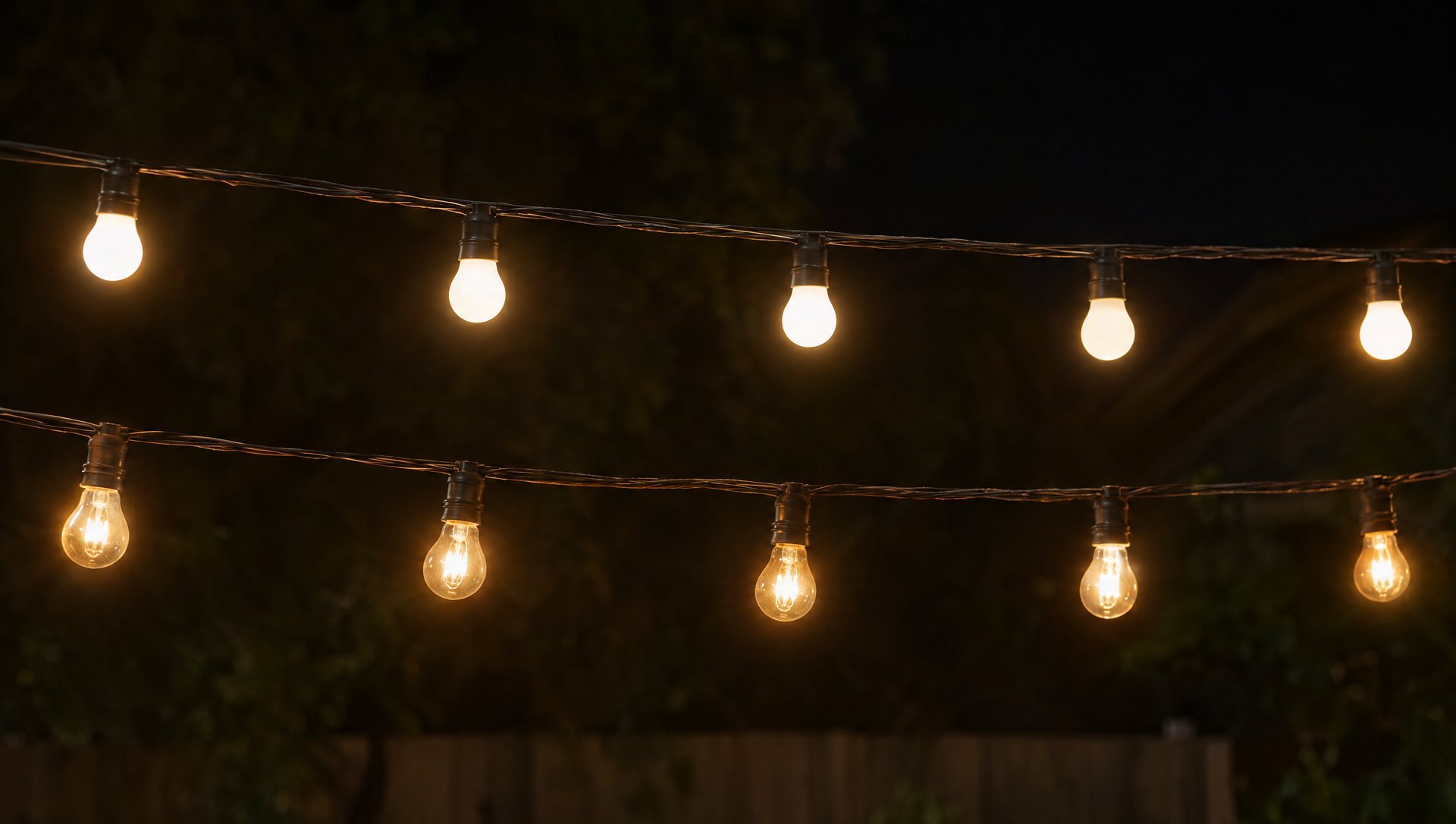
Brightness. A good LED C9 reads at least as bright from the street as an incandescent one. What changes the look more is the lens. Faceted LED C9s throw sparkle; smooth ones look more like old glass bulbs. For minis, 5mm wide-angle LEDs have a concave lens that spreads light sideways, so a wrapped trunk glows evenly instead of showing a dotted line. Older conical LED minis are bright looking straight at them and dim from the side.
Warmth. Incandescent bulbs have a soft, slightly amber glow that a lot of people simply call “Christmas.” Warm-white LEDs get close, but “warm white” is not a standard, and two brands side by side can look like two different colors. The mistakes we see most on real houses are LED bulbs bought from two different orders on one roof edge, and a warm-white LED roofline next to a cool-white LED tree.
How to avoid it:
- Matching an existing incandescent display? Buy one LED sample, put it in the run, and look from the street after dark.
- Going all LED? Buy every bulb for one continuous edge from the same product and the same order.
- Check the color temperature on the box if it’s listed; lower numbers are warmer.
Color. LEDs give saturated reds, blues and greens because the color comes from the diode. Incandescent colors come from tinted or coated glass and look softer and a bit chalky. Neither is wrong; if you’re choosing a palette, our colored vs white lights guide is the next read.
Flicker: the LED problem the box never mentions
Cheap LED sets often run straight off household alternating current with little or no smoothing, so the diodes switch on and off 60 or 120 times a second. Most people don’t see it looking straight on. It shows in peripheral vision, when your eyes move across the display, and on phone video as rolling bands.
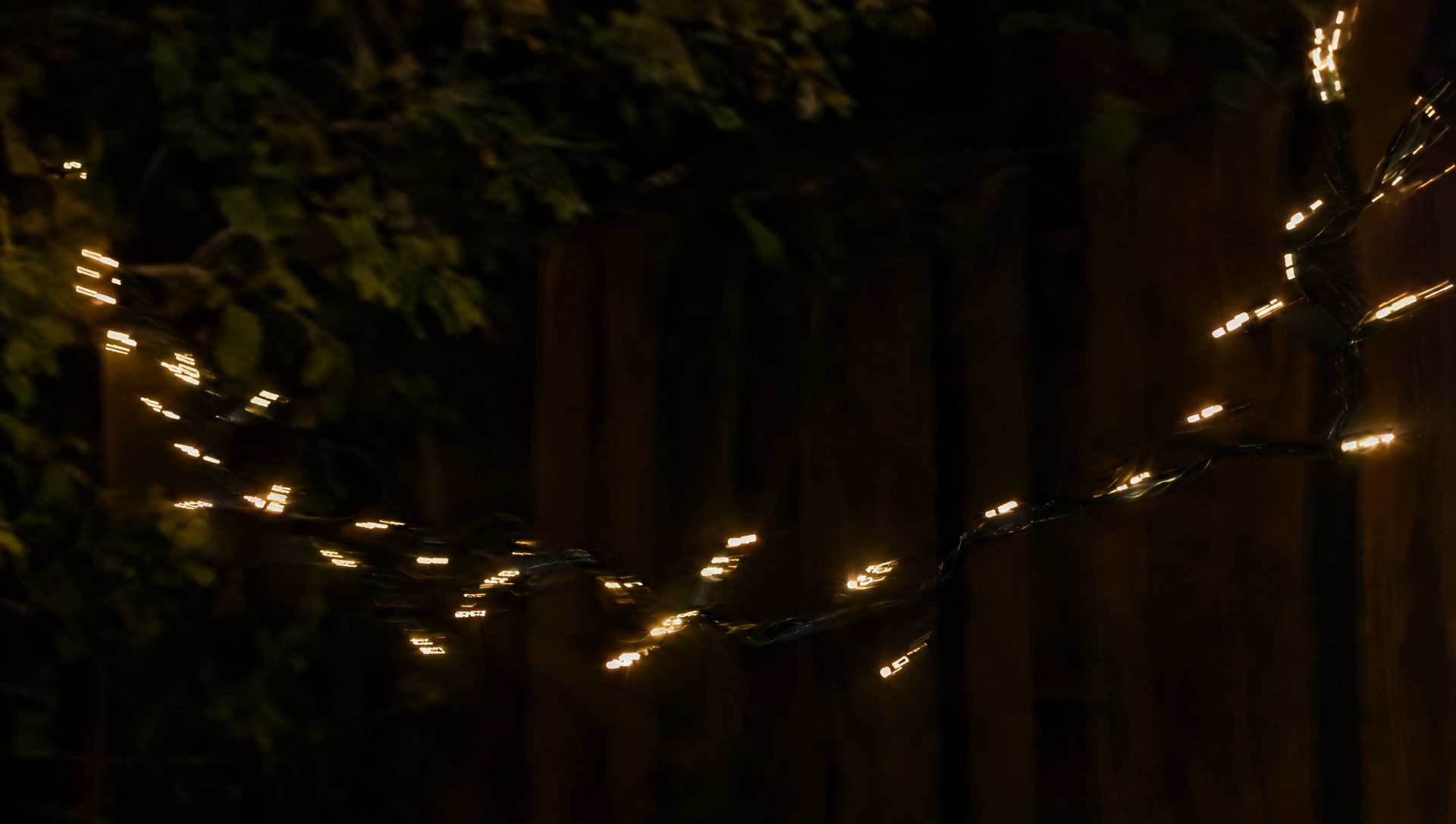
It’s measurable, not imagined. In Ocean Optics’ measurements, an LED Christmas bulb’s output dropped all the way to zero many times a second, while an incandescent bulb barely varied. Neither flicker was visible to the eye.
Better sets use rectified or driver-based designs that flicker far less. The test before you buy in bulk: plug in one sample at night and film it in slow motion on your phone. Dark bands rolling through the video mean visible flicker for some people. Incandescent sets don’t have this problem at all, which is one honest point in their favor.
Heat and safety
LEDs run warm to the touch; incandescent C9s get hot. Lower current also means less heat in the cord, the plug and every connection. That matters around dry cedar garland, in a mulch bed in a dry December, and on an outlet that’s already working hard.
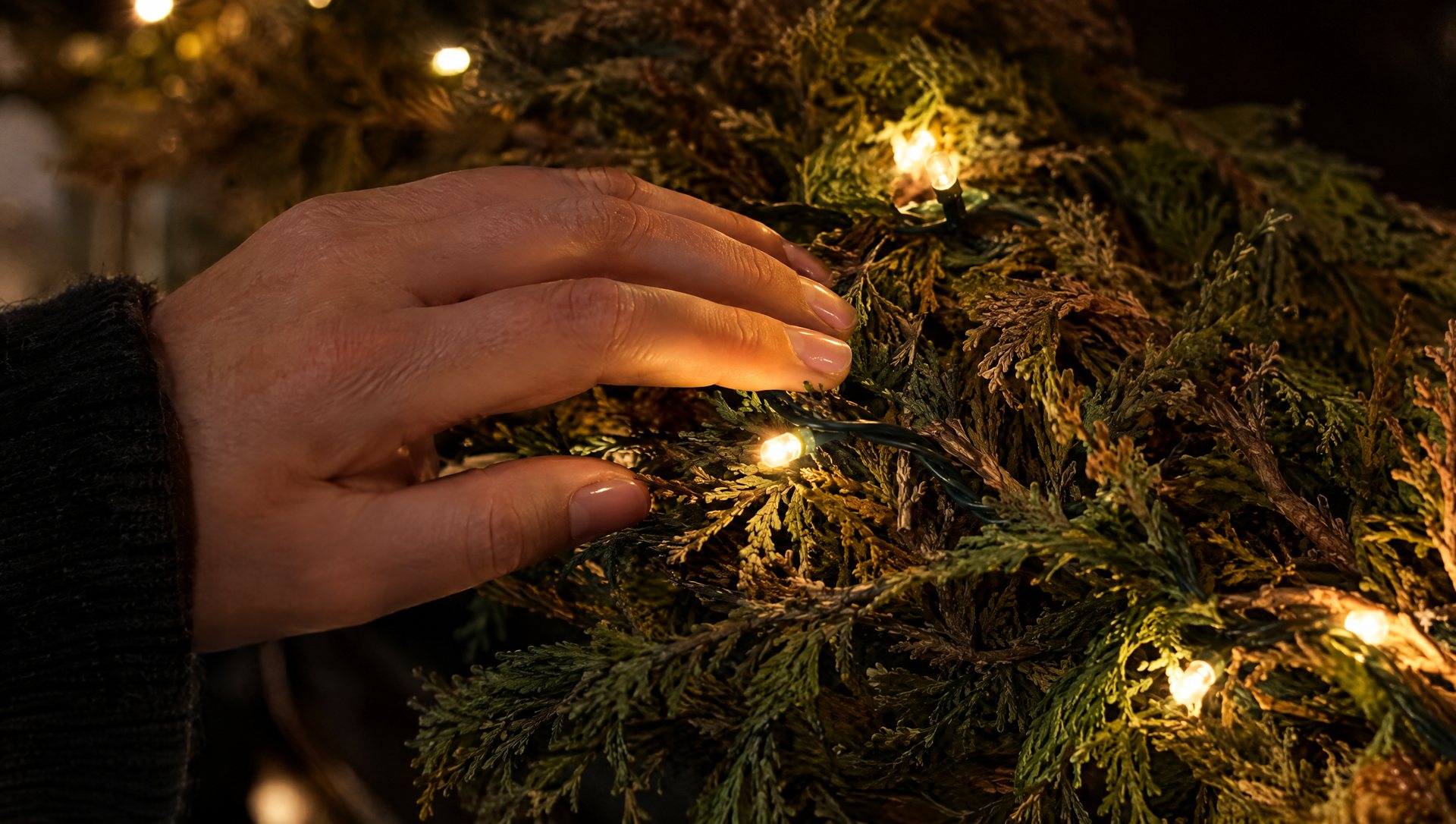
Cool does not mean carefree. The basics apply to both:
- Outdoor-rated, listed products only.
- GFCI-protected outlets.
- Inspect every set each season; a cracked socket or nicked insulation means the set is done.
- UL Solutions advises checking equipment, avoiding overloads, and turning decorations off when you’re away or asleep. A timer does that for you; how long to run them is covered in can you leave Christmas lights on all night.
Anything that trips a breaker, smells hot, or has damaged insulation comes down, LED or not. Our installation safety guide covers the ladder side.
Repairs and lifespan
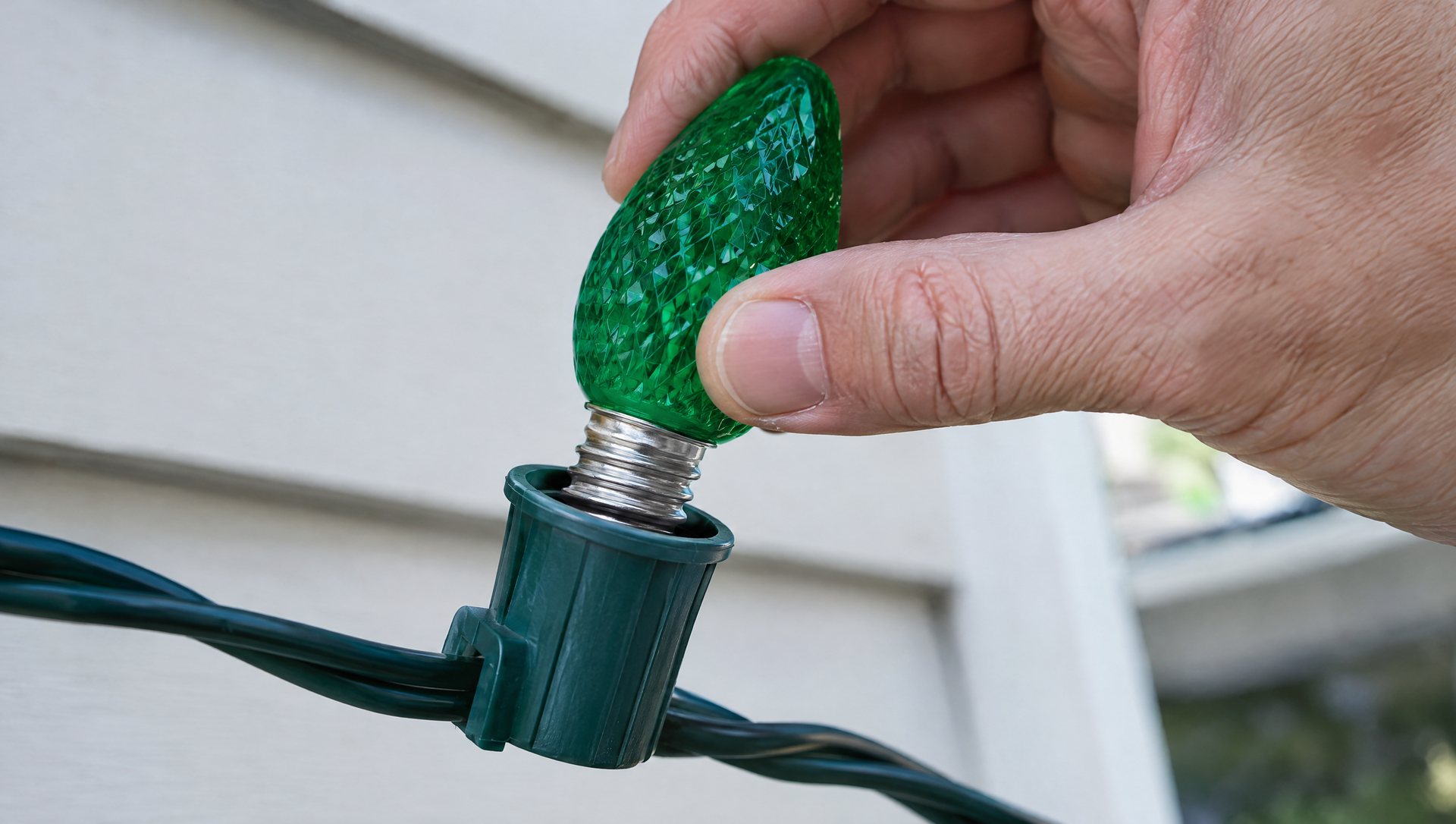
Screw-in bulbs (C7 and C9) are the easiest to live with either way. A dead bulb is a 10-second swap. That’s one reason commercial rooflines use bulbs on socket wire rather than sealed strings.
Incandescent minis are repairable in theory: replace a bulb, replace the fuses in the plug. In practice, finding one loose bulb on a dark 100-light string is the most tedious job in Christmas lighting. Our guides to fuses and light testers help.
Most LED mini sets are sealed. When a section fails, you usually replace the set. In exchange, a well-made LED set lasts many seasons, because the diode itself outlives a filament by a wide margin.
The catch is that a set’s life is not the diode’s life. Cheap LED strings fail at the wiring, the seals and the little rectifier in the plug long before the LEDs wear out. “50,000 hours” on the box tells you about the diode, not the cord.
Mixing the two
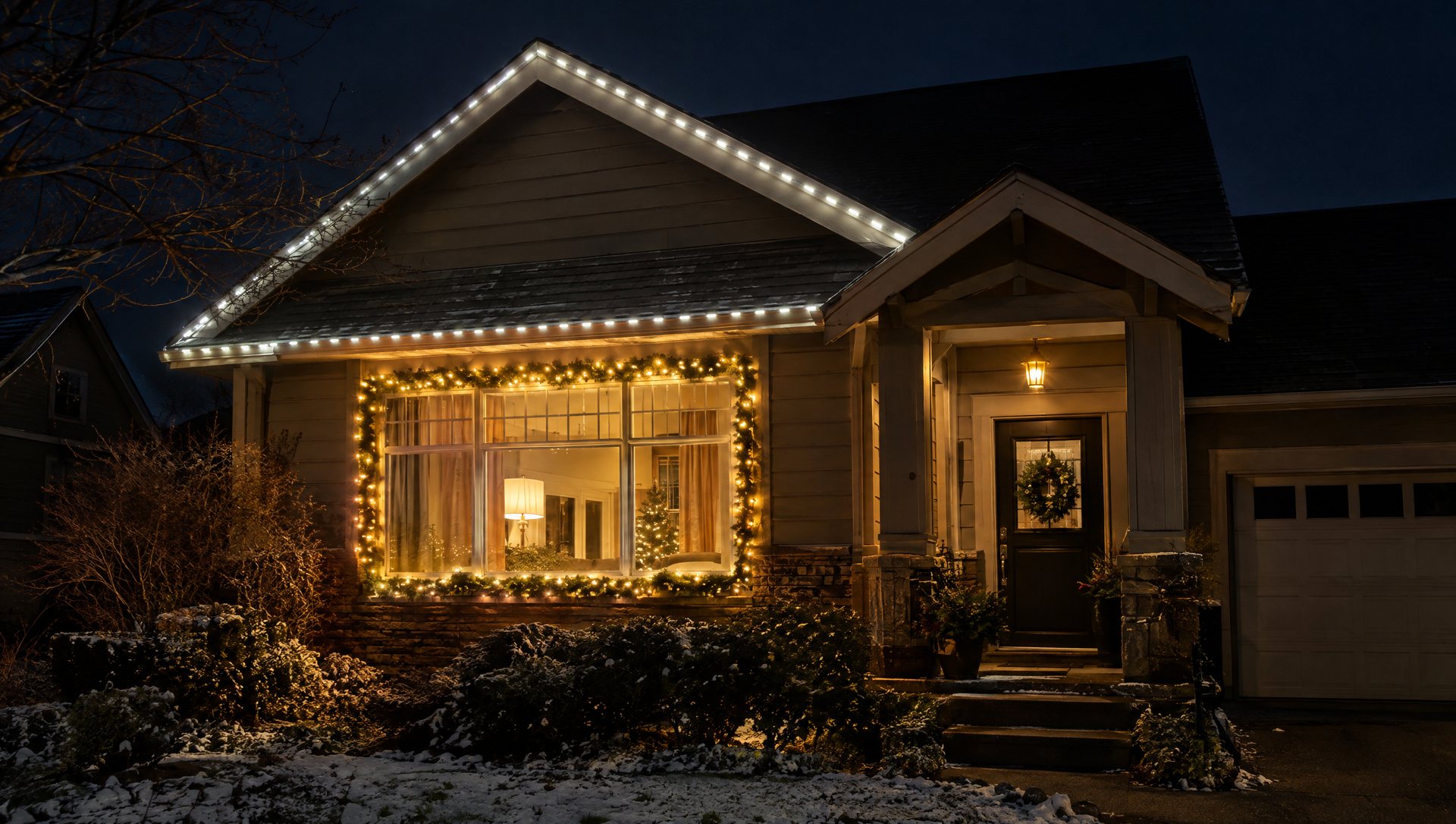
Visually, mixing works when each technology gets its own zone: an incandescent C7 porch and an LED roofline can look fine together, because the eye reads them as separate features. It looks wrong when they share an edge. An LED run that turns into incandescent halfway along a gutter looks like a mistake.
Electrically, don’t plug LED and incandescent sets end to end unless both manufacturers say you can. The connection ratings, fusing and rectifiers aren’t designed for each other.
What to buy and what to skip
Buy:
- LED C9s or C7s on socket wire for rooflines, all from one product line and one order.
- 5mm wide-angle LED minis for trees and shrubs.
- LED retrofit bulbs for old C9 wire that’s still in good shape, if they cost about a dollar or less each.
- One sample before you buy a hundred of anything.
Skip:
- New incandescent sets for anything larger than a porch accent.
- Re-bulbing incandescent minis to “save power”; the savings are pennies.
- LED bargain sets you haven’t slow-motion tested.
- Mixing warm whites from different brands on one edge.
If you want help planning a full LED roofline and tree for your house, text a photo of the front of your house to (737) 777-9099 or use our contact page; our Austin installation service uses LED C9s on rooflines and 5mm wide-angle minis on trees. For bulb sizes and spacing, see the C9 Christmas lights guide.
Frequently asked questions
Are incandescent Christmas lights being banned?
No. The 2023 federal efficiency rule covers general service lamps, which the DOE definition limits to bulbs putting out at least 310 lumens and which excludes colored lamps. Incandescent C7, C9 and mini Christmas bulbs are far dimmer than that, so they’re outside the rule and still sold.
Can I put LED bulbs in my old incandescent C9 or C7 strings?
Yes. LED C9 retrofit bulbs use the same E17 base, and LED C7s the same E12 base, as the incandescent versions. Inspect the old wire first, and don’t mix the two bulb types on one continuous edge.
Sources
- U.S. Department of Energy: how holiday lights work
- Austin Energy: residential rates
- Christmas Lights Etc: C7 and C9 bulb specifications
- Christmas Lights Etc: C7 and C9 stringer specifications
- Ocean Optics: spectroscopy of Christmas lights
- UL Solutions: safe lighting tips
- eCFR: 10 CFR 430.2 definitions (general service lamp)
About the author. Rick Safeman owns Sapien Lighting & Installation in Austin, Texas.