


A Christmas light installation contract should list what gets lit, who owns the lights, the price and deposit, how you cancel, weather and outage terms, who pays for damage, the insurance behind the work and the takedown date. In Texas, a quote accepted by email or e-signature can bind you like a paper contract. Read every line before you pay a deposit.
- Is a quote I accepted by email a contract?
- It can be. Texas gives electronic signatures and contracts the same effect as paper when both sides agreed to deal electronically.
- How much deposit is normal?
- No public standard sets one. The Texas Attorney General says to expect partial payment in advance. Paying in full before any work is the warning sign.
- Do I get three days to cancel?
- Only for certain sales made away from the seller’s place of business. Otherwise the contract’s own terms decide.
- Who pays if the crew damages my roof or a tree?
- Whatever the damage clause says. Look for a cap, a gross-negligence limit and a reporting deadline before you sign.
- Does “insured” mean the crew is covered?
- Not by itself. General liability covers damage and injuries to other people, not the company’s own workers.
- Does being on the certificate make me an additional insured?
- No. A Texas certificate is for information only. That status comes from the policy or an endorsement to it.
- Do Christmas light installers need a Texas license?
- Texas has no state-level license for them. Adding an outlet or circuit takes a TDLR-licensed electrician.
- When should the lights come down?
- On a date written into the contract, before your HOA’s deadline. Circle C Ranch, Teravista and Sun City Texas, for example, use January 15.
This checklist is for an Austin-area homeowner holding a quote, service agreement or terms page and deciding whether to sign. It also works for an HOA board or business checking a vendor agreement. If you are still comparing prices, start with how to read a Christmas light installation quote.
The checklist: 14 things a Christmas light contract should say
A Christmas light installation contract can be one page. What matters is whether it answers these 14 points in writing:

- Parties. The installer’s legal business name, your name and the service address.
- Scope. Each area lit, with footage or counts, bulb type, color and spacing, and each tree and how far it is wrapped.
- Ownership. Whether you buy the lights or the installer supplies and keeps them.
- Price. The total, whether sales tax is included, and how design changes are priced and approved.
- Payment. The deposit, when the balance is due, and any late or returned-payment fees.
- Cancellation. How you cancel, by when, and what happens to the deposit.
- Install window, access and weather. The target week, whether you need to be home, gate and pet arrangements, and how rain or wind reschedules it.
- Power and timers. Which outlets the lights use, the on and off times, and that new wiring is not part of the job.
- In-season service. How you report a dark section, and what is excluded.
- Damage. How lights attach to each surface and tree, how you report damage, and who pays.
- Insurance. The coverage behind the work, with a certificate you can check.
- Removal and storage. The takedown date or window, and storage terms if the installer keeps the lights.
- HOA. Who is responsible for meeting your association’s rules and dates.
- Fine print. Renewal for next season, use of photos of your house, an “entire agreement” clause, and dated signatures.
To see what real terms look like, we read two installers’ published agreements and one contract-template guide written for installers in October 2026. “Those agreements” below means that set.
Is an accepted quote a contract?
An accepted quote can be the contract. Under Texas Business and Commerce Code section 322.007, a contract cannot be denied legal effect just because it was formed electronically, and an electronic signature counts as a signature. That applies when both sides agreed to deal electronically, judged from the circumstances, including how both sides acted (section 322.005). Replying “approved” to a quote email can count.
The Texas Attorney General advises a written contract that says what will be done, when work starts and when it ends. The AG says never to sign one with blanks, and to keep copies of everything you sign.
What should the scope section say?
The scope section should let you walk around the house on install day and check every line. A one-line scope (“front of house, roofline and trees”) leaves room to disagree about what was promised. Look for each roofline by location with footage, the bulb type (C9, C7 or mini), color and spacing, and counts for wreaths, garland and bushes.

Tree lines need definitions, because installers use the same words differently. A trunk wrap spirals lights up the trunk only. A trunk-and-limb wrap continues out along the main limbs. Canopy lighting, as we use the term, lays or drapes lights through the outer branches instead of wrapping them. Each takes very different footage and money. Our own typical 2026 prices show the spread: from $195 for a trunk wrap only (trunk up to 10 feet) to $950 for a large tree of 20 to 30 feet, and $2.75 per foot of light string, with a $1,750 minimum, for an extra-large or heritage oak. So the contract should name the style, the height, the spacing between wraps and how far out the limbs go. A marked-up photo of each tree, attached to the quote, settles it.
Installer templates put the job of checking scope on you and bill for later changes. That is fair only when the scope is specific.
Who owns the lights under the contract?
The contract should say plainly who owns the lights, because it changes what you are paying for. Under a lease or service model, the installer supplies the lights, takes them down and keeps them. Those agreements sometimes kept the cords and timers with the installer too. Under a purchase model, the lights are yours in January, and the contract should say whether the installer stores them.
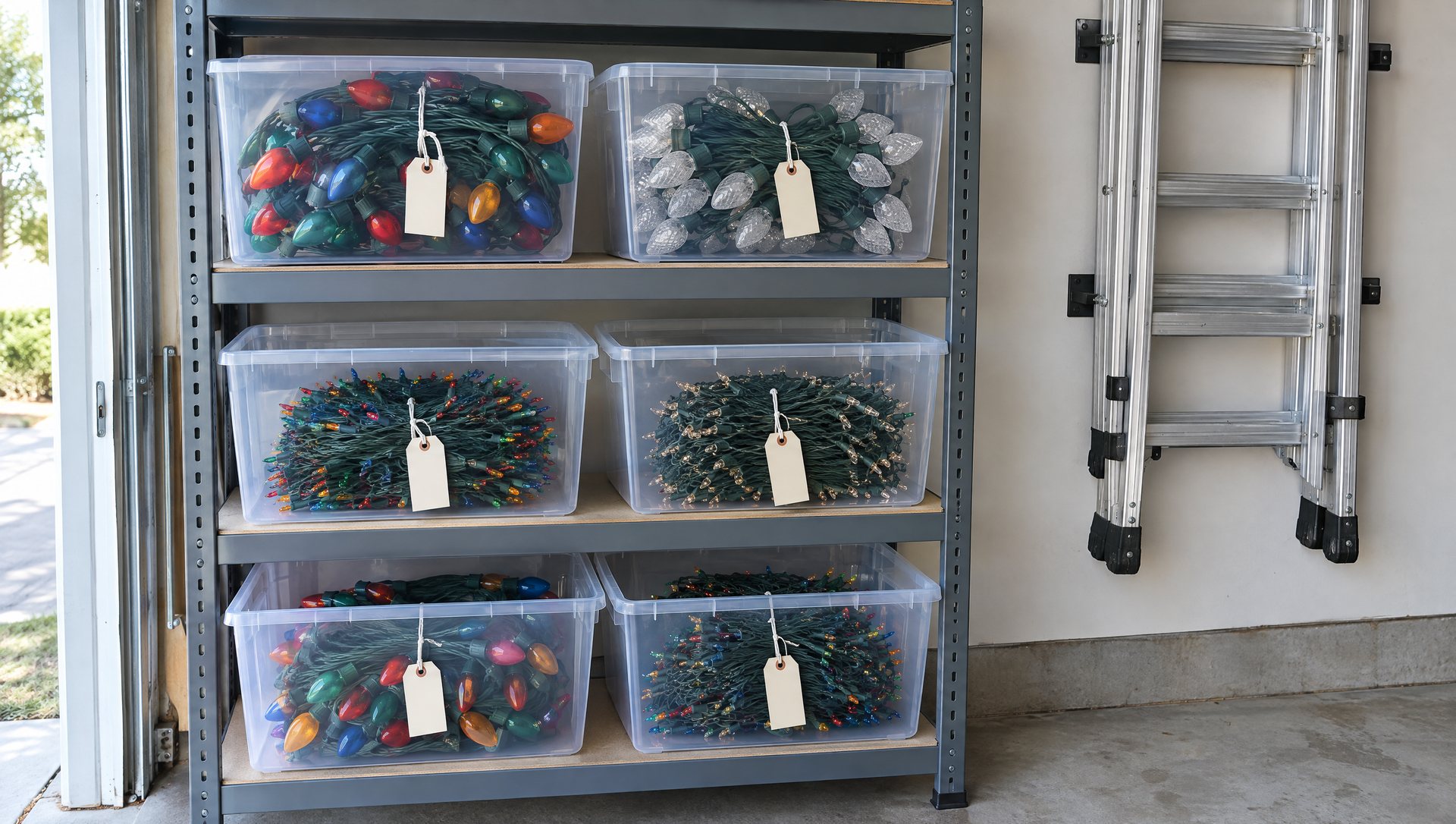
Neither model is right for every house; the contract just has to match what you were told. For the trade-offs, see whether installers supply the lights or you buy them.
How much deposit should a Christmas light contract ask for?
A deposit is normal, but no public standard sets the amount for seasonal installers. The Texas Attorney General says most contractors ask for partial payment in advance, and not to pay in full until the work is done and inspected. The Federal Trade Commission warns about anyone who wants everything up front or takes only cash.
As one example, a contract template guide for installers from the software company Strandr (updated October 2026) suggests 50 percent on jobs under $1,000, 40 percent from $1,000 to $5,000, and 33 percent above $5,000. That is advice to installers, not a rule.
Advice written for installers, not a rule: no public standard sets a deposit for seasonal lighting.
Source: Strandr, Christmas light contract template for installers, updated October 4, 2026
Show the numbers
| Suggested deposit | |
|---|---|
| Under $1,000 | 50% |
| $1,000 to $5,000 | 40% |
| Above $5,000 | 33% |
The payment clause should state the deposit and whether it is refundable, when the balance is due, and any late or returned-payment fee in dollars. Ask any installer whether sales tax is included. “Price subject to change” with no written change process is worth a question.
Can you cancel a Christmas light contract after you sign?
Most of the time, your right to cancel comes from the contract’s own terms. Two laws give three business days to cancel, but each covers only certain sales:

- The FTC Cooling-Off Rule covers some sales made at your home ($25 or more) or at a seller’s temporary location ($130 or more). It does not cover sales made entirely online, by mail or by phone (FTC: the Cooling-Off Rule).
- Texas Business and Commerce Code chapter 601 covers a sale over $25 that the seller personally solicits and you agree to away from the seller’s place of business. You can cancel until midnight of the third business day (chapter 601).
A quote built from texted photos and accepted by email may fit neither law. A home visit followed by an email acceptance is less clear. Either way, get the installer’s own terms in writing: how to give notice, the deadline, and what happens to the deposit. Some installer templates keep more of the deposit as the install date gets closer. For more on both laws, see questions to ask an installer about insurance and cancellation.
Weather, reschedules and service calls
Austin’s late-fall weather is why the reschedule and service lines matter. Lights hung on a mild fall day then have to last through the first freeze, which averages December 1 at Camp Mabry (1991 to 2020 records), and the gusty north winds that follow passing fronts (National Weather Service Austin climate summary).
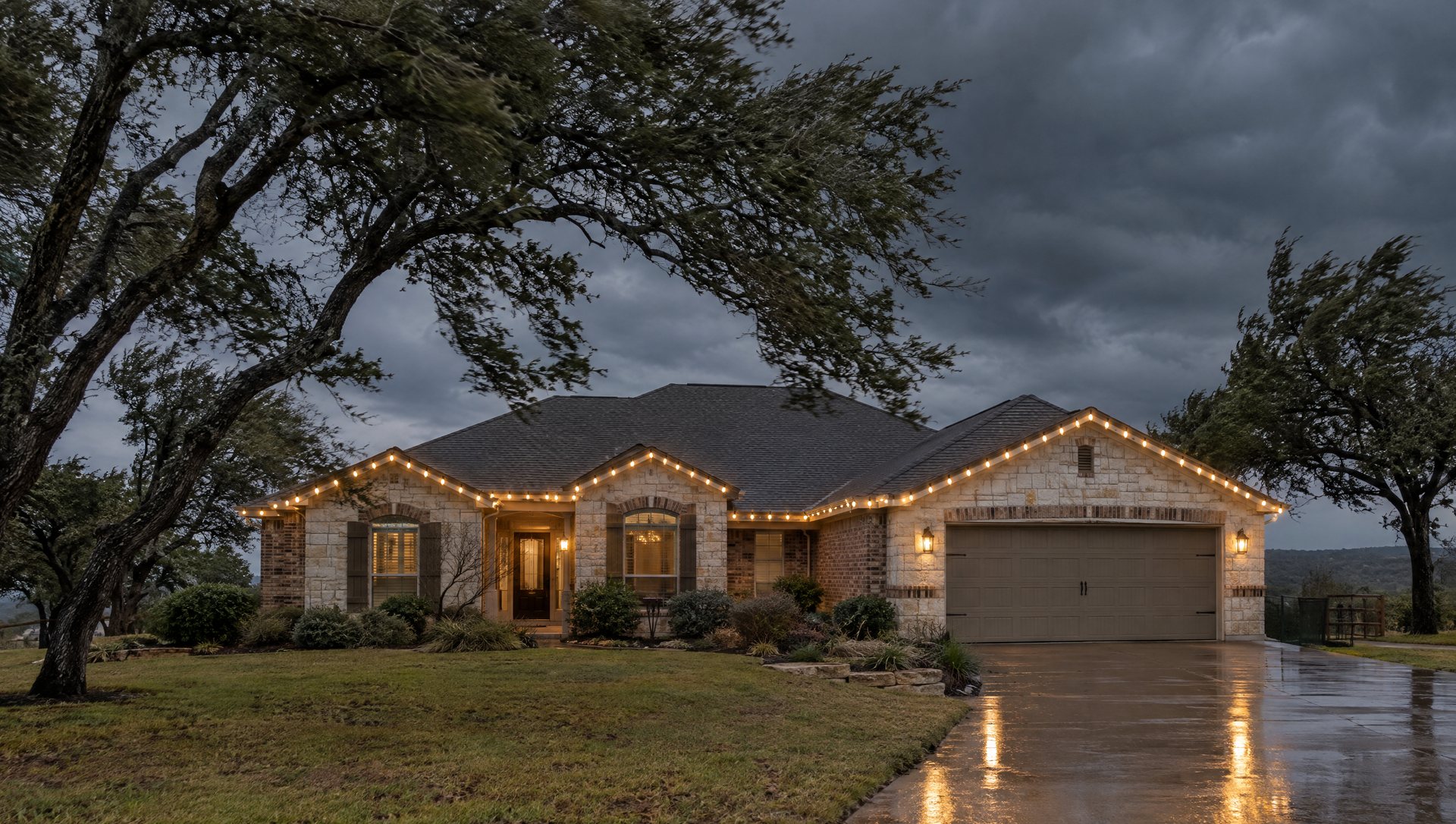
The contract should say:
- Reschedules: what weather postpones an install and how the new date is set. The Strandr template uses rain, ice or winds over 25 mph.
- Service calls: how you report a dark section, roughly how soon someone comes, and whether late-season visits cost extra. If a section goes out, why Christmas lights stop working covers the usual causes.
- Tripped outlets: whether a visit for a GFCI outlet that tripped after rain counts as a service call. A GFCI that trips in wet weather is often detecting current leaking at a wet connection, as S4 Lights explains. The fix is the connection, not bypassing the GFCI.
- Exclusions: those agreements excluded weather, animals and anything the homeowner added.
Who handles outlets and power?
The contract should name the outlets the lights will use and the timer settings. Those agreements made the homeowner responsible for working outlets. That split lines up with Texas law: the electrician licensing law exempts landscapers installing “holiday lighting excluding any required power source” (Occupations Code section 1305.003). The exemption stops at the power source.
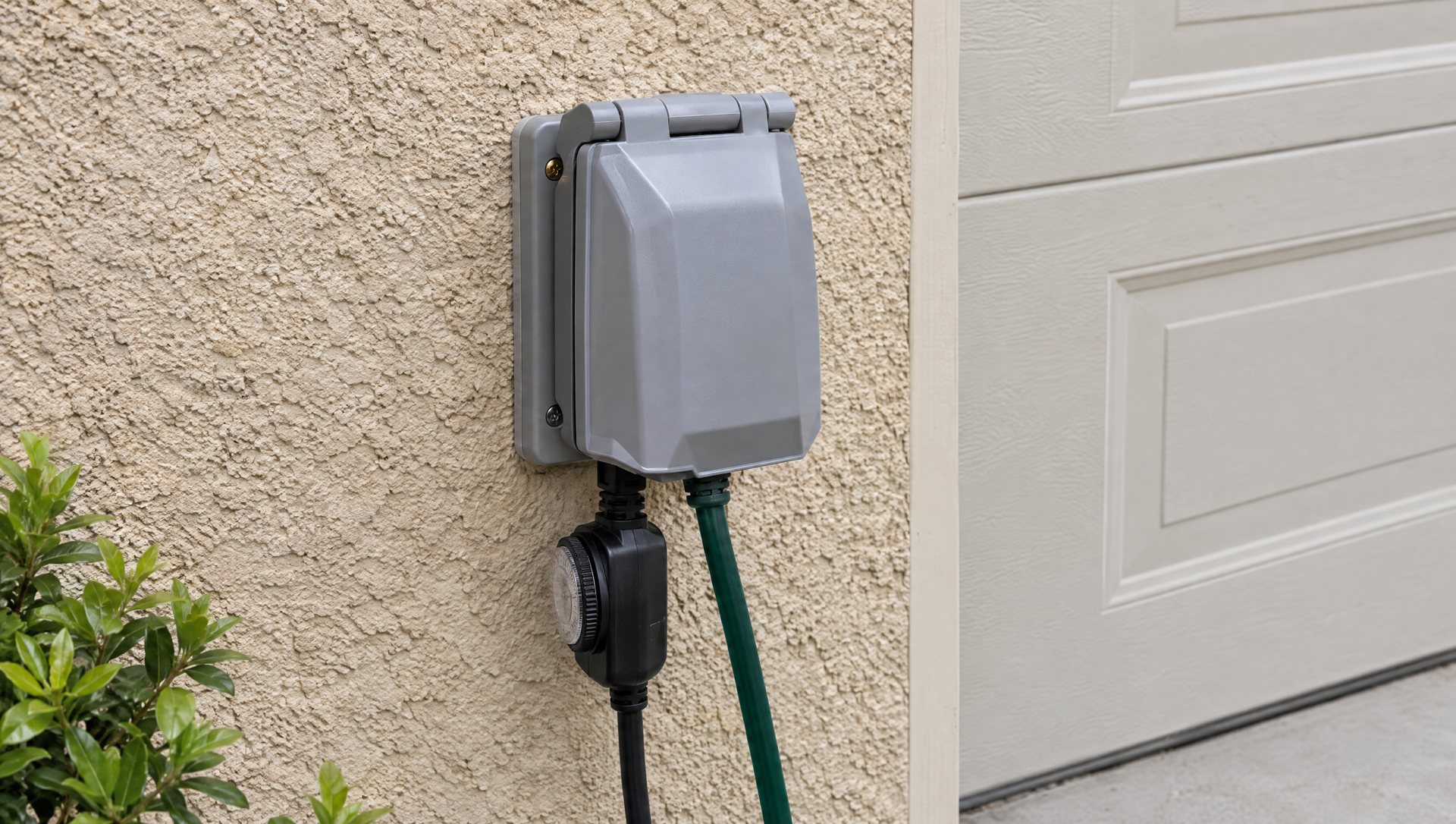
Adding an outlet, a circuit or hardwired lighting is a job for an electrician licensed by the Texas Department of Licensing and Regulation. If a light contract includes new wiring, ask who holds the electrical license. More on this in what Texas law says about holiday lighting and electrical work.
What if the installer damages your house or trees?
The damage clause decides who pays if a tile cracks or a gutter bends during install or takedown. Clauses in those agreements included:
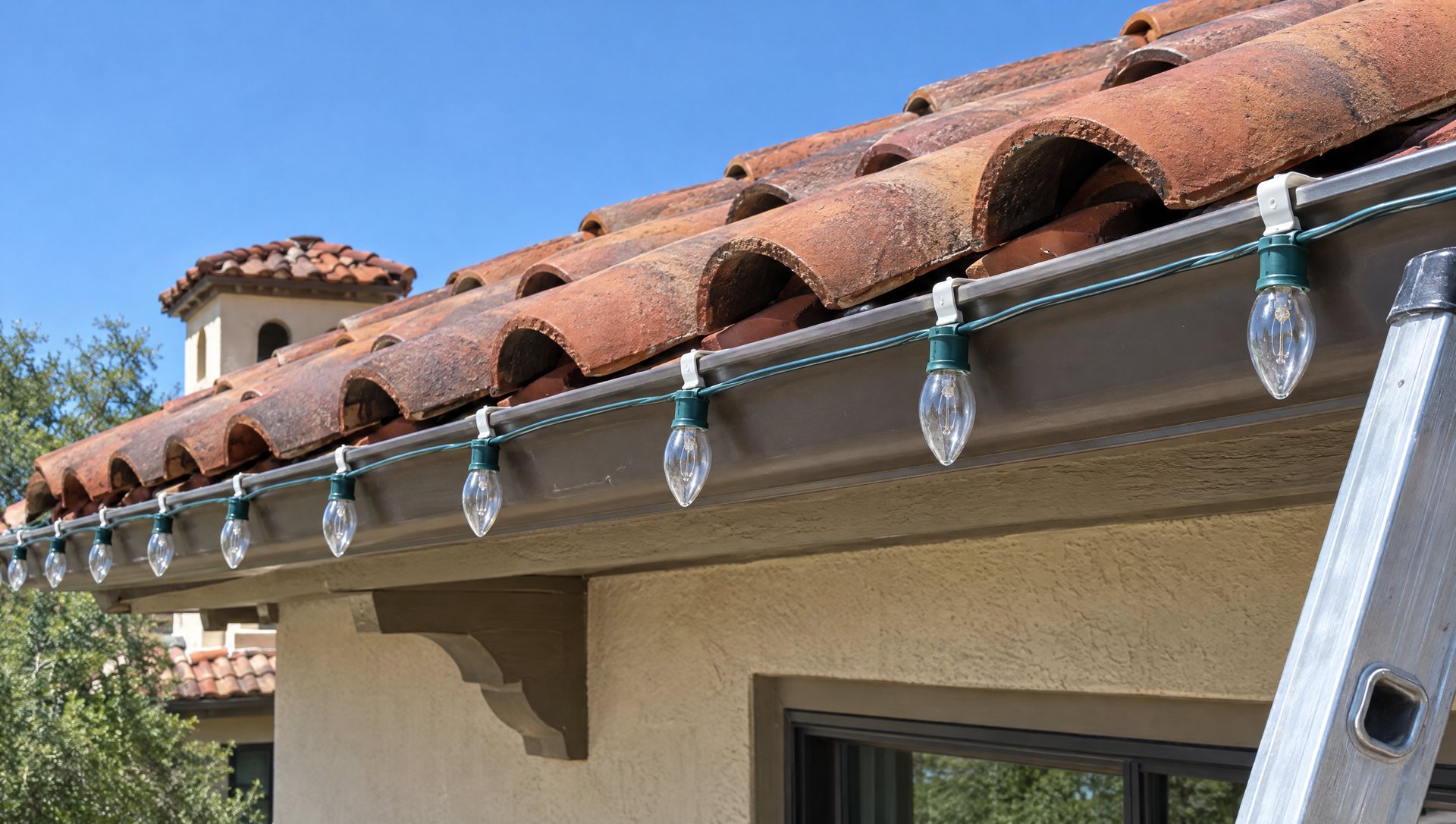
- Liability capped at the amount you paid.
- No responsibility for pre-existing damage.
- A deadline to report damage in writing, such as 48 hours from discovery, in the Strandr template.
Takedown is a second chance for damage, so ask whether the reporting window also runs after removal.
Whether a cap holds up is a legal question for your case. Separately, Texas makes a consumer’s waiver of Deceptive Trade Practices Act rights void unless it is in writing and signed, the consumer is not in a significantly weaker bargaining position, and the consumer has a lawyer the seller did not choose (