What to Expect From Professional Christmas Light Installation in Austin
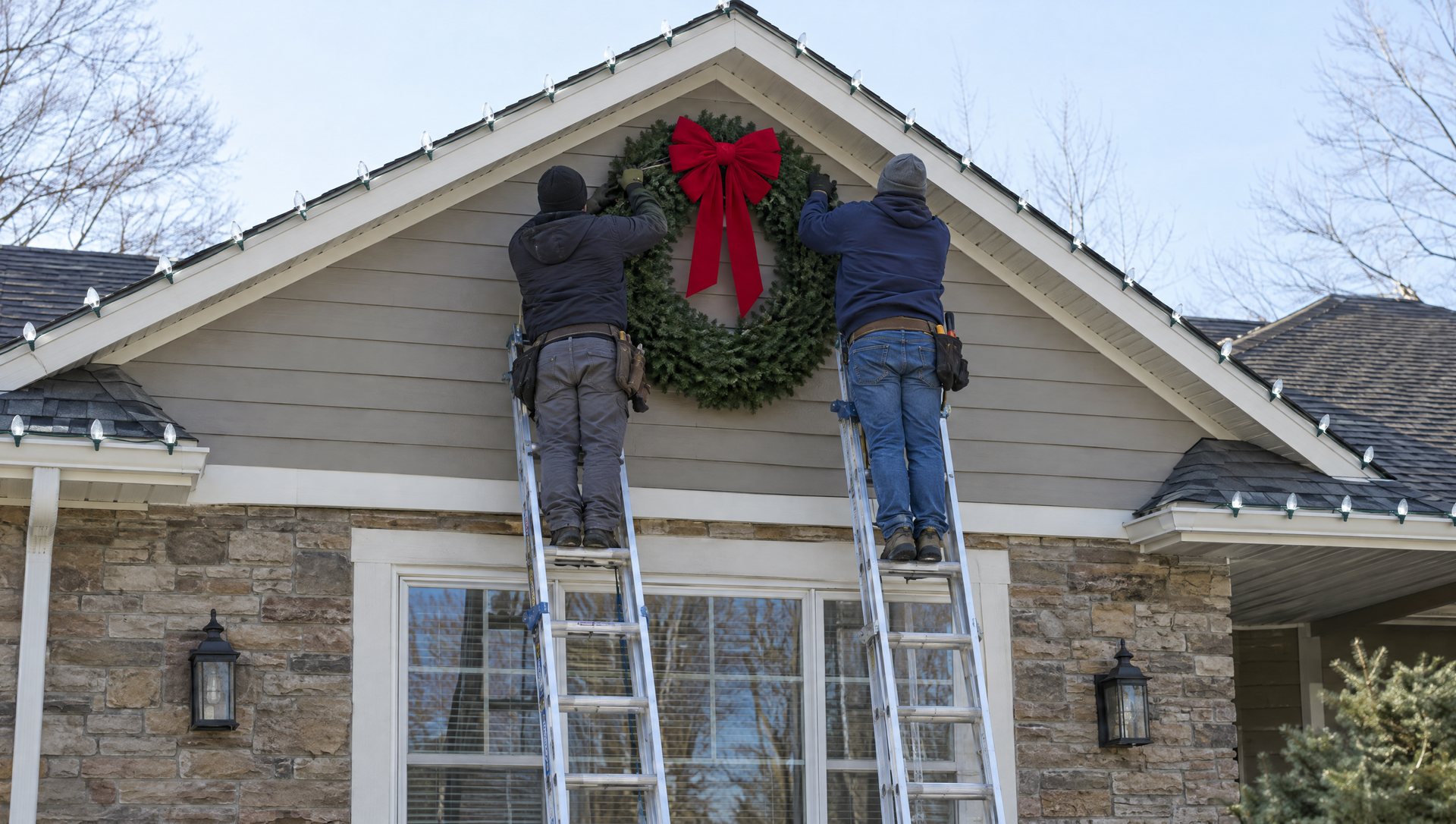
Professional Christmas light installation is a season-long service in seven steps: quote, design and written scope, prep, install day, timer and walk-through, in-season repairs, and January takedown and storage. Only install day and takedown keep a crew at your house for long. Bob Vila’s 2022 cost guide puts install day at 1 to 4 hours for an average-size home. In our experience at Sapien Lighting & Installation in Austin, wrapped trees add the most time.
| Question | Answer |
|---|---|
| What does full service include? | Design, lights and clips, installation, a timer, in-season repairs, January takedown and usually storage. Get each item in writing. |
| What does it cost? | It depends on feet of roofline, stories and trees. See 2026 installation prices in Austin. Sapien’s minimum job is $500. |
| How long is install day? | 1 to 4 hours for an average home (Bob Vila, 2022); 3 to 4 hours for a two-person crew (installer pricing guide, March 2026). A typical Sapien home: 3 to 6 hours. |
| Do I pay up front? | The Texas Attorney General says to expect part of the cost up front, not all of it. Get the payment schedule in writing. |
| Who handles the electrical side? | Installers plug into outlets you already have. A new outlet or circuit is a job for a licensed electrician in Texas. |
| When do the lights come down? | Usually in January. Sapien’s takedown window is January 2 to January 15. |
If you are thinking about hiring, this page follows the season in order, with your part at each step.
Full service or install-only: what’s the difference?
Full service bundles the lights, the install, in-season repairs and takedown into one seasonal price. Published packages from five other Austin-area installers, checked in October 2026, all include takedown and storage, and four include in-season maintenance. Only one lists timers, and none lists design. When you compare quotes, compare the list of items, not the package name.
Install-only is a different product. Thumbtack’s price guide lists it at $1.25 to $3 per linear foot when the customer already owns the lights (checked October 2026). That is Thumbtack’s figure, not a Sapien price, and Thumbtack does not say it covers repairs or takedown. Our guide to whether installers provide the lights covers the trade-off.
The seven steps, from quote to takedown
A full-service season runs in seven steps. An installer may merge two, but none should be missing.
| Step | The installer | You |
|---|---|---|
| 1. Quote | Measures the roofline and counts trees from photos or a visit. | Send daytime photos and say what you want lit. |
| 2. Design and written scope | Sets which lines get lit, the bulb color and the price. | Read the scope, give your HOA dates, approve in writing. |
| 3. Prep | Sizes the lights to each run and schedules the install. | Test outdoor outlets. Clear the work areas. |
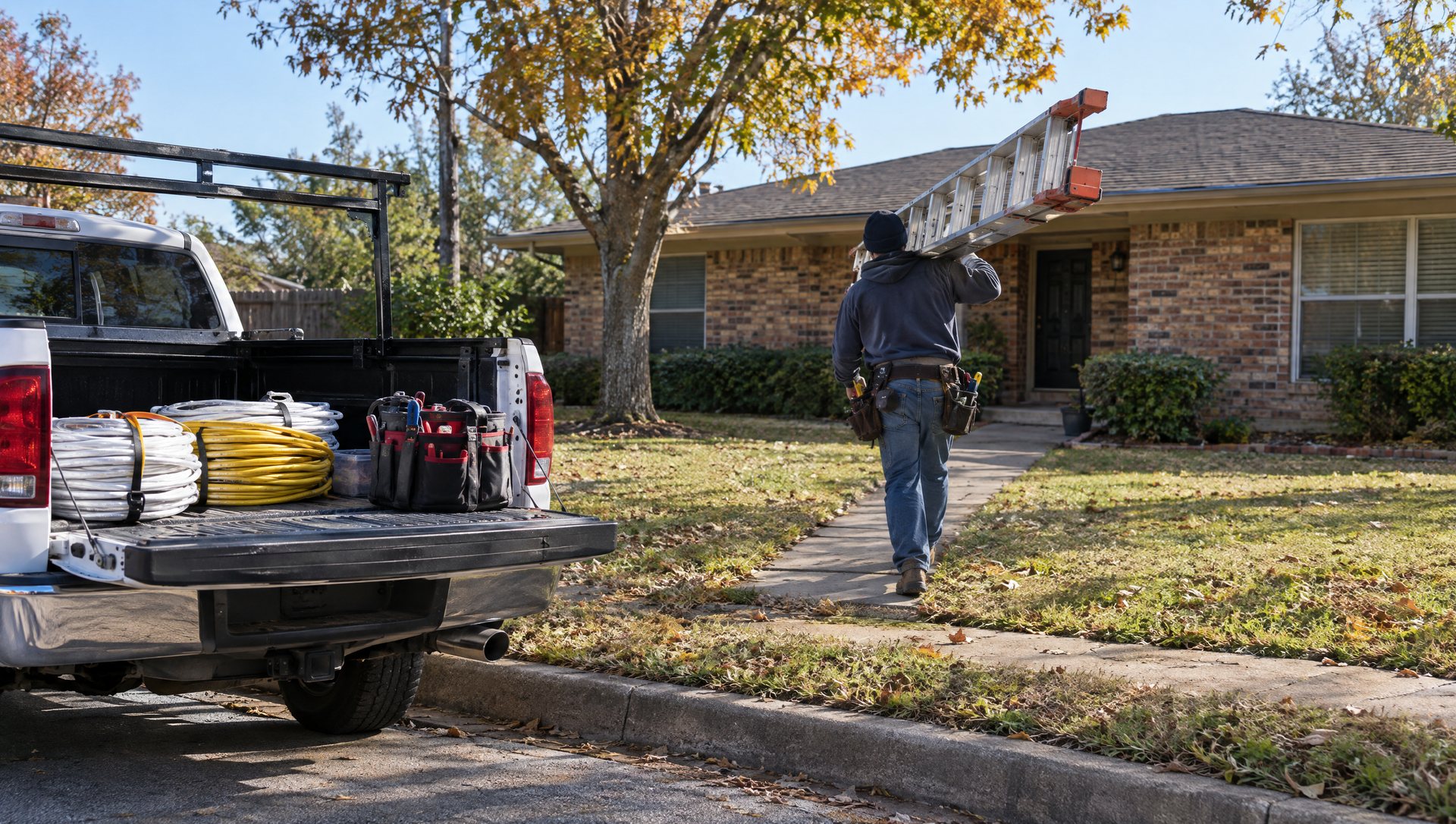
| 4. Install day | Hangs the roofline, wraps trees, routes cords. | Open side gates. Keep pets in and cars clear. |
| 5. Timer and walk-through | Tests every run and sets the timer. | Check the display at dusk. |
| 6. In-season service | Fixes outages. | Text a photo when something goes dark. |
| 7. Takedown and storage | Removes, labels and packs the lights in January. | Check the date against your HOA deadline. |
Steps 1 and 2: how the quote and design work
The quote turns your house into numbers: feet of roofline, stories, roof surface, trees and outlet locations. Our guide to how a photo quote works covers when a site visit is still needed.
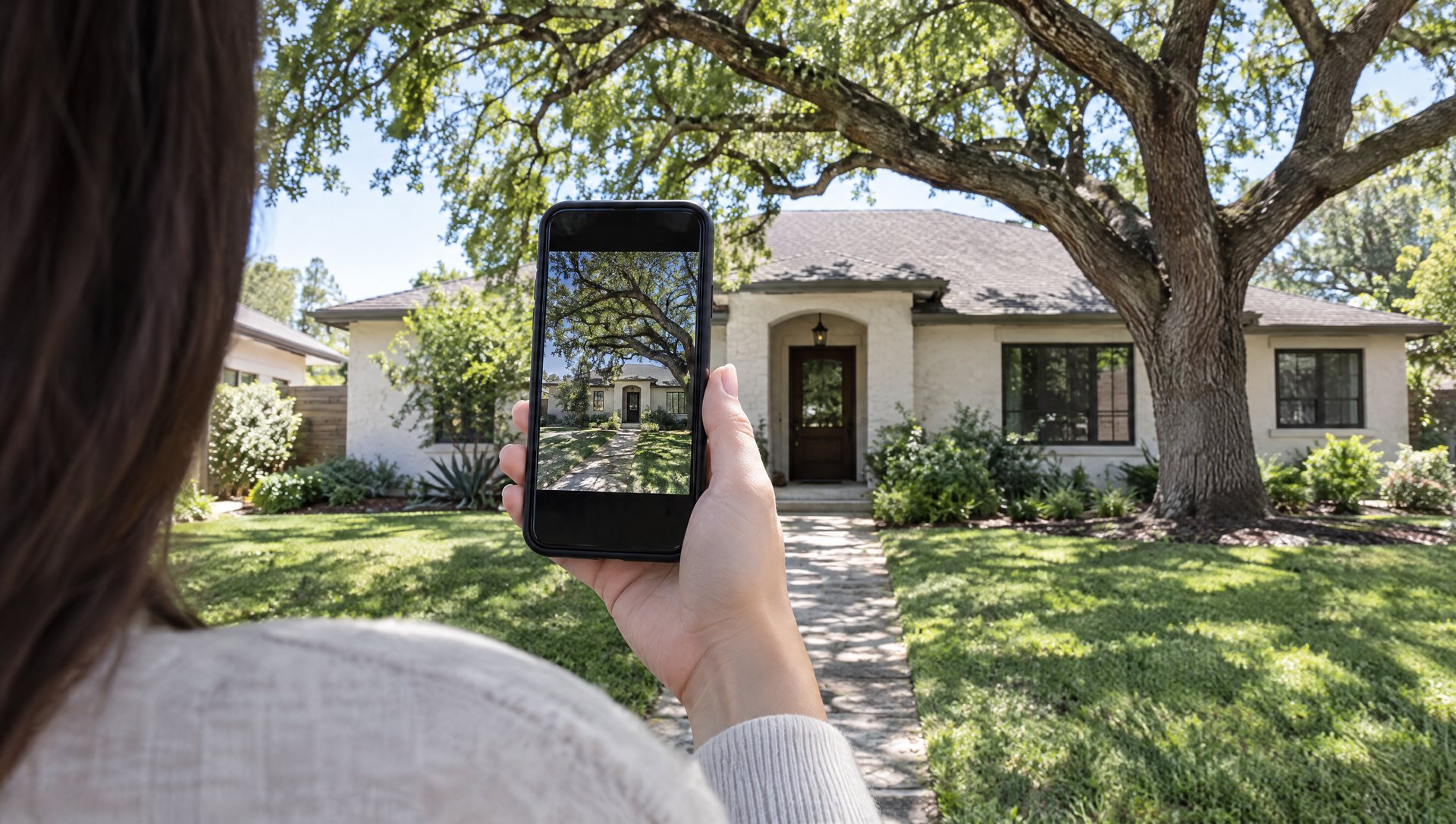
The design step decides which lines get lit, where each run stops, and the bulb type and color. It should end in a written scope. The Texas Attorney General’s guidance on hiring contractors says to get written bids that detail the work and when it starts and finishes. For lights, that means feet of roofline, which trees and how high each wrap goes, what in-season service covers, the install and takedown windows, and who keeps the lights.
The same guidance says to expect to pay part of the cost before work begins, and names a demand for full payment up front as a warning sign. This is general information; your contract governs.
Step 3: what happens between booking and install day
Between booking and install day, the installer sizes the lights to your roofline. A pro supplier, Christmas Lights Etc, says commercial light line can be cut to custom lengths, with slide-on plugs added where needed. A cut run can end exactly at the corner of the house. A store-bought string ends wherever its fixed length runs out.
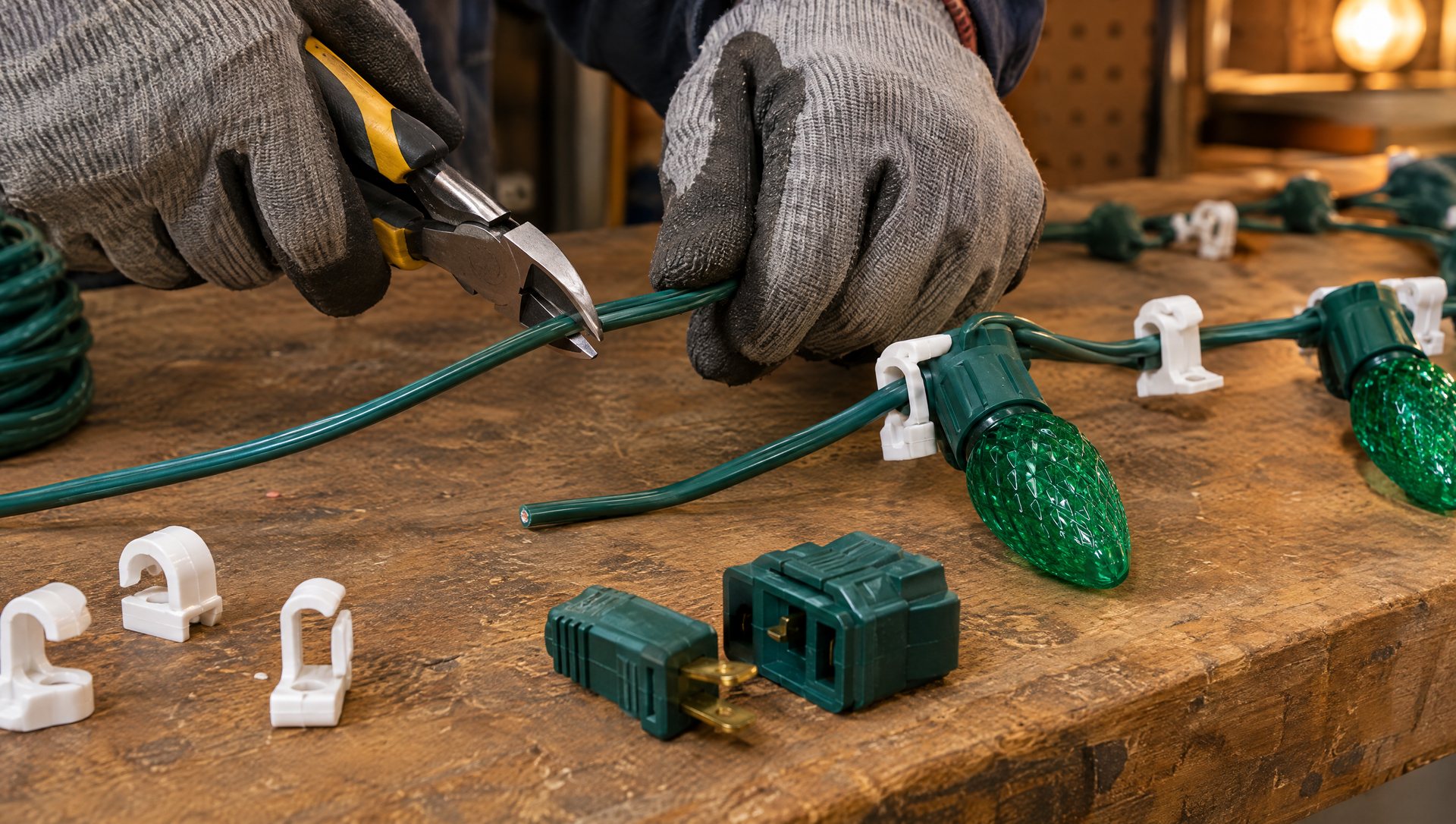
The same supplier’s hanging guide says to attach clips to the line on the ground before going up the ladder. Prep done on the ground means less ladder time at your house.
What should you do before the crew arrives?
Your prep is short:
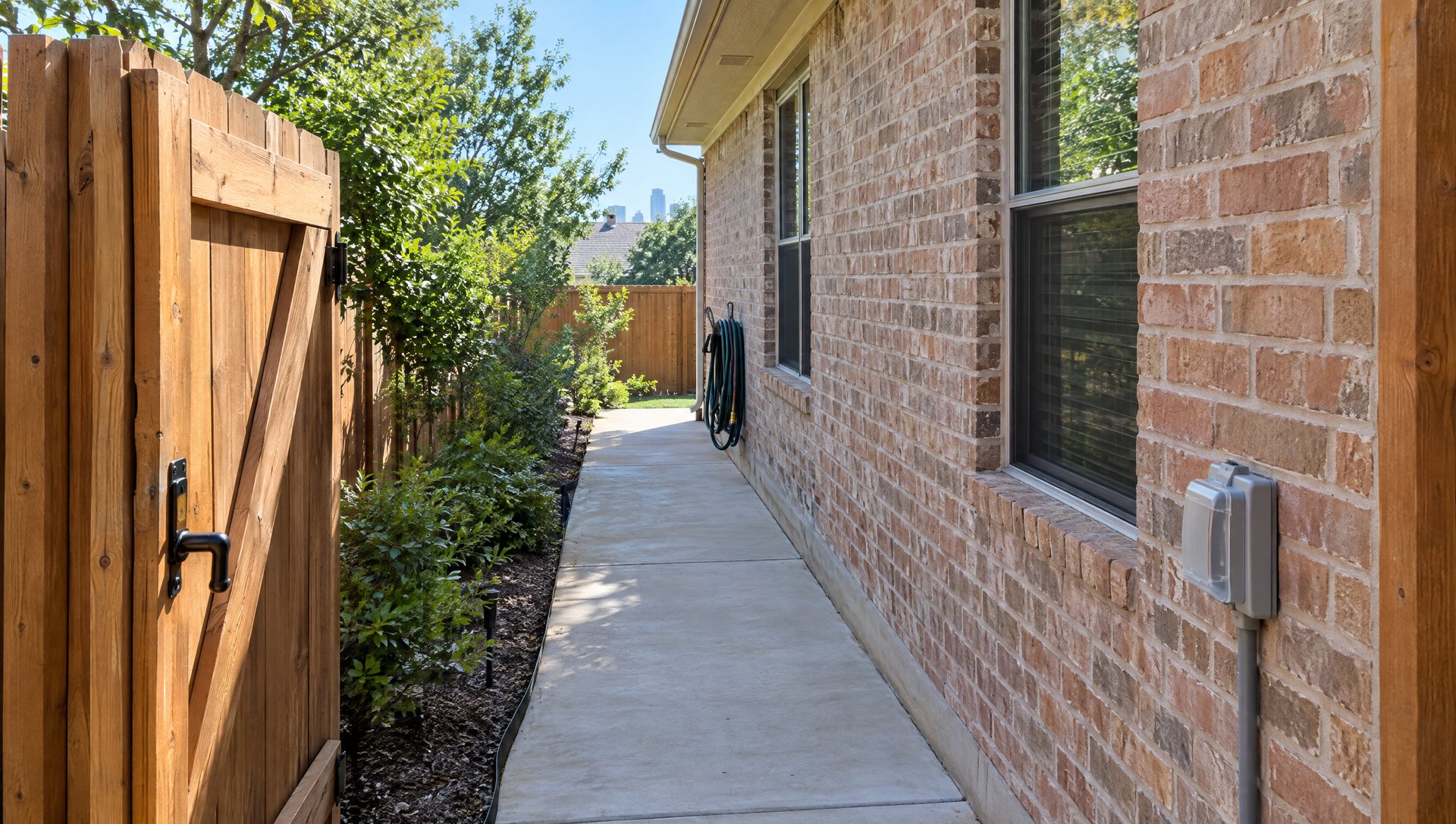
- Clear the driveway and the ground along the house: cars, planters and hoses.
- Open side gates and say which outdoor outlets may be used.
- Keep pets inside while ladders are up.
- Turn off sprinklers near the work areas. Pro suppliers also advise setting irrigation so it does not run while the lights are on.
- Test each outdoor GFCI a few days ahead. Press TEST, confirm the power cuts off, then press RESET. If the outdoor outlet has no buttons, its protection may be on another outlet or a GFCI breaker. The Consumer Product Safety Commission’s GFCI fact sheet says to call a qualified electrician if TEST does not cut the power.
- Send your HOA’s install and removal dates if you have them.
Leave the roofline alone. You do not need to clean gutters or hang anything first.
Step 4: what happens on install day?
Most crews work in this order: walk-around, roofline, trees and ground-level items, cords, then testing and the timer.