


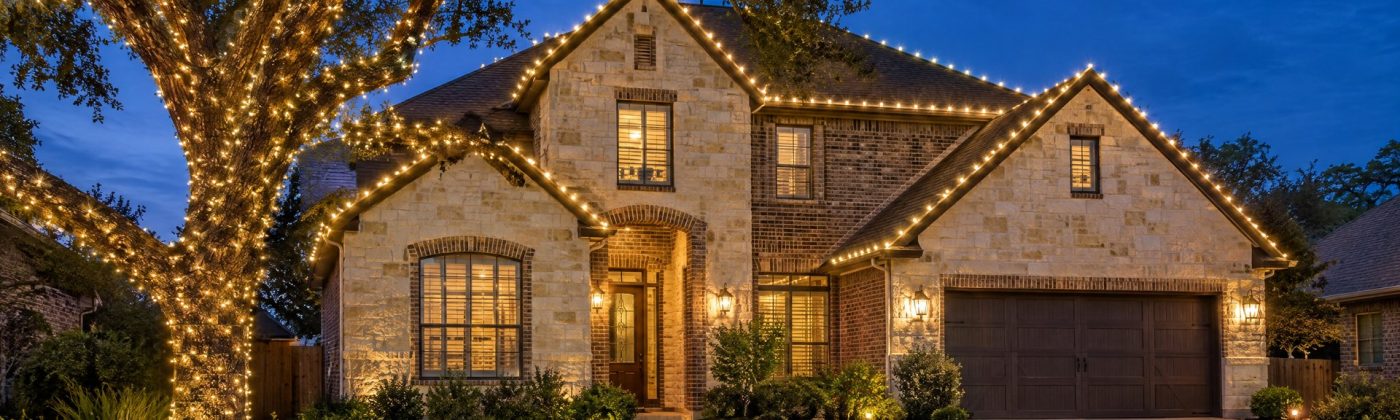
Why Is Christmas Light Installation So Expensive? A Line-by-Line Breakdown
Christmas light installation is expensive because the lights are usually the smaller part of the price. Most of it pays for crew time at install and again at takedown, payroll costs on top of wages, in-season fixes, storage, ladders and lifts, insurance, and overhead spread over a season a few weeks long. Austin-area installers that publish a minimum set it at $450 to $500, and their typical jobs run about $800 to $3,500 (checked October 2026).
| Question | Answer |
|---|---|
| What do Austin-area installers charge? | Of the five that publish prices, the two that state a minimum set it at $450 and $500. Typical jobs run about $800 to $3,500, full service (checked October 2026). |
| How much of the price is the lights? | About $1.50 to $3.00 per foot of roofline at wholesale, per Christmas Lights HQ’s pricing guide for installers (March 2026, checked October 2026). |
| How long does a pro install take? | 3 to 4 hours for a two-person crew on an average home, or 6 to 8 labor-hours, per the same guide. |
| What does $1 of wages cost an employer? | About $1.10 with only legally required costs, up to about $1.43 with full benefits, across U.S. private industry (Bureau of Labor Statistics, June 2026). |
| Why do trees add so much? | Trunk girth and wrap spacing drive the footage. A 24-inch trunk wrapped 6 feet high at 3-inch spacing takes about 166 feet of lights, more than a small one-story roofline. |
| How much of the price is profit? | We found no public figure. A trade survey reports a 62% average gross margin, which is before overhead, not profit. |
| What is Sapien’s minimum for 2026? | $500 |
Most of the money in a Christmas light quote goes to people, trips and the season, not the bulbs. This page is for Austin homeowners holding a quote that looks high next to a $20 strand at the store. If you want the price ranges themselves, start with what Christmas light installation costs in Austin; this page explains where that money goes.
What a Christmas light quote pays for, line by line
A full-service Christmas light quote pays for nine things, from the lights to the installer’s overhead and profit. The table puts a published third-party figure beside each line, all checked October 2026. None of these numbers is Sapien’s cost or price.
| Line | What it pays for | Published figure (source, date) |
|---|---|---|
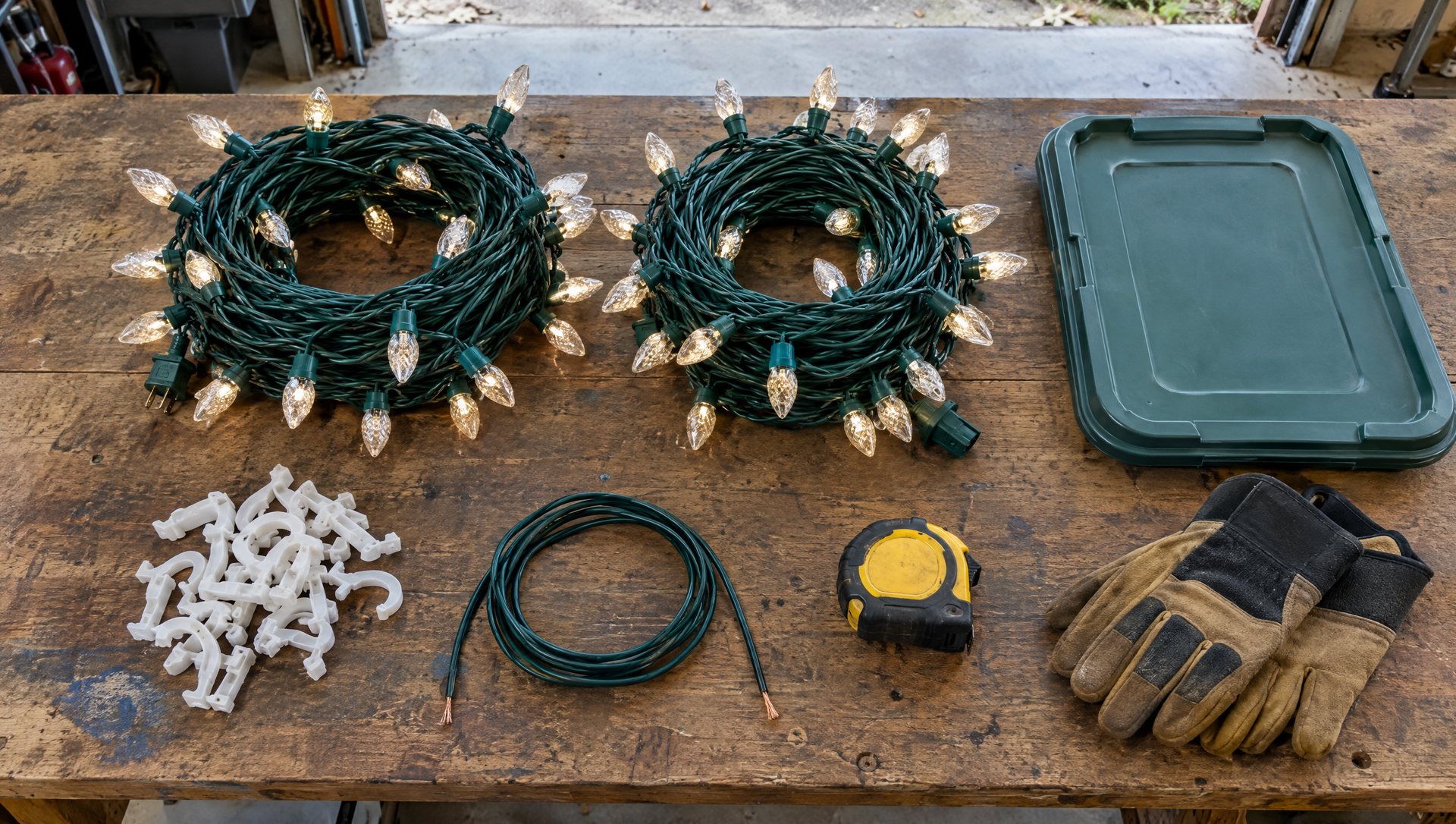
| Lights, wire and clips | Commercial-grade bulbs, socket wire cut to your roofline, clips for your surface | About $1.50 to $3.00 per roofline foot at wholesale (installer pricing guide, March 2026) |
| Install crew | Two people hanging, testing and aiming the lights | 3 to 4 hours for an average home; wages $18 to $25 an hour for installers, $12 to $18 for helpers (same guide) |
| Payroll costs | Legally required costs, and for some workers paid leave, insurance and retirement, on top of wages | About 7% to 30% of employer cost, from legally required benefits only to full benefits (BLS, June 2026) |
| Takedown trip | A second visit after the season to remove, sort and pack | $100 to $400 per job when sold alone (HomeAdvisor 2026, HomeGuide 2025) |
| In-season fixes | A strand that fails or a run the wind pulls loose | $20 to $50 per replacement strand, $50 to $100 an hour for repair labor (Angi, May 2026) |
| Storage | Keeping the lights dry, labeled and matched to your house until next year | Included in every Austin-area package we checked; one San Antonio installer lists storage bins at $30 each with takedown |
| Ladders, lifts and trucks | Equipment that reaches second stories and tall trees | 28-foot extension ladders about $413 to $530 at a Texas building-supply chain; tall trees may need a rented lift |
| Insurance | Claims for injury or damage to other people’s property | No published insurance cost we could verify |
| Margin | Overhead (office, quoting, vehicles, off-season) and profit | 62% average gross margin in a trade survey of 200+ contractors (March 2026) |
What lights and crew add up to
Example, one 150-foot one-story roofline, not anyone’s price: new lights at wholesale run $225 to $450, and one install visit by a two-person crew runs about $99 to $246 with payroll costs (both worked out in the sections below). That is $324 to $696 before the takedown visit, storage, fixes, equipment, insurance and overhead.
HomeGuide’s full-service rate of $5 to $12 a foot (October 2025 page, checked October 2026) puts the same roofline at $750 to $1,800. At the midpoints, new lights are about a quarter of that price, and lights plus crew about two-fifths. The rest is everything else in the table.
What a Sapien price covers: a custom design, commercial-grade lights and clips, installation, repairs if anything goes dark during the season, and takedown in January. The full scope is on our Christmas light installation in Austin page.
How much of the price is the lights?
The lights are a smaller share of the price than most people expect. A pricing guide written for installers (Christmas Lights HQ, March 2026) puts wholesale materials at about $1.50 to $3.00 per foot of roofline, depending on bulb style and spacing (checked October 2026). Example: a 150-foot roofline at those rates is $225 to $450 in materials, even if every bulb is bought new for one season.
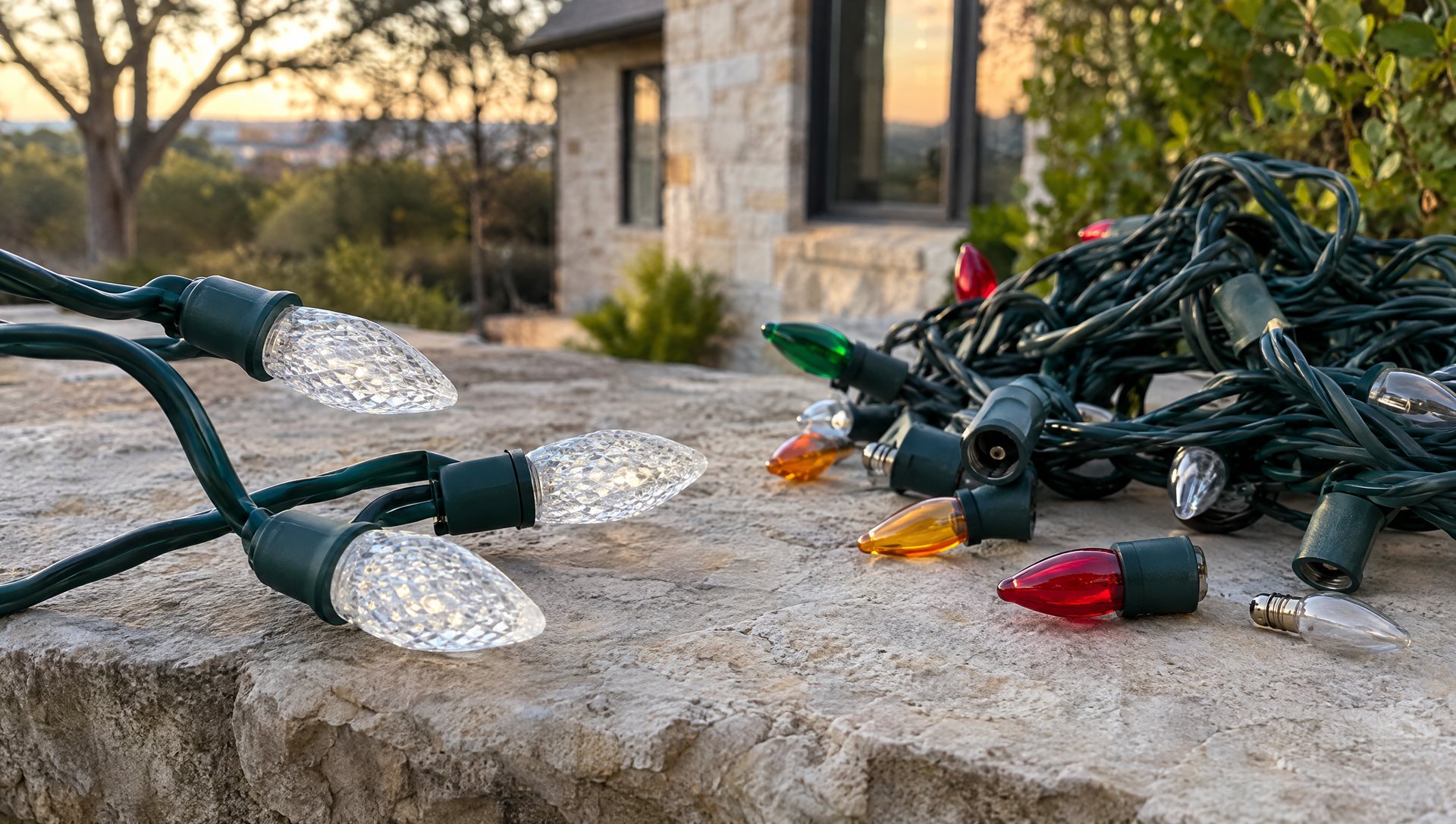
Commercial-grade lights cost more than store sets because they are built differently. Pro LED strings are one piece: the bulb, lens and socket are sealed together so water stays out. Lighting suppliers put retail sets at about 2 to 3 seasons. For commercial sets, Christmas Designers says about 5 to 6 seasons with yearly takedown and Creative Displays about 6 to 8 years. Those are supplier estimates, not test results. For the bulb styles themselves, see our guide to C9 Christmas lights.
Many full-service installers keep and reuse the lights, so you rent them for the season; see who supplies and keeps the lights.
Why labor costs more than the hourly wage
Crew time costs an installer more than the hourly wage on the paycheck. Christmas Lights HQ’s guide puts an average home at 3 to 4 hours for a two-person crew, which is 6 to 8 labor-hours on site. Its wage figures are $18 to $25 an hour for an installer and $12 to $18 for a helper.
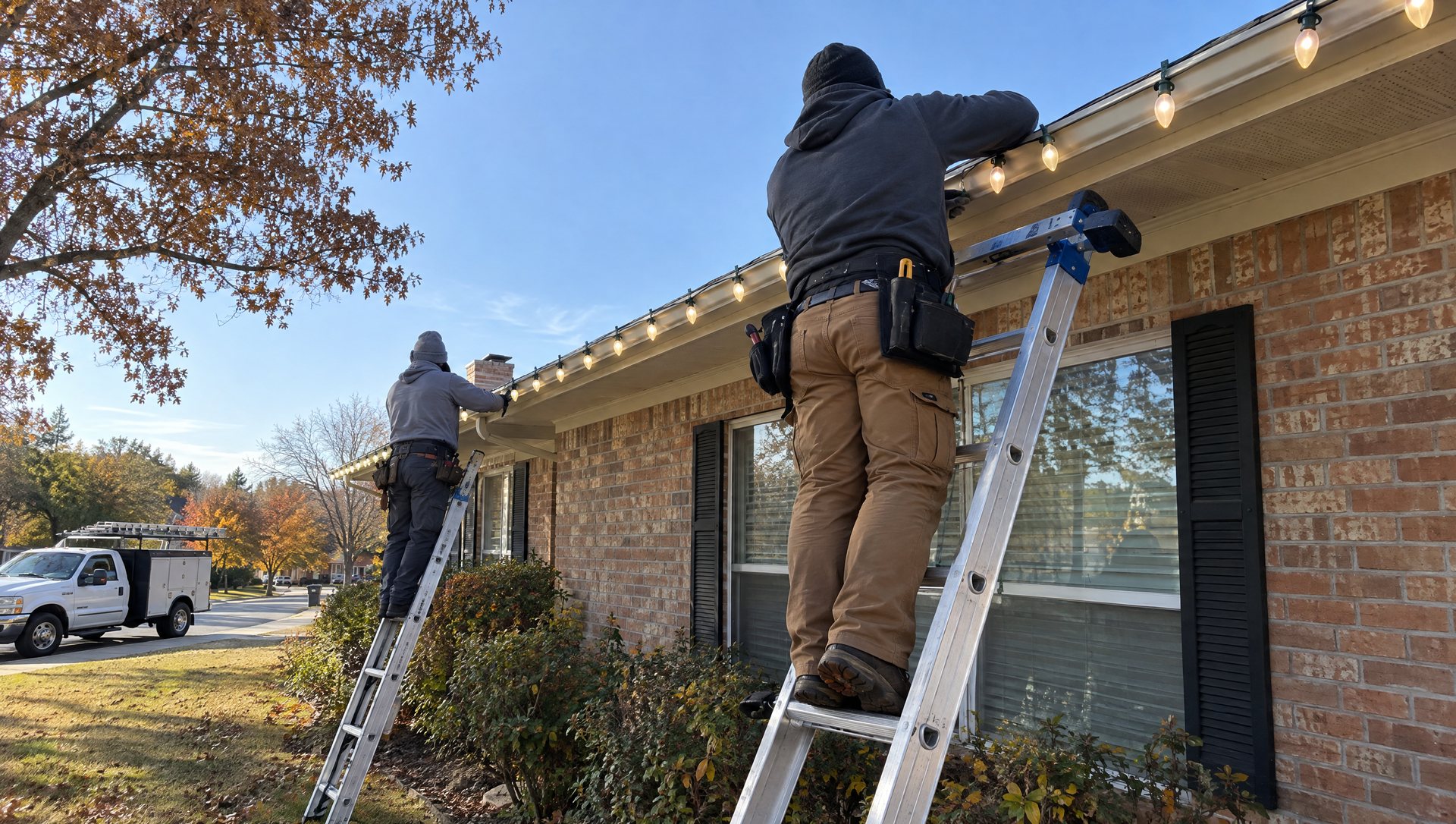
Wages are only part of what a worker costs. The Bureau of Labor Statistics’ June 2026 employer cost survey found private employers paid $46.89 an hour in total compensation: $32.82 (70%) in wages and $14.07 (30%) in benefits. At that average, each $1 of wages costs about $1.43.
A seasonal helper with no paid leave or health plan still carries legally required costs, such as Social Security, Medicare and unemployment insurance. BLS puts those at 9.1% of compensation for part-time private-industry workers, or about $1.10 per wage dollar. Both are all-industry figures, not lighting-crew figures.
Example, using the trade guide’s ranges: one installer for 3 to 4 hours is $54 to $100 in wages, and one helper is $36 to $72, so $90 to $172 in all. At $1.10 to $1.43 per wage dollar, that crew costs roughly $99 to $246 for the visit. Loading, driving and the return trip are extra.
The hours on site are not the whole job. Before install day someone measures or quotes from photos and cuts the runs to fit. On the day, the crew loads, drives across town and tests at dusk. Homes without gutters, and tile or stucco roofs, take longer because the clips have to suit the surface.
Takedown is a second job
Takedown is a second trip: the crew comes back, removes every clip, sorts the strands and packs them by house. National guides price removal on its own at $100 to $400 per job (HomeAdvisor, June 2026, and HomeGuide; checked October 2026). A full-service quote carries that second visit inside the price. If you only need lights taken down, here is how a removal-only job works.
Why is there a minimum charge?
A minimum charge exists because every job carries the same fixed costs, however small it is. The crew still loads, drives, plans the power, sets up ladders, tests at dusk and returns for takedown. On a short roofline those fixed costs are most of the job.
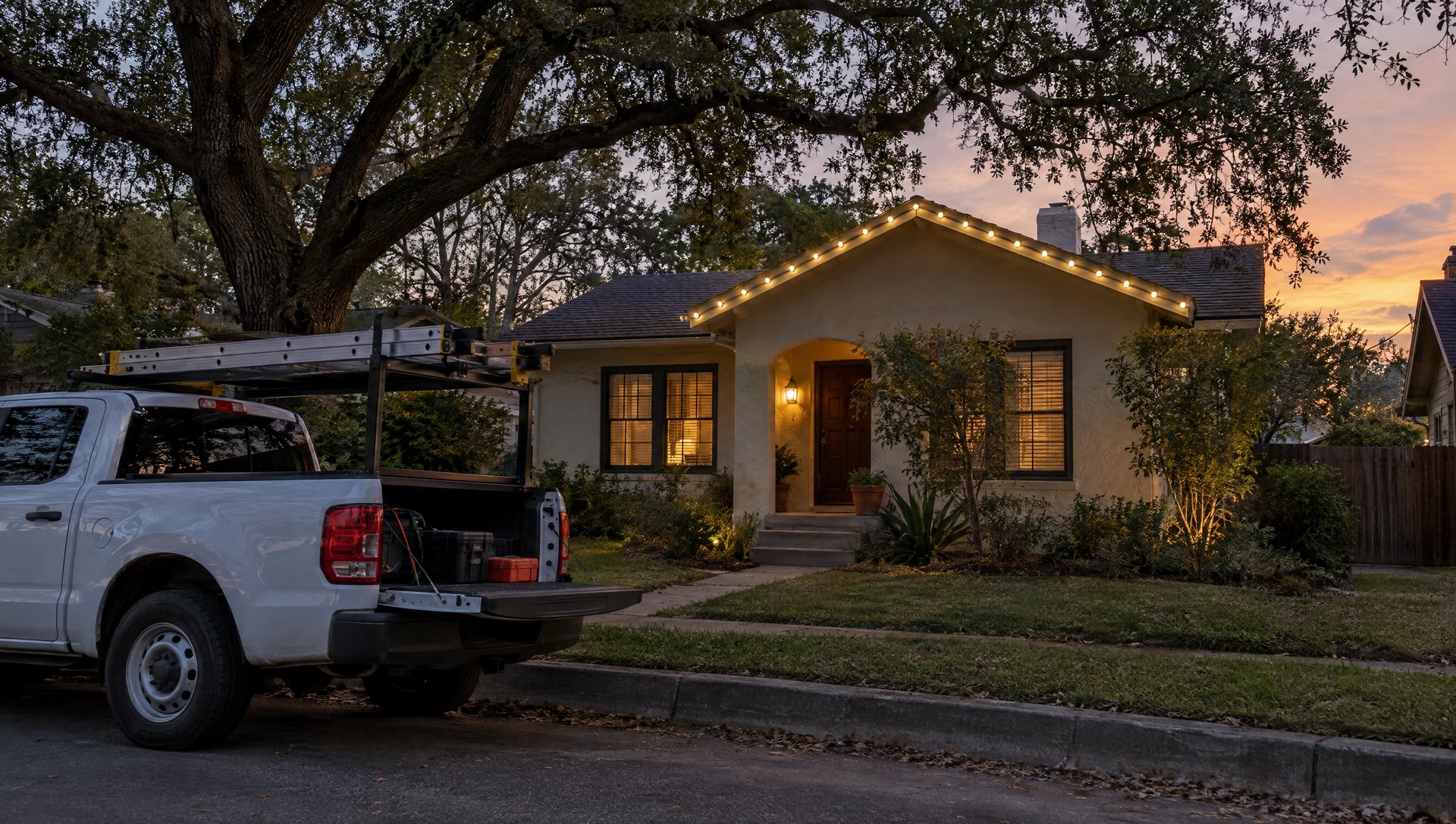
Of five Austin-area installers that publish prices, the two that state a minimum set it at $450 and $500 (checked October 2026). Angi’s national guide (updated May 2026, checked October 2026) says most companies charge a minimum of $150 to $300. Christmas Lights HQ’s guide advises installers to set a $1,000 minimum. Sapien’s minimum is $500.
Why two-story homes and big trees cost more
Height and trees add time, equipment and footage. Thumbtack’s national price page says most installers charge about twice as much for a second story, and both Thumbtack and HomeAdvisor cite about 20% more for hard-to-reach roofs (checked October 2026).
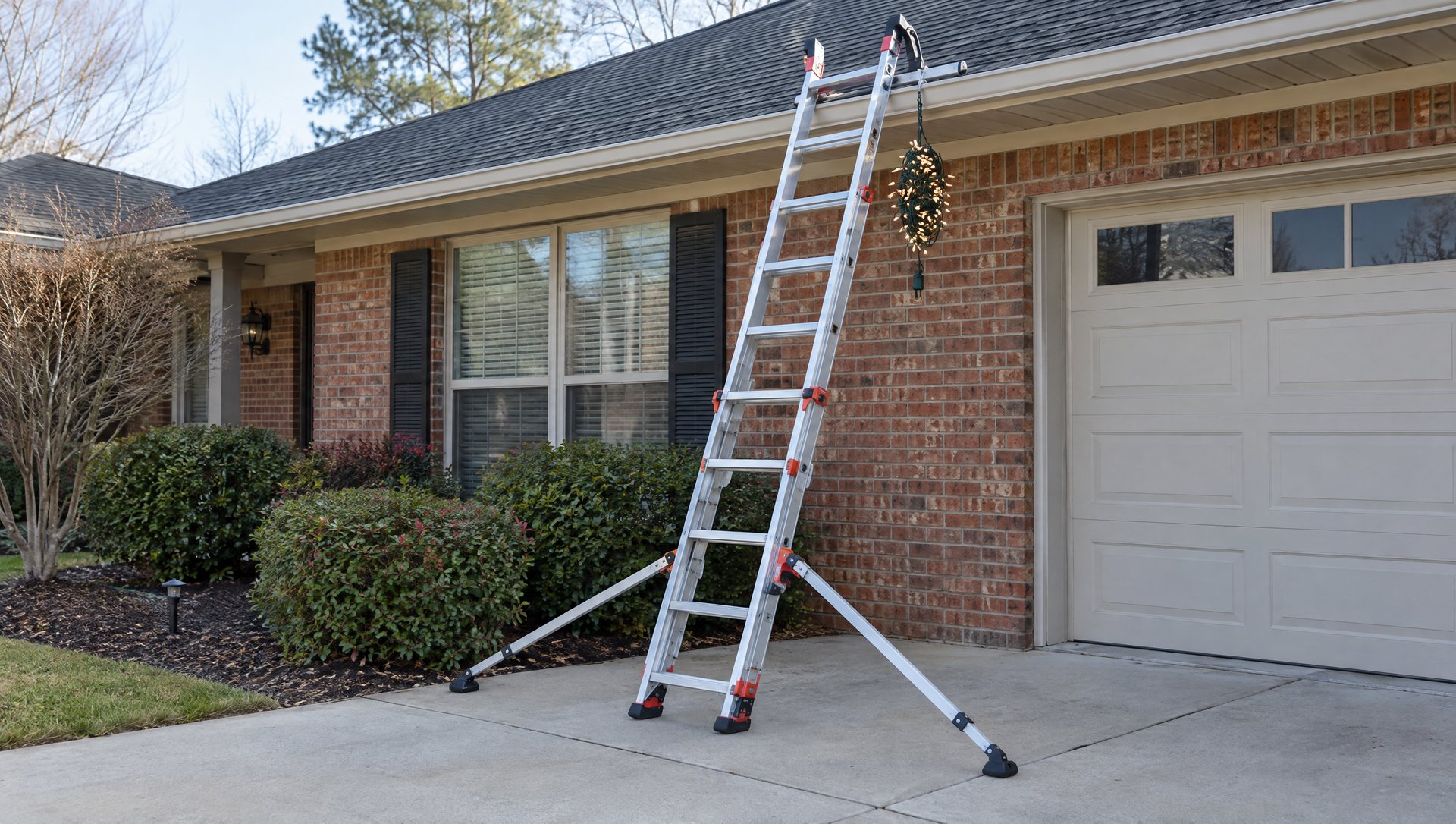
Ladders last many jobs, so each job carries a small share of their cost. A lift for a tall tree is rented by the day, so it lands on that one job. A 36-foot towable boom lift rented for $478 a day in Austin on a rental marketplace’s listing, before delivery (as of October 2026).
Why trees take so many feet of lights
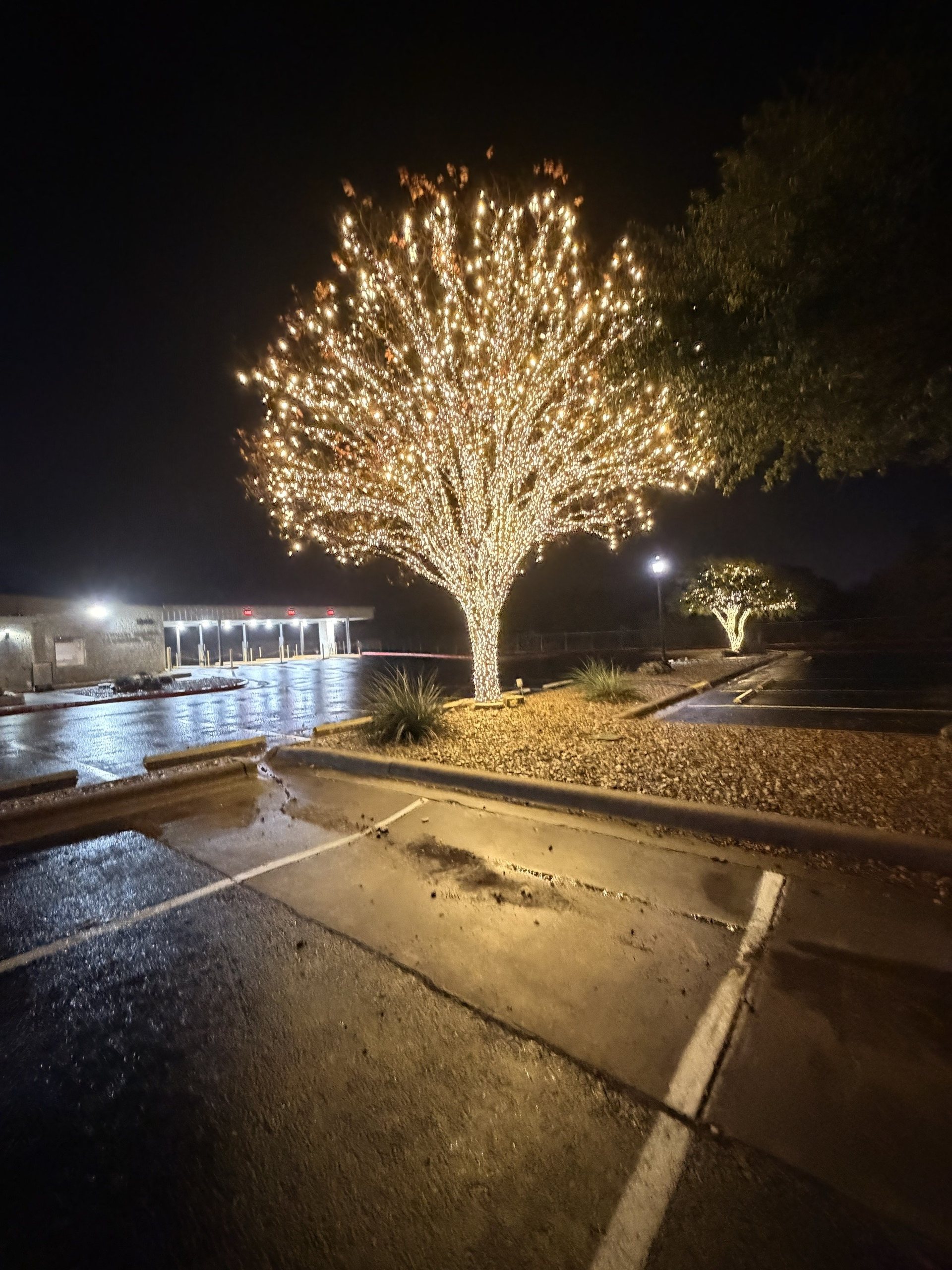
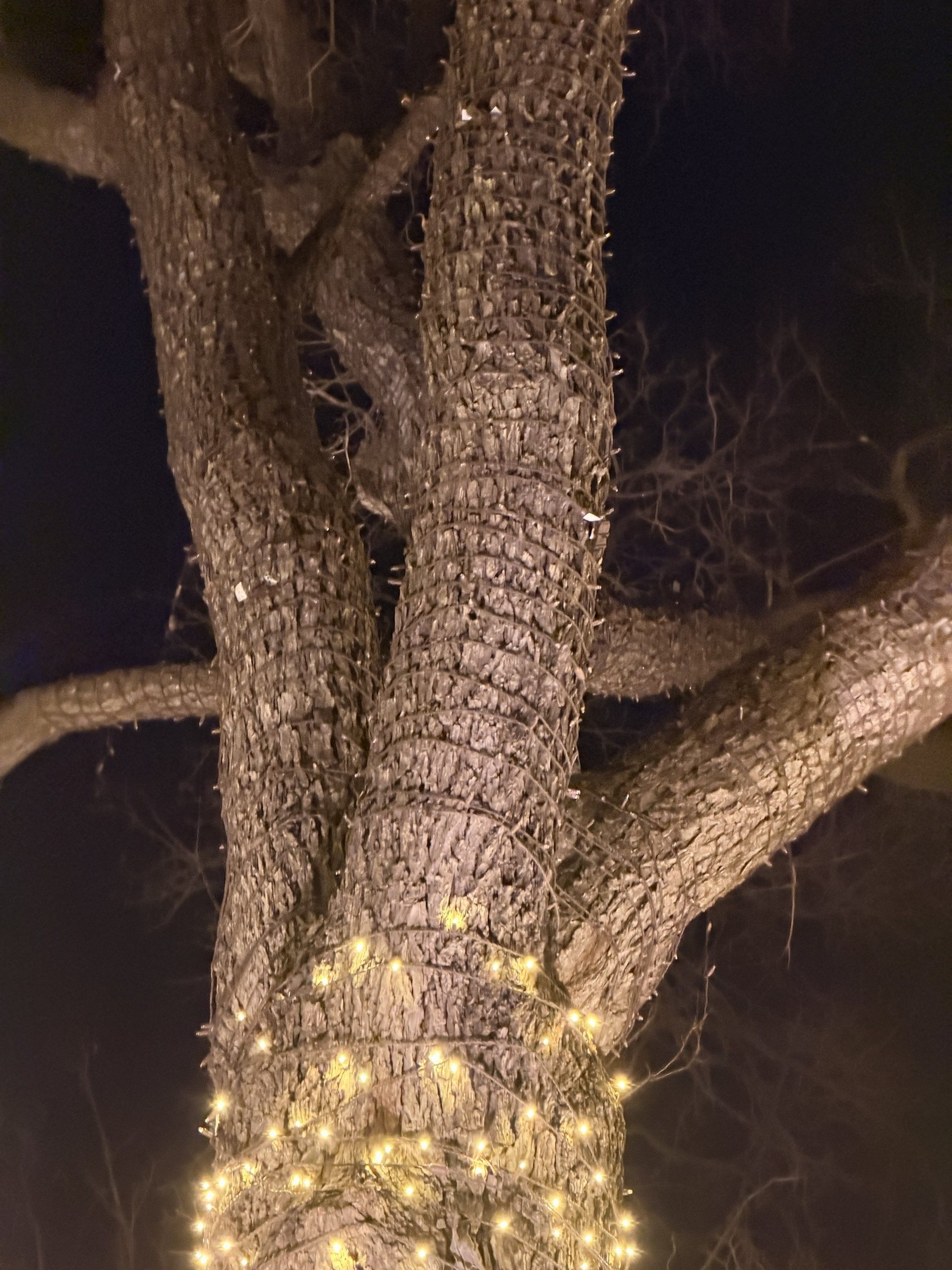
A trunk wrap is a string of lights spiraled up the trunk. A trunk-and-limb wrap carries that spiral out along the main limbs. Trees cost more than people expect because footage depends on trunk girth and wrap spacing, which the height tiers in cost guides ignore, and every wrap is placed by hand.
The standard formula, published by Davey Tree, is wrapped height divided by the space between wraps, times the trunk’s circumference. Example: a 24-inch-diameter trunk is about 75 inches (6.3 feet) around. Wrapped 6 feet high with 3 inches between wraps, that is 24 wraps, or about 151 feet of lights. Add the 10% allowance Christmas Light Source recommends and it is about 166 feet. Real trunks take more: bark, flare at the base and uneven spacing all add string.
At that spacing, one trunk takes more string than a whole small one-story roofline, which Angi puts at 100 to 150 feet. Spacing matters as much as girth: at 6 inches between wraps, the same trunk takes about half the lights.
Live oaks add more. Their short, stout trunk splits into several large limbs, as the Texas A&M Forest Service describes, and each wrapped limb is another run; see how to light a live oak. Christmas Lights HQ’s guide suggests $100 to $250 per tree under 10 feet, $250 to $500 for 10 to 20 feet and $500 to $1,500 above 20 feet (checked October 2026). For prices by tree size and coverage, see what it costs to wrap a tree.
Why the short season costs money
Seasonal installation is packed into a few weeks. One Round Rock installer, for example, publishes that its installs begin November 1 and removals begin January 2. Demand bunches around Thanksgiving, which is November 26 in 2026. If you want lights on for the holiday, here is how to get lights up before Thanksgiving.
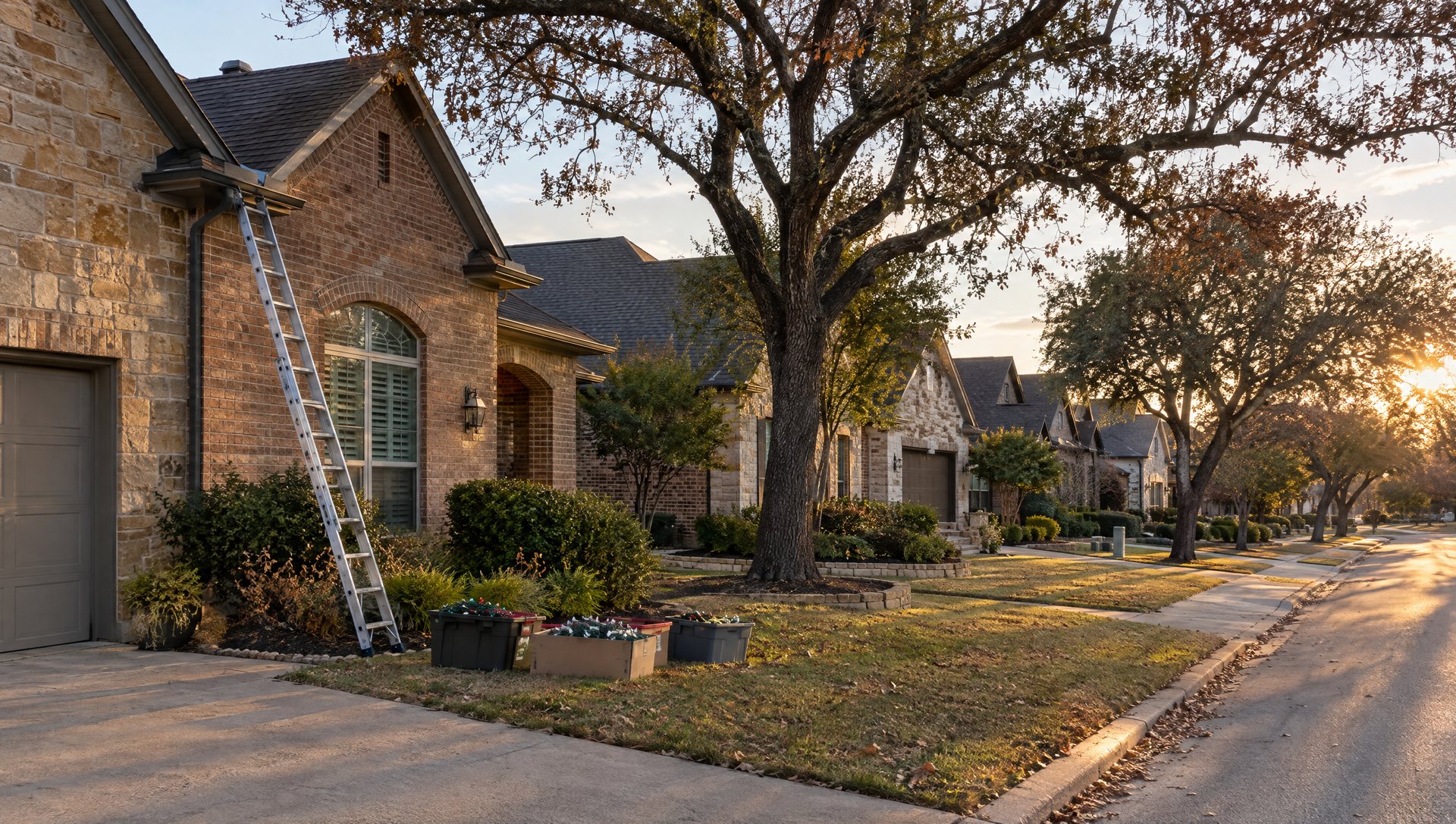
Trucks, equipment and storage space cost money all year. Spreading those costs over a few busy weeks is a big reason seasonal prices look high.
The calendar can change your price too. Christmas Lights HQ’s guide coaches installers to charge full price in November, add 10% to 20% in early December and add 25% to 50% for last-minute requests, or decline them. That is advice to installers, not a survey of Austin prices, so ask any installer whether its price changes with the install date. If you are already into December, see what is still possible with a last-minute install.
What the installer’s insurance covers (and what it doesn’t)
An installer’s general liability insurance covers injury and damage to other people, not the crew. The Texas Department of Insurance says commercial general liability covers bodily injury and property damage caused by a business’s operations, and is not meant to provide workers’ compensation.
Workers’ compensation is optional for most private employers in Texas, according to TDI’s workers’ compensation guide. Whether your own homeowner’s policy would respond if a worker got hurt is a question for your insurance agent.
What to ask any installer, Sapien included: a current certificate of insurance for general liability, naming the coverage limits, and, as a separate question, how their workers are covered if someone gets hurt on your property. Get both answers before anyone climbs a ladder at your house. Sapien is fully insured.
How much of a Christmas light price is profit?
We found no public source that reports installers’ net profit. What exists are gross margin figures. Christmas Lights HQ’s guide reports a 62% average gross margin in its survey of more than 200 contractors, and Strandr, a software company for installers, tells them to target 60% to 75% (updated October 2026).
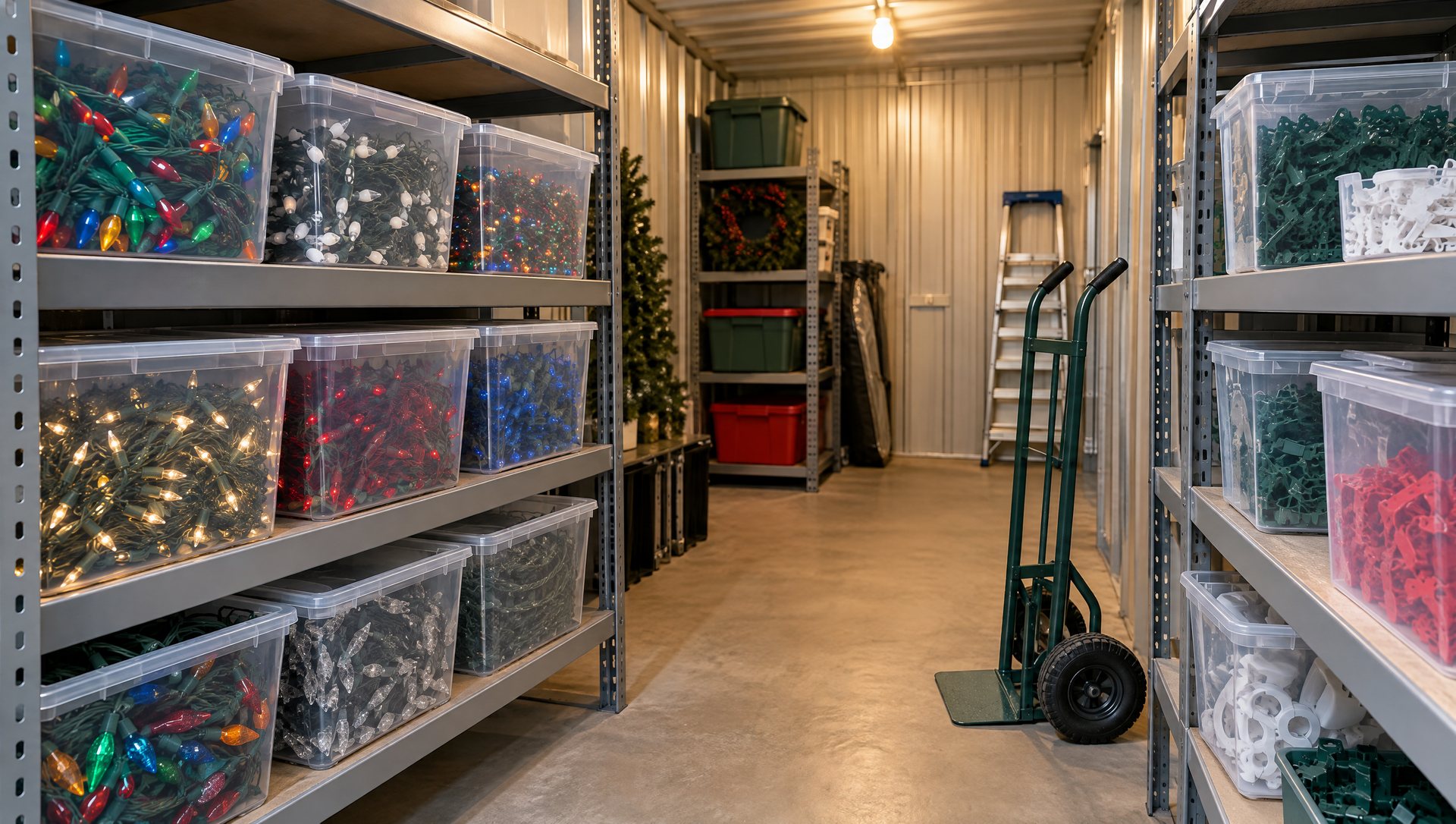
Gross margin is the price minus the costs tied to that one job, mainly lights and crew labor. It is not profit. Insurance, vehicles, fuel, storage space, equipment, phones, quotes that don’t book and the months with no installs all come out of it before anything is left.
Example: a $1,000 job at a 62% gross margin leaves $620 after that job’s lights and wages, and the year’s overhead comes out of that. These are trade figures, not Sapien’s.
When the price is worth paying, and when it isn’t
The price is worth paying for two-story rooflines, big trees, a hard date, or anyone who shouldn’t be on a ladder. A one-story roofline with lights you already own is often cheaper to do yourself; the three-season cash math is in DIY vs. professional Christmas lights, and the steps are in how to hang Christmas lights outside.
Ladder work is where much of the risk sits: the Consumer Product Safety Commission estimated about 14,900 emergency-room visits for holiday decorating injuries from November 1, 2022 to January 31, 2023, and nearly half involved falls. If you do it yourself, read our light installation safety checklist first.
How to lower the price without cutting corners
The safest way to lower a Christmas light price is to change the scope, not the quality.
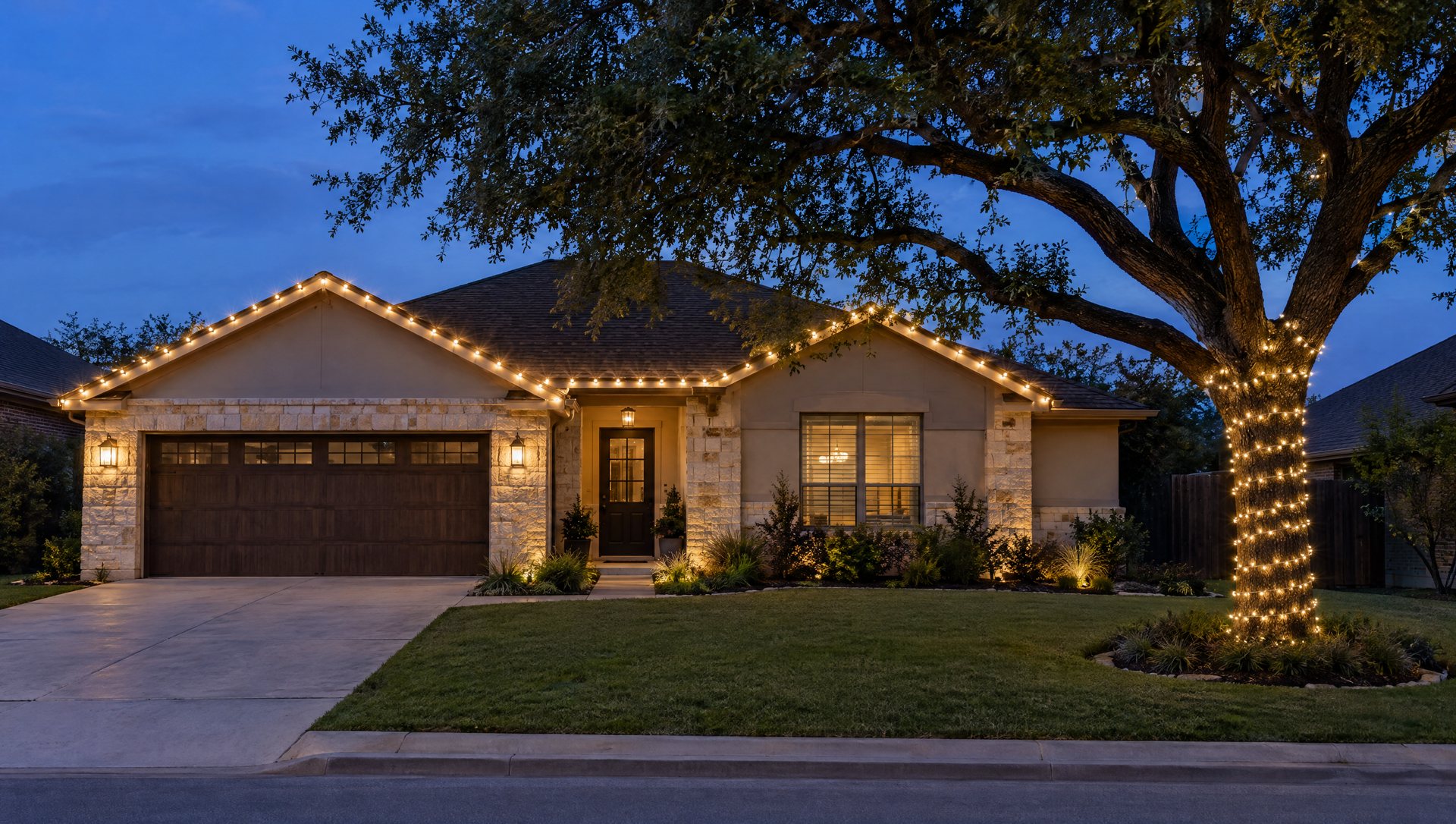
- Light what people see. The front roofline does most of the work. Skip the back of the house unless you entertain back there.
- Wrap fewer trees, fully. One large tree wrapped at even spacing reads better from the street than three trees wrapped thin.
- Skip effects. Twinkle, chase and color-changing setups add controllers and setup time.
- Ask about install-only. If you own good commercial-grade lights, some installers will hang them for less (see the FAQ).
- Ask for each line priced separately. Then you can drop the lines you care about least.
Cutting the price by choosing the lowest bid is a different thing. Here is how to choose an installer and spot where a low bid saves its money.
What we’d skip or do differently
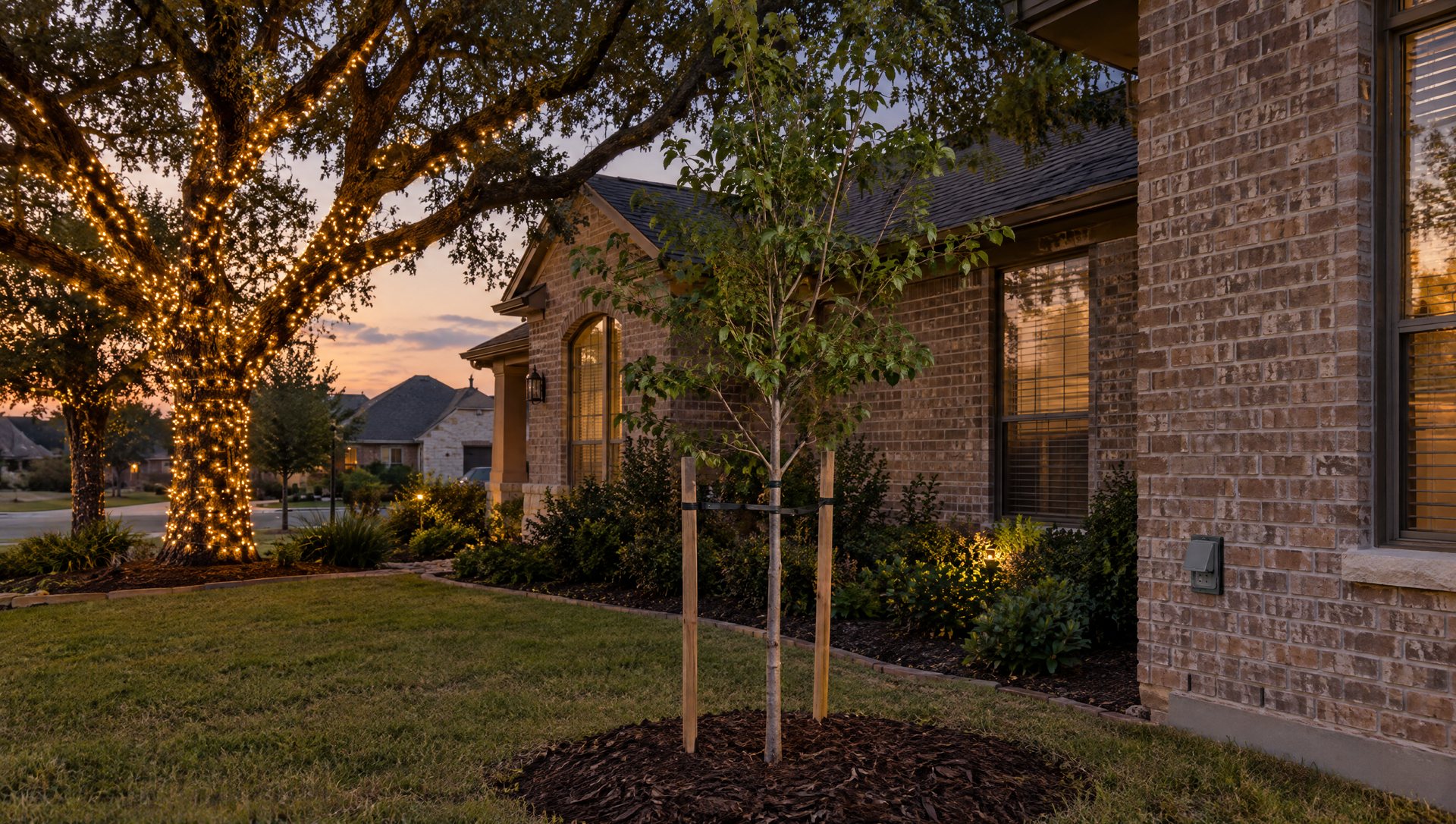
- A young or weak tree. Davey advises against lighting young, newly planted, weak or damaged trees. Spend the budget on a mature tree instead.
- Any job that needs a new outlet. Adding an outlet or circuit is electrical work. In Texas it goes to an electrician licensed by the Texas Department of Licensing and Regulation, not a lighting crew. Sapien works from the outlets you already have.
Want to see where your own price would land? Text a few daytime photos of the front of your house to (737) 777-9099, or use the contact page, and tell us which parts you want lit and your target date. We quote from the photos; jobs start at $500.
Frequently asked questions
Does Christmas light installation cost less the second year?
It can, because the measuring and design are done and custom-cut runs can be reused, but no published survey gives a typical second-year price. Sapien re-quotes every season, so a returning customer’s price reflects that year’s scope.
Is sales tax included in a Christmas light quote?
Ask any installer whether tax is included before you compare quotes. Get the answer in writing so two quotes compare on the same basis.
Can I bring my own lights to lower the price?
Some installers will hang lights you own, which national guides price at about $1.25 to $3 per foot without the lights (Thumbtack and Angi’s hire-a-pro guide, checked October 2026). Ask who fixes them if they fail mid-season.
Sources
- Christmas Lights HQ: Christmas light installation pricing guide (advice to installers; March 30, 2026)
- Strandr: Light calculator for Christmas light installation costs (60% to 75% gross margin target; updated October 4, 2026)
- U.S. Bureau of Labor Statistics: Employer Costs for Employee Compensation, June 2026 (total compensation, wages, benefits and legally required benefits; released September 9, 2026)
- Angi: How much does Christmas light installation cost? (minimums, repair costs, roofline footage; updated May 3, 2026)
- Angi: Hire a pro to hang Christmas lights (install-only rate; updated July 9, 2026)
- HomeAdvisor: Cost to install holiday lighting (removal-only price, hard-to-reach surcharge; updated June 19, 2026)
- HomeGuide: Christmas light installation cost (full-service per-foot rate, removal-only price; October 1, 2025)
- Thumbtack: Christmas light installation prices (second-story and hard-to-reach surcharges, install-only rate; updated April 13, year not shown)
- Christmas Designers: Retail vs commercial Christmas lights (one-piece construction, seasons of service; undated)
- Creative Displays: Pro-grade vs retail Christmas lights (seasons of service; July 27, 2021)
- Davey Tree: Wrapping trees with Christmas lights, the dos and don’ts (wrap formula, trees to skip; December 6, 2019)
- Texas A&M Forest Service: Trees of Texas, live oak (trunk and limb form)
- Christmas Light Source: How many light strings do I need to wrap my tree? (10% allowance; November 29, 2021)
- Dozr: Towable boom lift rental in Austin (daily lift rate; opened October 4, 2026)
- Texas Department of Insurance: Commercial general liability insurance (what general liability covers and excludes)
- Texas Department of Insurance: Workers’ compensation insurance guide (workers’ compensation optional for most private employers)
- U.S. Consumer Product Safety Commission: Holiday safety release 25-049 (decorating injury estimate and share of falls; November 19, 2024)
- Texas Department of Licensing and Regulation: Electricians (electrical work requires a licensed electrician)
- Five Austin-area installers’ own price pages, a Round Rock installer’s season dates and a San Antonio installer’s price list, all opened October 4, 2026. We do not name or link other installers. Ladder prices come from a Texas building-supply chain, seen the same day.
About the author. Rick Safeman owns Sapien Lighting & Installation in Austin, Texas.