



An HOA holiday lighting proposal lets the board approve the lights in one vote. It names each location and what gets lit, the install, lights-on and removal dates, the power source, the price and cost per home, who owns the lights, the vendor documents, and the exact motion. Under Texas Property Code chapter 209, notice of a regular board meeting goes out at least 144 hours ahead (10 days if mailed), so get the proposal to your manager first.
- Who approves common-area lighting?
- The board. Lights on your own house fall under your community’s rules instead
- How much notice does a Texas board meeting need?
- Posted and emailed 144 hours (6 days) before a regular meeting, 72 hours before a special one, or mailed 10 to 60 days ahead
- Can the board approve it by email?
- Often yes, for a routine contract. The vote is reported at the next meeting. Amending the budget needs an open meeting
- Does the HOA need three bids?
- State law requires a bid process over $50,000 and names no number. Your own policy may ask for more
- How do we show the cost?
- Season price divided by the number of lots. Sapien quotes HOA and commercial work per property
- What documents come before install?
- Certificate of insurance, an endorsement if your manager requires additional-insured status, how workers are covered, a W-9 and a signed agreement
- What if the entrance needs a new outlet?
- A licensed electrician adds it, with a permit inside Austin. The holiday lights themselves need no Austin permit
- Can the entry oaks be wrapped?
- Usually, if the HOA owns the tree and no power line runs through it. Ask for a wrap with nothing driven into the bark, paint any wound immediately, and take wraps off every season
This guide is for the board member, committee volunteer or resident who wants the entrance, monument or clubhouse lit and has to get the board to pay for it. If you are still deciding what to light, start with what to light at an HOA entrance and monument. The copy-and-fill template comes first. This is general information, not legal advice; your association’s recorded documents and its attorney decide your case.
The HOA holiday lighting proposal template (copy and fill in)
An HOA holiday lighting proposal is a one-page request that answers every question a board asks before it spends common money. If one answer is missing, the item can slide to the next meeting. Copy the text below into a document, fill each blank, and attach the site sketch, photos and vendor quote.

Holiday lighting proposal for (association name)
Submitted by (name, role) to the Board of Directors for the (date) meeting
- Request. Approve holiday lighting at (locations) for the (year) season, installed by (vendor).
- Locations. Main entrance and monument at (street); secondary entrance at (street); clubhouse; entry trees: (number and species).
- Scope at each location. What is lit (monument, trees, wreaths, garland); light type and color; about ____ feet of lights or ____ trees; tree coverage: trunk only, or trunk and main limbs.
- Dates. Install by ________. Lights on ________. Nightly hours ________ to ________ on a timer. Removal by ________.
- Power. Existing outlets at ________, tested on ________. Other loads on that circuit: ________. Outlet switched by a photocell or timer: yes / no. Outlet covers stay weatherproof with a plug in: yes / no. Meter or account: ________. Any new outlet, circuit or cover added by a licensed electrician with any required permit, priced separately at $________.
- Cost. Vendor price $________ for the season (sales tax included: yes / no). Lots: ________. Cost per lot: $________. Paid from the ________ budget line ($________ remaining). Deposit $________ due ________; balance due ________; paid by (manager) by check or ACH. Later phases: ________.
- Ownership and service. Lights owned by ________ and stored by ________. Outages reported to ________ and repaired within ________. Second-season price: ________.
- Documents before install. Certificate of insurance; additional-insured endorsement if the manager requires it; written answer on worker injury coverage; W-9; signed agreement with this scope and these dates; vendor-portal registration if used.
- Trees and public property. No staples, nails, screws or other fasteners in oak bark. Any oak wound painted immediately. All tree wraps removed each season. No lights in a median, street tree or public right of way without written City authorization.
- Site conditions. Landscape contractor told the install and removal dates. No holes drilled in monument masonry. Crew parks at (location) and does not block traffic lanes. Replacement of lights damaged by vehicles, vandalism or storms paid by ________.
- Motion. “Move to approve $________ from the ________ budget line for holiday lighting at (locations) by (vendor), to be installed by (date) and removed by (date), subject to receipt of a certificate of insurance and a signed agreement.”
- Attachments. Site sketch with outlets and footage; daytime photos of each location; vendor quote or quotes.
Who approves holiday lighting in an HOA?
Lighting the entrance, monument or clubhouse is a board spending decision, because the association owns or maintains those areas. The manager often gathers quotes and sets the agenda. A resident or committee can bring the idea, but only the board can commit the money.
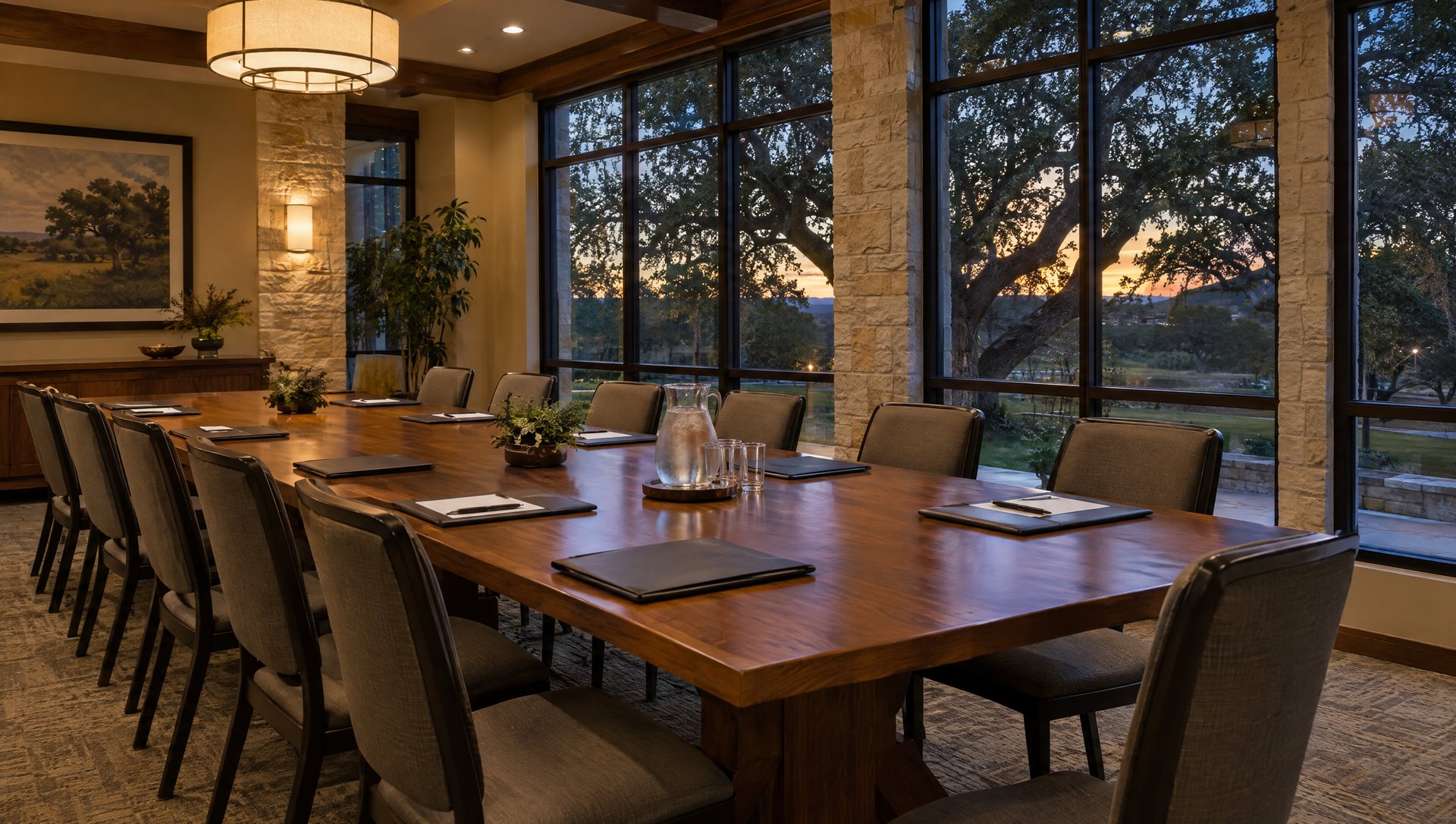
When should you bring the proposal to the board?
Bring the proposal before the agenda for the board’s next regular meeting goes out. Under Property Code section 209.0051, the association either mails notice to owners 10 to 60 days ahead, or posts and emails it at least 144 hours before a regular meeting and 72 hours before a special one. Once notice is out, a new item usually waits for the next meeting.
144 hours is 6 days and 72 hours is 3 days. Mailed notice goes out 10 to 60 days ahead, so 10 days is the latest it can be mailed.
Source: Texas Property Code section 209.0051(e)
Show the numbers
| Days of notice | |
|---|---|
| Regular meeting, posted and emailed | 6 days |
| Special meeting, posted and emailed | 3 days |
| Any meeting, mailed | 10 days |

Work backward from lights-on night. Thanksgiving is November 26, 2026, and Thanksgiving weekend is a common lights-on target.
- Find the board’s next regular meeting date and ask the manager when the agenda closes.
- Get the vendor’s site walk and written quote before then.
- Ask the manager how and when vendors get paid, and match it to the vendor’s deposit terms.
- After the vote, allow time for vendor documents and the install. Ask each vendor for its current lead time in writing before the meeting, so the install date in the motion is one the vendor can meet.
Example: a meeting on Tuesday, November 17, 2026 at 7 p.m. needs posted notice by 7 p.m. on Wednesday, November 11. Your proposal has to reach the manager before that. That leaves nine days before Thanksgiving for documents and the install, which is tight. A board meeting that late in the season is a good reason to approve an entrance-only first phase, or to set a lights-on date in early December rather than promise residents Thanksgiving weekend.
Can an HOA board approve it by email in Texas?
Often, yes. Section 209.0051 lets a board act by email or phone if every member has a fair chance to weigh in and vote; the action and its cost are then reported at the next meeting. Fifteen listed matters need an open, noticed meeting. Approving or amending the annual budget is one. A routine service contract is not.
So the path depends on the budget. With a lighting line already in it, the board can likely approve a vendor by email. Amending the budget to add or fund a lighting line needs an open, noticed meeting; ask your manager whether moving money between lines counts as an amendment. If the board is weighing permanent lighting instead, it may count as a capital improvement, which is also on the open-meeting list.
How should you present the cost to the board?
Show the cost as a total and as a cost per home, because owners pay it one assessment at a time. Divide the season’s price by the number of lots.
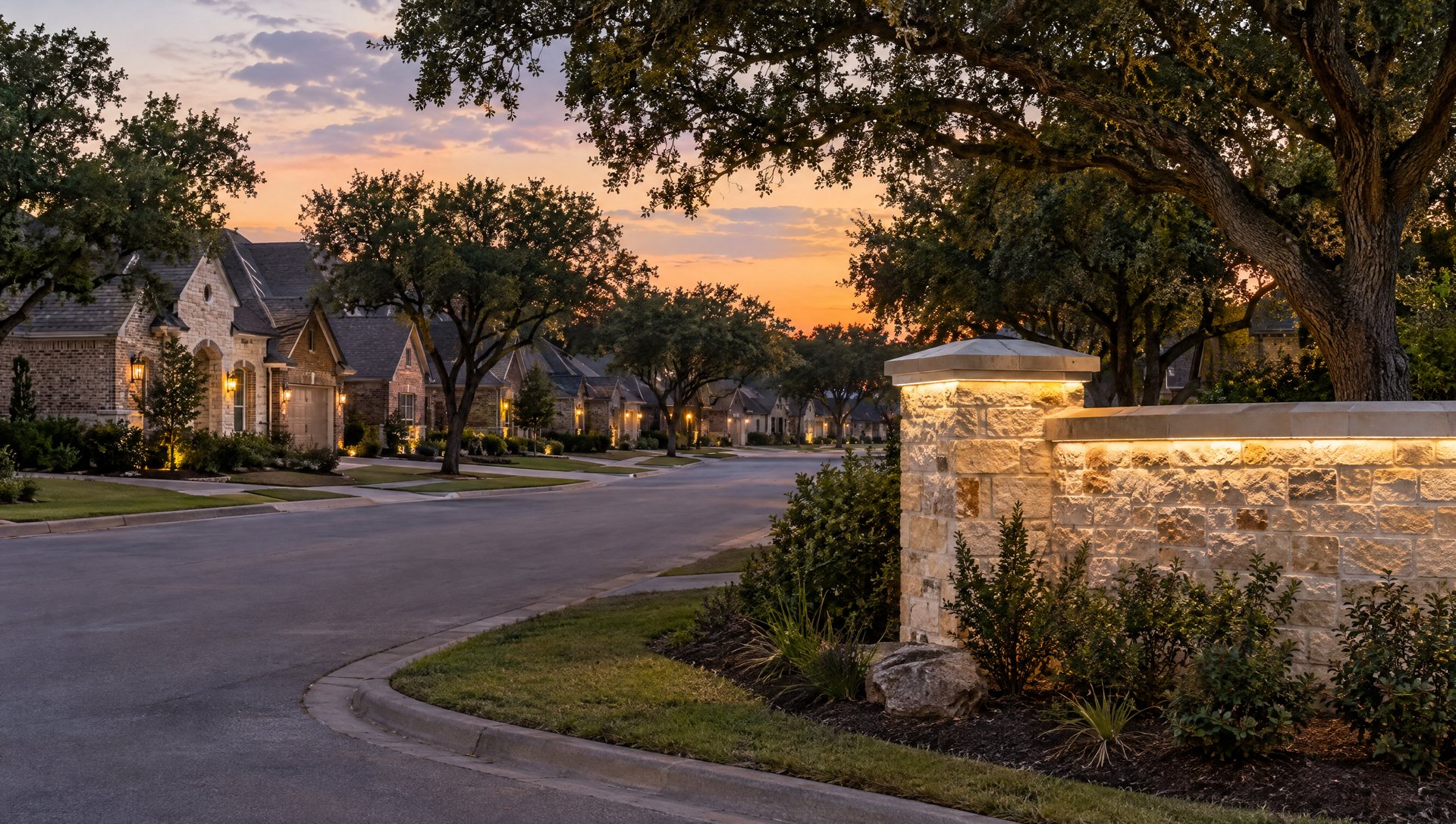
Example (round numbers, only to show the math): a $6,000 season over 400 lots is $15 per lot. A $3,000 entrance-only first phase over the same 400 lots is $7.50 per lot. These are not market prices or Sapien prices.
An entrance quote depends on the footage, the number and size of the trees, and the power, so get a site walk before you take a number to the board. Sapien quotes HOA and commercial work per property; there is no starting price to plug in. The Christmas light installation in Austin page describes the service, and what it costs to wrap a tree in Christmas lights shows how tree size moves a price.
Should the HOA buy the lights or pay for a service?
An HOA can buy lights and pay someone to hang them, or pay for a full service where the installer supplies the lights under the contract’s terms.
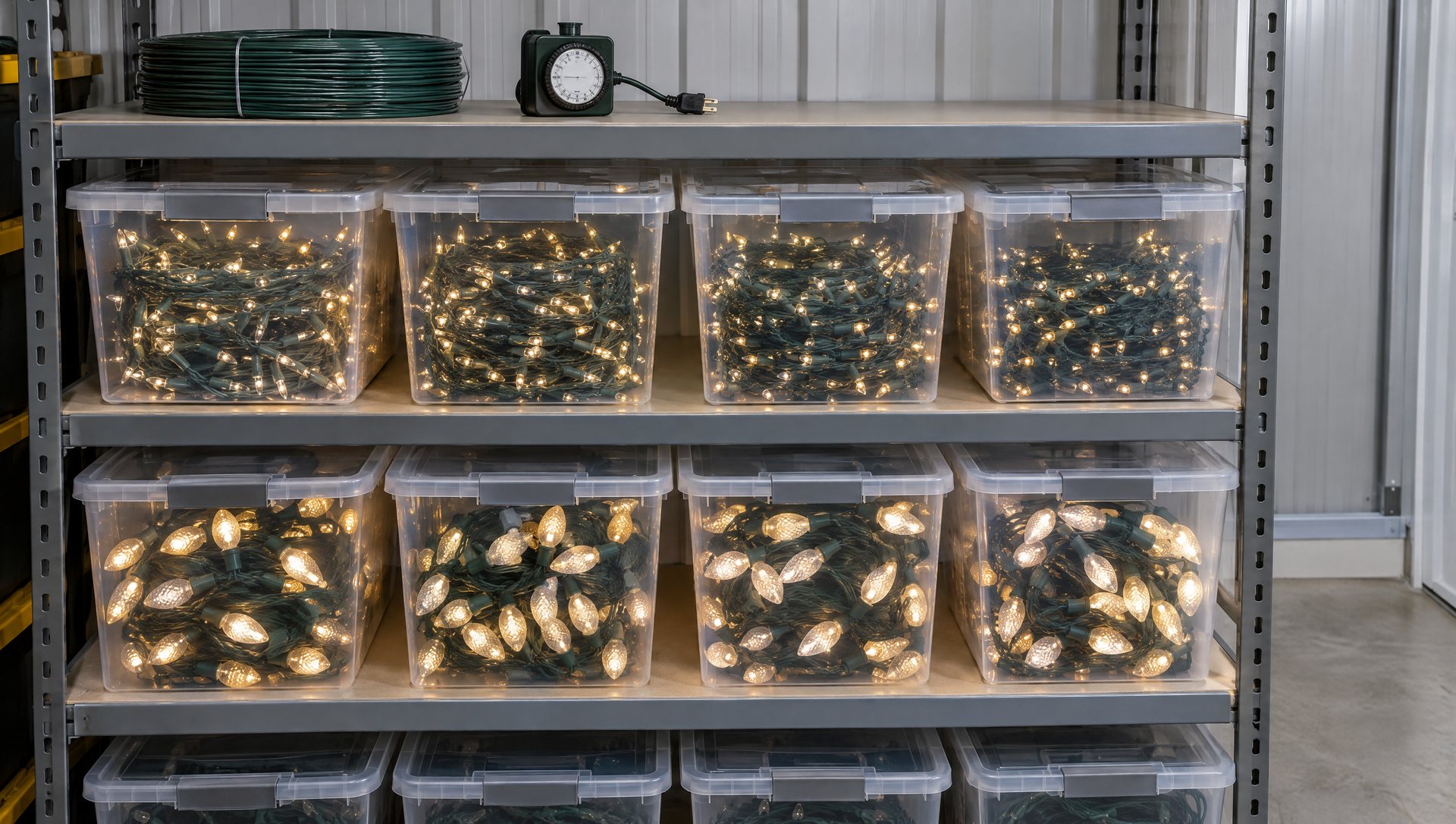
HOA buys, installer hangs
- Who owns the lights
- The HOA
- Ask about
- Storage, who tests them each fall, who pays for replacements
Full service
- Who owns the lights
- Set by the contract
- Ask about
- What happens to the lights after removal; year-two price
Multi-year agreement
- Who owns the lights
- Set by the contract
- Ask about
- Price for each year, how either side can end it, what happens if the scope changes
Buying only saves money if someone will store, test and track the lights every year. Get the answer in writing either way. Our guide to whether installers provide the lights compares the two models, and how to read a Christmas light installation quote goes through a quote line by line.
How Sapien handles it: the lights are leased for the season unless the quote says otherwise. Sapien supplies the lights, installs them, looks after them through the season and takes them down between January 2 and 15, or earlier if your deadline requires it. If a light we supplied fails or our install comes loose, we fix it free; after weather or animal damage, the first trip is free and later trips are quoted first.
Does a Texas HOA need three bids?
Texas law requires a bid process only above $50,000. Property Code section 209.0052 says an association contracting for services over that amount must use a bid process it has set up, but not how many bids. Below $50,000, your own policy controls. Crystal Falls in Leander, for example, recorded a 2021 protocol for contracts over $50,000: try for three bids on the same scope, giving each vendor at least seven days.

Stricter rules apply when an insider bids. If a board member, a relative within the third degree, or a company in which either holds at least 51 percent of the profits wants the job, section 209.0052 requires at least two other bids where reasonably available. The interested member stays out of the discussion and the vote.
A second quote helps even when nothing requires it. The Texas Attorney General suggests written bids from more than one contractor, with detail on the work. Give each vendor the same scope, and use our questions to ask any installer.
What documents should an HOA get from a lighting contractor?
Before install day, the HOA should hold the vendor’s certificate of insurance, a W-9, a signed agreement with scope and dates, and a written answer on how the crew is covered if someone gets hurt. Some of these prove less than people assume.

- Certificate of insurance. Under Texas Insurance Code chapter 1811, a certificate summarizes coverage for someone outside the policy. It cannot change the policy and must say it is for information only, or similar wording that the policy controls. So a certificate cannot make the HOA an additional insured; that status comes from the policy or an endorsement. If your manager requires it, ask for the endorsement page.
- General liability is not crew coverage. The Texas Department of Insurance says general liability covers injury or damage to others and is not meant to provide workers’ compensation.
- How workers are covered. TDI’s workers’ compensation guide says Texas does not require most private employers to carry it, and that alternative injury policies are not workers’ compensation. Ask, and file the answer.
- W-9 and vendor agreement. FirstService Residential Texas, for example, has vendors register through a third-party portal that collects insurance information, a W-9 and a signed agreement. Ask your manager early if yours uses one.
- Licenses: electrical work only. TDLR’s list of licensed programs includes electricians but no program for holiday-light installers. A license matters for whoever adds an outlet.
Sapien is fully insured, and boards can request a certificate of insurance. Ask for it along with the rest of the vendor documents, and put each of the other questions above to us in writing as you would to any vendor.
What the proposal should say about power
The template’s power line tells the board which outlets the lights will use, whether a photocell or timer switches them, and which meter pays for the electricity. No usable outlet means a separately priced line for a licensed electrician, because the landscapers’ holiday-lighting exemption in Texas Occupations Code section 1305.003(a)(13) excludes “any required power source.” Inside Austin, City Code chapter 25-12 requires a permit for a new outlet or circuit, while temporary holiday decorative lighting needs none. Sapien’s work is plug-in only: we use the outlets that are there and do not add outlets or circuits. How to check the outlets, circuits and covers on site is covered in our guide to what to light at an HOA entrance and monument.