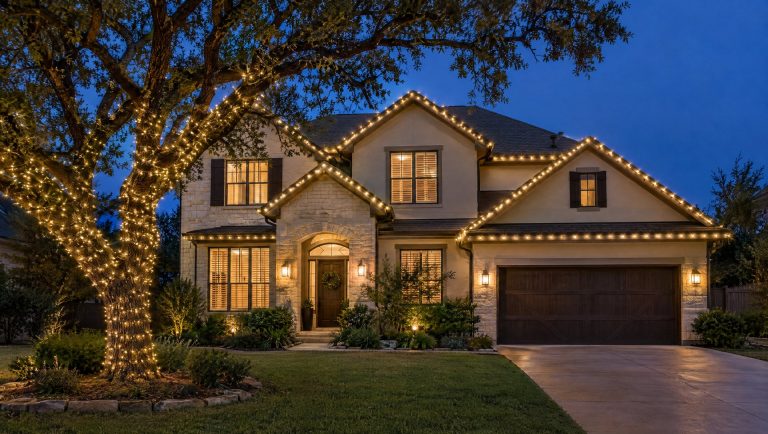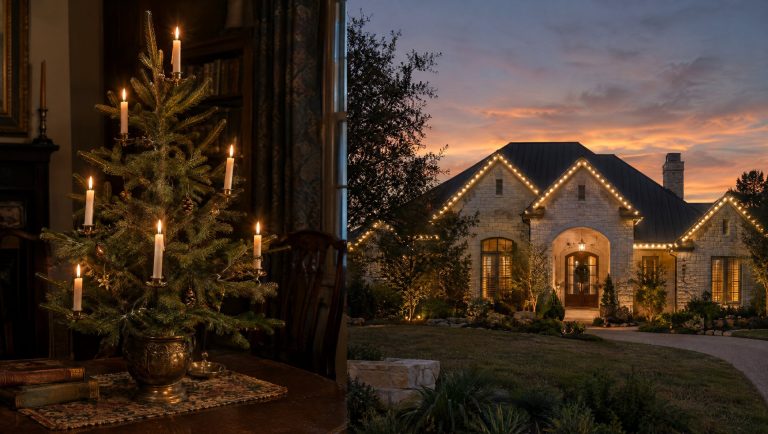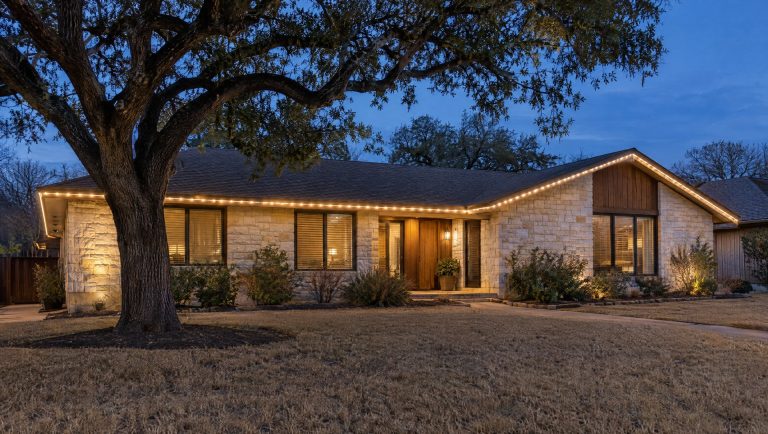
Permanent Christmas lights are sold on convenience: install once, never climb a ladder in December again, change colors from your phone. All of that is true. What gets left out of the pitch are the things you discover a year or two later, usually when a roofer is standing in your driveway or when you notice the “warm white” looks faintly pink from across the street.
This is the list of those things, written from the installer’s side of the ladder in Austin. Each one comes with what to do about it. None of them is a reason to skip permanent lights on its own, but a few of them together might be, and the last section says who should.
If you’re still at the “how does this even work” stage, start with our step-by-step permanent installation guide. For prices and run-time costs, see the Austin permanent lighting cost breakdown.
1. The daytime look matters more than the nighttime look
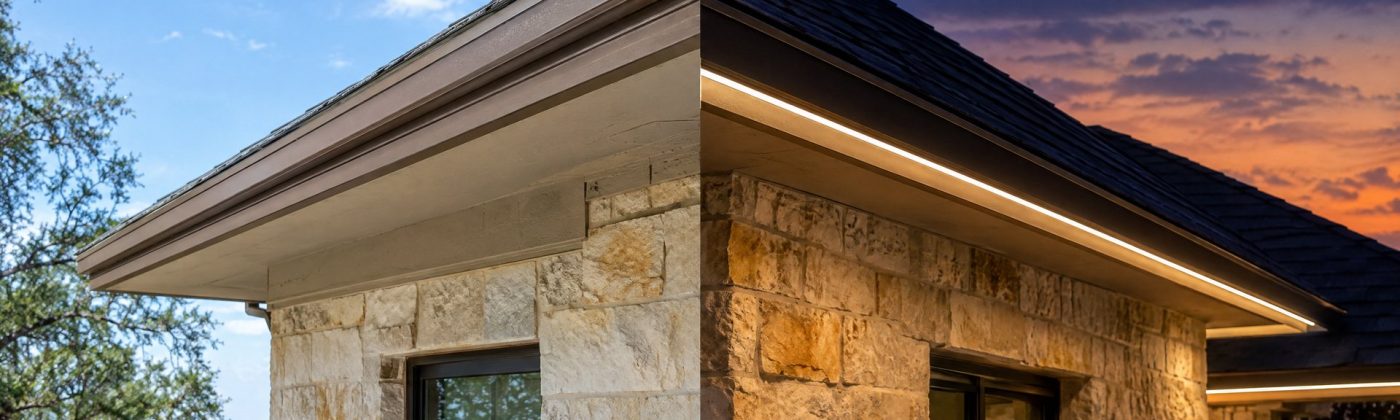
You’ll look at your lights switched off about 20 hours a day, every day of the year. At night, almost every system looks good. In daylight, the difference between a clean install and a cheap one is obvious from the curb.
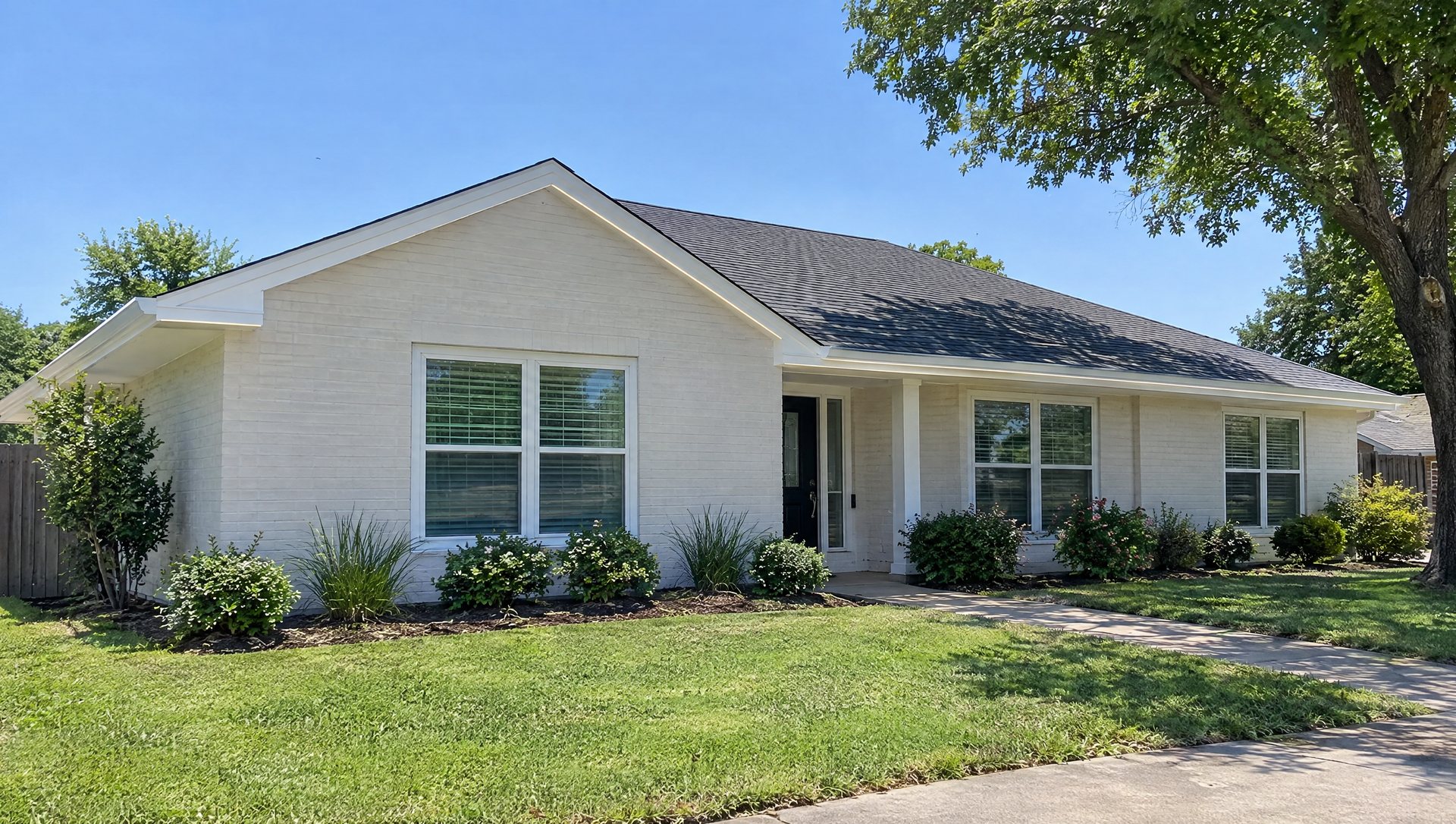
What you’re actually looking at in daylight is the channel (or the clips, if there’s no channel), the color match to your trim, how straight it runs, how the corners are finished, and where the power cable comes down the wall.
What to do: Before you buy, ask to see daytime photos of finished installs, not night shots, and drive past one or two in person if you can. Pick a channel color that matches your fascia, not your brick or siding. Decide where the power cable will go before the install, not during it.
2. Node spacing decides whether it looks like Christmas or like a runway
Permanent lights are individual points of light, and the distance between them changes the look completely. At 6 to 12 inches apart, a roofline reads as a continuous line, close to the classic look of C9 bulbs on 12-inch spacing. At 16 to 20 inches apart, it reads as a row of dots.
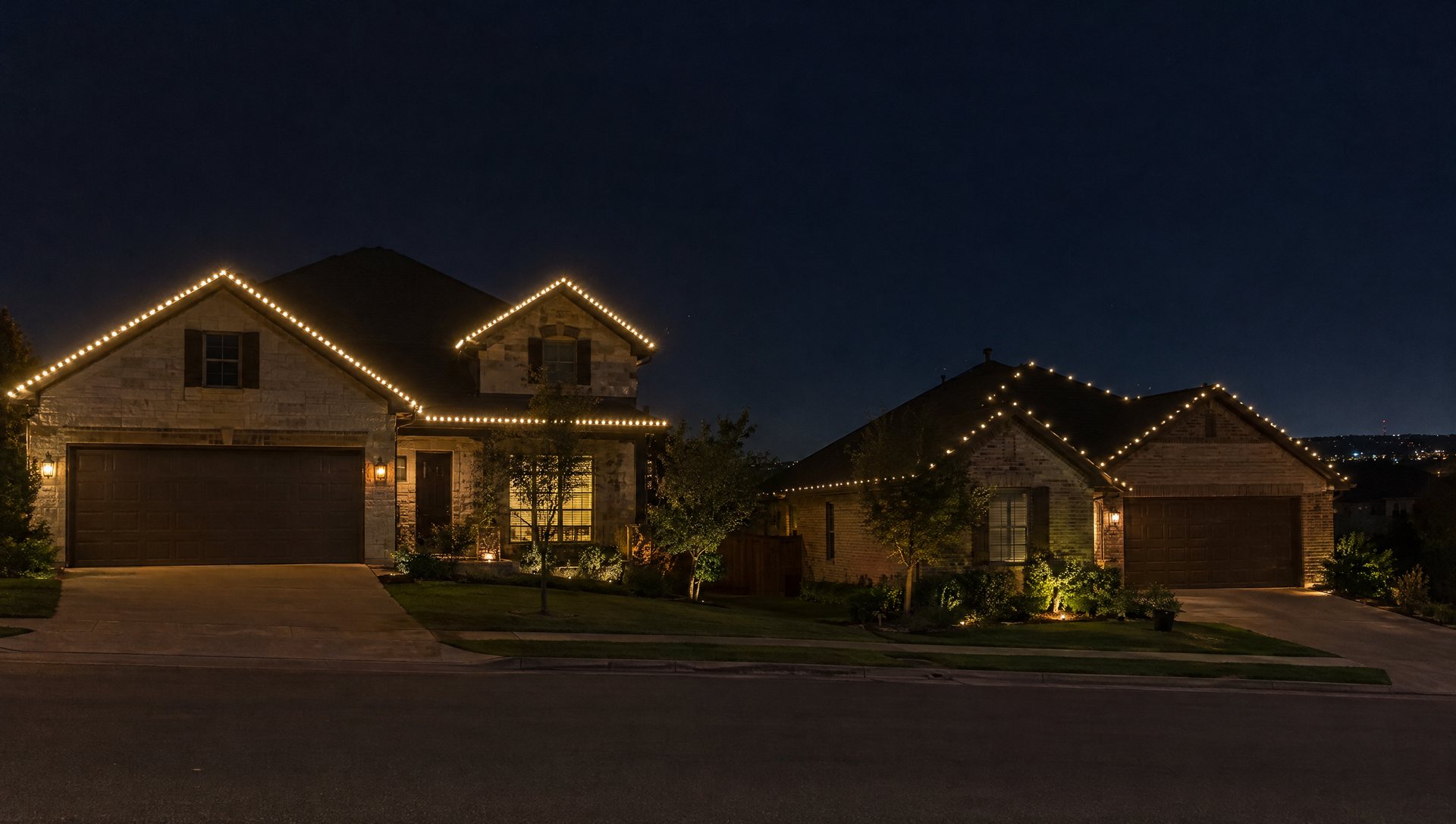
Many DIY kits sit at the wide end. Govee’s Permanent Outdoor Lights 2 spaces its lights about 417 mm (roughly 16 inches) apart, with 72 lights per 100 feet. Eufy’s Permanent Outdoor Lights E22 puts 60 lights on 100 feet, which works out to about 20 inches. Professional systems typically let you choose, commonly 6, 9 or 12 inch spacing.
At 6 to 12 inches a roofline reads as a continuous line, and 12 inches matches classic C9 strings. Govee lists 417 mm, roughly 16 inches; Eufy's 60 lights on 100 feet work out to about 20 inches.
Source: Govee and Eufy product pages and a professional brand's 2026 pricing guide, listed in Sources
Show the numbers
| Spacing | |
|---|---|
| 6-inch pro option | 6 inches |
| 9-inch pro option | 9 inches |
| 12-inch pro option | 12 inches |
| Govee Permanent Outdoor Lights 2 | 16 inches |
| Eufy E22 | 20 inches |
Wide spacing isn’t wrong. For accent lighting on a modern house, dots can look intentional. But if what you want is a traditional Christmas roofline, wide spacing will always look a little sparse.
What to do: Decide which look you want before comparing prices, since tighter spacing means more nodes per foot and a higher cost. Compare quotes at the same spacing.
3. “Warm white” on a color system isn’t always warm white
Most permanent lights are color-changing, and many people end up running them in plain white most of the year. How the system makes white matters.
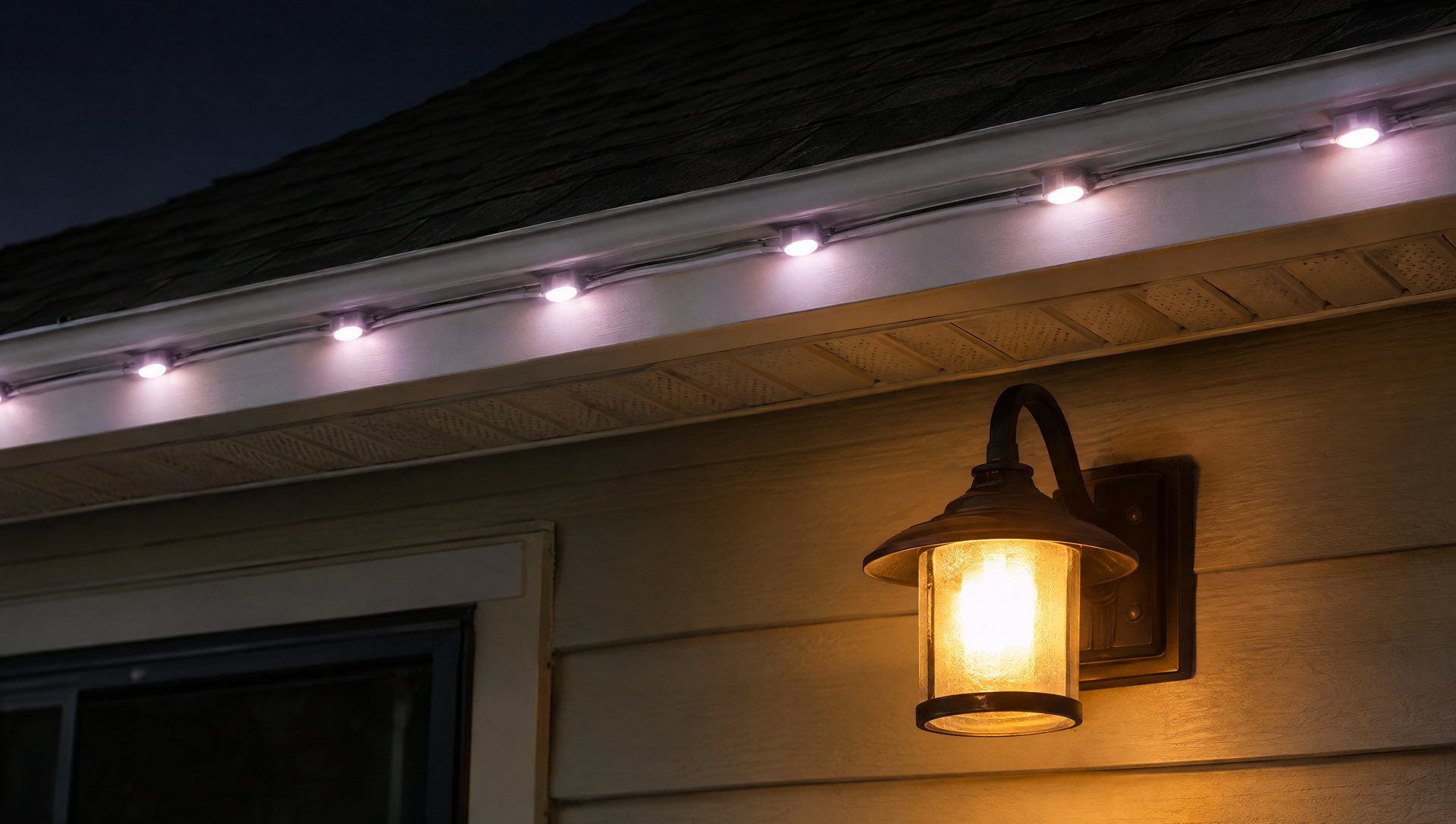
An RGB-only node fakes white by mixing red, green and blue. The result often has a tint, slightly blue or pink depending on the batch, and it rarely matches the warm glow of incandescent bulbs or of your porch light. Systems with a dedicated white diode do much better. Govee’s second-generation permanent lights are RGBICW, adding a white LED; Eufy’s E22 uses separate warm and cool white diodes alongside RGB and advertises a 1500K to 9000K range. Pro systems vary, so ask.
What to do: Ask whether the node has a dedicated white LED, and ask to see the system running warm white next to a real warm white bulb. If most of your use will be white, weight this above the number of animated effects in the app.
4. DIY kits come in fixed lengths that don’t match your house
Your roofline is not a neat multiple of 50 or 100 feet. Many consumer kits can’t be cut. Govee’s product page states plainly that its permanent lights are not cuttable, that extensions come in 16.4-foot pieces, and that a single controller tops out at 150 feet.
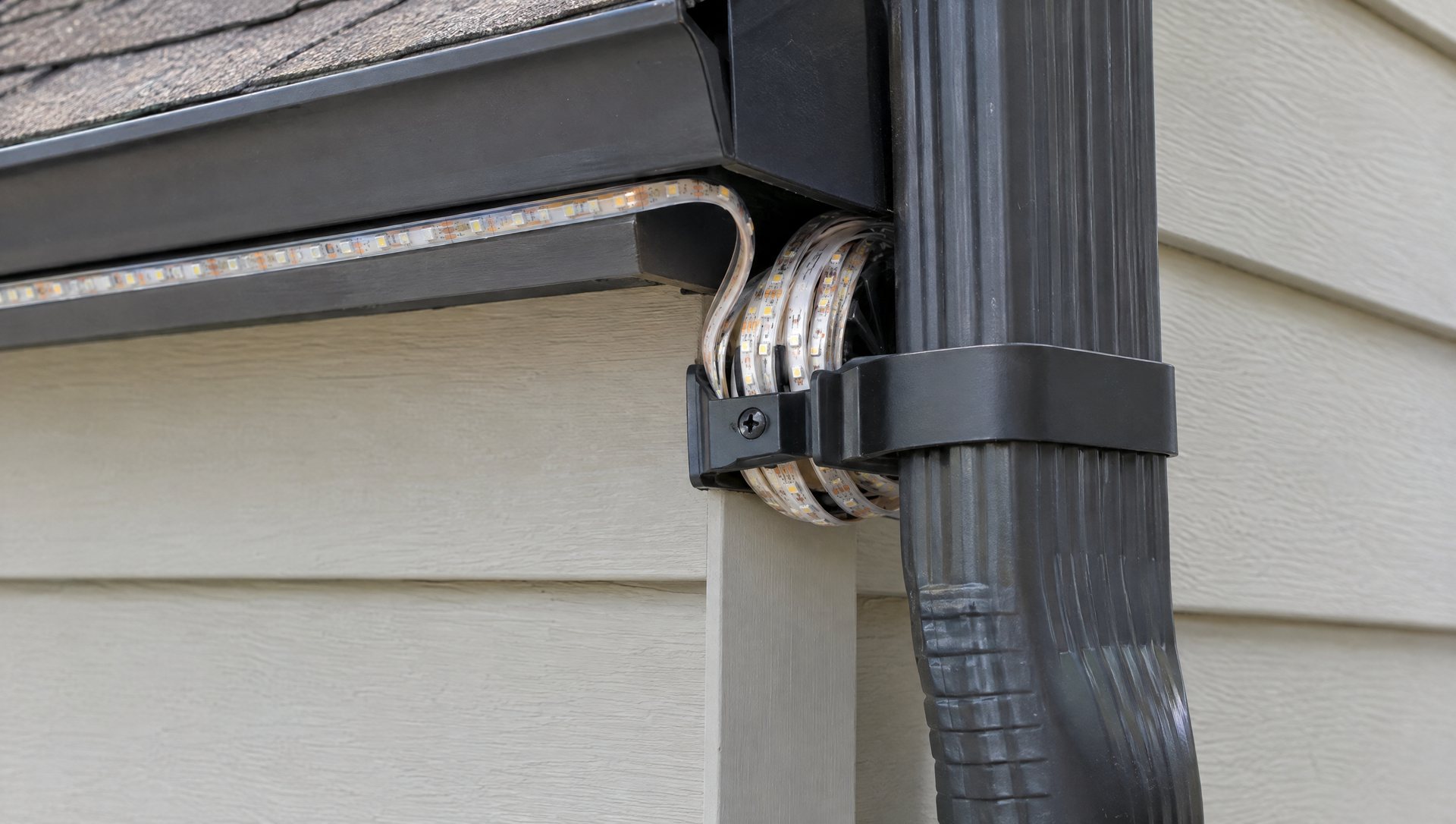
On a 180-foot ranch, that means two kits, two controllers, two power points, and roughly 20 feet of lit strip with nowhere to go. The extra gets doubled back or tucked out of sight, which works but isn’t elegant. Systems cut to length on site avoid this.
What to do: Measure first, then map the measured runs against available kit lengths before buying. The installation guide linked above shows how to break a roofline into runs.
5. Your outdoor outlet is probably in the wrong place
Most homes have one or two outdoor outlets, near the ground, beside the back door or the AC unit. Permanent lights want power near the roofline, usually at a corner close to where a run starts.
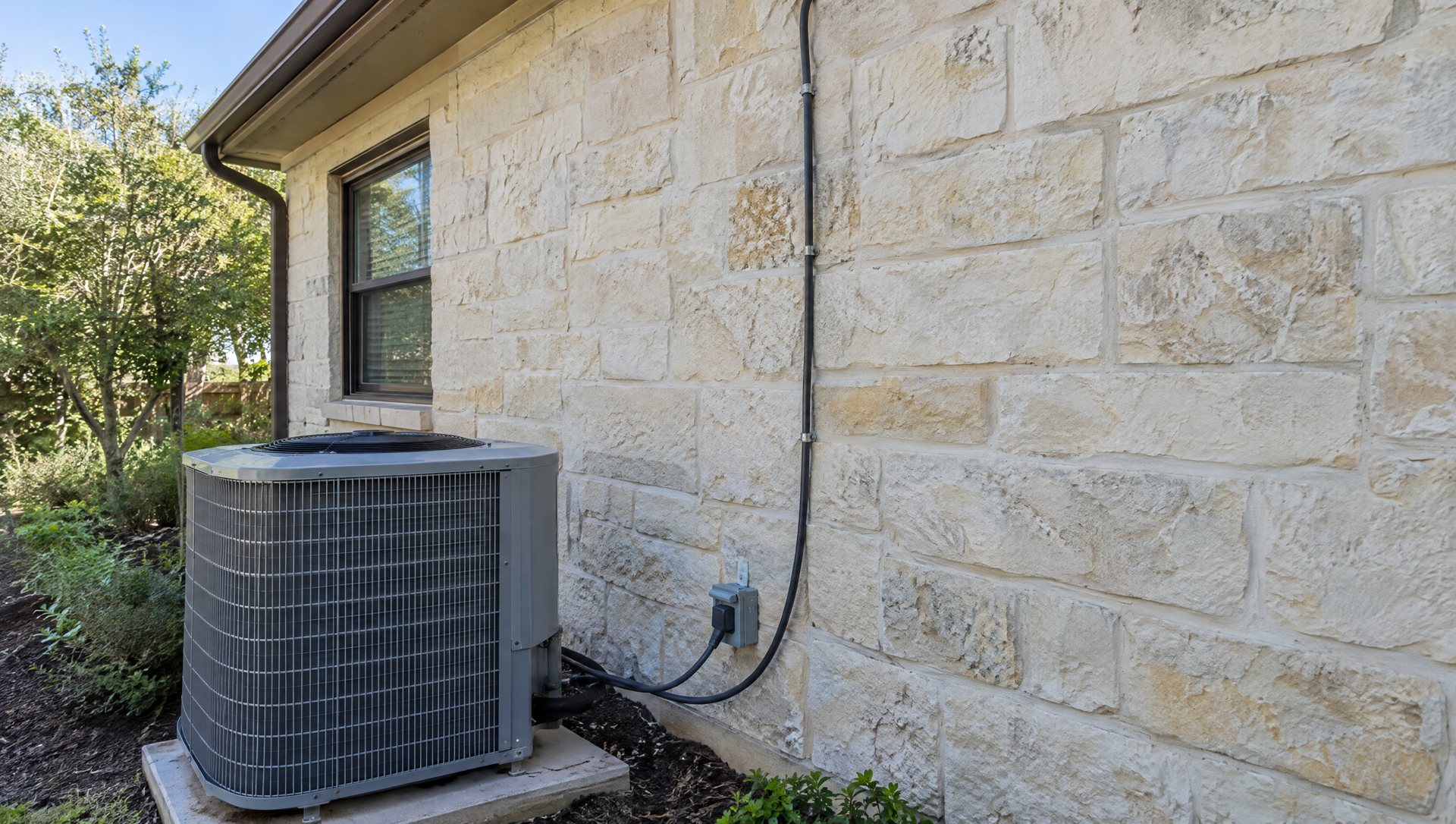
Under the National Electrical Code, which Austin enforces in its 2026 edition (in effect since September 1, 2026), an outdoor residential receptacle needs GFCI protection, and a receptacle in a wet location that has something plugged into it needs an “in-use” cover that stays weatherproof with the plug in. A lot of older Austin homes have neither.
The fixes are a cable run down the wall to an existing outlet (visible, especially on stucco or stone), a pass-through into the garage, or a new receptacle under the soffit. Adding a receptacle is electrical work. Texas exempts owners working on the home they live in from state licensing, but local permit rules still apply, and anyone you hire for it should be a TDLR-licensed electrician. This is general information, not legal advice.
What to do: Figure out power on the first site visit, and ask who does the electrical part and whether it’s included in the price.
Here is how Sapien handles it: our permanent-light work is labor only, installing plug-in kits on existing outlets. We don’t do hardwiring, new outlets or new circuits; that work needs a TDLR-licensed electrician.
6. Austin heat and sun are a harder test than snow
Most marketing for permanent lights talks about surviving snow and ice. In Central Texas the real enemy is the summer: months of strong UV and fascia boards on south and west walls that get far hotter than the air temperature.
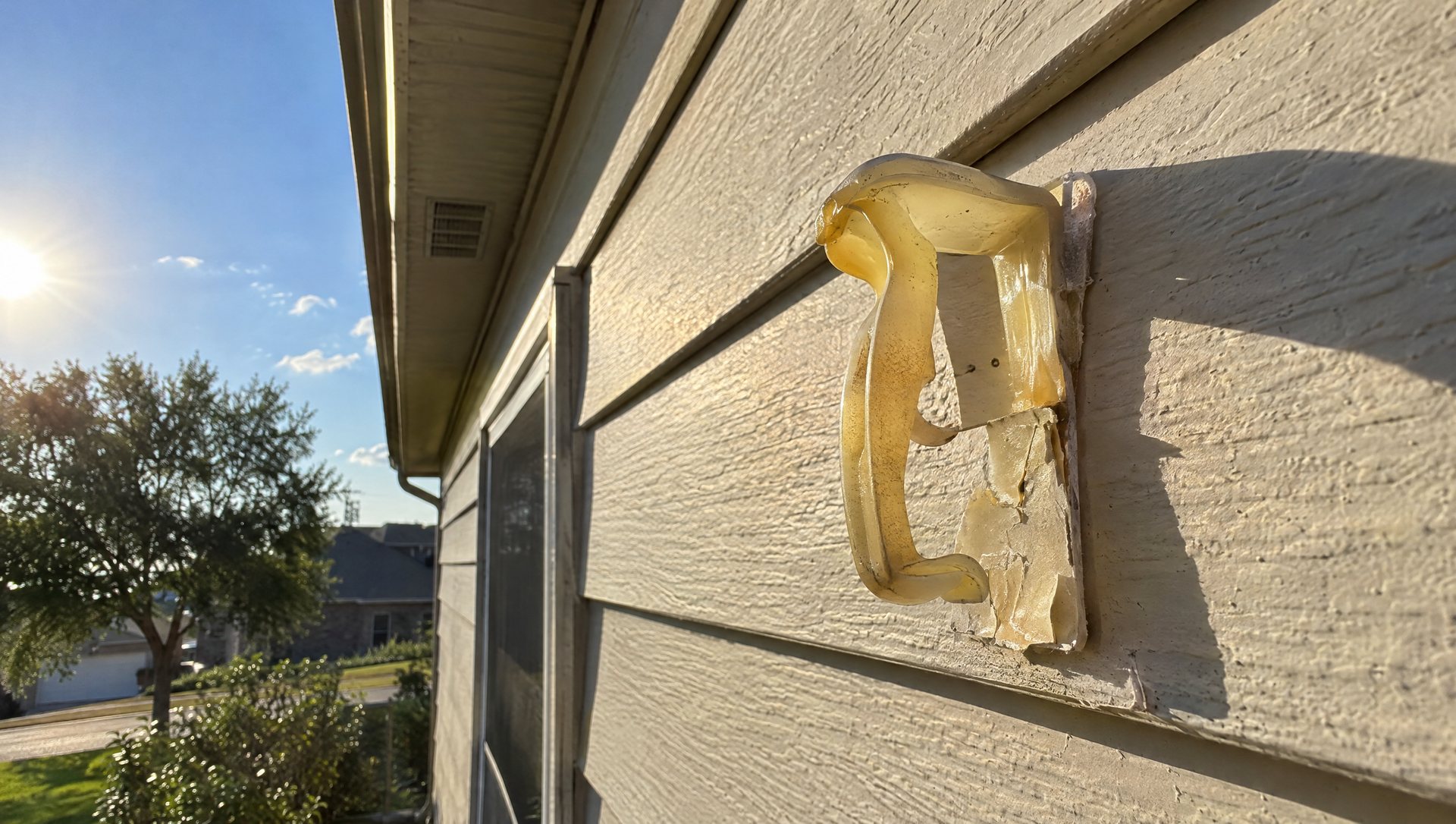
Heat shows up in a few ways:
- Adhesive lets go. Many DIY kits include VHB adhesive pads. On a sun-baked fascia, adhesive is the first thing to fail. Screws and clips last.
- Plastic gets brittle. PVC channel and cheap clips yellow and crack after a few summers in direct sun. Aluminum channel holds up better.
- Electronics age faster. Govee rates its strings for operation up to 140°F. A controller or power supply mounted in an Austin attic, or on a west wall in full sun, works much closer to its limits than one inside a garage.
What to do: Insist on mechanical fastening, put the controller somewhere shaded, and ask what the warranty says about heat. Our guide to IP ratings for permanent lighting explains what water and dust ratings do and don’t tell you.
7. Hail, wind, trees and squirrels
A permanent roofline sits at the edge of the house, which is exactly where hail hits hardest and where tree limbs rub.
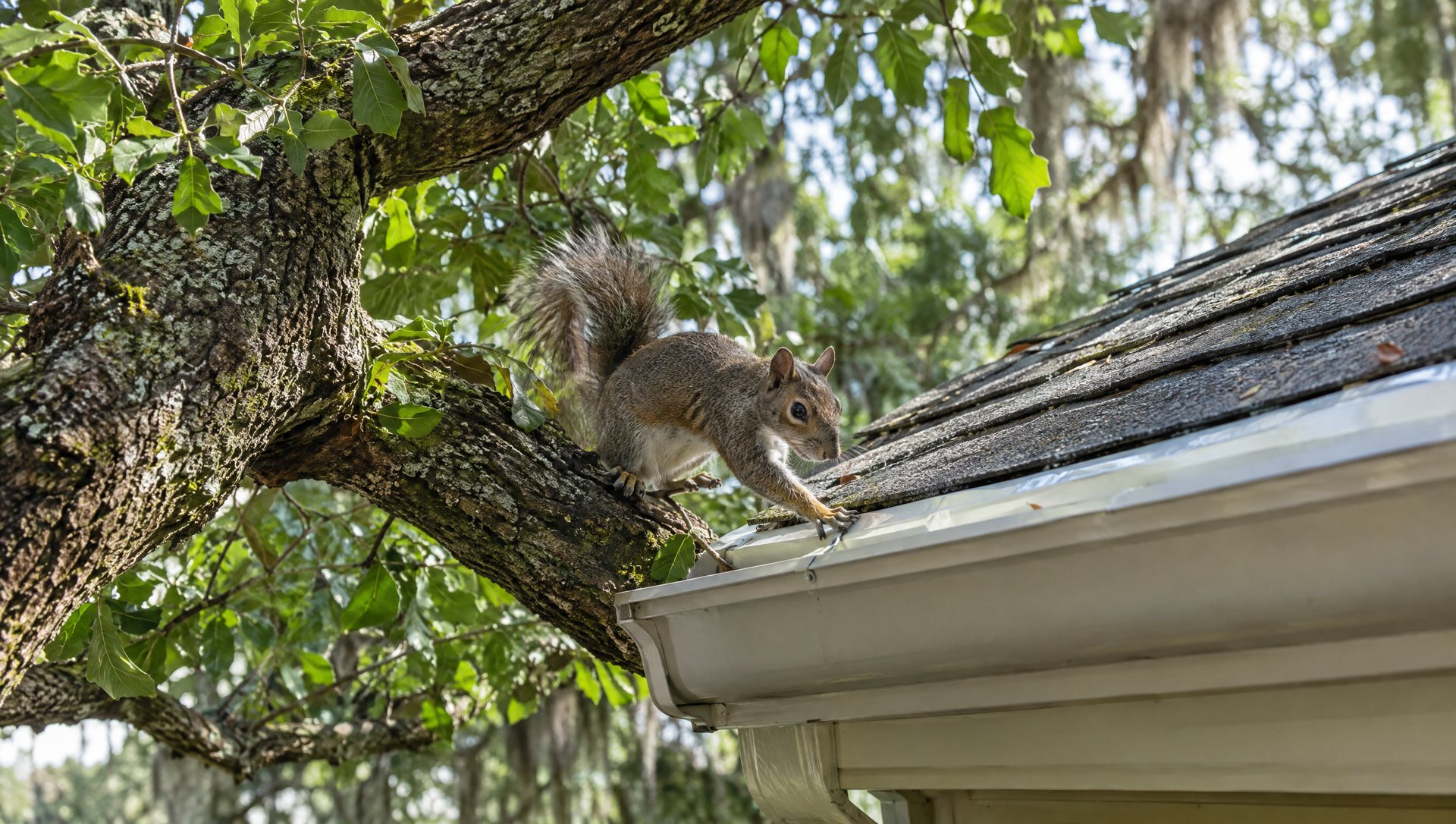
Hail can crack node lenses and dent channel. Live oaks and cedar elms that hang over the gutter scrape the lights every time the wind blows and give squirrels a route to the wire, which they will chew. Gutters that overflow because they’re packed with oak leaves pour water over the front edge, right onto the lights.
What to do: Trim limbs back from the roofline before installing, and in Austin do oak trimming outside the February 1 to June 30 oak wilt window. Clean gutters once or twice a year. After a hailstorm, walk the house and look at the roofline while you’re checking the shingles; if you’re filing a roof claim anyway, mention the lights to your adjuster.
8. You’re buying a piece of technology, not just lights
A permanent system is a controller, an app, a cloud account and firmware. That brings tech-product risks that string lights never had.
- The app is the product. If the company changes its app, ends support for an older controller, or goes out of business, your lights may get stuck on their last setting.
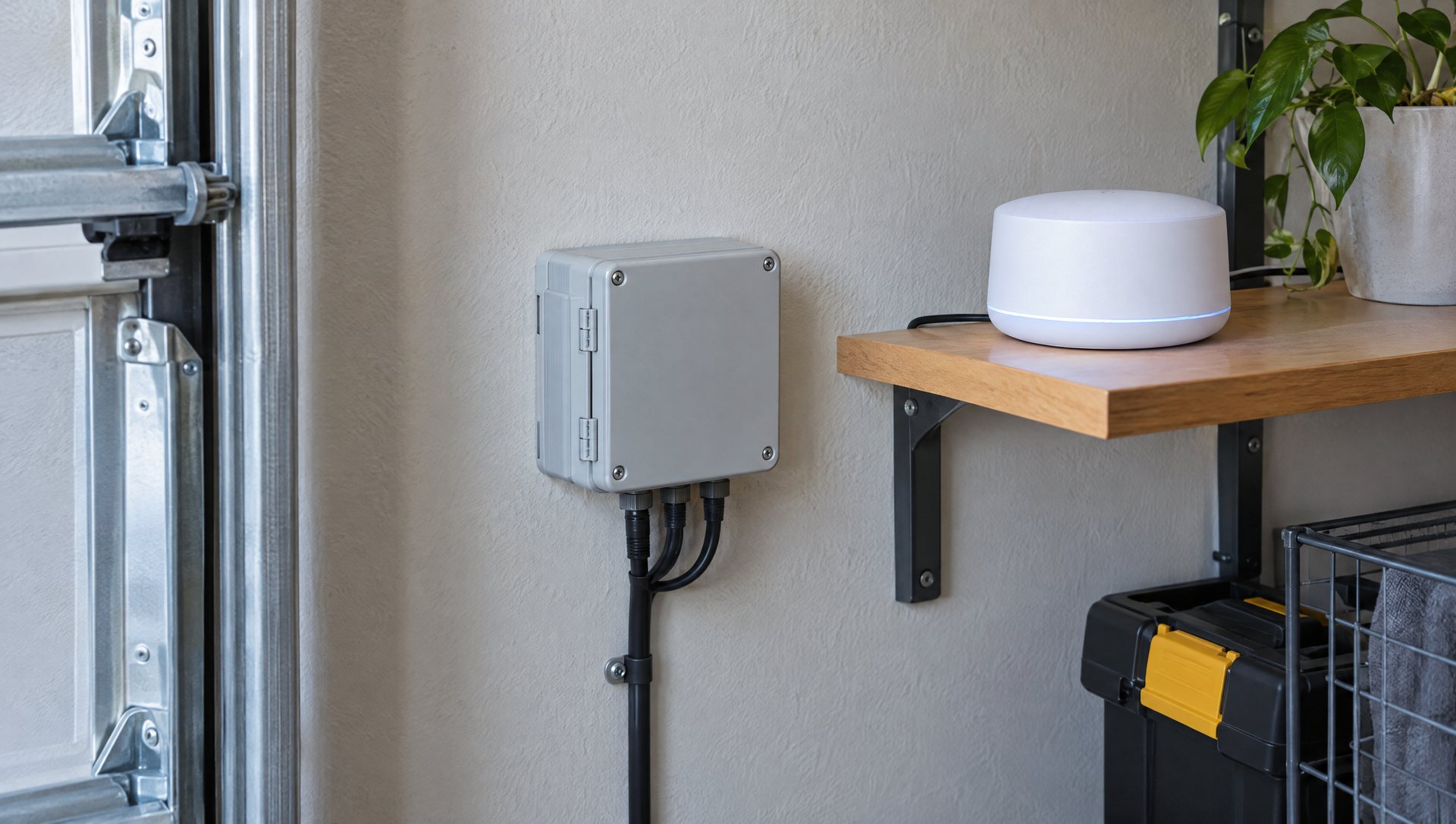
- Wi-Fi coverage. Most controllers use 2.4 GHz Wi-Fi, and a controller in a garage behind two exterior walls may not connect reliably.
- The warranty has two halves. Parts and labor are often covered separately. One professional brand, for instance, advertises a lifetime parts warranty while the system is installed, with its dealers backing installation labor for at least one year. Read both halves of any warranty you’re offered.
What to do: Choose a brand with a track record and a working app, ask how long they’ve supported their current controller, and ask how service works after the first season: who you call, and what it costs, when a section goes dark.
9. Roofers, gutter crews and painters will have to work around it
Permanent lights are attached to the parts of the house that get replaced and repainted. A new roof often means new drip edge. New gutters mean anything mounted to the old gutters comes off. Repainting the fascia means removing the channel or painting around it.
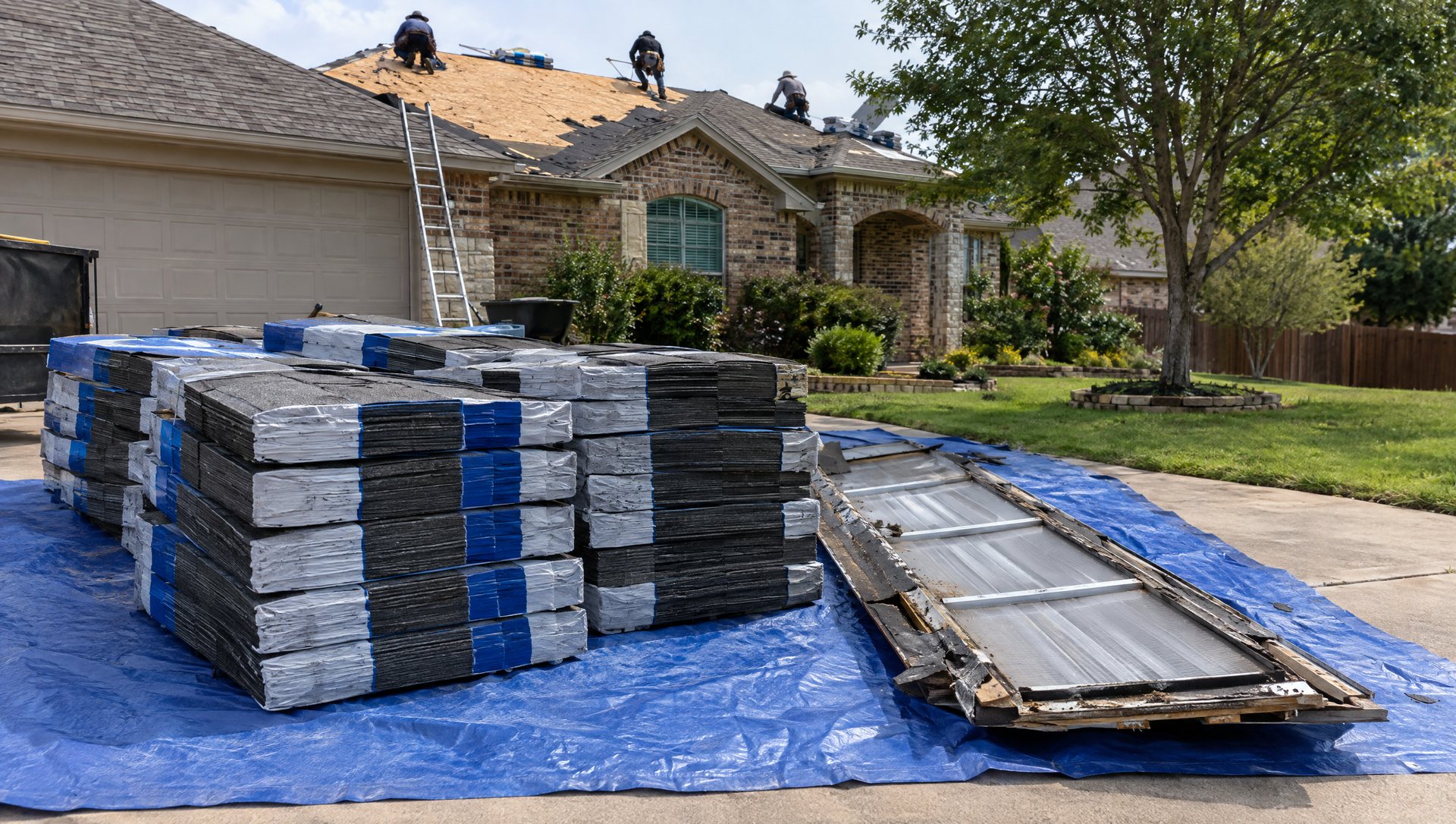
In hail country, a roof replacement in the first ten years isn’t unusual. Each of those jobs means someone has to take the system down carefully, store it, and put it back.
What to do: If a roof, gutter or exterior paint job is on the horizon, do it first. Ask your installer what they charge to remove and reinstall a system for a roofer, and keep the as-built sketch of the runs.
10. Your HOA and your neighbors get a say
Many Austin-area HOAs require architectural approval for exterior changes. Some approve permanent lighting readily, some limit colors or hours, and a few don’t allow it. Getting approval after the install is the expensive order.
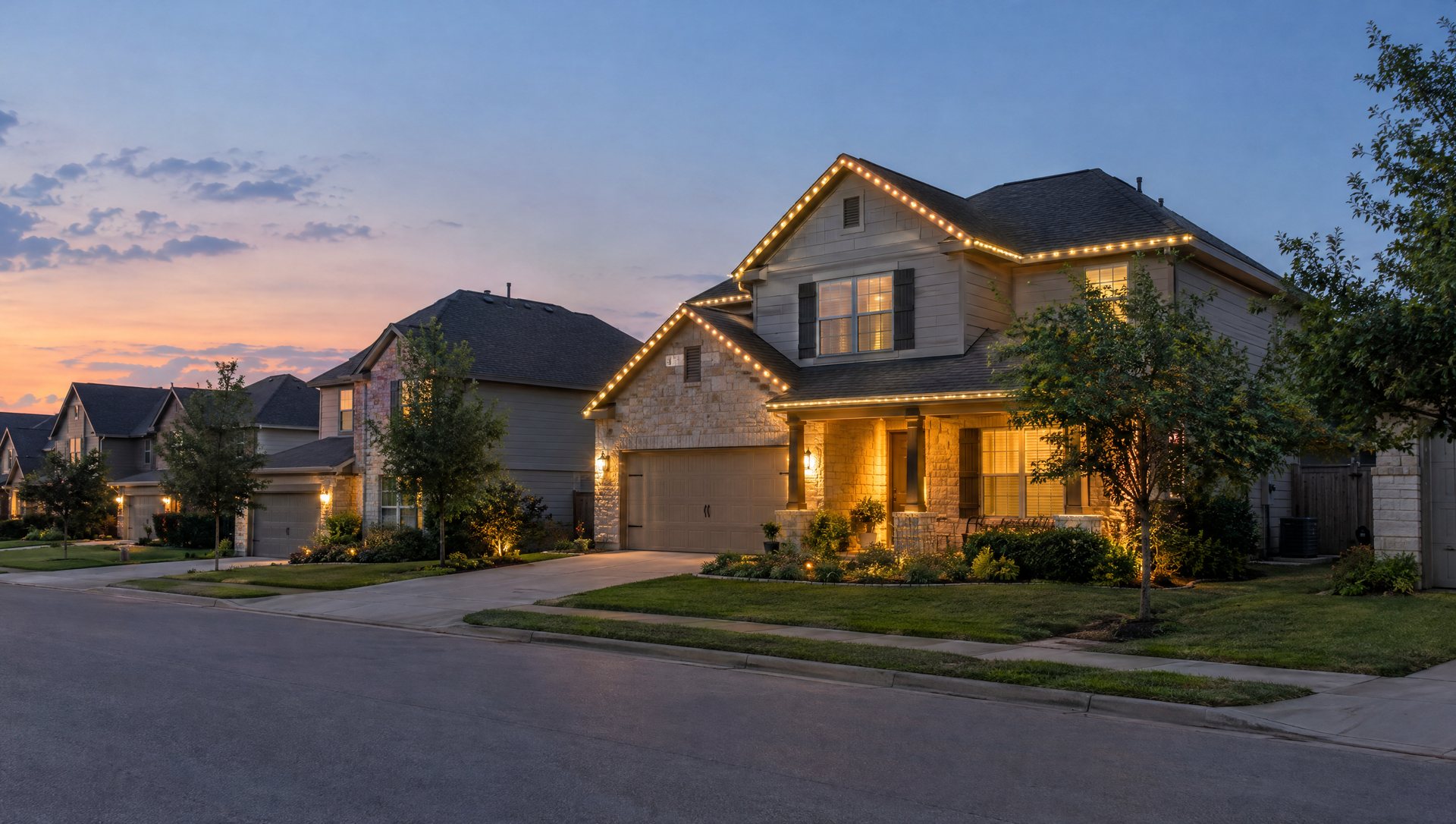
Neighbors matter even without an HOA. A bright, saturated roofline, especially one that animates, can shine straight into a bedroom window across the street. Running it nightly, year-round, turns a holiday tolerance into a permanent irritant.
What to do: Get written HOA approval first. Set a schedule that turns the lights off at a reasonable hour, use warm white at moderate brightness for everyday, and save chasing color effects for holidays. Our post on light trespass and light pollution in Texas covers where courtesy ends and complaints begin.
11. They won’t necessarily raise your home’s value
You’ll often see claims that permanent lights add resale value. We haven’t found reliable data showing that they do. Buyers who love them will like them; buyers who don’t will see screw holes and a system they’ll need to learn or remove. Warranties may or may not transfer to a new owner.
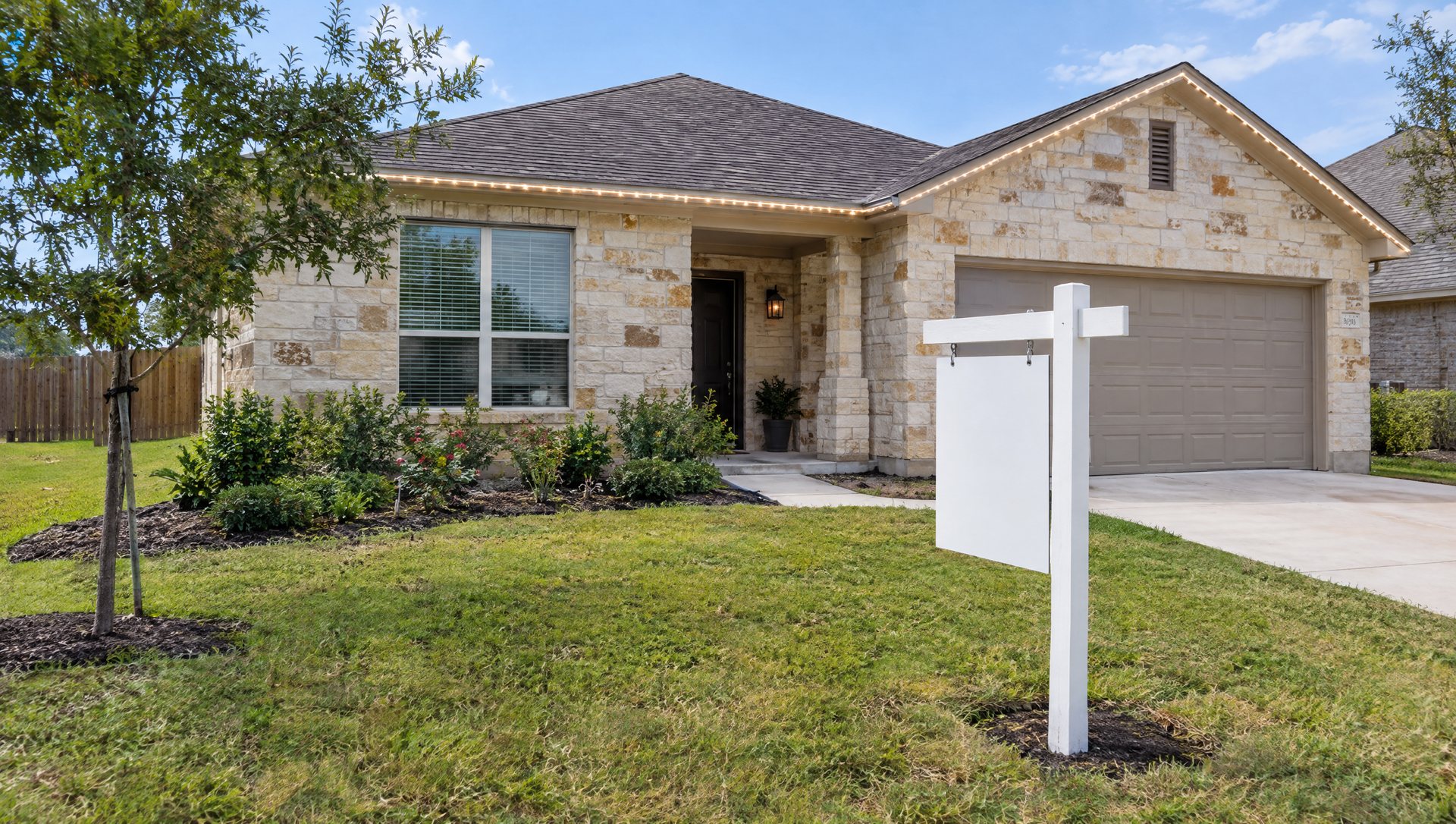
What to do: Buy permanent lights because you’ll use them, not as a resale strategy. If you might sell within a few years, factor that into the payback math in the cost breakdown linked at the top, and ask whether the warranty transfers.
Who should skip permanent lights
Permanent lights are a good fit for people who decorate every year, plan to stay put, and will use the lights beyond December. They’re a poor fit if:
- You’ll move within a few years. The payback period may be longer than your stay.
- A roof, gutter or paint job is coming soon. Do that first.
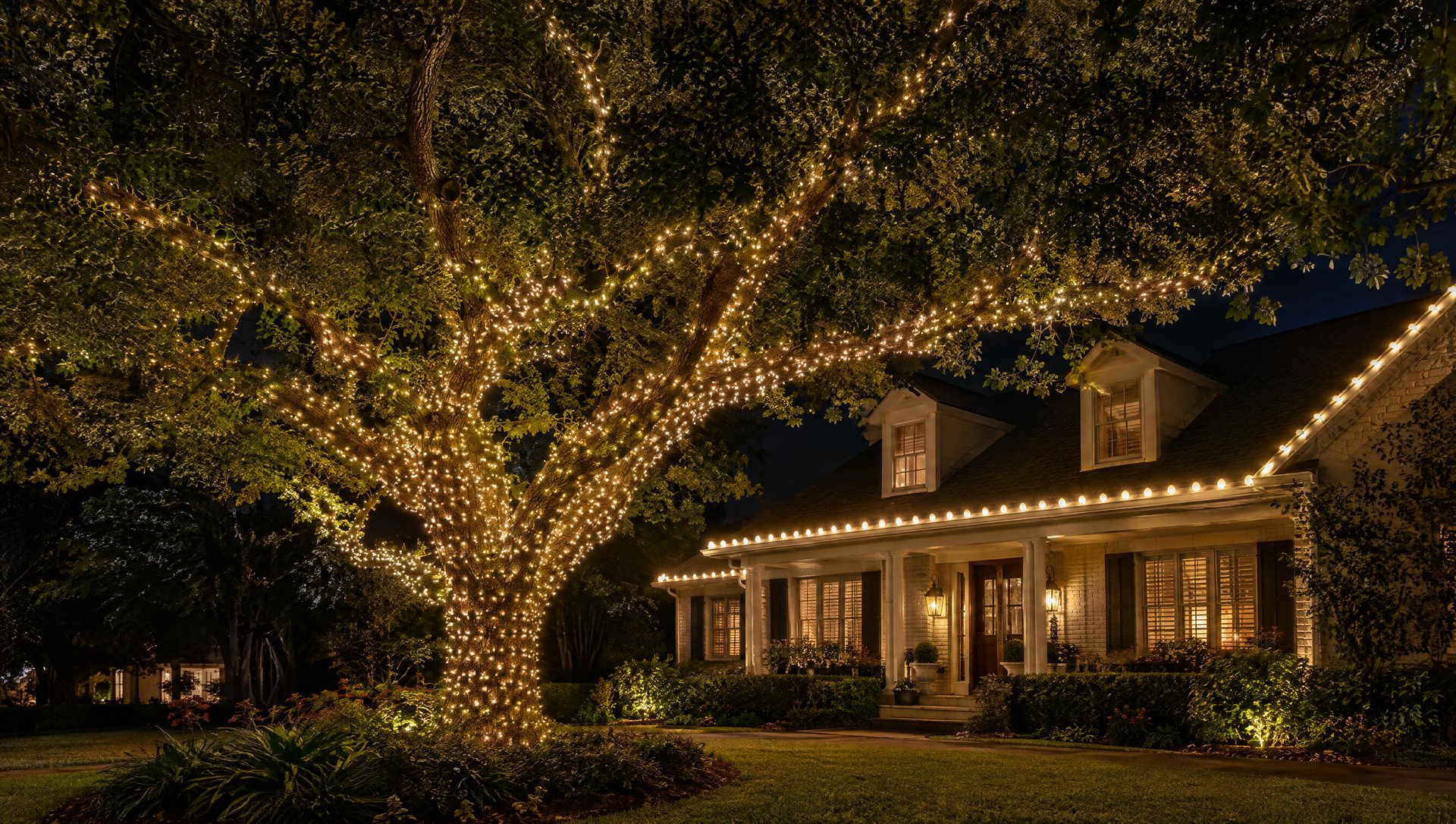
- You love the look of big, classic C9 bulbs or a hand-wrapped tree. No permanent roofline replaces lit live oaks, wreaths or garland, and many people end up with both.
- Your HOA won’t approve it, or your best power option is a cable down the front of a stone facade.
- You only want lights four weeks a year and don’t mind someone else putting them up and taking them down. A seasonal install is simpler. See our Austin Christmas light installation service and the Austin holiday lighting timeline for when to book.
Want an honest read on whether permanent lights make sense for your house? Contact Sapien Lighting or call (737) 777-9099 and we’ll tell you what we’d do.
Sources
- Govee, Permanent Outdoor Lights 2 product page (72 lights per 100 ft, 417 mm spacing, not cuttable, 16.4 ft extensions, 150 ft limit, 140°F rating): https://us.govee.com/products/govee-permanent-outdoor-lights-2
- Eufy, Permanent Outdoor Lights E22 100 ft product page (60 lights, RGB plus warm and cool white, 1500K to 9000K): https://eufy.com/products/t8l02121
- Trimlight, “How Much Do Permanent Christmas Lights Cost? 2026 Pricing Breakdown” (6, 9, 12 inch spacing; lifetime parts warranty; dealer labor warranty of at least one year): https://trimlight.com/blog/how-much-do-permanent-christmas-lights-cost-2026-pricing-breakdown
- City of Austin, Building Technical Codes: https://www.austintexas.gov/page/building-technical-codes
- Texas Department of Licensing and Regulation, Exemptions to Electrician Licensing: https://www.tdlr.texas.gov/ELECTRICIANS/exemptions.htm
- Texas Department of Licensing and Regulation, Commission adopts the 2026 National Electrical Code, effective September 1, 2026: https://www.tdlr.texas.gov/news/rulemaking/2026/09/01/commission-adopts-rules-12/
- NFPA 70, National Electrical Code, 2023 edition, sections 210.8(A)(3) and 406.9(B)(1).
- City of Austin, Oak Wilt Policy: https://www.austintexas.gov/sites/default/files/files/Planning/City_Arborist/Oak_Wilt_Policy.pdf