The cost of permanent Christmas lights comes down to three numbers: how many feet of roofline you light, what you pay per foot, and how long you keep the system. Running costs, the part people worry about most, turn out to be close to a rounding error on an Austin Energy bill.
This post works through those numbers on real house shapes, with every input shown so you can swap in your own. Prices and rates were checked in October 2026.
If you haven’t decided whether permanent lights suit your house at all, read what no one tells you about permanent lights first. For how the system goes up, see our permanent Christmas light installation guide.
What you’re paying for
A permanent lighting quote bundles several things that are worth pulling apart, because they’re where two quotes differ:
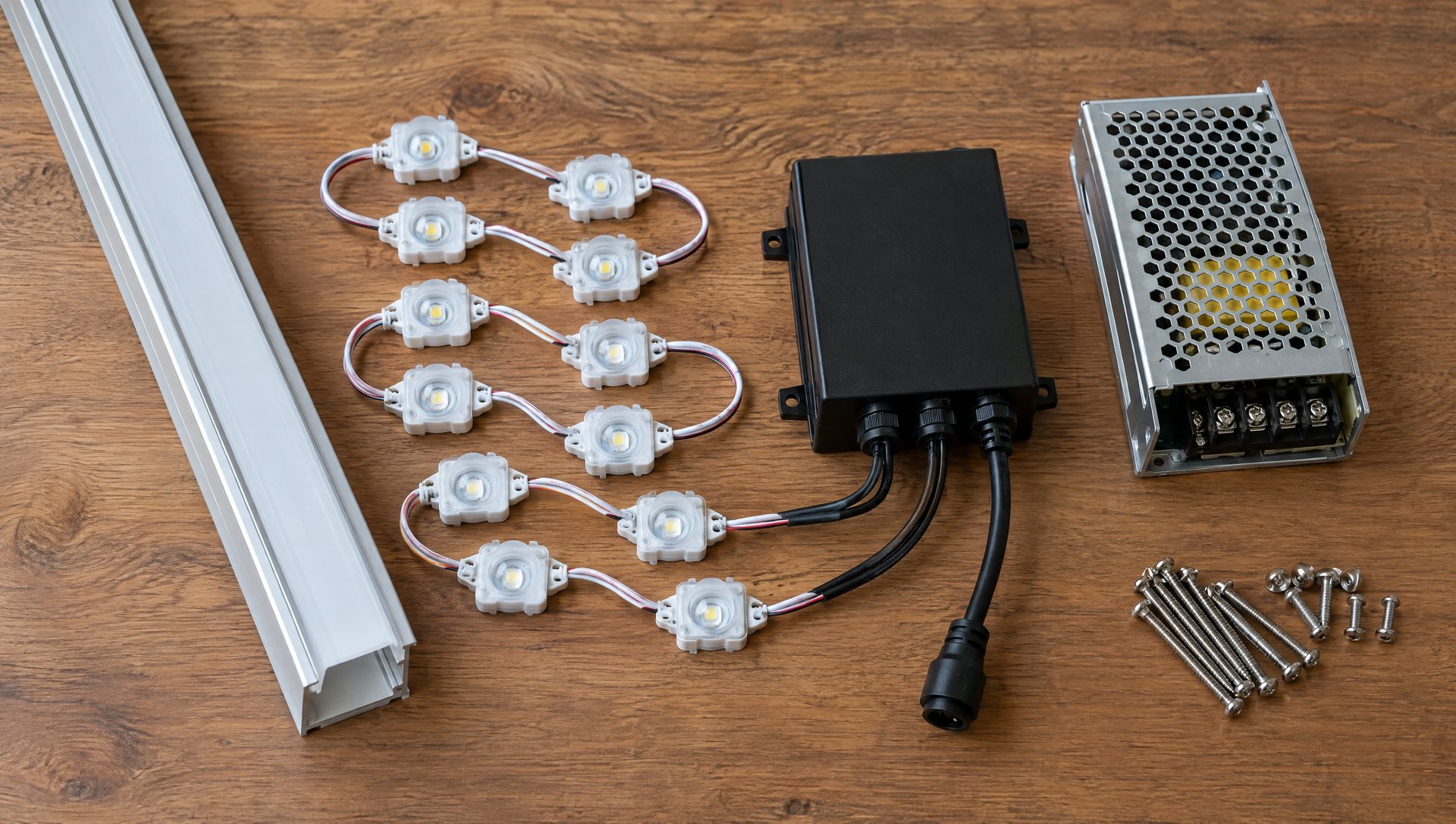
- Lights (nodes). The LED modules themselves. Price rises with tighter spacing (more nodes per foot) and with better LEDs, especially those with a dedicated white diode.
- Channel. Aluminum or PVC track, color-matched to your trim. Aluminum costs more and holds up better in Texas sun.
- Controller and power supplies. One controller per run or group of runs. Larger homes need more of them.
- Labor. Ladder or lift work, cutting and fitting, corners, sealing penetrations, programming. Labor scales with height, roof complexity and wall material, not just footage.
- Electrical work, if needed. A new receptacle under the soffit or in the garage is a separate line item and should be done by a TDLR-licensed electrician.
- Warranty and service. Parts and labor coverage often differ. Who comes out when a section dies matters as much as the sticker price.
What installed permanent lights cost per foot
Permanent lighting is almost always priced per linear foot of roofline lit. Trimlight, a national permanent-lighting brand, puts professionally installed systems at roughly $18 to $35 per linear foot in its 2026 pricing guide (checked October 2026 and again in November 2026). Treat that as a vendor’s range, not an independent survey.
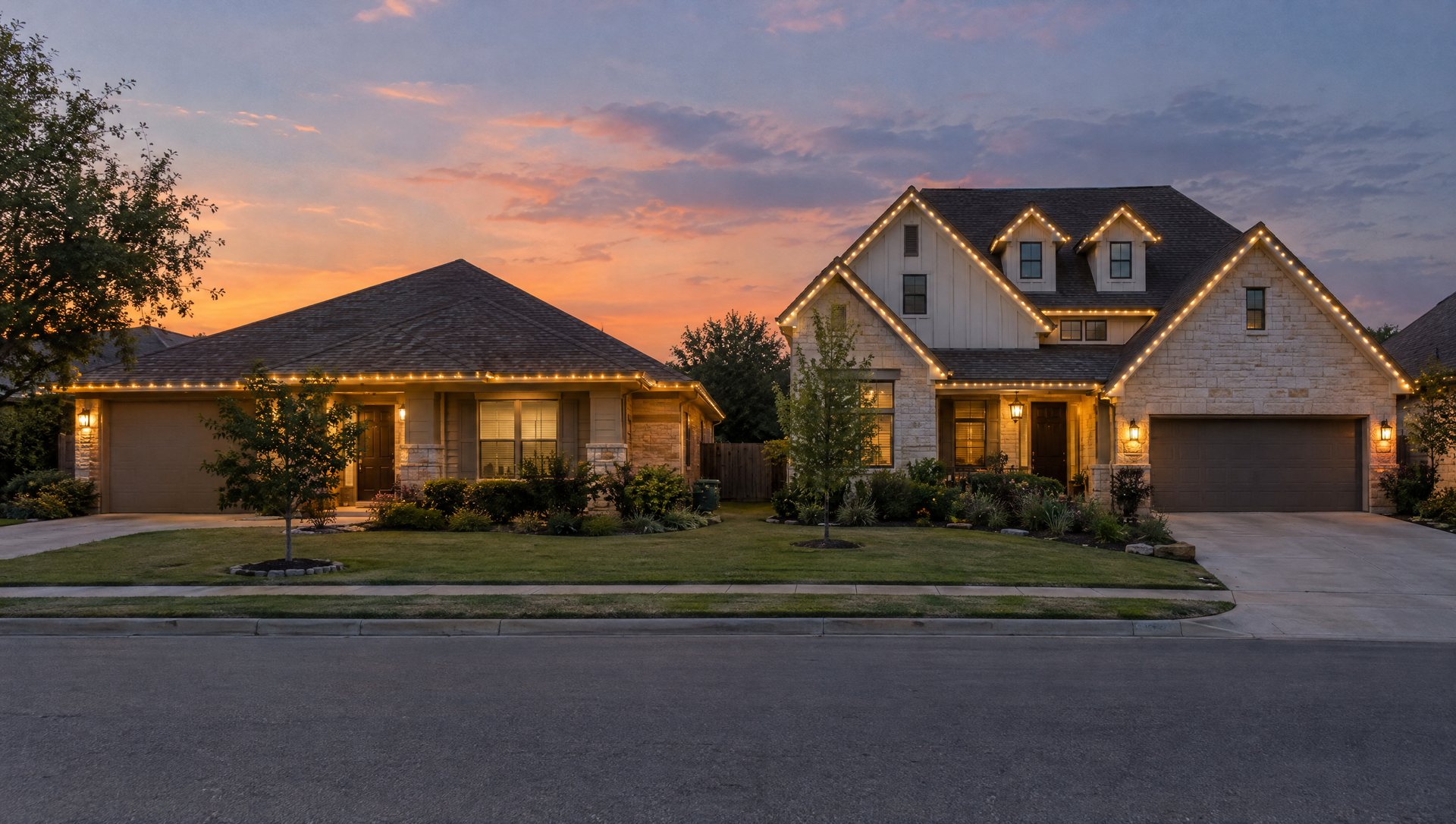
What moves you toward the bottom or top of that range:
| Pushes the price down | Pushes the price up |
|---|---|
| Single story, simple hip roof | Two or more stories, steep pitches, lift required |
| Wood or fiber-cement fascia | Stucco or stone, needing masonry anchors and sealing |
| 12-inch node spacing | 6-inch spacing (twice the nodes) |
| One or two continuous runs | Many short runs, dormers, gables, multiple roof levels |
| Existing GFCI outlet near the roofline | New receptacle or circuit required |
| RGB-only nodes | Nodes with dedicated warm and cool white LEDs |
Because footage and roof complexity drive so much of the price, any honest quote starts with measuring your house, which is the next step.
First, measure your roofline
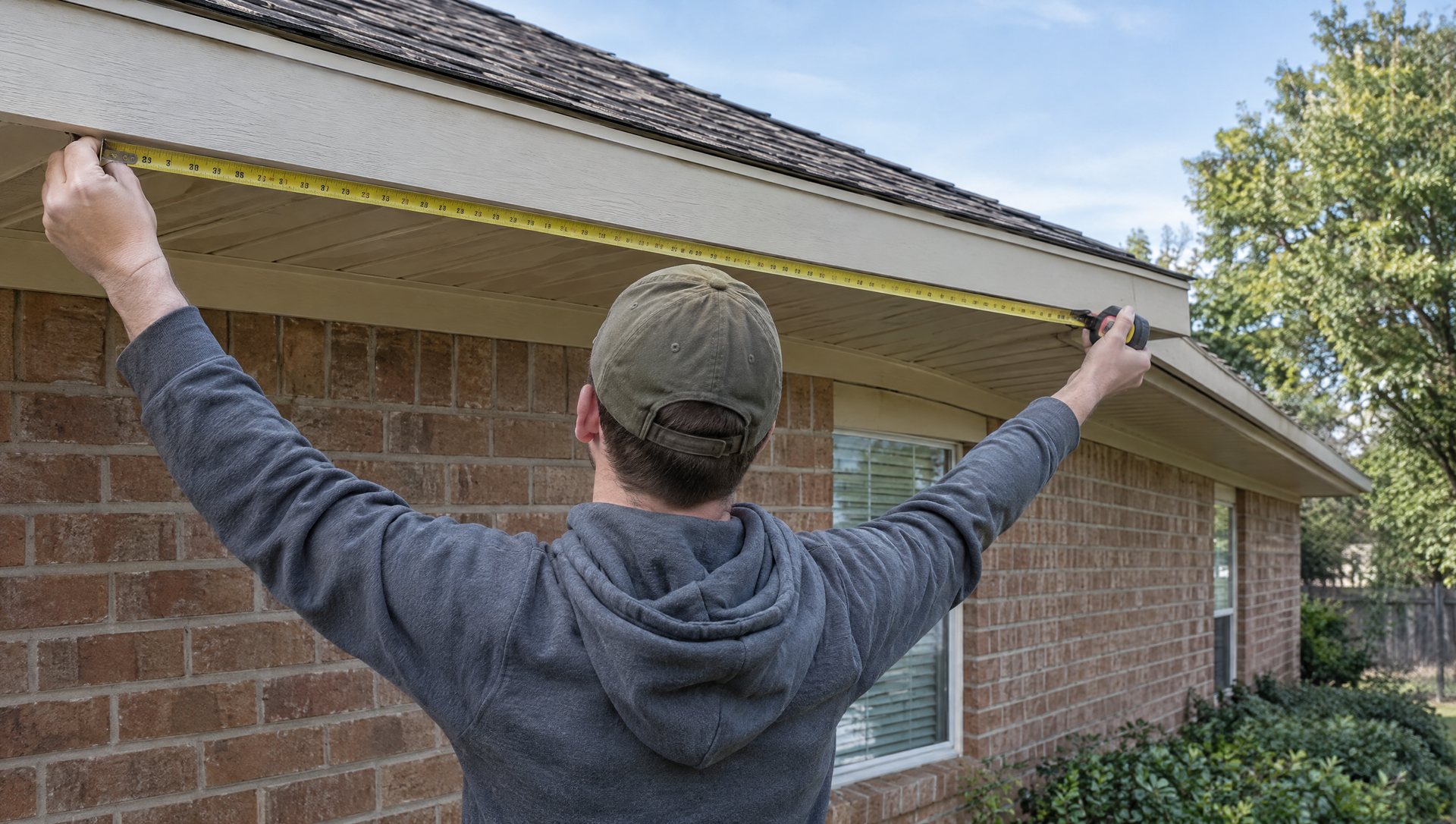
You can’t estimate a price without footage. Measure every edge you want lit: front eaves, garage, sides, and any back sections. On a two-story, measure what you can from the ground and estimate rake lengths from the roof pitch, or use satellite imagery and adjust.
Worked example 1: single-story ranch, 180 feet
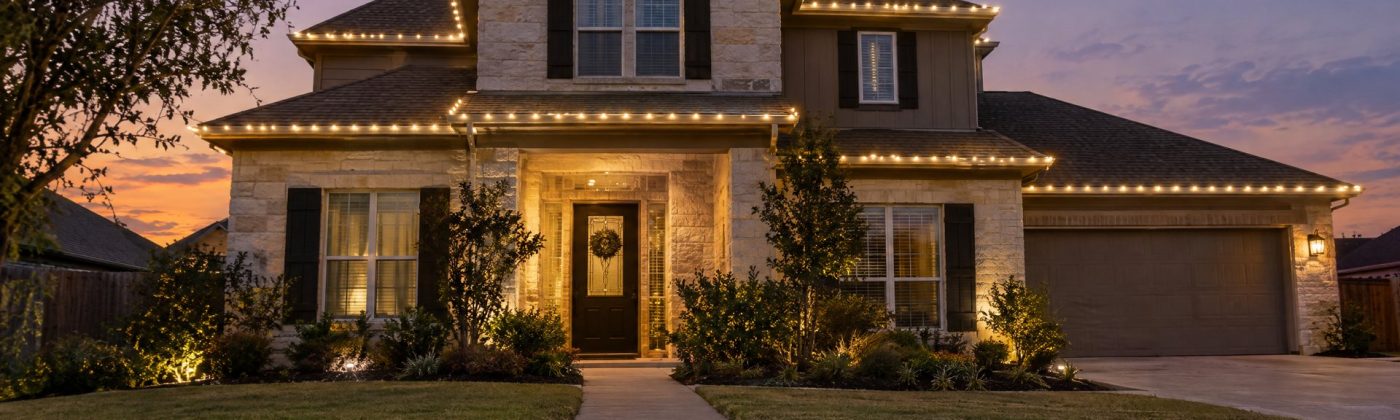
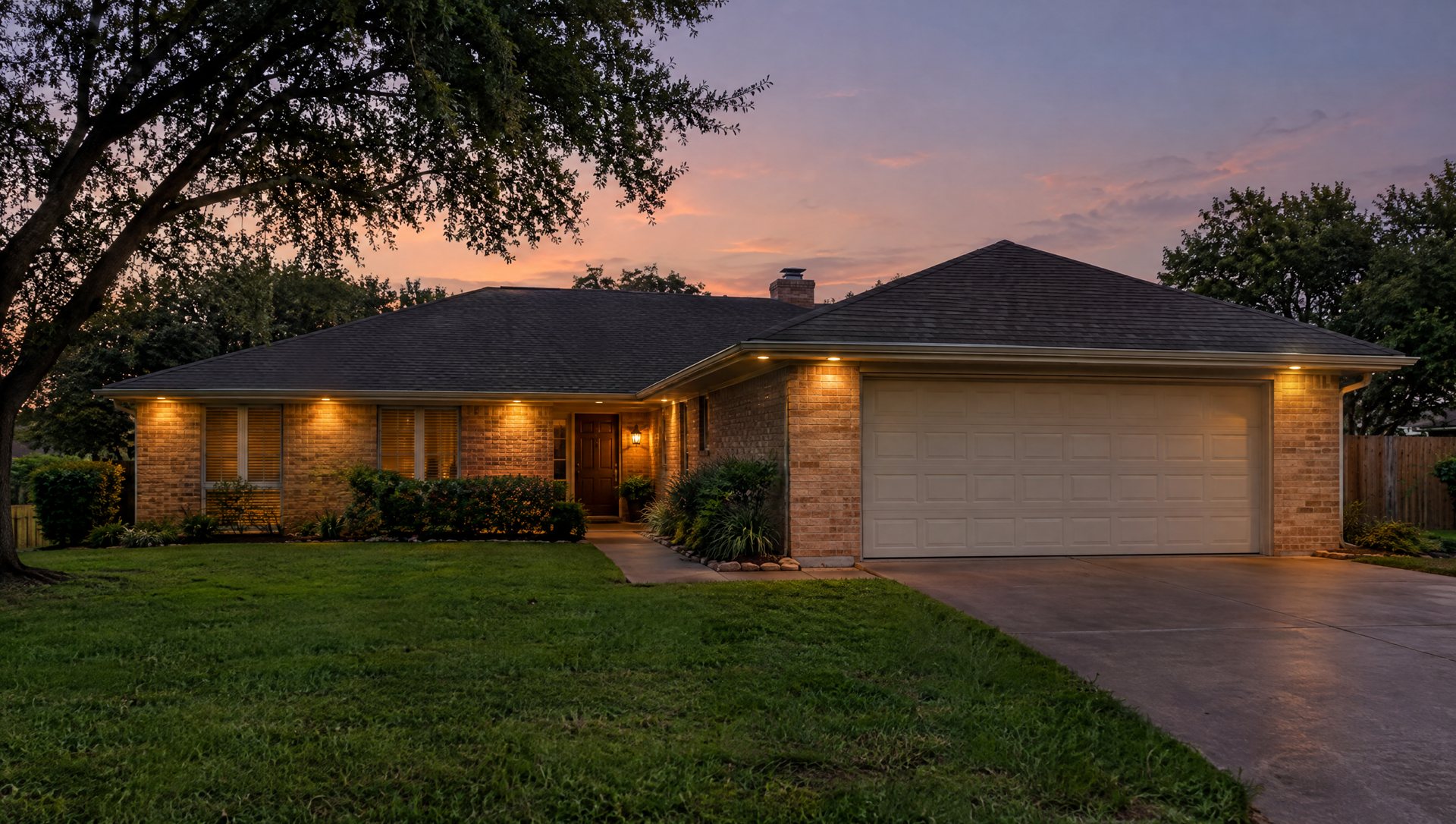
A typical 1970s or 1980s Austin ranch with a hip roof and an attached garage:
- Front eave: 52 ft
- Garage eave: 24 ft
- Two side eaves: 36 ft each
- Visible back section: 32 ft
- Total: 180 ft
At $18 to $35 per foot:
- Low: 180 × $18 = $3,240
- High: 180 × $35 = $6,300
Where this house lands depends mostly on spacing and fascia. Wood fascia, 12-inch spacing and an existing outlet near the garage corner push it toward the low end. Stucco eave returns or a request for 6-inch spacing push it up.
If you only light the front and garage (76 ft), the math becomes 76 × $18 = $1,368 to 76 × $35 = $2,660, though small jobs may carry a minimum charge that makes the per-foot number higher.
Worked example 2: two-story with gables, 260 feet
A newer two-story home in Cedar Park, Round Rock or Leander with a front gable, a garage bump-out and a second-story eave:
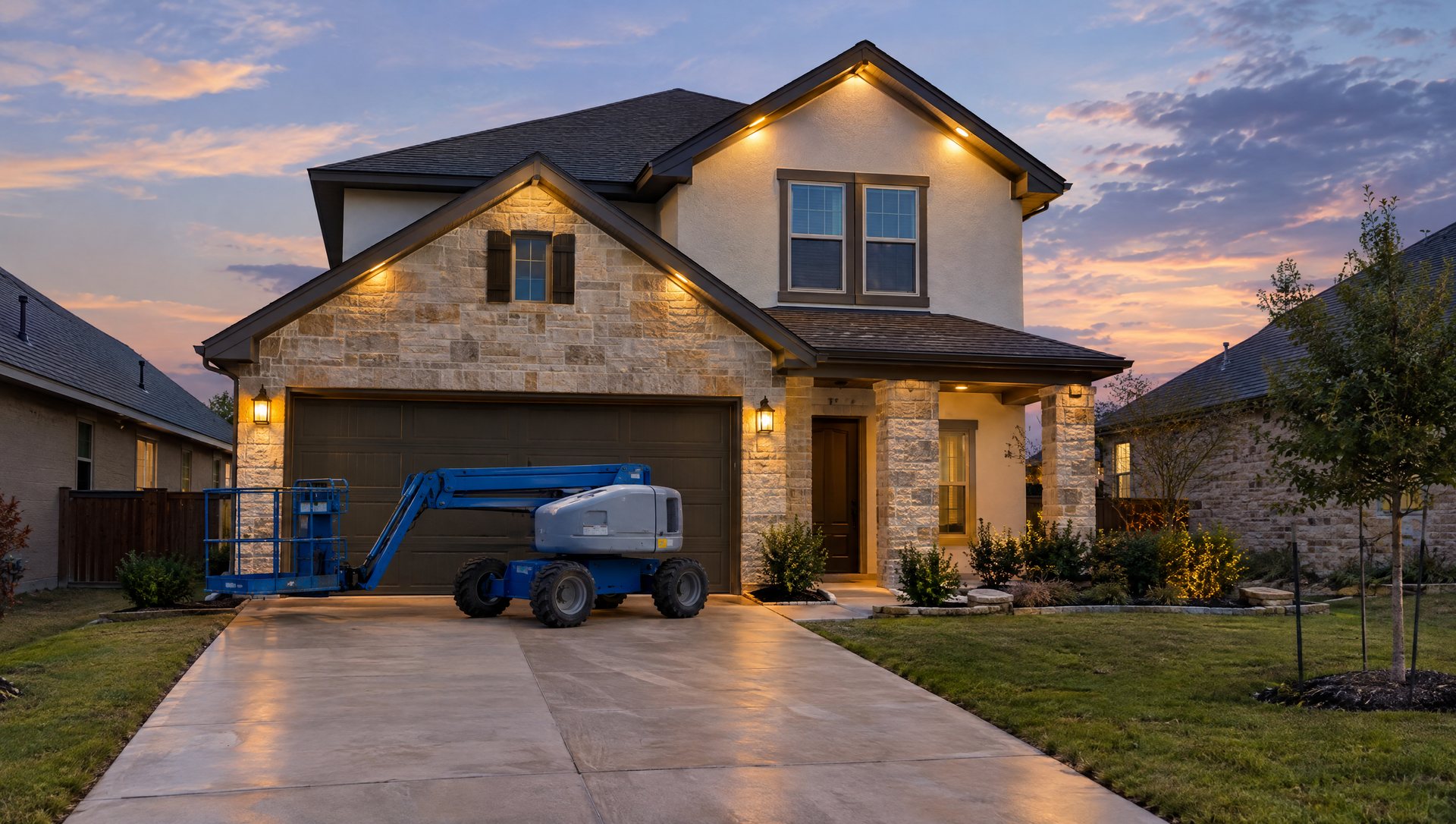
- First-floor front eave and porch: 60 ft
- Garage eave: 26 ft
- Front gable rakes: 2 × 28 ft = 56 ft
- Second-story front eave: 48 ft
- Visible side eaves: 2 × 35 ft = 70 ft
- Total: 260 ft
At $18 to $35 per foot:
- Low: 260 × $18 = $4,680
- High: 260 × $35 = $9,100
This house will usually land higher in the range than the ranch. Second-story and rake work is slower and may need a lift, gables mean more corners and separate runs, and stucco or stone on new builds adds anchor-and-seal time.
- Low, $18 per foot
- High, $35 per foot
Feet x $18 and feet x $35: 76 ft gives $1,368 to $2,660, 180 ft gives $3,240 to $6,300, 260 ft gives $4,680 to $9,100. The per-foot range is Trimlight’s 2026 pricing guide; small jobs may carry a minimum charge.
Source: Sapien Lighting calculation from the figures in this post
Show the numbers
| Low, $18 per foot | High, $35 per foot | |
|---|---|---|
| Front and garage only, 76 ft | $1,368 | $2,660 |
| Single-story ranch, 180 ft | $3,240 | $6,300 |
| Two-story with gables, 260 ft | $4,680 | $9,100 |
Worked example 3: DIY kits on the same 180-foot ranch
Consumer permanent-light kits come in fixed lengths, and many can’t be cut. Prices checked in October 2026:
- Govee Permanent Outdoor Lights 2, 100 ft: listed at $279.99 on Govee’s site and on sale for $189.99 in October 2026. (The 150-foot set normally lists around $490; PCWorld reported it at $320 in a September 2026 sale.) The sets can’t be cut, and one controller handles at most 150 feet.
- Eufy Permanent Outdoor Lights E22, 100 ft: $329.99 on Eufy’s site in October 2026. It can’t be cut either, though unused lights can be switched off in the app.
For 180 feet you’d buy two 100-foot kits:
| Govee (list) | Govee (sale) | Eufy | |
|---|---|---|---|
| 2 × 100 ft kits | $559.98 | $379.98 | $659.98 |
| Footage you’ll actually use | 180 of 200 ft | 180 of 200 ft | 180 of 200 ft |
Then add what the kit doesn’t include:
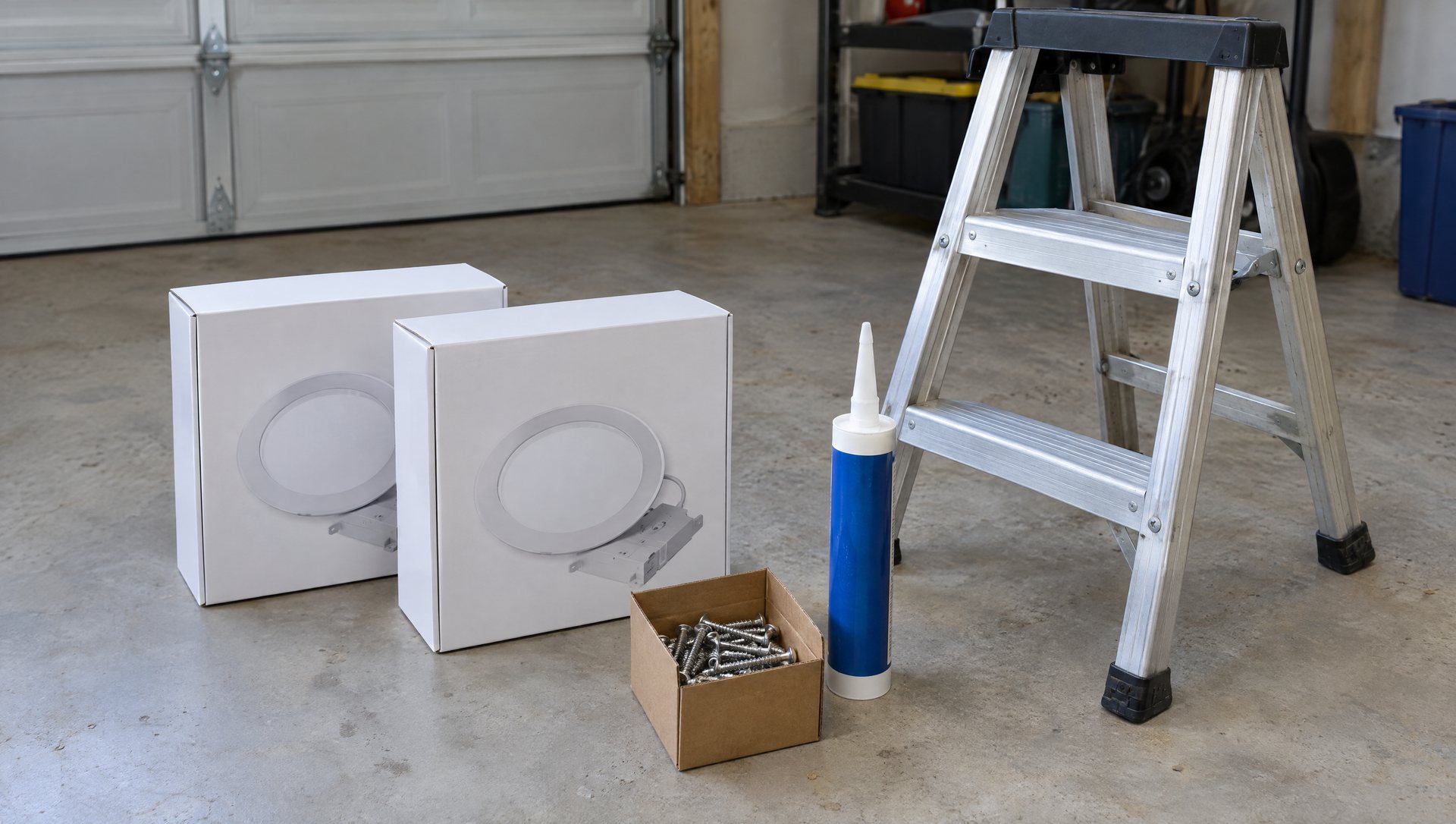
- A ladder you trust for 10 to 12 foot eaves, if you don’t own one.
- Stainless screws and masonry anchors, if you’re not relying on the included adhesive (you shouldn’t on a sunny Texas fascia).
- Exterior sealant for every hole.
- A proper outlet: if your nearest GFCI outlet with an in-use cover is at ground level on the far side of the house, the fix is a TDLR-licensed electrician, priced separately.
- Your time: a careful first-timer should plan on a full weekend or more for 180 feet, mostly on a ladder.
The DIY route costs a fraction of a professional install up front. What you give up is spacing (Govee’s lights are about 16 inches apart, Eufy’s about 20), the cut-to-length fit, the channel, and someone else on the ladder and on the hook for repairs. Our post on unexpected hazards of light installation is worth reading before the ladder comes out.
There is a middle route. Sapien’s permanent-light work is labor only: we install plug-in kits you supply, on outlets you already have. We do not hardwire, add outlets or run new circuits; in Texas that is work for a TDLR-licensed electrician.
What it costs to run permanent lights in Austin
Running cost is small. Here is the math with Austin Energy’s current residential rates for customers inside the city.
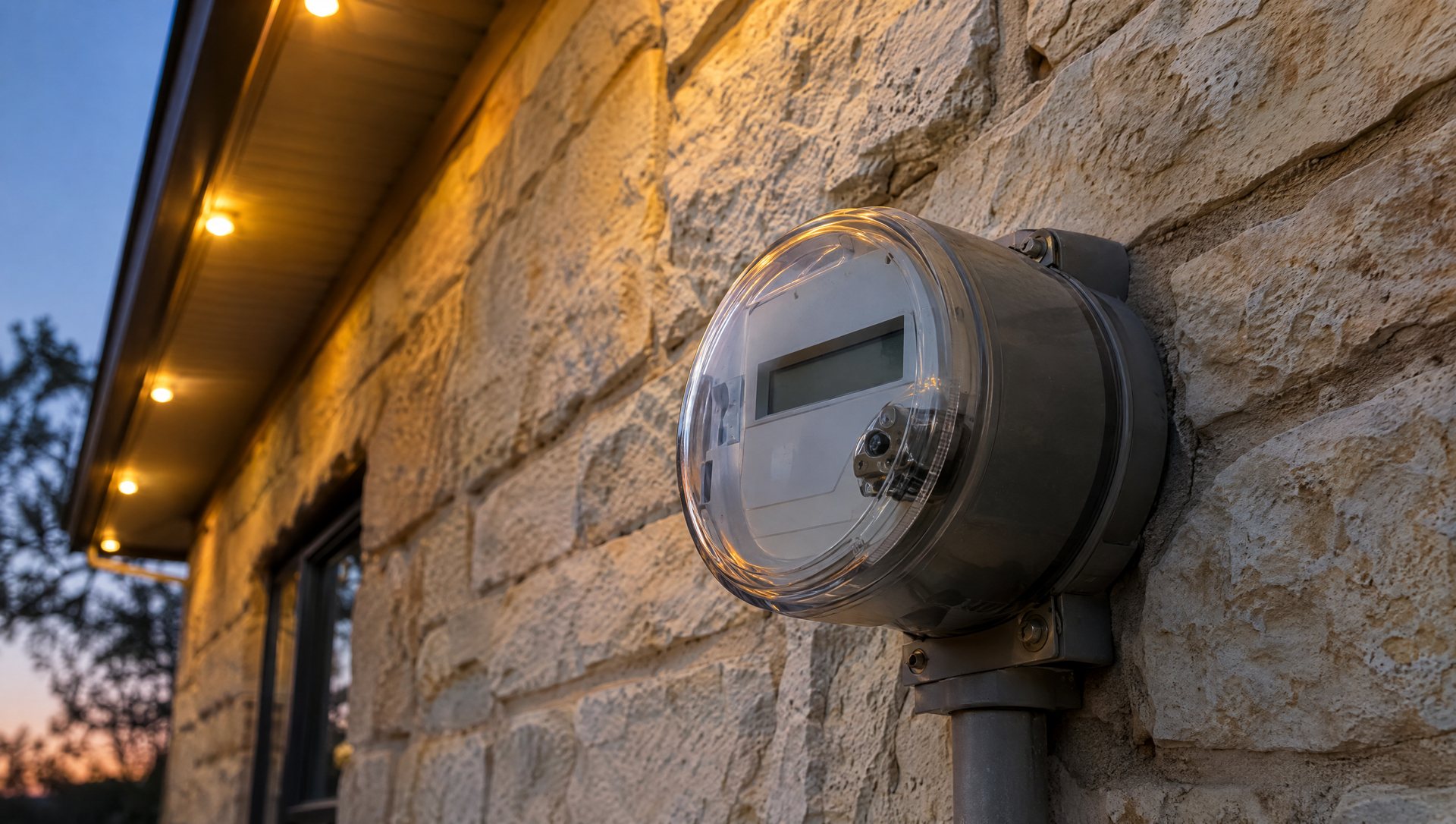
The rate. Austin Energy bills residential power in tiers. A household using between 901 and 2,000 kWh in a month, which covers a lot of Austin homes, pays 7.901¢ per kWh for energy in that tier. Every kWh also carries per-kWh pass-through charges: the power supply adjustment (3.912¢), community benefit charges (0.415¢ + 0.272¢ + 0.410¢), and the regulatory charge (1.799¢). Added up:
- 7.901 + 3.912 + 0.415 + 0.272 + 0.410 + 1.799 = 14.709¢ per kWh at the margin
If your monthly use is lower, in the 301 to 900 kWh tier, the marginal rate is 12.203¢. Sales tax and the monthly customer charge don’t change with your lights, so we leave them out.
The load. Govee rates its 100-foot permanent set at 72 watts at full output, about 0.72 watts per foot. Systems differ, and most scenes draw less than maximum, so this is a conservative ceiling.
December on the 180-foot ranch, every night, dusk to about 11 p.m. (6 hours):
- Power: 1.8 × 72 W = 129.6 W
- Hours: 6 × 31 = 186 hours
- Energy: 129.6 W × 186 h = 24.1 kWh
- Cost: 24.1 × $0.14709 = about $3.55 for the month
Year-round accent lighting at half brightness, 5 hours a night:
- 64.8 W × 5 h × 365 = 118.3 kWh
- 118.3 × $0.14709 = about $17.40 a year
For comparison, the same roofline in incandescent C9 bulbs at 12-inch spacing (180 bulbs × 7 W = 1,260 W), for the same December schedule:
- 1,260 W × 186 h = 234.4 kWh
- 234.4 × $0.14709 = about $34.50 for the month
The two-story house at 260 feet scales the same way: 187.2 W at full output, about $5.10 for a December of nightly use. Running cost is a reason LEDs beat old incandescent displays, but it isn’t a reason to choose permanent over seasonal LEDs, which draw comparable power.
Permanent LED at full output: 129.6 W x 186 h = 24.1 kWh, about $3.55; 187.2 W x 186 h, about $5.10. Incandescent C9s: 1,260 W x 186 h = 234.4 kWh, about $34.50.
Source: Sapien Lighting calculation from the figures in this post (Austin Energy Tier 3 rate, page reviewed October 1, 2026)
Show the numbers
| December cost | |
|---|---|
| Permanent LED, 180-ft ranch | $3.55 |
| Permanent LED, 260-ft two-story | $5.10 |
| Incandescent C9s, 180-ft ranch | $34.50 |
Break-even: permanent versus paying for seasonal installs
The honest comparison isn’t permanent lights versus nothing. It’s permanent lights versus what you’d otherwise spend each year putting lights up and taking them down, whether that’s paying a company or your own time and new strings.
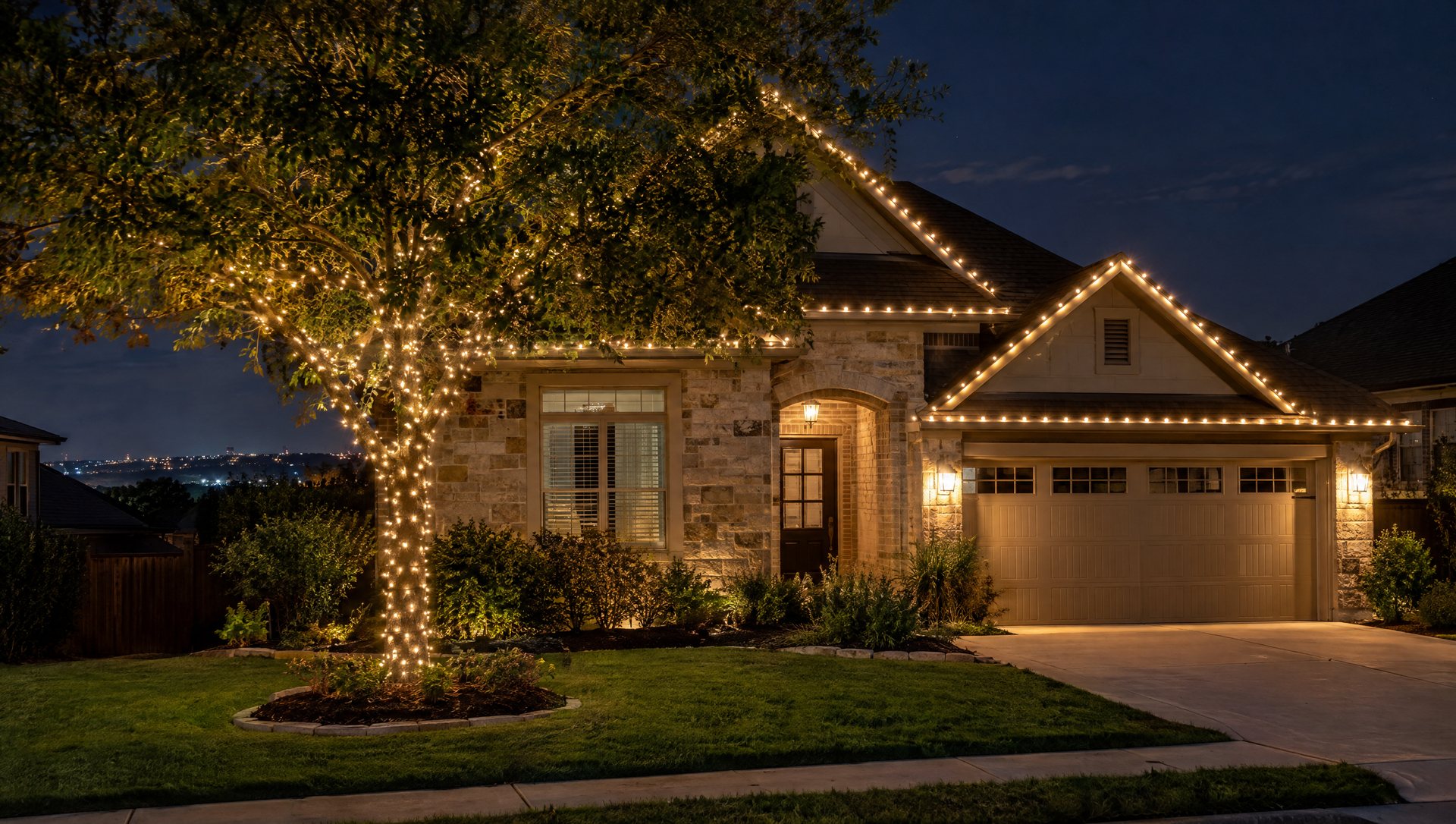
The formula is simple:
Years to break even = permanent system cost ÷ what you spend per year on seasonal lights
Your seasonal number is the input that matters, so use your own quote or receipts. For typical figures, see seasonal installation prices in Austin. To show how sensitive the answer is, here are the two ranch prices from Example 1 against three illustrative seasonal budgets. These budgets are inputs for the math, not prices for any company’s service.
| If you spend this per year on seasonal lights | Ranch at $3,240 | Ranch at $6,300 |
|---|---|---|
| $800 | 4.1 years | 7.9 years |
| $1,500 | 2.2 years | 4.2 years |
| $2,500 | 1.3 years | 2.5 years |
For one real seasonal number: Sapien’s published 2026 price for a single-story roofline is $4.50 per foot, with the lights, clips, timer, install, in-season service and January takedown included. On the 180-foot ranch that is $810 a season before tax, for the roofline alone, close to the $800 row above.
Three things the table shows:
- The more you already spend each year, the faster permanent pays off. Homeowners who hire out large seasonal displays break even fastest.
- Permanent only replaces the roofline. Seasonal budgets often include wrapped live oaks, wreaths, garland and shrubs, which a permanent roofline doesn’t do. Subtract only the roofline portion of your seasonal spend.
- How long you stay matters. If you might move in three years, the high-end ranch at $800 a year never pays back.
For the seasonal side of the comparison, see our Austin Christmas light installation service.
Costs people forget
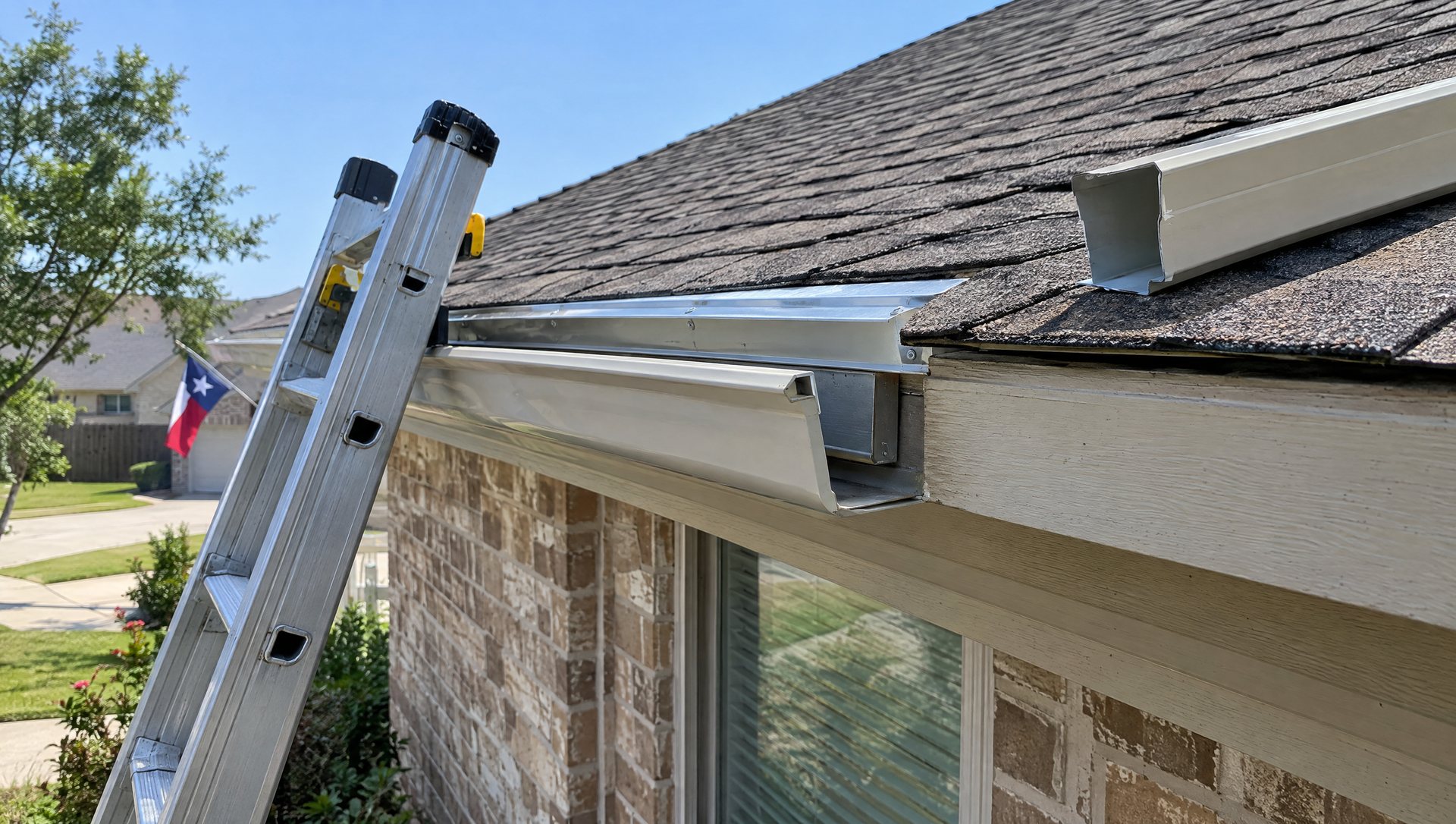
- Electrical work. A new soffit or garage receptacle with GFCI protection and an in-use cover is the most common add-on. Get it quoted before you sign.
- Remove and reinstall for a roofer. If a hailstorm means a new roof, the lights may need to come off and go back on. Ask what that costs.
- Gutter replacement or exterior paint. Same issue. Do those first if they’re coming.
- Controller replacement. Lights may last a decade or longer; controllers and power supplies are the parts most likely to fail first, especially in hot locations. Ask what’s covered and for how long.
- Wi-Fi. A controller in a detached or far-side garage may need a mesh node or extender.
- HOA review. Usually free but takes time; get approval before you pay a deposit.
How to compare two quotes
Two quotes at the same price per foot can be very different systems. Line them up on these points:
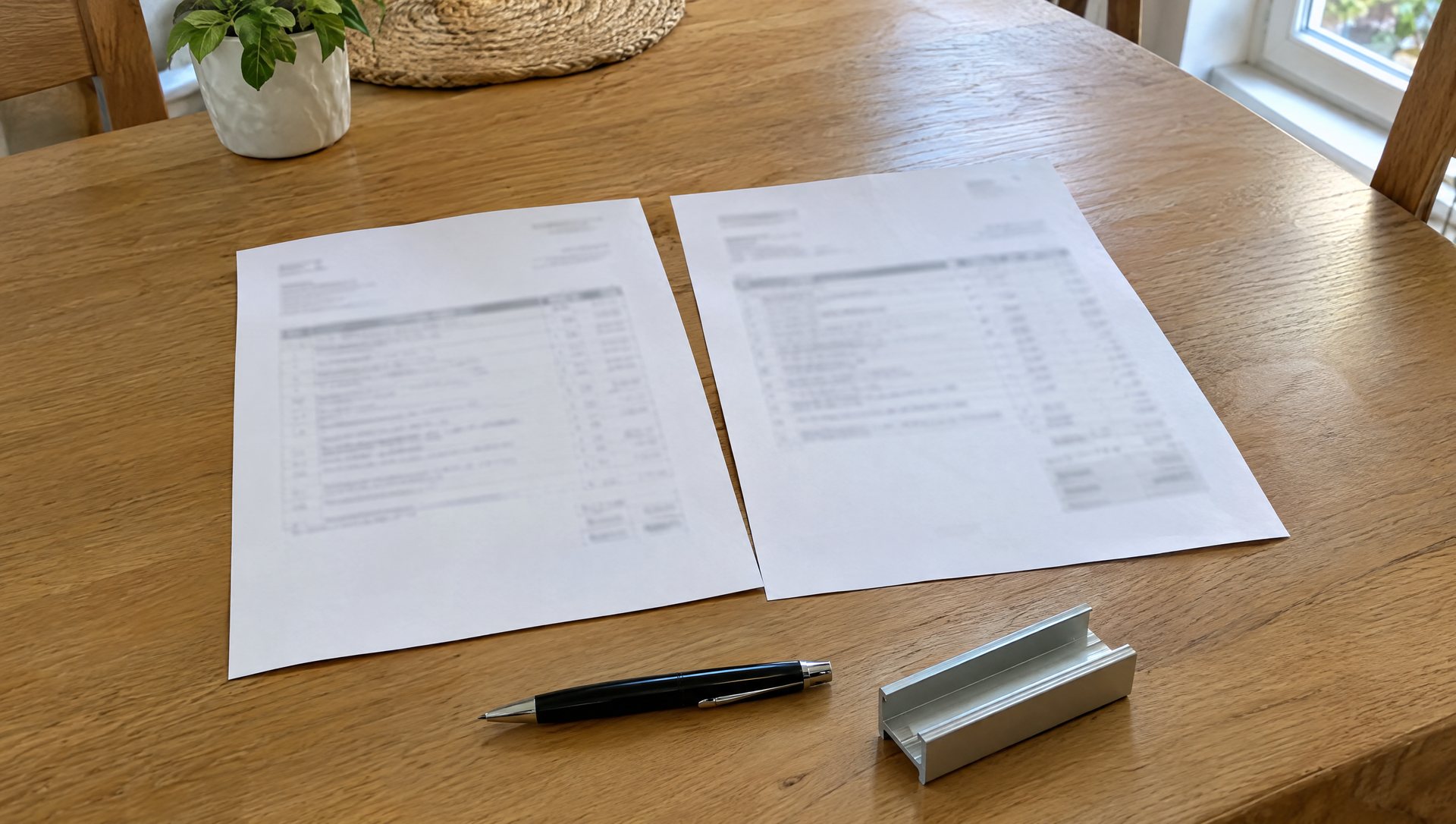
- Total linear feet and which edges are included.
- Node spacing in inches.
- LED type: RGB only, or RGB plus a dedicated white diode.
- Channel material and color, and whether it’s color-matched to your trim.
- Mounting method: screws and clips, or adhesive.
- Number of controllers and power points, and where each one goes.
- Electrical work: who does it, whether they hold a TDLR electrical license, and whether it’s included.
- Warranty: who covers the parts (on a kit you buy, usually the kit maker) and who covers the labor, and for how long.
- Service: how repairs are handled when a section goes dark, and what a service call costs.
- Whether the warranty transfers if you sell the house.
A quote that can’t answer these clearly is the expensive one, whatever the number at the bottom. For what the water and dust ratings on a spec sheet mean, see our guide to IP ratings for permanent holiday lighting.
Want a labor quote to install a plug-in kit on your own roofline? Contact Sapien Lighting or call (737) 777-9099.
Sources
- Austin Energy, Residential Rates (inside city limits: tier energy charges, power supply adjustment, community benefit charges, regulatory charge; page reviewed October 1, 2026): https://austinenergy.com/rates/residential-rates
- Trimlight, “How Much Do Permanent Christmas Lights Cost? 2026 Pricing Breakdown” ($18 to $35 per linear foot installed; price drivers; warranty terms; checked October 2026 and November 2026): https://trimlight.com/blog/how-much-do-permanent-christmas-lights-cost-2026-pricing-breakdown
- Sapien Lighting, Austin Christmas light installation (published 2026 single-story roofline price, $4.50 per foot, lights and January takedown included): https://sapienlighting.com/austin/christmas-lights-installation/
- Govee, Permanent Outdoor Lights 2 product page (100 ft price, 72 W and 72 lights per 100 ft, not cuttable, 150 ft per controller): https://us.govee.com/products/govee-permanent-outdoor-lights-2
- PCWorld, “Govee’s smart LED outdoor lights hit their lowest price of the year” (150 ft set, $320 sale vs. $490 regular, September 8, 2026): https://pcworld.com/article/3229296/govees-smart-led-outdoor-lights-hit-their-lowest-price-of-the-year.html
- Eufy, Permanent Outdoor Lights E22 100 ft product page ($329.99, 60 lights, not cuttable): https://eufy.com/products/t8l02121