Most Austin holiday lighting problems are timing problems. The lights went up the week a cold front hit, the timer was still on daylight saving time, the outlet everyone needed was on a GFCI in the garage that nobody could find, or the house went dark on December 20 because a connector sat in a puddle for three days.
This timeline lays out the 2026 season week by week, with the dates that actually matter in Central Texas: Halloween on a Saturday, the clocks falling back the next morning, Diwali, Thanksgiving, the Zilker Holiday Tree, Hanukkah, the Trail of Lights, and the first freeze. Use it whether you hang your own lights, hire a seasonal installer, or are weighing a permanent system.
If you are reading this in October or November, you have not missed anything that matters. Skip to the section for where you are, and read “Starting late” at the end.
Key 2026 Dates for Austin Holiday Lighting
These are the dates to plan around. Event dates come from the City of Austin and event organizers; check them again before you go, because event details change. Our Austin Christmas events guide lists the rest of the season week by week.

Date (2026): what happens, and why it matters for your lights
- Halloween. Last night for orange and purple; Christmas installs usually start after this.
- Daylight saving time ends. Mechanical and some plug-in timers will now run an hour off.
- Diwali (main day). Homes lighting for Diwali need lights working by the first week of November.
- Thanksgiving. The most common “lights-on” target in Austin.
- Day after Thanksgiving. A busy weekend for DIY hanging.
- Zilker Holiday Tree lighting. Tree stays lit through Jan 1.
- Average first freeze at Camp Mabry (1991 to 2020 normal). Wet connectors and cold nights are when weak strings fail.
- Hanukkah (begins at sundown Dec 4). Window and porch displays go up before Dec 4.
- Trail of Lights preview party and Fun Run.
- Austin Trail of Lights at Zilker Park. Free nights Dec 10, 11 and 13 to 17.
- Winter solstice, shortest day (sunset about 5:35 p.m.). Your lights run longest around now.
- Christmas.
- New Year’s Day. Zilker tree’s last night; takedown season starts.
- Start of the City of Austin oak pruning restriction window. Finish any oak trimming related to lights before this.
September: Make the Big Decisions
September is for decisions, not ladders. Three questions shape everything else.
Seasonal, permanent, or do it yourself?
There are three honest routes, and each fits a different household:
- Do it yourself. Lowest cash cost, highest time cost (see DIY vs. professional costs over three seasons). Fine for a single-story ranch with a reachable roofline and a working outdoor outlet. Our step-by-step guide to hanging Christmas lights outside walks through it. Not fine for two-story gables, steep metal roofs, or anyone who should not be on a 24-foot extension ladder. Read our guide to the hidden hazards of light installation before you commit.
- Seasonal professional installation. A crew designs, hangs, maintains and removes the display each year. You pay every season, but nobody in your family climbs anything. Our guide to what Christmas light installation costs in Austin lays out 2026 prices. See how it works on our Austin Christmas light installation page.
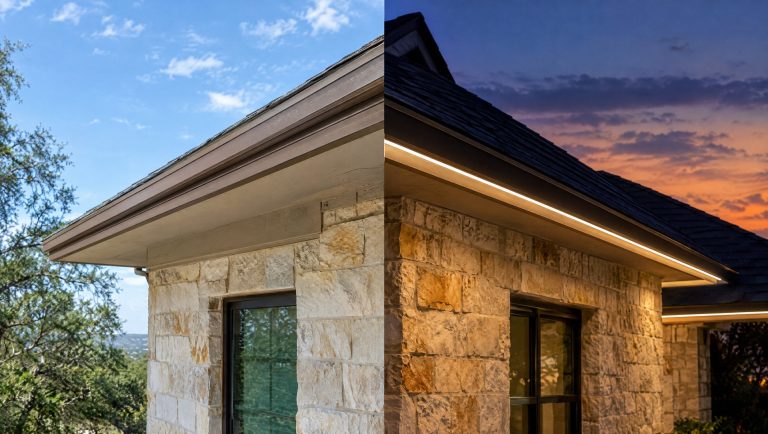
- Permanent lighting. A low-profile track along the roofline with app-controlled LEDs that stays up all year. The upfront cost is higher; the payoff is no annual hanging and lights for Halloween, game days and birthdays too. Our breakdown of the cost of permanent Christmas lights walks through what drives the price.
If you are leaning permanent, September is the right month to decide. A permanent install is a construction project: design, an HOA application in many neighborhoods, and scheduling. Leave yourself room.
Measure the house
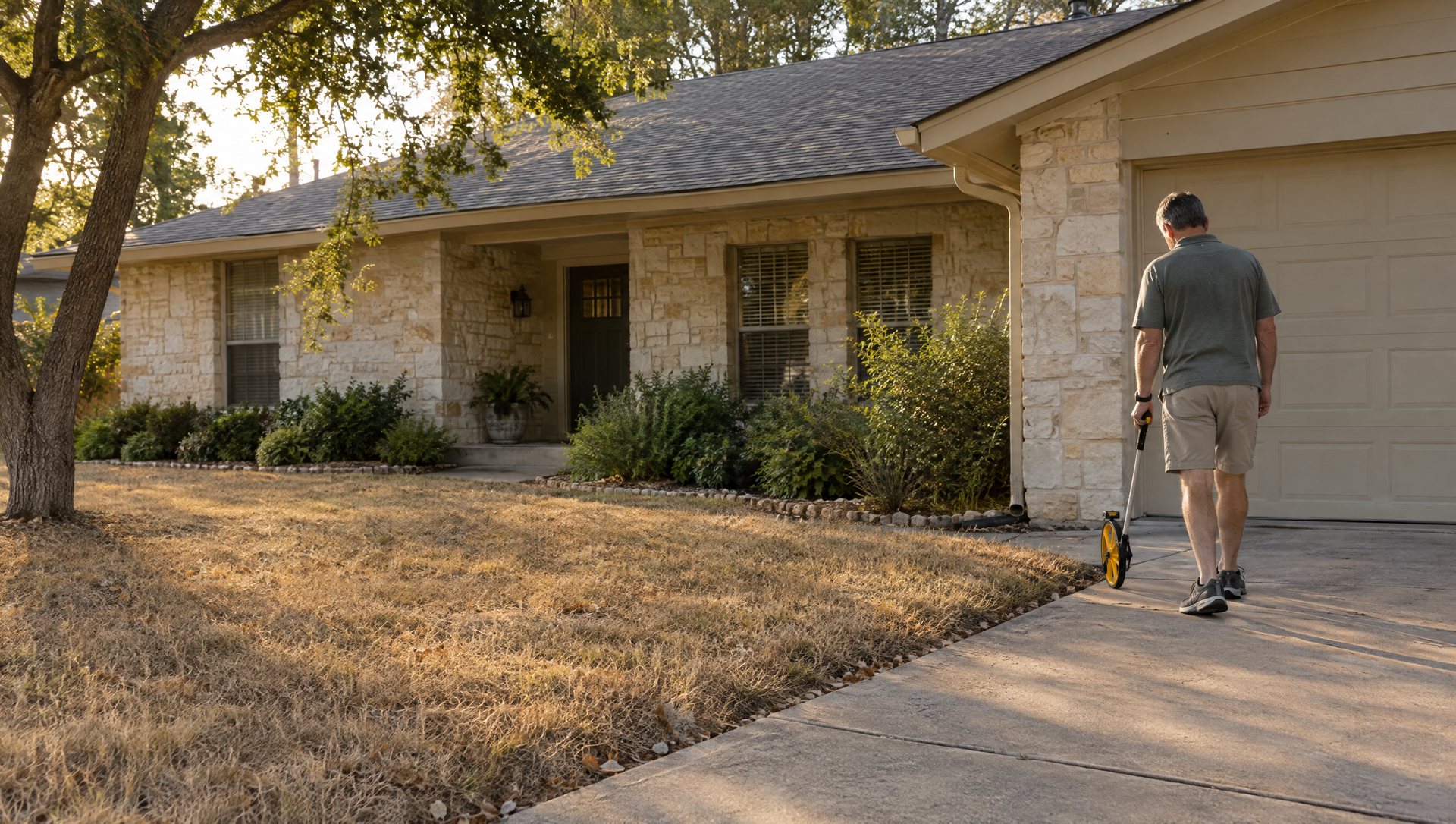
Whatever route you choose, get real numbers. Walk the house with a 100-foot tape or a measuring wheel and write down:
- Linear feet of each roofline run (front gutter line, each gable rake, garage)
- Height to the gutter on each side (one story is usually 9 to 10 feet to the drip edge; two story is roughly double)
- Where every outdoor outlet is, and which breaker or GFCI controls it
- Trees you want lit and their trunk circumference at chest height
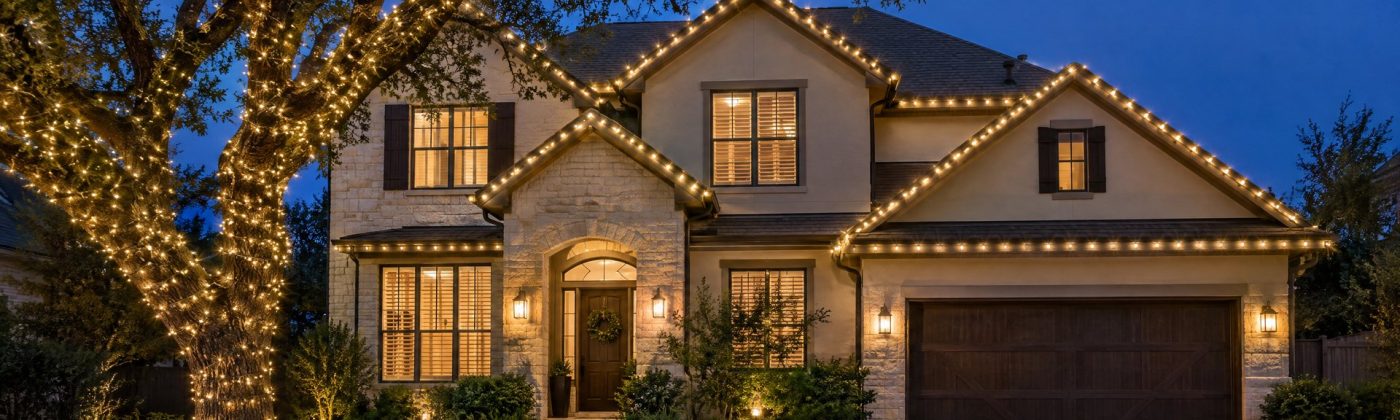
On a two-story with a front gable, the front-facing roofline can easily run well past 100 feet once you add up the rakes and the garage. That number drives bulb counts, power draw and price, so do not guess it.
Check your HOA
Many Austin-area HOAs set rules on holiday display dates and, more often, on permanent exterior changes. Seasonal lights rarely need approval, though some deed restrictions limit how early they go up and how late they stay. A permanent track mounted to the fascia is a different matter: many architectural review committees treat it as an exterior modification. Read your covenants and, for a permanent system, submit the application in September. Review committees often meet monthly.
This is general information, not legal advice.
Early October: Prep the House
Early October is for the unglamorous work that keeps December quiet.
Trim branches off the roofline
Limbs that touch the roof will rub through wire and give squirrels a highway to your bulbs. Fall is the right time to cut them. The City of Austin asks its own staff and contractors to avoid pruning live oaks and red oaks from February 1 through June 30, because that is when the beetles that spread oak wilt are active. Texas A&M Forest Service goes further and recommends painting every oak wound immediately, in any season. If a live oak limb has to come off for your lights, do it now, paint the cut, and do not leave it for a January cleanup that drifts into February.
Test outlets and find your GFCIs
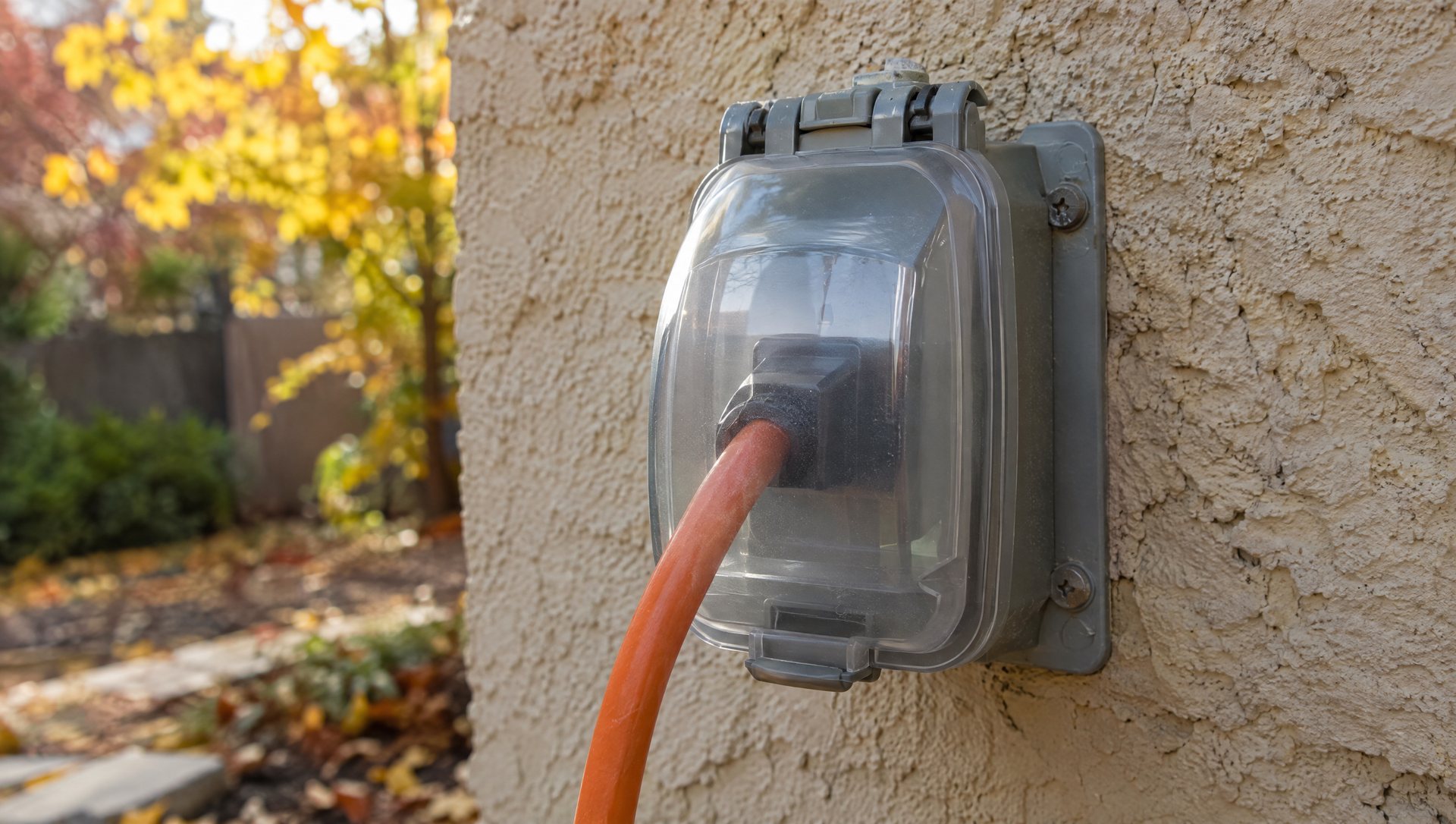
Plug a lamp or a tester into every outdoor outlet you plan to use. Then find the GFCI that protects each one. In Austin houses it is often in the garage, a bathroom, or behind a patio chair. If the outlet does not have an in-use (“bubble”) cover that stays closed with a cord plugged in, buy one. The National Electrical Code requires a cover that is weatherproof with the plug inserted for 15- and 20-amp receptacles in wet locations, and an open flip lid is how December rain trips a GFCI.
If you need a new outdoor outlet, call a TDLR-licensed electrician in October. They are busy in November too.
Test last year’s lights on the driveway
Unbox everything and plug it in on the ground, in daylight. Replace strings with cracked insulation, crushed sockets, or more than a few dead bulbs. Austin summers are hard on stored lights; a garage attic in July runs far hotter than the outside air, and heat ages PVC wire insulation. Buying replacements in early October beats hunting for C9 sockets in the second week of December.
Book a design call if you want help
If you want a professional look at the house, our lighting design call is the place to start. Early fall is when there is the most room to talk through options.
Late October: Halloween, Then the Clocks Change
Halloween falls on a Saturday this year, which means a full Friday-and-Saturday weekend of trick-or-treaters. For ideas on doing orange, purple and projector effects without making the house look like a used car lot, see our outdoor Halloween lighting ideas.
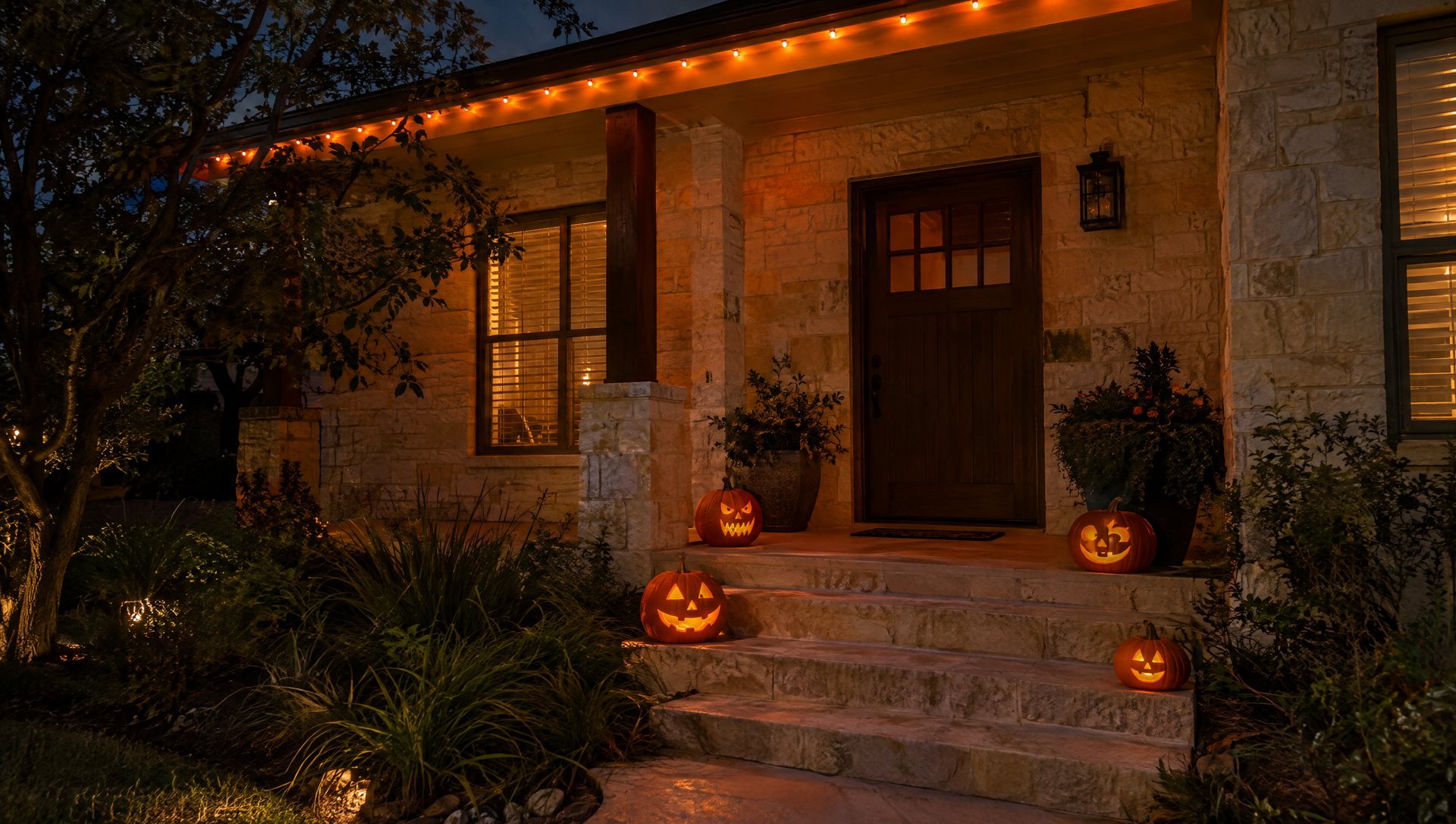
Permanent systems earn their keep here: switching from Halloween orange to warm white for November is a tap in the app. Seasonal Christmas installs generally start after Halloween decorations come down, so plan for a clean house front on November 1. If you want them up sooner, see whether October is too early for Christmas lights.
Sunday, November 1: reset every timer
Daylight saving time ends at 2 a.m. on Sunday, November 1. Mechanical outdoor timers do not know that. If your timer is set to “on at 6 p.m.,” your lights will now come on an hour after sunset. Reset every mechanical timer that morning. Smart plugs and app-controlled systems usually adjust automatically, but check that any schedule set to a fixed clock time still makes sense; better yet, use a sunset-based schedule.
Sunset never moves more than 13 minutes all season: earliest about 5:30 pm from late November to early December, back to 5:43 pm by January 3. A sunset-based timer follows it on its own.
Source: U.S. Naval Observatory, Sun rise/set tables for Austin, TX, 2026 and 2027
Show the numbers
| Sunset | |
|---|---|
| Nov 1 | 43 minutes after 5 pm |
| Nov 8 | 38 minutes after 5 pm |
| Nov 15 | 34 minutes after 5 pm |
| Nov 22 | 32 minutes after 5 pm |
| Nov 29 | 30 minutes after 5 pm |
| Dec 6 | 30 minutes after 5 pm |
| Dec 13 | 32 minutes after 5 pm |
| Dec 20 | 34 minutes after 5 pm |
| Dec 27 | 38 minutes after 5 pm |
| Jan 3 | 43 minutes after 5 pm |
November: Install Season
November is when most Austin houses go from dark to lit.
Pick your install week by weather, not by date
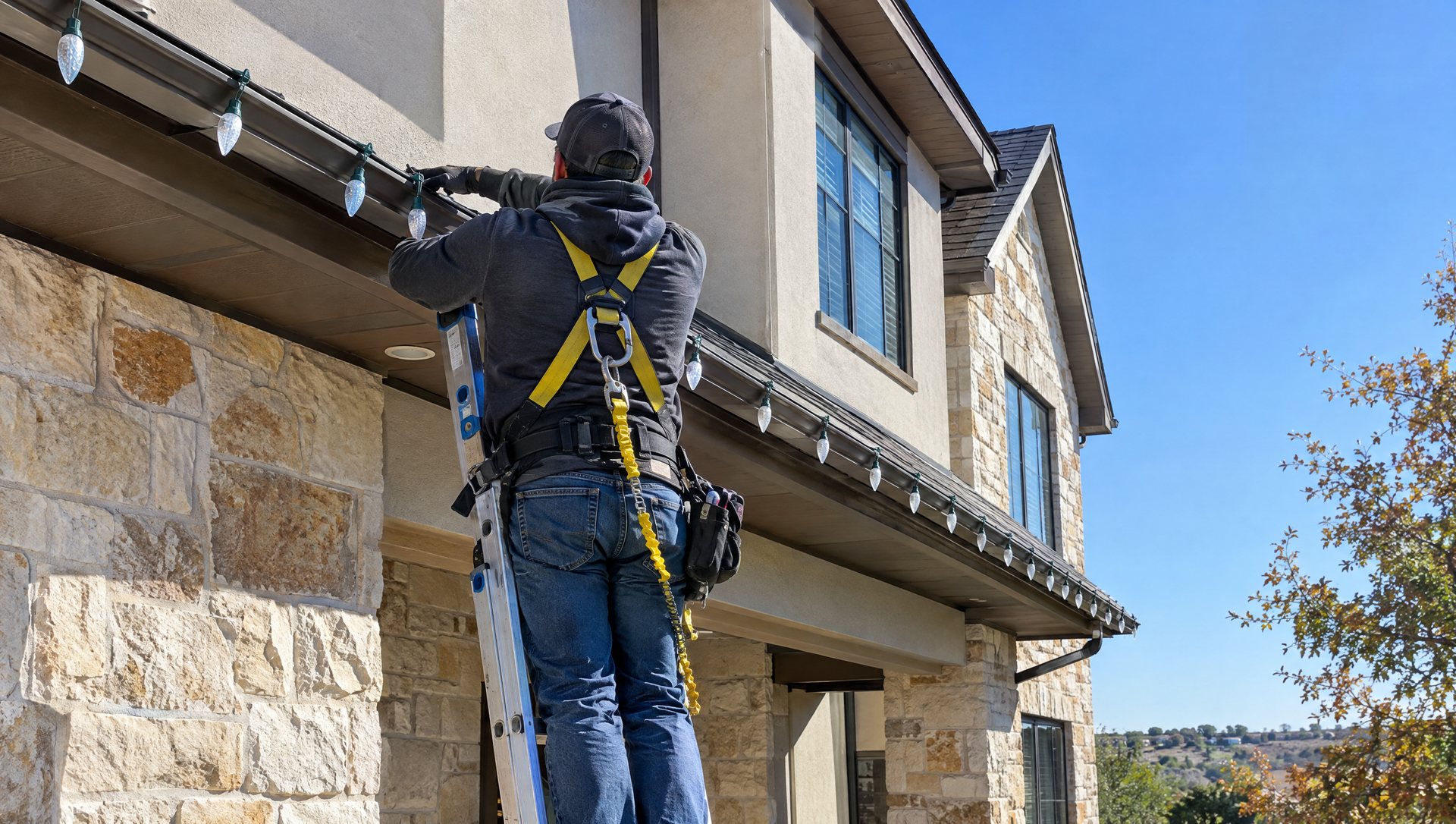
Hang lights on a dry day with dry roofing. Wet composition shingles are slick, and a wet metal roof is worse. Central Texas Novembers swing hard: a mild 80°F afternoon can turn into a 45°F north wind behind a front the next day. Check the forecast a week out and pick the dry days in front of a front, not behind it.
The average first freeze at Camp Mabry is December 1 based on the 1991 to 2020 normals, and the earliest on record came October 26, 1924. Freezes themselves rarely hurt LED lights. The damage comes from water: rain ahead of a front fills a cheap connector, the temperature drops, and the GFCI trips at 9 p.m. Seal connections before the first cold front, not after.
Diwali: Sunday, November 8
Diwali’s main day falls on November 8 in 2026. Families lighting for Diwali need their display working the first week of November, which is earlier than most Christmas schedules. Permanent and app-controlled systems handle this well: warm white or amber for Diwali, then the same lights for Thanksgiving and Christmas.
Thanksgiving: Thursday, November 26
“Lights on for Thanksgiving” is a common target, and our guide to putting lights up before Thanksgiving covers the timing. If you are hanging your own, do it the weekend before, November 21 and 22, not on Black Friday, when every ladder in Travis County comes out at once. If you are hiring an installer, ask in October what their schedule looks like for the week before Thanksgiving. When the quotes come in, check each one against what a complete Christmas light quote includes.
Zilker Holiday Tree: Sunday, November 29
The city lights the Zilker Holiday Tree at 6 p.m. on November 29. The city lists it as 39 streamers of multicolored LED bulbs, 3,309 lights in all, hung from a 165-foot moonlight tower, and it stays lit through January 1. It is also a good reminder that a simple idea done at scale beats a busy one.
Worked Example: What Your Lights Cost to Run in Austin
Here is the math for a real-sized roofline, using Austin Energy’s residential rates for customers inside the City of Austin as posted in October 2026.
Inputs:
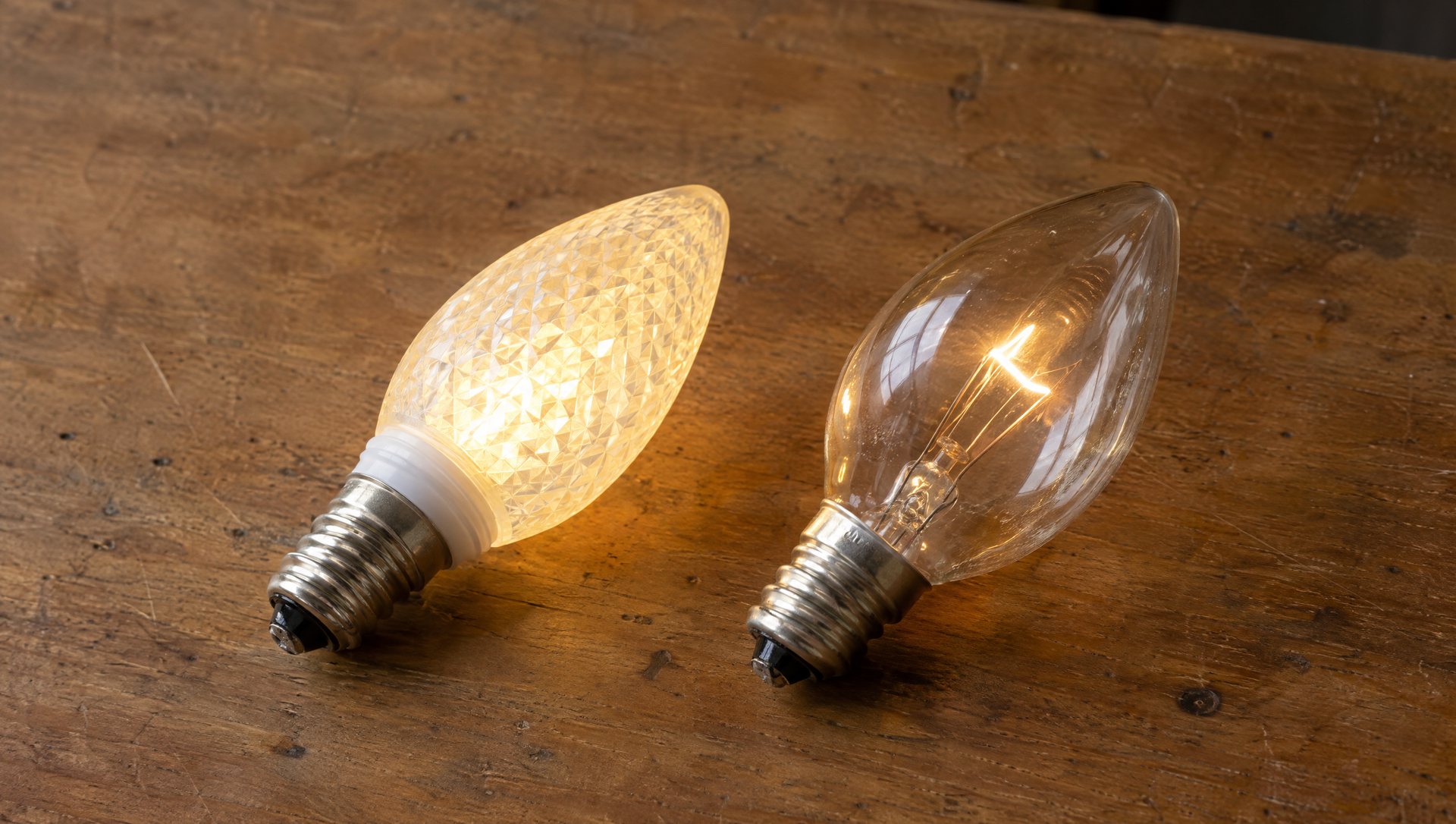
- Roofline: 180 feet with bulbs at 12-inch spacing, so 180 C9 bulbs
- LED C9 bulb: 0.6 W (a common rating for current LED C9 replacement bulbs)
- Incandescent C9 bulb: 7 W
- Schedule: sunset to about 11:30 p.m., 6 hours a night
- Season: Thanksgiving Day (Nov 26) through January 4, 40 nights, so 240 hours
- Price per extra kWh: Austin Energy’s Tier 3 energy charge (7.901¢) plus the power supply adjustment (3.912¢), community benefit charges (1.097¢) and regulatory charge (1.799¢), which comes to about 14.7¢ per kWh. If your December usage stays in Tier 2 (301 to 900 kWh), the figure is about 12.2¢.
LED: 180 × 0.6 W = 108 W. 108 W × 240 h = 25.9 kWh. 25.9 × $0.147 = about $3.81 for the season.
Incandescent: 180 × 7 W = 1,260 W. 1,260 W × 240 h = 302.4 kWh. 302.4 × $0.147 = about $44 for the season, before counting that 302 extra kWh can push a household into a higher tier.
December: Keep It Running
December is for enjoying the lights and catching small failures before they become dark houses.
Hanukkah: December 4 to 12
Hanukkah begins at sundown on Friday, December 4, and ends at nightfall on Saturday, December 12. Blue and white window and porch displays should be up and tested by December 3. On a permanent system, a blue-and-white scene can run for the eight nights and switch back to warm white after.
Trail of Lights: December 10 to 23
The 62nd Austin Trail of Lights runs December 10 to 23 at Zilker Park, with a preview party on December 4 and the Fun Run on December 5. Free nights are December 10, 11 and 13 through 17. The event started in 1965, and it is worth a walk to see how commercial crews handle long runs, ground connections and tree wraps.
After every hard rain, walk the house
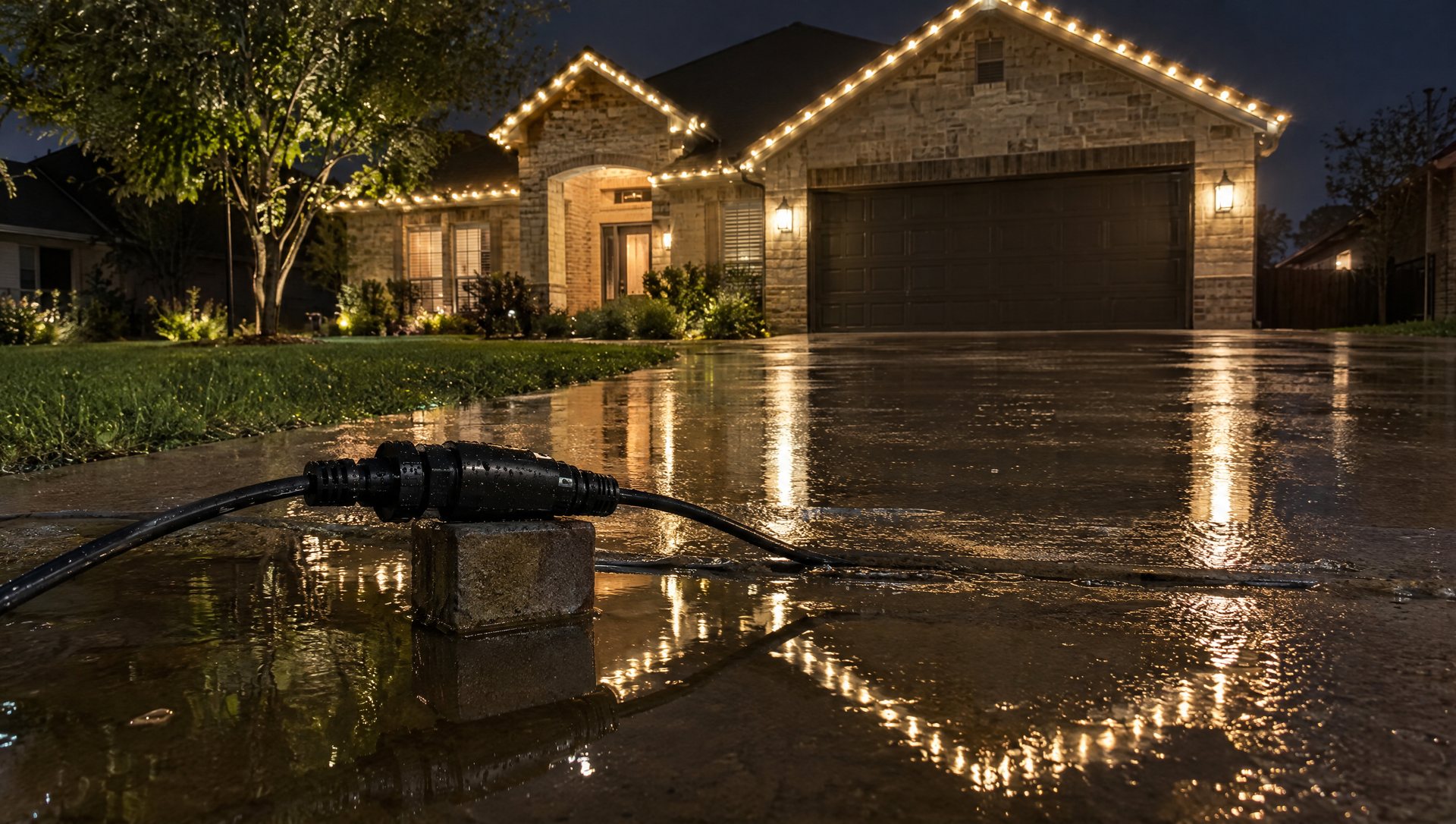
If a section goes dark after rain, the cause is almost always water in a connection, not a bad bulb. Unplug, find the low connector, dry it, and lift it off the ground or gutter floor. Connections should sit higher than the cord on either side so water drains away. Our guide to IP ratings for permanent holiday lighting explains which parts of a system are built to sit in weather and which are not.
The solstice and the long nights
December 21 is the shortest day of the year in Austin, about 10 hours and 11 minutes of daylight. Your lights run the most this week. Check that the timer still turns them off at night; leaving C9s on until dawn roughly doubles the run time in the cost example above.
January: Take It Down Right
When lights come down
Plan on taking seasonal lights down in early January. Check your HOA rules, which sometimes set a deadline. If a professional installed your lights, ask them for their removal window; it varies by company. Sapien takes its installs down between January 2 and January 15, earlier if your HOA sets a deadline.
Permanent systems simply switch to an everyday white or turn off. That is the point.
Store them so they work next year
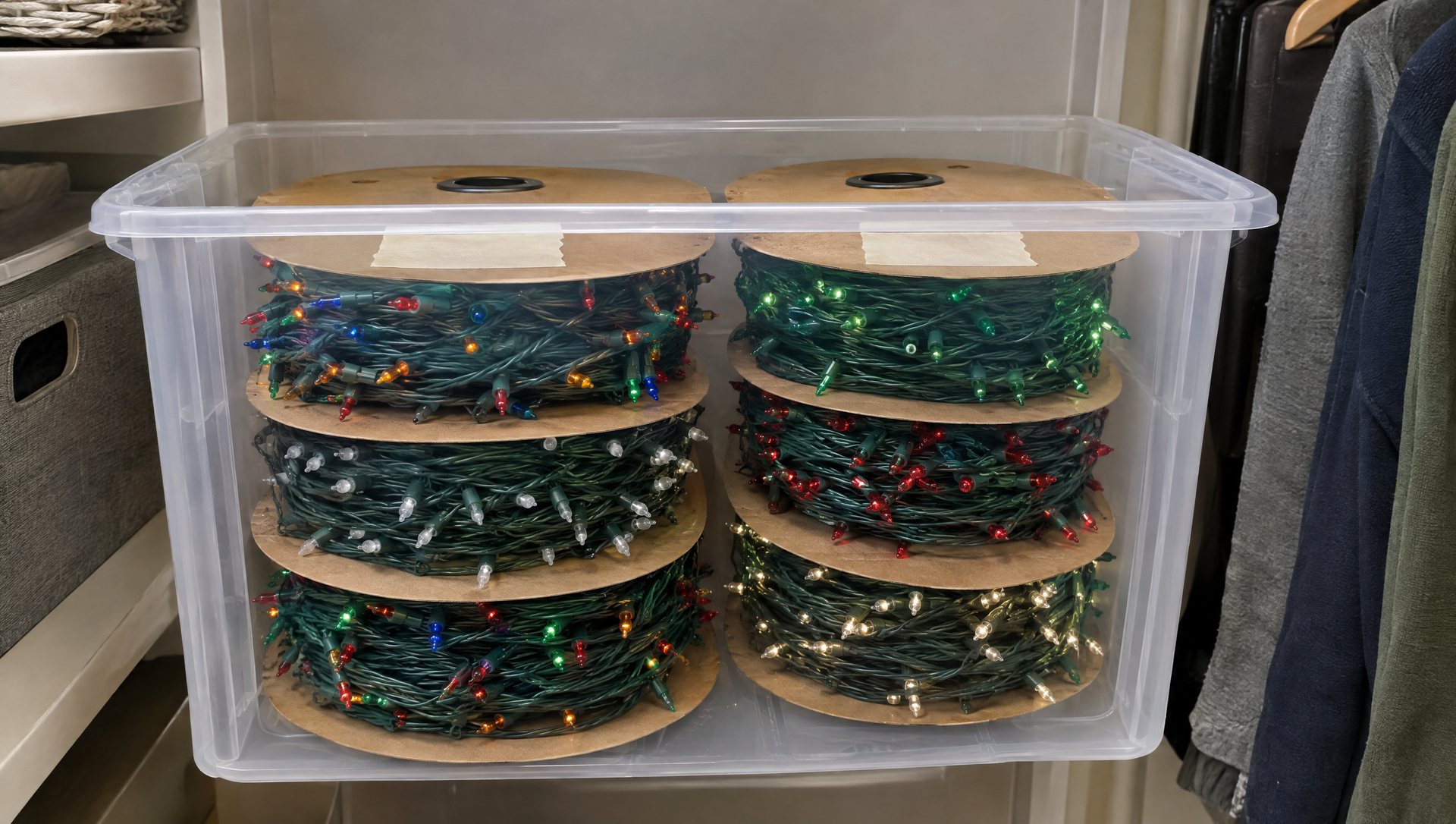
- Wrap strings around a piece of cardboard or a cord reel, not loosely in a bin
- Label each string with where it went (“front gutter, left of gable”)
- Store them inside the house if you can, not in a garage attic that bakes all summer
- Throw away anything that failed this season; do not “fix it next year”
Finish oak work before February 1
If removing lights reveals a live oak limb rubbing the roof, trim it and paint the cut in January. The City of Austin’s restriction on pruning live oaks and red oaks runs from February 1 through June 30.
Starting Late: If It Is Already October or November
Most of this timeline still works with a late start. Here is how to compress it:
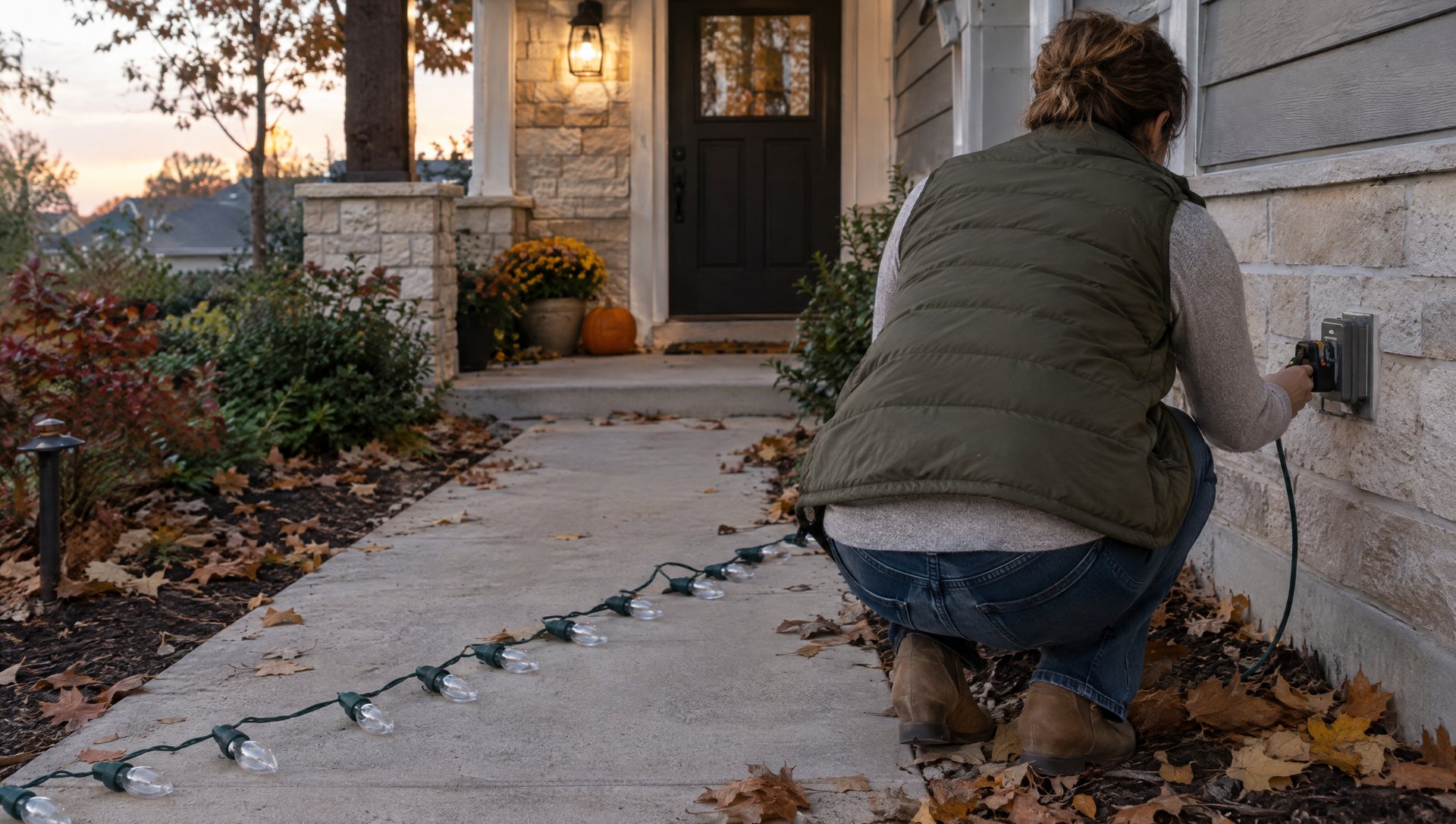
- This week: measure the house, test your outlets, find the GFCIs, and check last year’s lights.
- Within 10 days: decide whether you are doing it yourself or hiring a crew. If hiring, call now.
- Permanent lighting: if you want lights this Christmas, ask the installer directly whether their 2026 schedule and your HOA’s review timeline still allow it. If not, a seasonal display this year and a permanent install in the spring is a sensible path. Our permanent Christmas light installation guide covers what that process looks like.
- Before Thanksgiving: have every connector off the ground and every outlet under an in-use cover.
If you want your Austin home lit this season without the ladder work, call (737) 777-9099 or reach us through our contact page.
Sources
- City of Austin Parks and Recreation, Zilker Holiday Tree: https://www.austintexas.gov/parks/programs/zilker-holiday-tree
- CultureMap Austin, “Trail of Lights 2026 tickets” (October 1, 2026): https://austin.culturemap.com/news/entertainment/trail-of-lights-2026-tickets/
- City of Austin, Trail of Lights event listing: https://www.austintexas.gov/ace/events/trail-lights
- National Weather Service Austin/San Antonio, Austin climate summary (first freeze normals): https://www.weather.gov/media/ewx/climate/ClimateSummary-ewx-Austin.pdf
- Austin Energy, Residential Rates (reviewed October 1, 2026): https://austinenergy.com/rates/residential-rates
- City of Austin, Oak Wilt Policy: https://www.austintexas.gov/sites/default/files/files/Planning/City_Arborist/Oak_Wilt_Policy.pdf
- Texas A&M Forest Service, preventing the spread of oak wilt: https://tfsweb.tamu.edu/prevent-the-spread-of-oak-wilt-in-texas-this-spring
- Bulbrite and Holiday Bright Lights C9 LED replacement bulb specifications (0.6 W): https://products.bulbrite.com/770195
- IAEI Magazine, “Holiday Lighting and Outside Electrical Receptacles”: https://iaeimagazine.org/electrical-fundamentals/holiday-lighting-outside-electrical-receptacles
- Texas Highways, “Austin’s Trail of Lights turns 60”: https://texashighways.com/travel/austins-trail-of-lights-turns-60/