“Commercial grade” is a seller’s term, not a safety rating. Store-bought and commercial-grade Christmas lights must meet the same federal minimums from UL 588. What differs: sealed sockets, screw-on connectors, full-wave power with no directly visible flicker, and C7/C9 line cut to length. Suppliers estimate store sets last 2 to 3 seasons and pro sets 5 to 8. In our example at prices checked October 2026, a 1,000-foot pro C9 spool beat store sets per season only past roughly 400 feet of use.
| Feature | Store-bought (typical) | Commercial grade (typical) | Why it matters |
|---|---|---|---|
| Socket (mini and 5mm) | Two-piece, bulb pulls out | One-piece, sealed | Water gets into removable sockets |
| Connector | Push-together plug | Screw-on coaxial connector | Wet plugs trip GFCIs |
| Power | Usually half-wave (60 flashes a second) | Full-wave (120 a second) | Flicker below about 80 Hz is visible |
| Wire | Same legal floor; gauge varies | Usually 18 AWG zip cord on a spool | Gauge is printed on the jacket |
| Length | Fixed lengths | C7/C9 line cut to fit | No bunching or gaps at corners |
| Seasons (supplier estimates) | About 2 to 3 | About 5 to 8, taken down yearly | Not test results |
| Warranty | Varies; read the box | 3 seasons on the pro items we priced | A warranty in seasons is a useful signal |
| Cost per foot per season (example, checked October 2026) | $0.45 to $0.68 | $0.21 to $0.34 if the whole spool gets used | Pro costs less per season at volume |
This guide is for Austin homeowners choosing between a box of lights from a store and lights from a pro supplier, or checking what an installer plans to hang. Most numbers on this topic come from pro suppliers that sell lights online. We name the source each time; naming one is not a recommendation. This post has no affiliate links, and no brand paid to be included. If you’d rather have someone else supply and hang them, see how Christmas light installation in Austin works.
What does “commercial grade” mean for Christmas lights?
“Commercial grade” is a label sellers put on heavier-built light sets. It is not a rating, a test or a certification. We found no definition of it in the federal rule on seasonal lighting or in UL’s summary of UL 588, the safety standard for holiday lights.
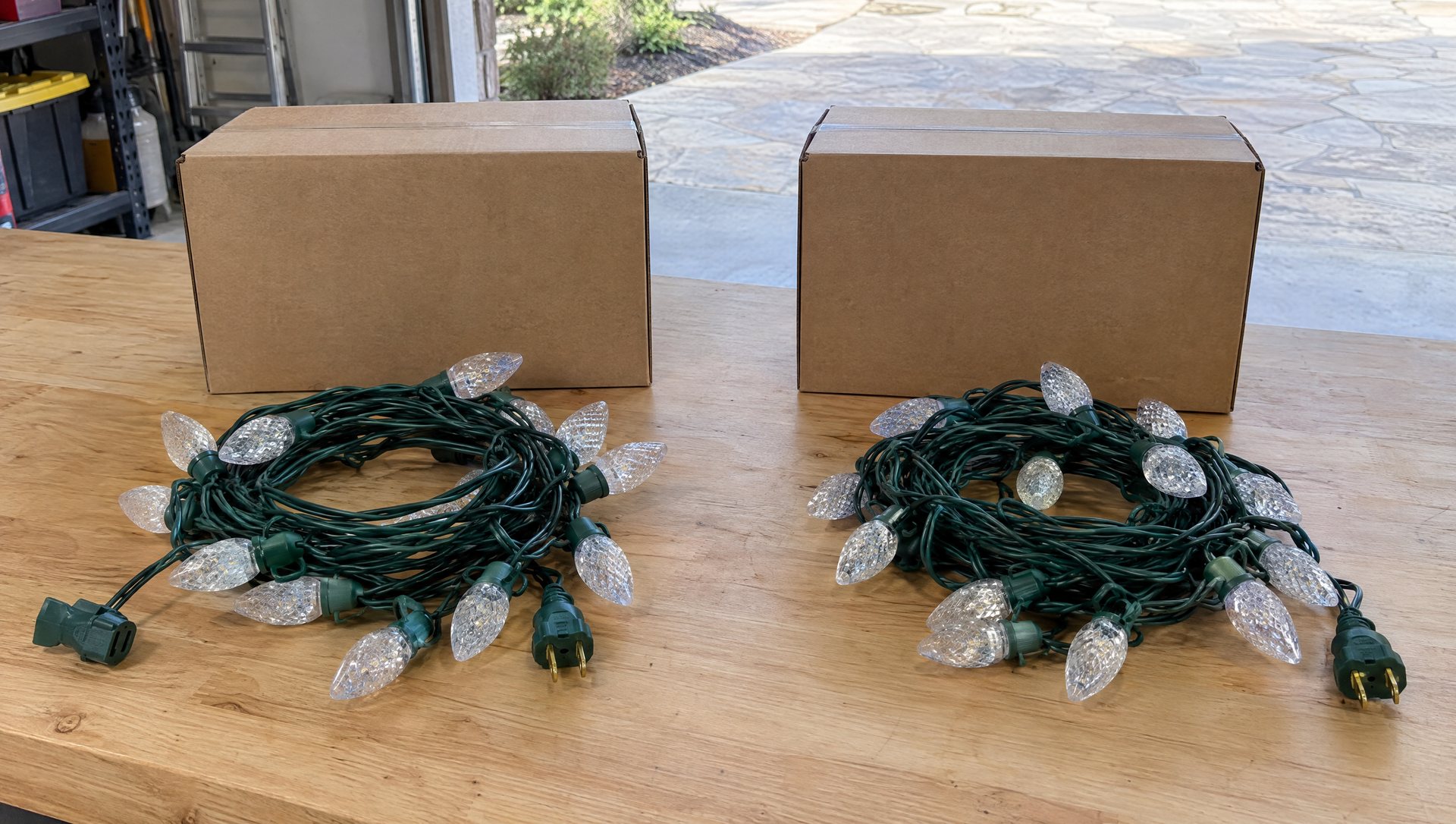
So two boxes can both say “commercial grade” and be built very differently. Judge a set by its socket, connector, wire, power supply and warranty. (This guide is about the grade of the lights, not about lighting a business.)
How are commercial-grade lights built differently?
Commercial-grade lights differ from store-bought lights at the socket, the connector and the wire. Each one affects how well a set keeps water out, and water is a common way outdoor sets fail.
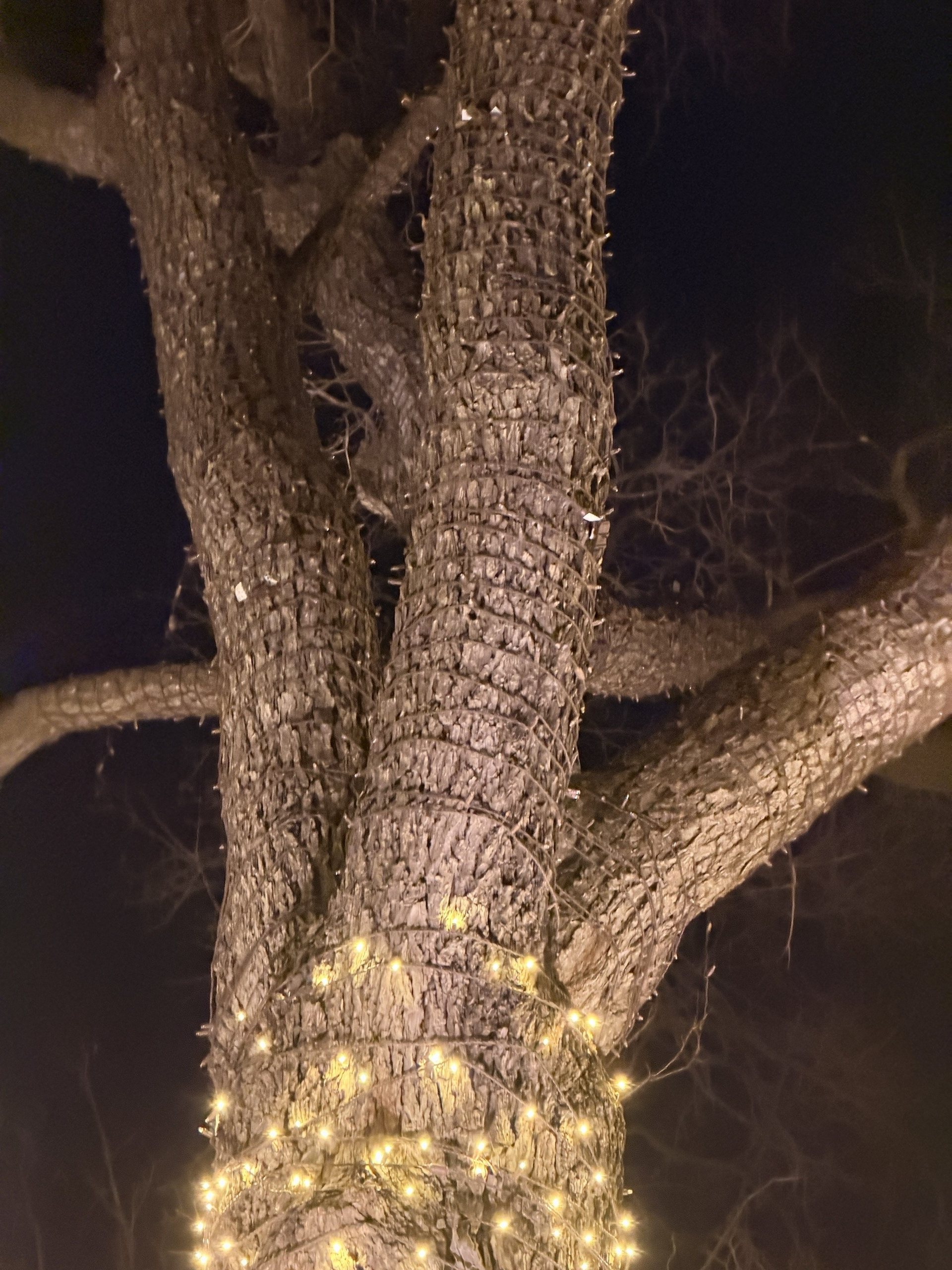
Sockets: sealed or removable
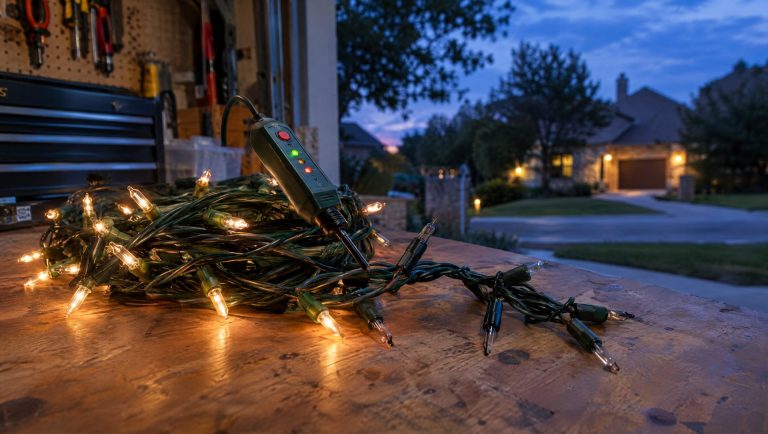
Pro suppliers describe commercial LED mini and 5mm strings as one-piece: the LED, lens and socket are sealed together. Retail sets are typically two-piece, and the gap around each removable bulb lets in water and debris, according to Creative Displays’ pro-grade comparison and Christmas Designers’ retail vs commercial guide.
Not every set fits that pattern. Some store sets have fixed bulbs, including the C9 set in our cost example. Pro C7 and C9 line is sold as empty sockets plus screw-in bulbs. That is a practical advantage: a dead bulb is a single swap, while a failed section of a prelamped set (bulbs already attached) usually means a new set.
Connectors: screw-on or push-together
Commercial strings join with screw-on connectors that cannot be pulled apart. Christmas Lights Etc’s commercial LED page says they seal out water and let more than 500 feet connect on one outlet. Store sets use push-together plugs, and one large pro supplier’s GFCI guide says even a tight two-prong connection is not watertight. It estimates that sealed screw-together connections cut GFCI problems by roughly 30 to 40%.
Wire: the same floor, different builds
The wire floor is the same for both grades. Under the Consumer Product Safety Commission’s 2015 rule, parallel-wired C7 and C9 sets need at least 18 AWG wire. Pro C9 line is usually 18 AWG SPT, a flat two-wire “zip cord” sold on a spool. Pre-made cords can be lighter: one supplier’s 25-foot C9 cord is 20 AWG, with a limit of 2 cords in one run.
Why this matters more in Austin
Austin gets measurable rain on about 7 days a month from October through January, per the National Weather Service normals for Camp Mabry. The GFCI guide above estimates that at least half of GFCI problems trace to a cord connection or the outlet itself. So in Austin, check the sockets and connectors before you compare lifespan claims.
Why do some store-bought LED lights flicker?
Some LED Christmas lights flicker because of how they convert household power. U.S. power alternates 60 times a second. A half-wave set uses half of each cycle, so its LEDs switch on and off 60 times a second. A full-wave set uses both halves and switches 120 times a second.
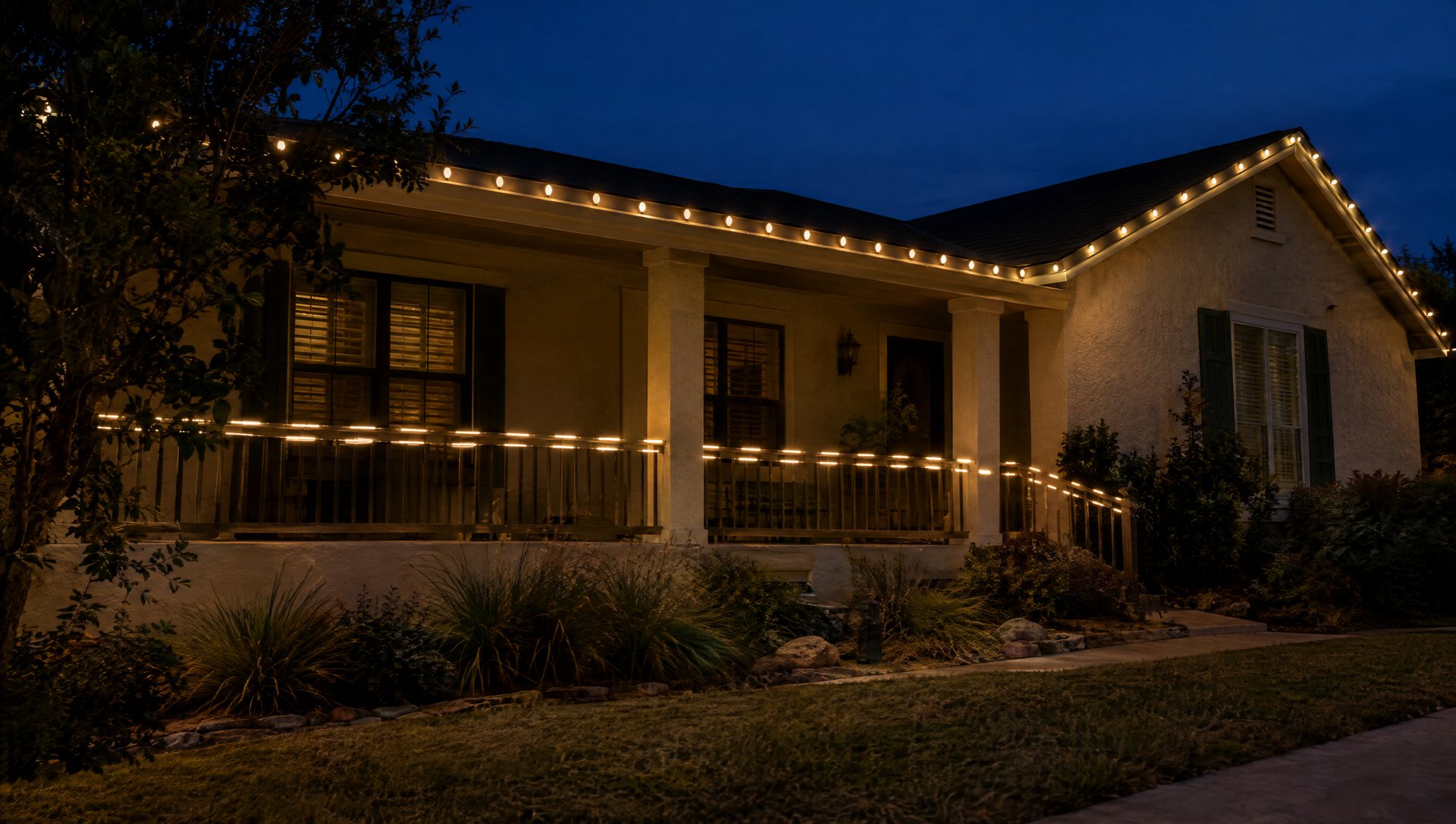
A 2022 Pacific Northwest National Laboratory review of flicker ties directly visible flicker to light that pulses below about 80 Hz. Above that, a steady gaze sees steady light, though a moving object can still show some flicker.
By suppliers’ accounts, most retail LED sets are half-wave. Christmas Designers’ half-wave explainer says so of the sets it sells, and 1000Bulbs says half-wave sets are what big-box stores usually carry. We found no independent count, so treat it as a tendency. On the box, look for “full wave” or “flicker free”. If the strobe look is what bothers you, our post on why LED Christmas lights look harsh covers color temperature and spacing too.
Are commercial-grade lights brighter?
Not reliably: we found no measurement showing that. Brightness depends on the bulb, so compare listed lumens when a seller publishes them.
Can you cut Christmas lights to length?
Whether you can cut Christmas lights depends on the wiring. Series-wired mini sets cannot be cut, because current passes through every bulb in turn. Parallel-wired C7 and C9 cords can, because each socket gets power on its own, as Christmas Light Source explains. The cut end then needs a plug.
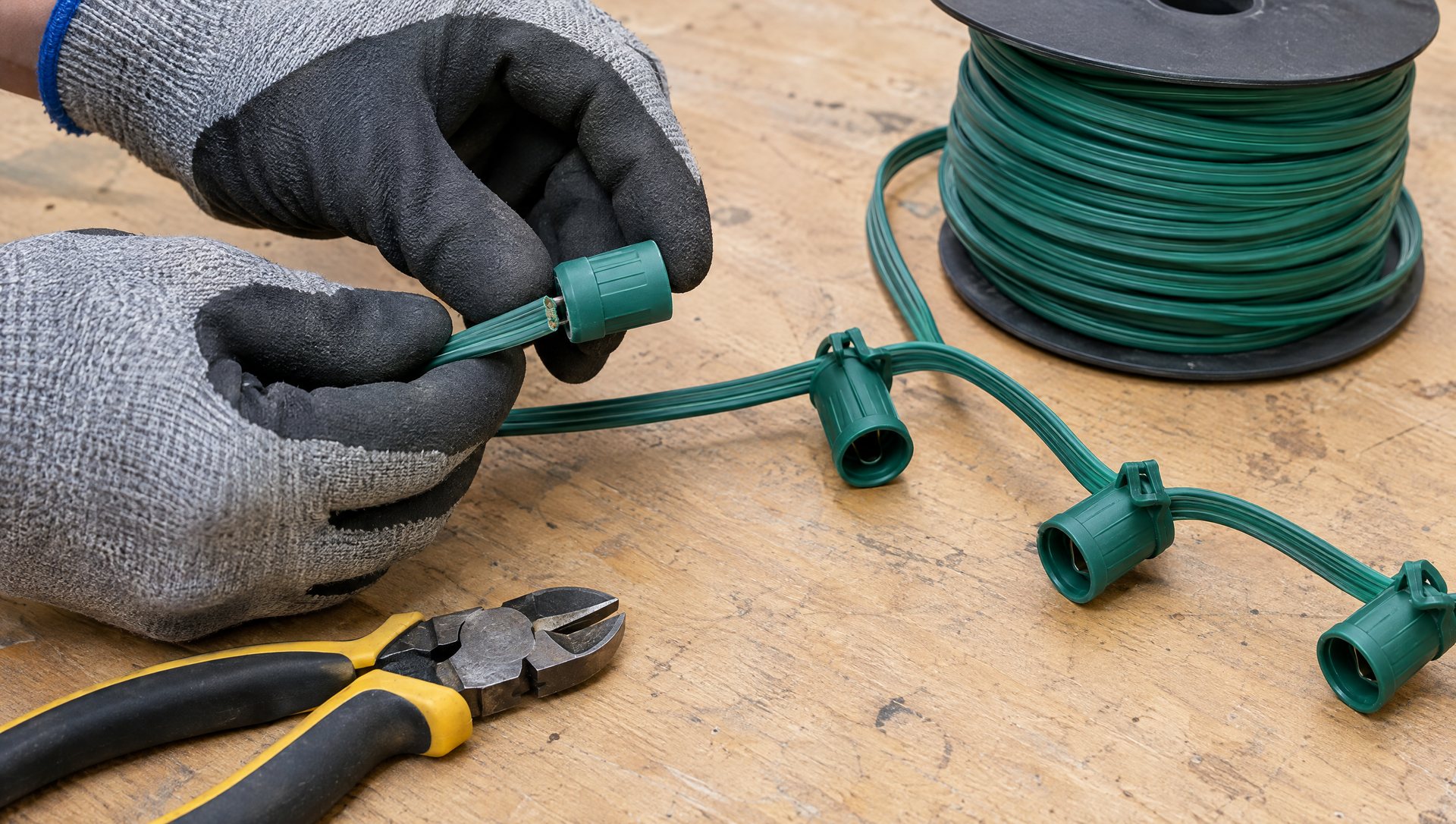
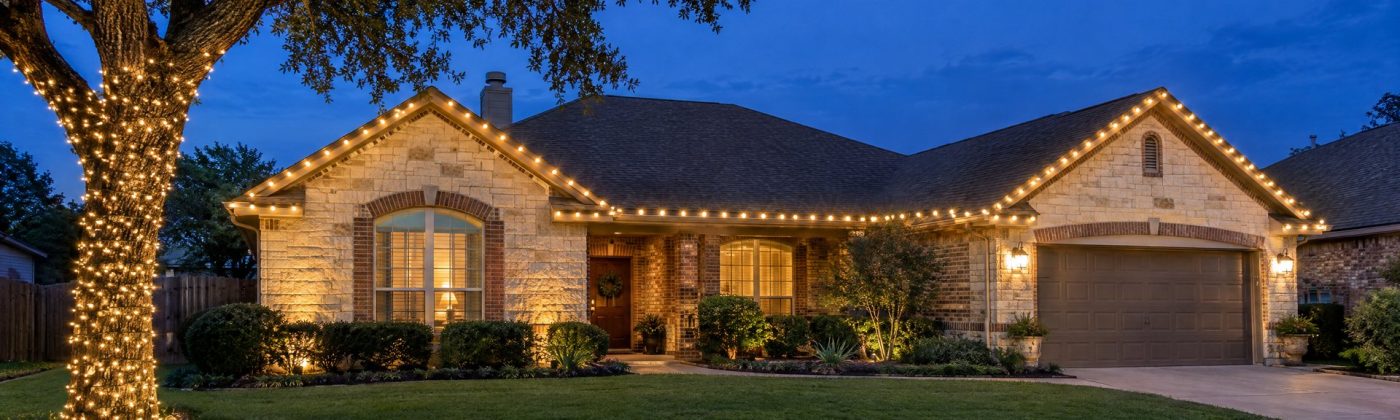
That is “custom-cut wire”. Line comes on a spool, each run is cut to the length of an eave or gable, and slide-on plugs are added. The run ends where the roofline ends, with no bunched extra at a corner and no gap where a 25-foot set fell short. Our guide to how a professional install works, step by step shows where this fits.
Pro suppliers set three rules for custom runs:
- Match SPT-1 or SPT-2 plugs and sockets to the wire, since mismatched parts fit loosely and heat up.
- Keep an 18 AWG run under the 250-foot cap in one supplier’s spool listing.
- Check whether a slide-on plug is fused. Some are not, though fused male plugs exist, and a fused plug keeps the overcurrent protection the federal rule requires in factory sets.
Fixed-length sets with factory plugs avoid that wiring step, but they can’t be cut to fit, so the extra wire ends up bunched at a corner or hanging between sections. For a neat, finished roofline, the answer is commercial line cut to each run and installed by a pro.
How long do commercial-grade and store-bought lights last?
Suppliers put store-bought LED sets at about 2 to 3 seasons, sometimes less than one. They put commercial sets at about 5 to 8 seasons when taken down and stored each year: Creative Displays says 6 to 8 years, and Christmas Designers says 5 to 6 on its year-round lighting support page.
Ignore rated hours. Ratings of 15,000 to 200,000 hours describe the diode, and the wire, sockets and plugs fail first outdoors, according to a pro supplier’s article on LED lifespan. A 2006 ENERGY STAR proposal reported the same from 2004 outdoor tests: failures came from build quality and corrosion, not the LEDs.
What shortens a set’s life in Austin
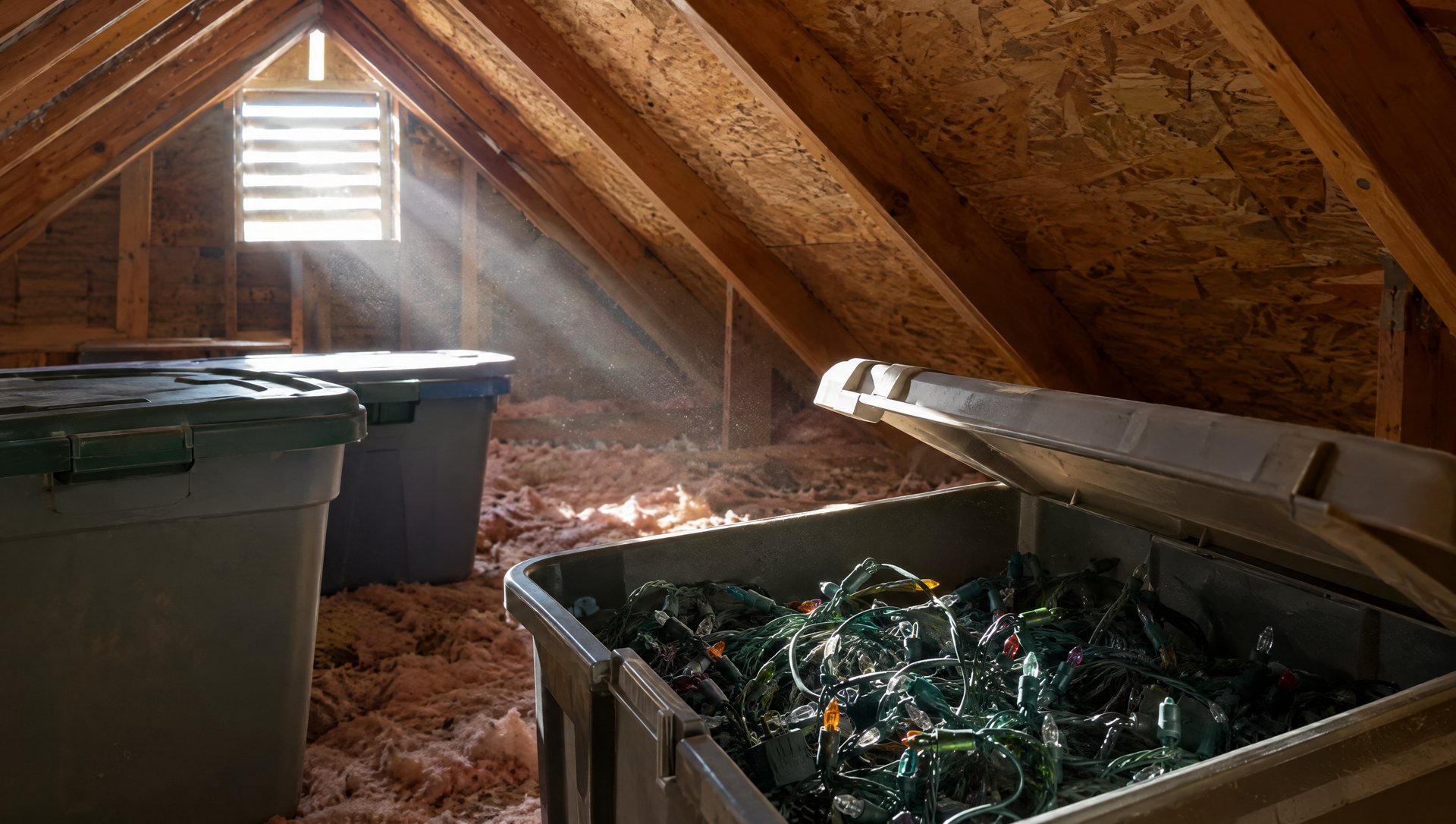
That supplier names UV exposure as the biggest cause of wear. Austin installs often start in October, when Camp Mabry’s normal high is still about 82°F, so a set spends weeks in heat and sun before the season starts. Storage matters too. Christmas Light Source’s attic-storage article says heat shortens LED set life, and a second supplier’s storage tips agree. Austin’s normal August high is about 98°F. A pro set stored in a hot attic gives up much of its advantage; our guide to storing Christmas lights covers better spots.
Are commercial-grade lights worth it? Cost per season, worked out
Commercial-grade C9 lights can cost less per season than store-bought sets, but they cost more up front, and you have to buy volume.
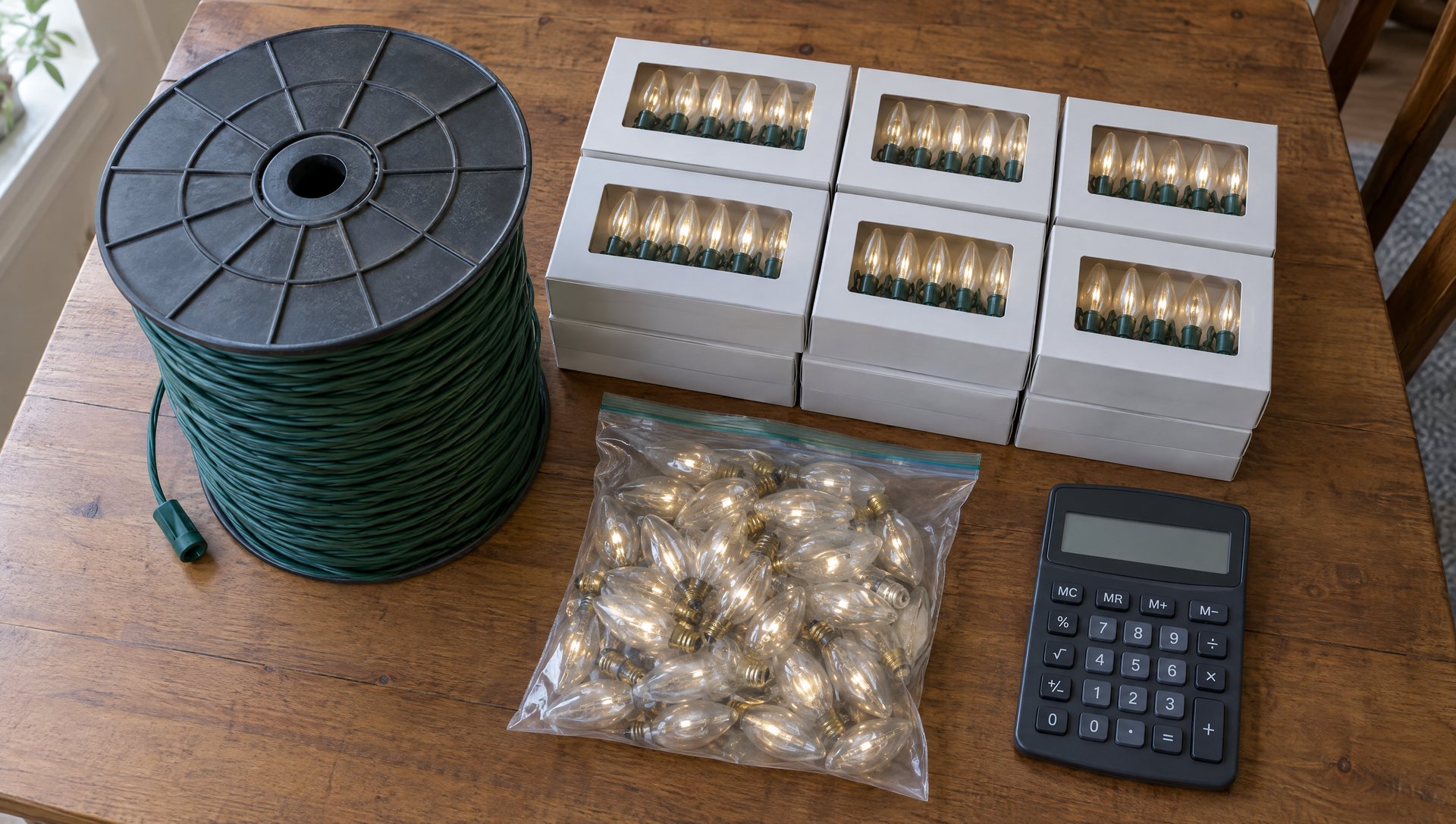
Example inputs (regular prices, checked October 2026; tax, shipping, clips and plugs not included; holiday sales can move them):
- Store grade: a 25-bulb prelamped LED C9 set, 17 feet, 8-inch spacing, $22.99 at Christmas Lights Etc, an online specialty retailer ($1.35 per foot). Big-box prices could not be checked.
- Pro grade: Christmas Designers’ C9 socket line, 12-inch spacing, $429 for a 1,000-foot spool ($0.43 per foot), plus pro C9 LED bulbs at $31.40 per 25 when buying 4 to 11 packs ($1.26 per foot). Total $1.69 per foot.
Example: 150-ft roofline
Store-grade C9 sets
- Cash up front
- $206.91 (9 sets)
- Seasons (supplier estimates)
- 2 to 3
- Cost per season
- $69 to $103
- If pro lasts only its 3-season warranty
- $69 to $103
Pro C9, wire prorated
- Cash up front
- $252.75
- Seasons (supplier estimates)
- 5 to 8
- Cost per season
- $32 to $51
- If pro lasts only its 3-season warranty
- $84
Pro C9, full spool bought
- Cash up front
- $617.40
- Seasons (supplier estimates)
- 5 to 8
- Cost per season
- $77 to $123
- If pro lasts only its 3-season warranty
- $206
How the numbers work: 9 store sets cover 153 feet. The prorated column is 150 feet of line ($64.35) plus 6 packs of bulbs ($188.40); no supplier we checked sells 150 feet at that per-foot price. The full-spool column is the $429 spool plus the same bulbs. Cost per season is cash divided by seasons. The per-foot, per-season figures in the table at the top use the same prices: $1.35 per foot over 2 to 3 seasons for store sets ($0.45 to $0.68), and $1.69 per foot over 5 to 8 seasons for pro line if the whole spool gets used ($0.21 to $0.34).
What it means: if you will use about 400 feet or more of the spool (several rooflines, or a spool split with a neighbor), pro line costs less per season even if it lasts only 5 seasons and store sets last 3. At that volume the bulbs drop to $28.60 per 25 (12 to 25 packs). If you need 150 feet and buy the whole spool, store sets cost less unless they fail after 2 seasons and the pro line lasts 6 or more.
- Store-grade C9 sets
- Pro C9, full spool bought
Store: whole 17-foot sets at $22.99 divided by 3 seasons; pro: the $429 spool plus one bulb per foot at $31.40 per 25 (4 to 11 packs) or $28.60 per 25 (12 to 25 packs) divided by 5 seasons; tax, shipping, clips and plugs left out.
Source: Sapien Lighting calculation from the figures in this post
Show the numbers
| Store-grade C9 sets | Pro C9, full spool bought | |
|---|---|---|
| 100 ft | $45.98 | $110.92 |
| 200 ft | $91.96 | $136.04 |
| 300 ft | $137.94 | $154.44 |
| 400 ft | $183.92 | $177.32 |
| 500 ft | $229.90 | $200.20 |
| 600 ft | $275.88 | $223.08 |
The math leaves out the look: 225 store bulbs at 8-inch spacing against 150 pro bulbs at 12 inches, and store sets that can’t be cut, so extra wire bunches at a corner or hangs between sections where pro line is cut to each run. Pro line also needs slide-on plugs (one listed price, checked October 2026: $52.50 for 50 female plugs, plus a male plug per run). If you are weighing buying against hiring, see what installed lights cost in Austin, and if you are shopping holiday sales, our Black Friday Christmas light deals guide says which discounts are worth it.
Are store-bought Christmas lights safe outdoors?
A store-bought set is meant for outdoors only if its tag or label says so; the word “commercial” on the box does not decide it. Both grades face the same federal floor. A UL Standards Academy case study says UL 588 covers temporary decorative lighting, meaning 90 days or fewer a year. Since June 3, 2015, the federal rule (16 CFR Part 1120) treats seasonal lighting as a substantial product hazard if it lacks minimum wire size, strain relief or overcurrent protection.
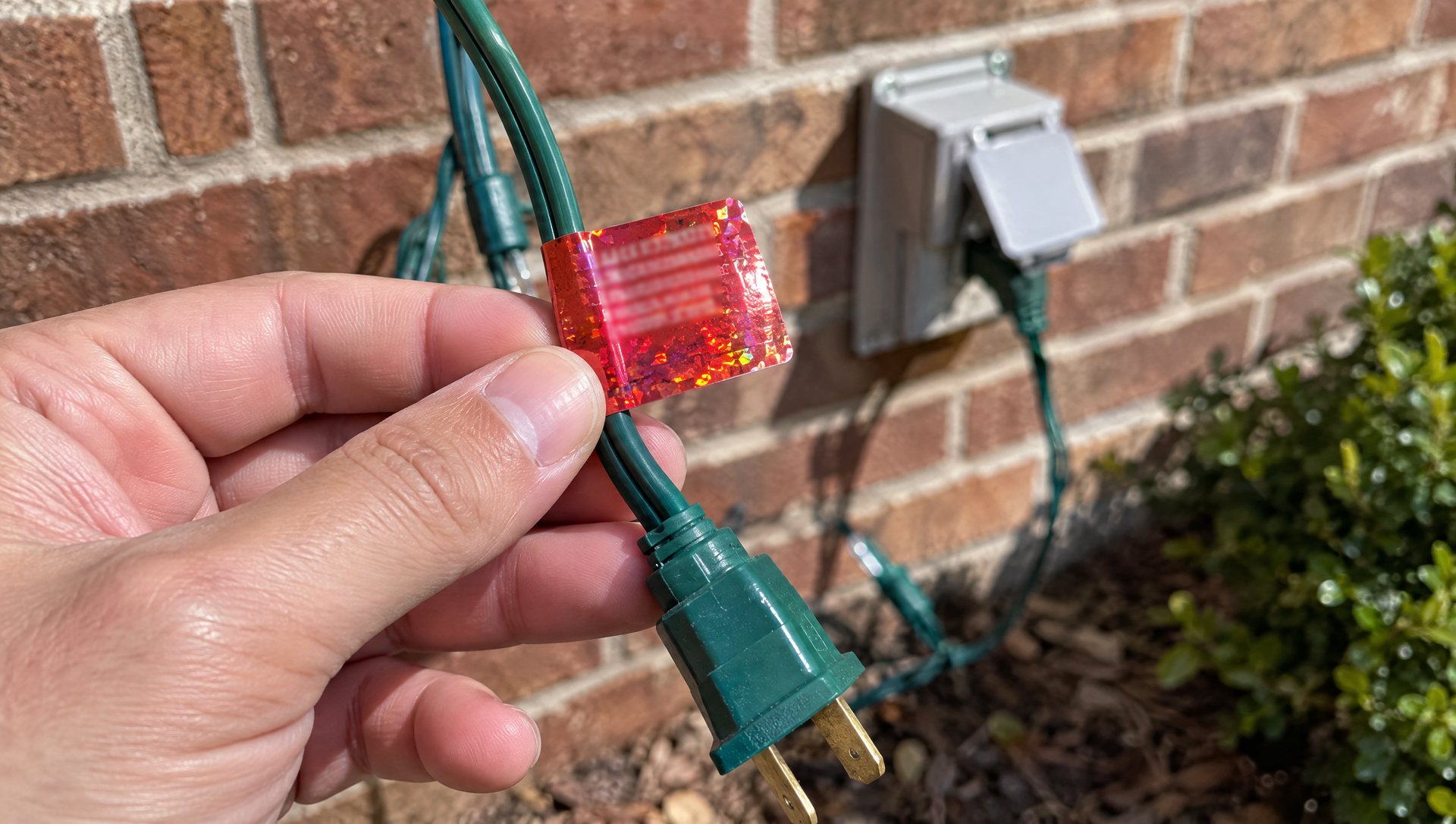
Read three things on the tag or box:
- The label color. UL Solutions says indoor-only light strings carry a green holographic UL label, and indoor-or-outdoor strings a red one. For an ETL or CSA mark, read the tag’s wording.
- Maximum sets connected. This is the end-to-end limit from one plug. A pro 70-light 5mm string rated 4.8 watts, for example, allows 43 sets. The tag on your own set governs.
- The fuse rating. Unplug the set first. Replace a blown fuse only with one of the identical rating, as Christmas Light Source’s fuse guide says. A fuse that keeps blowing means a fault to find first; our Christmas light fuses guide walks through it.
How to tell what you’re buying: 7 checks
You can check how a set is built without trusting the word “commercial” on the box. Checks 3 to 5 are our practical rules, not a standard.
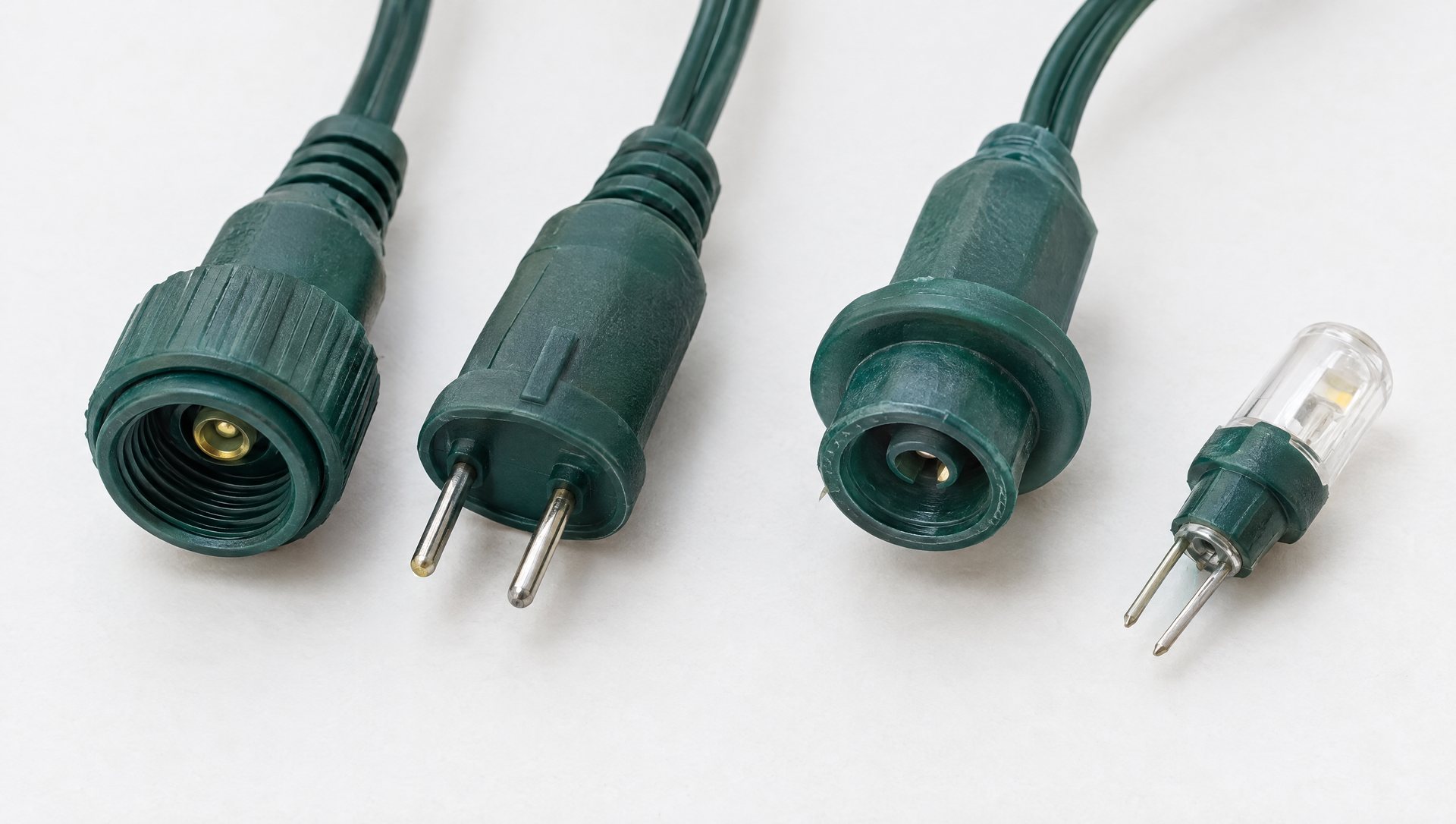
- Sealed or removable bulbs. On mini and 5mm sets, a bulb molded into its socket is sealed; one seated in a separate plastic base is removable.
- Connector type. Screw-on connectors between strings, not push-together plugs.
- “Full wave” or “flicker free” on the box. If the box says nothing, assume half-wave.
- Wire gauge and type, such as 18 AWG SPT-2, on the jacket or the box.
- Warranty in seasons, in writing on the box or the listing.
- Label color and max sets. A red UL label for outdoor use, and a max-sets figure that covers your longest run.
- The length you need. By the spool, or by bulb count and spacing: 70 bulbs at 4 inches is about 23 feet.
When do store-bought lights make sense?
Store-bought lights make sense for hobbyists who enjoy the work, for small jobs you can reach from the ground, and for displays you won’t reuse. On a roofline they suit only a completely flat run that needs no splicing, and only if you don’t mind extra bulbs bunched on one side, or pulling bulbs and taping the gap. For neatness and a finished look, the answer is commercial lights installed by a pro. Store sets are a reasonable fit for:
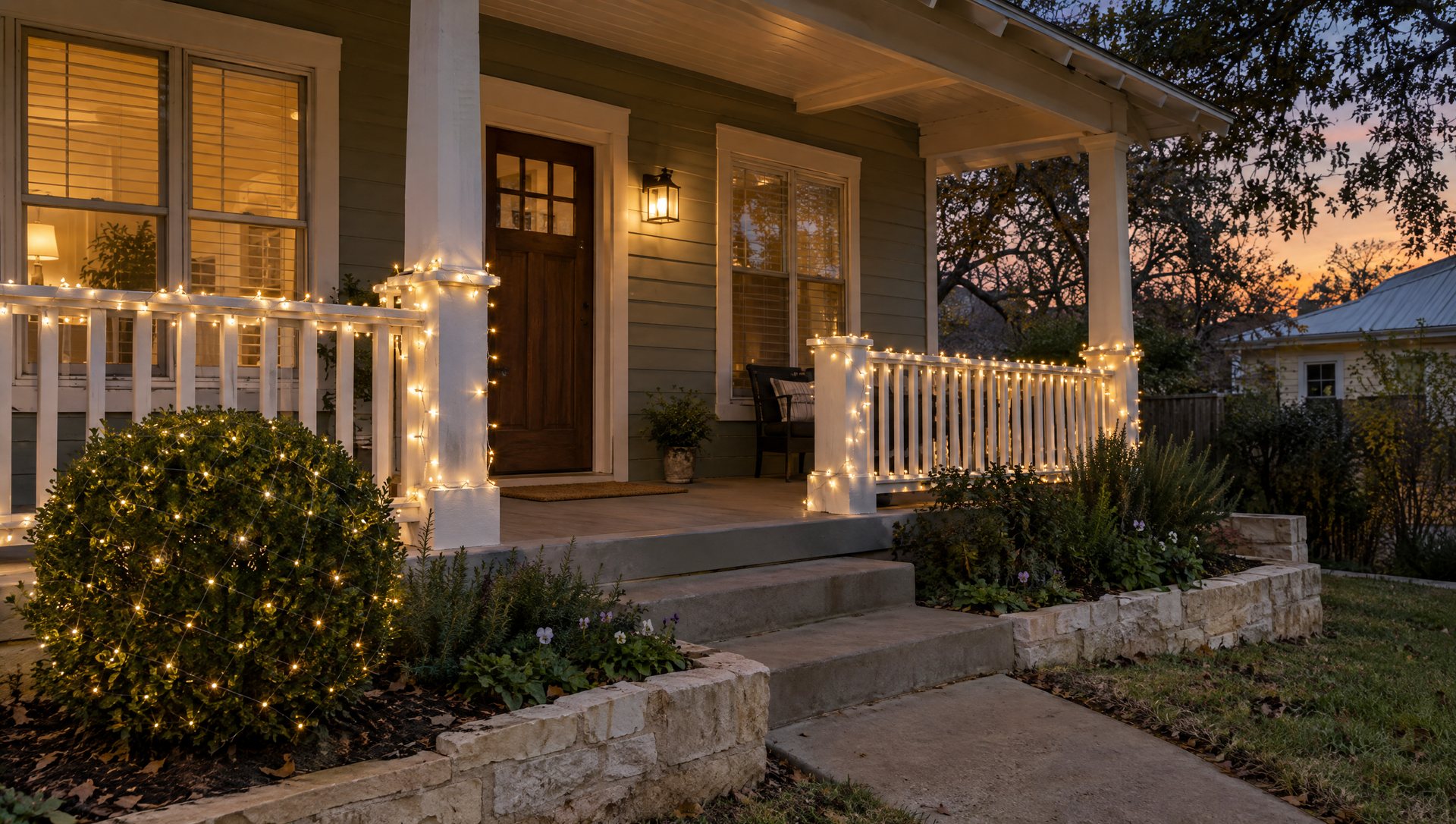
- Indoor use, with indoor-rated sets.
- A porch rail or a small shrub.
- A one-season display, or a rental you will leave next year.
- A short, completely flat roofline run that needs no splicing, if a little extra wire at one end doesn’t bother you.
Can commercial-grade lights stay up all year?
No. Commercial-grade Christmas lights are still seasonal products under UL 588, built for 90 days or fewer a year. UL Solutions certifies a separate category, String Lights for All-Year Use, marked with a yellow cord tag. Christmas Designers’ support page says even a top pro set left up year-round lasts about 12 to 18 months. For lights that stay up, look at permanent holiday lighting, a different product built for it.
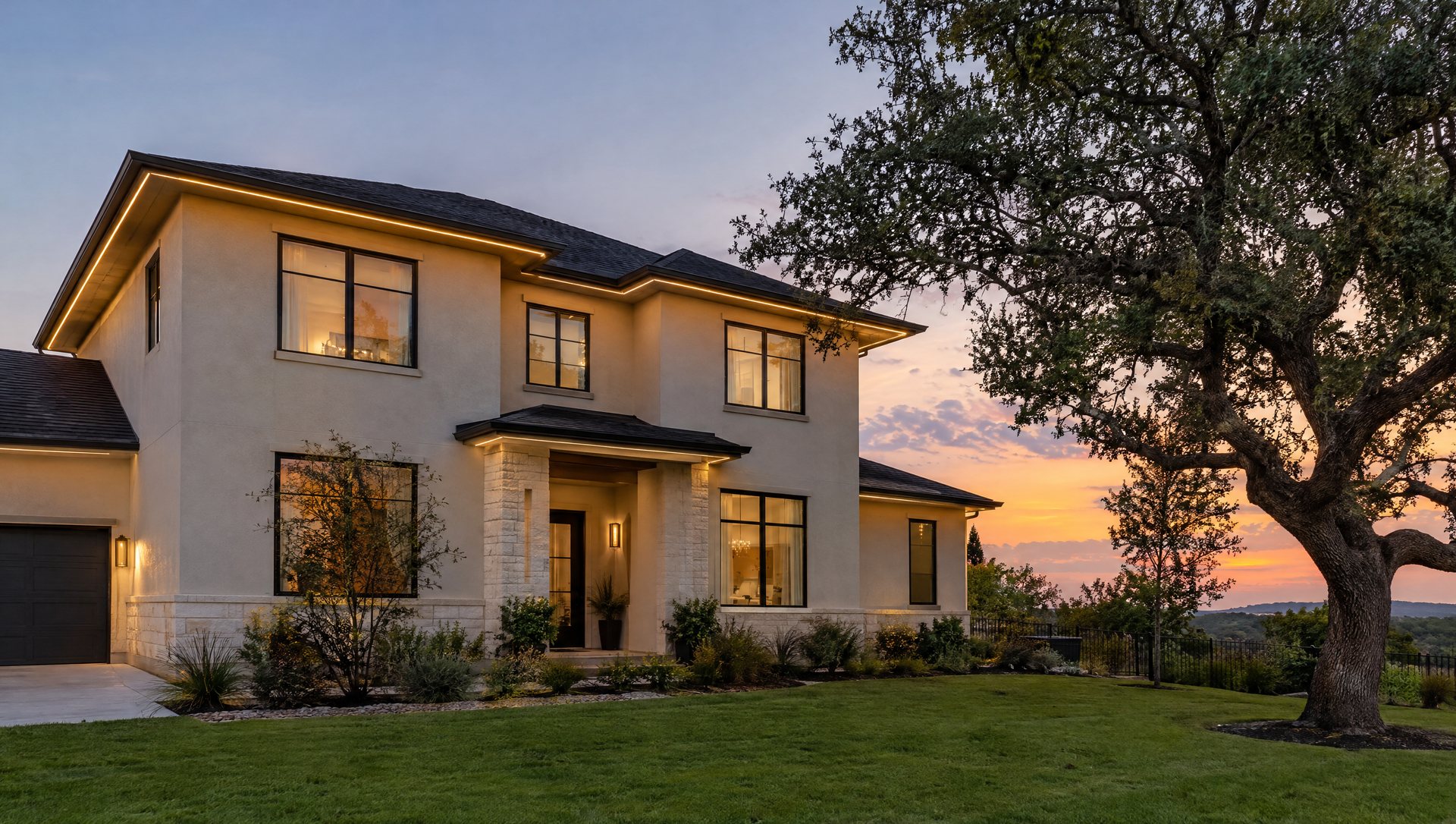
Why grade matters on wrapped trees
String grade matters most on wrapped trees. Trunk wraps use mini or 5mm strings, which cannot be cut, so a tree takes several whole sets joined end to end. In one supplier’s worked example, a trunk 5 feet tall and 3 feet around, wrapped every 3 inches, takes 60 feet of lights: about three 23.3-foot 5mm sets.
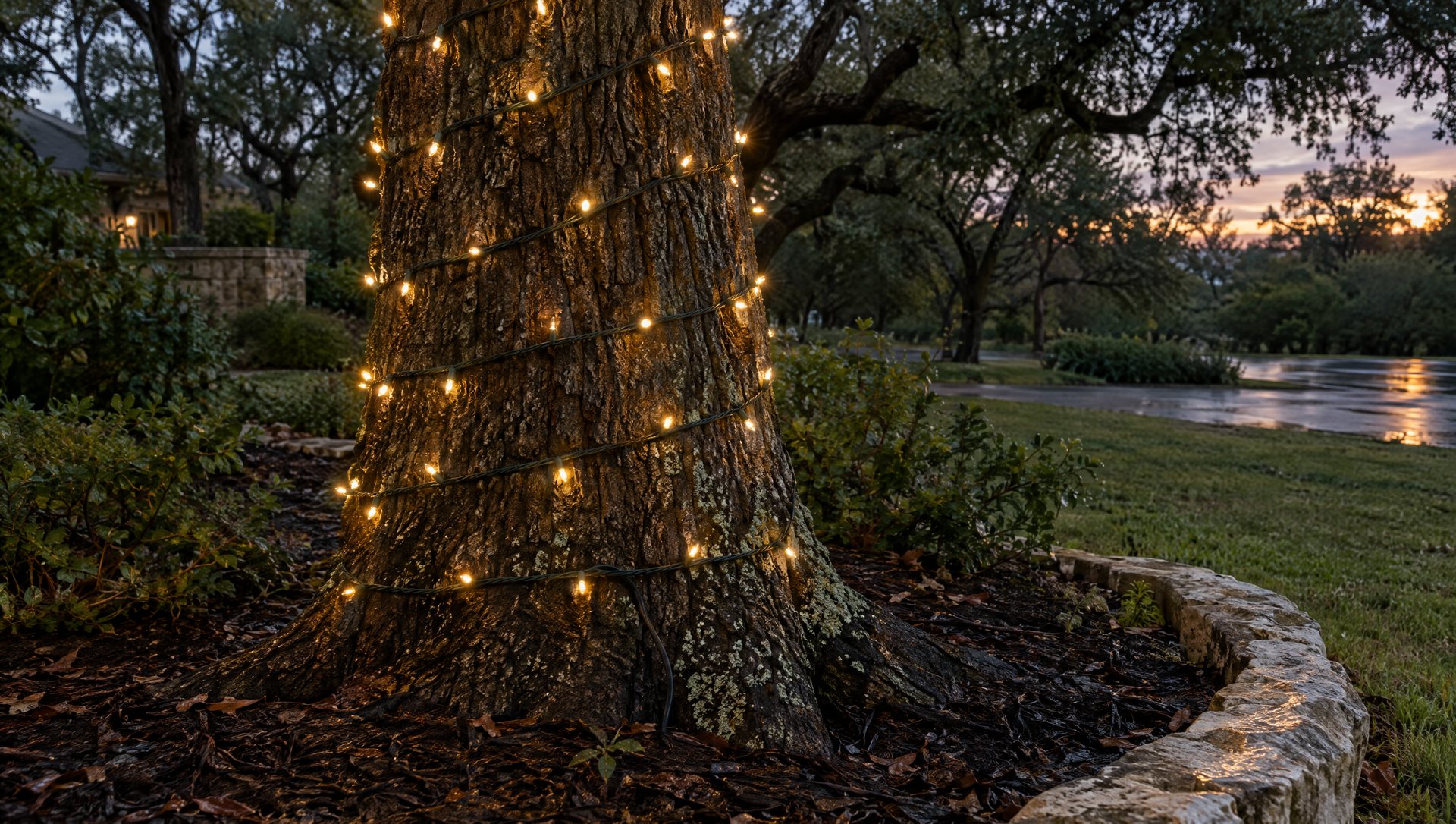
Big trees push the count up fast. Example: by the standard formula (circumference times height, divided by wrap spacing), a trunk 24 inches across wrapped every 3 inches takes about 25 feet of string per foot of height, so 8 feet of trunk is about 200 feet. The Christmas Light Emporium’s tree guide adds 50 to 100% for branches, which makes 300 to 400 feet, or 13 to 18 sets. Check that count against the tag’s max-sets figure; we’d feed a tree that size from more than one run.
Each wrap is snug enough to stay put for one season, never cinched, and comes off every year. All that handling, plus every joint sitting in damp mulch at the trunk base, is where sealed sockets and sealed connections earn their keep. For how footage turns into a price, see what it costs to wrap a tree.
How Sapien handles this
Ask any installer, including us, three questions: which bulbs and wire go on the roofline, which strings go on the trees, and whether they will hang lights you already own. Our answers:
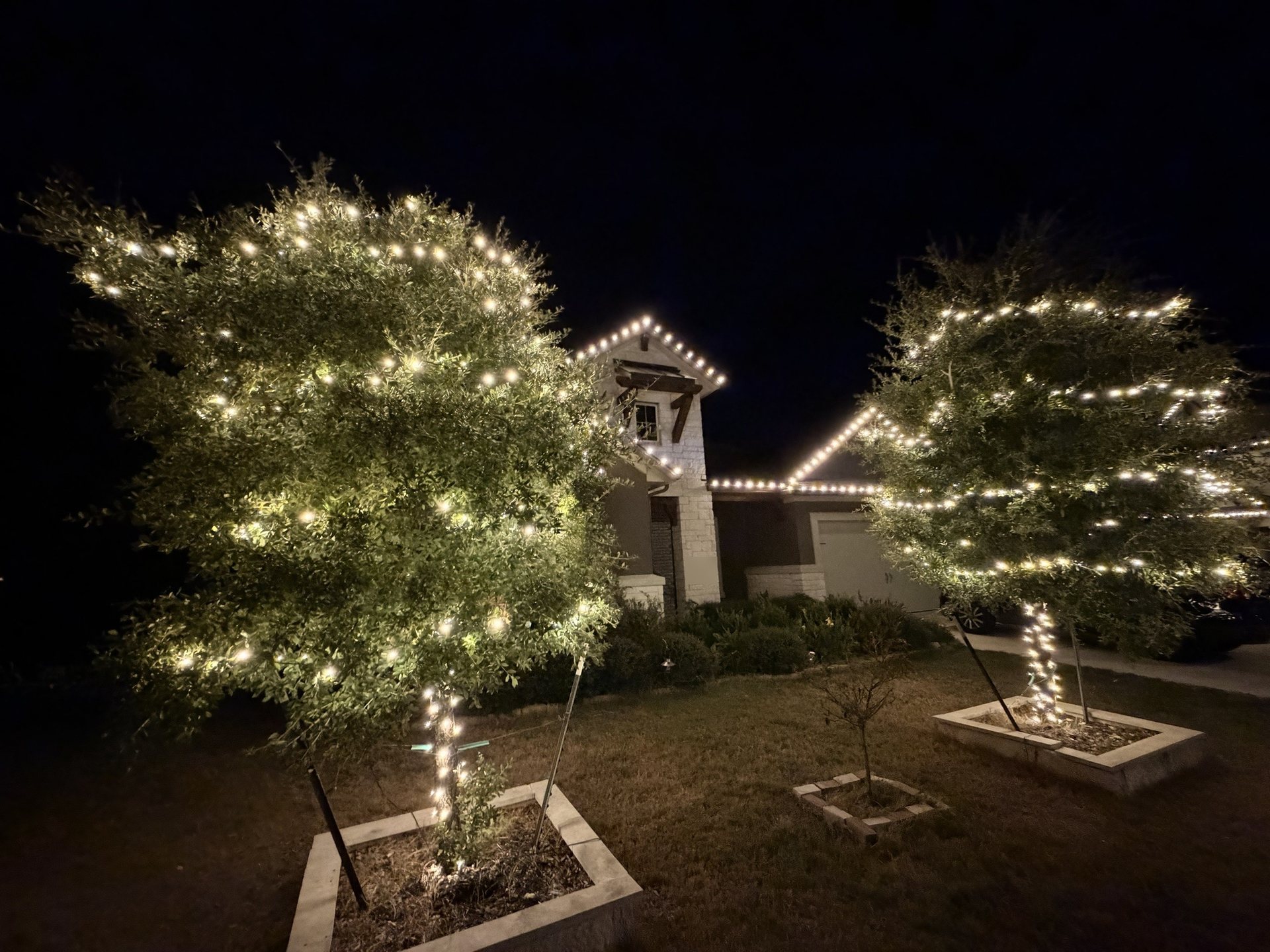
- Rooflines:
- C9 LED bulbs on commercial wire cut to fit each run of the roofline.
- Trees:
- 5mm wide-angle LED mini lights.
- Lights you already own:
- Yes, labor only, if they are pro-grade and working. We test them first, and sets that are dead or retail-grade get replaced or declined.
Sapien’s prices include the lights, clips, timer, install, in-season service and January takedown, and the lights are leased for the season unless your quote says otherwise, so there is nothing to buy or store.
Want it done with pro-grade lights? Text a few daytime photos of the front of your house to (737) 777-9099, or use the contact page, and tell us which parts you want lit and any trees you want wrapped. Jobs start at $500.
Frequently asked questions
Do commercial-grade lights use more electricity?
Both are small loads. In our example, 9 store-grade C9 sets list 2.4 watts each (about 22 watts total), and 150 pro C9 bulbs draw about 0.4 watts each (about 60 watts); the gap comes from the bulbs, not the grade. Suppliers differ on full-wave power itself, calling the added energy cost negligible to slight.
Are commercial-grade Christmas lights waterproof?
No. Christmas Light Source’s article on waterproofing says outdoor-rated LED sets are water-resistant, not waterproof. A rating such as IP65 means dust-tight and protected against water jets, per NEMA’s summary of the IP code, not immersion. Keep connections off the ground, whatever the grade.
Can I connect commercial and store-bought strings together?
We would not. The connectors often do not match, and one supplier says its 20-gauge pre-made C9 cords must not run in series with its 18-gauge cords. Give each kind its own run and follow each tag.
Will new warm white lights match my old ones?
Often not. “Warm white” is not standardized: one C9 bulb is listed at 2600 K, another brand’s warm white is 3000 K, and The Christmas Light Emporium notes that LEDs drift in color as they age. Buy one product line and year for each area.
Sources
- UL Standards Academy: UL 588 case study (2026) (UL 588 scope, 90 days, federal rule)
- CPSC: Seasonal and Decorative Lighting Products final rule, 80 FR 25216 (2015) (minimum wire sizes, fuse and strain-relief requirements)
- UL Solutions: Decorative Lighting Strings bulletin (updated 2025) (red and green label colors)
- UL Solutions: String Lights for All-Year Use (2024) (all-year category, yellow tag)
- Pacific Northwest National Laboratory: Flicker review (2022) (60 Hz, 120 Hz and the 80 Hz visibility threshold)
- Creative Displays: Pro-grade vs retail Christmas lights (2021) (construction, 6 to 8 years)
- Christmas Designers: Retail vs commercial Christmas lights (one-piece sockets, season estimates)
- Christmas Designers: Half wave vs full wave LED lights (2013) (which grades are half-wave, energy difference)
- 1000Bulbs: What are full wave LED Christmas lights? (half-wave in big-box stores, energy difference)
- Christmas Lights Etc: Commercial LED Christmas lights (updated 2026) (screw-on connectors, 500 ft claim)
- Christmas Designers: GFCIs and Christmas lights (2018) (watertightness, connector estimate, causes of GFCI trips)
- Christmas Light Source: C9 25 ft cord listing (20 AWG, 2-cord limit, no series with 18 AWG cords)
- Christmas Designers: SPT-1 vs SPT-2 wire (2018) (18 AWG line, matching parts)
- Christmas Light Source: C9 1,000 ft spool listing (250 ft maximum run)
- Action Lighting: Fused slide-on plugs (fused male plugs)
- Christmas Light Source: Can I cut Christmas lights to length? (2019) (series vs parallel cutting)
- Christmas Designers: How long do LED Christmas lights really last? (2016) (UV, rated hours vs string life)
- Christmas Designers support: Year-round lighting expectations (5 to 6 seasons, 12 to 18 months year-round)
- Natural Resources Canada and Navigant: ENERGY STAR decorative light strings proposal (2006) (2004 outdoor test findings)
- National Weather Service: Austin Camp Mabry monthly normals (rain days, October and August highs)
- Christmas Light Source: Can I store Christmas lights in the attic? (2023) (heat and LED sets)
- Christmas Designers: Tips for taking down and storing Christmas lights (2023) (keep lights out of the attic)
- ESFI: Outdoor decoration safety tips (GFCI, standing water)
- Christmas Lights Etc: C9 25-light prelamped set listing (store-grade example price and 2.4 W, checked October 2026)
- Christmas Designers: C9 cord, 1,000 ft spool listing (spool price, checked October 2026)
- Christmas Designers: Pro C9 LED bulbs listing (bulb price tiers, 0.4 W, 3-season warranty, checked October 2026)
- Christmas Designers: Plugs listing (slide-on plug price, checked October 2026)
- Christmas Designers: 70-light 5mm string listing (23.3 ft, 4.8 W, 43 sets, 3-season warranty)
- Christmas Light Source: How to replace a fuse (same-rating fuse)
- Christmas Designers: How to wrap a tree in Christmas lights (2015) (60 ft trunk example)
- The Christmas Light Emporium: How to wrap trees with Christmas lights (50 to 100% added for branches)
- Christmas Light Source: Are LED lights waterproof? (2019) (water-resistant, not waterproof)
- NEMA: A Brief Comparison of NEMA 250 and IEC 60529 (2002), hosted copy (meaning of IP65)
- Christmas Designers: Minleon C9 V2 bulb listing (2600 K warm white)
- The Christmas Light Emporium: Warm white vs pure white vs cool white (3000 K warm white, color drift, matching advice)
About the author. Rick Safeman owns Sapien Lighting & Installation in Austin, Texas.