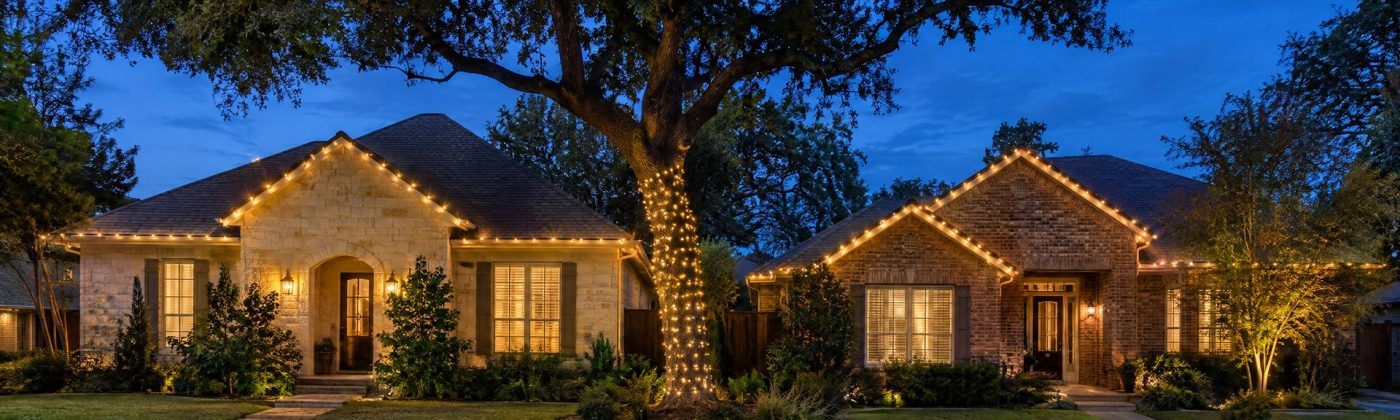
You can usually tell professional from DIY Christmas lights in a photo. Pro work shows one straight line with even bulb spacing, no sag or dark gap at the end of a run, every bulb at the same angle, one consistent white, hidden cords, and tree wraps carried up the main limbs. A careful DIY display on a small house can come close from the street, and a few habits narrow the gap.
This guide is for Austin homeowners deciding whether to hire out their lights, and for anyone who wants this year’s DIY display to look sharper. Each tell below comes with the reason it happens and the fix.
How to look at a photo of Christmas lights
Look twice: once in full dark and once in daylight. Dark shows the line, the gaps and the color. Daylight shows what the glow hides: clips, bulb angles, cords and how the wire sits on the edge.
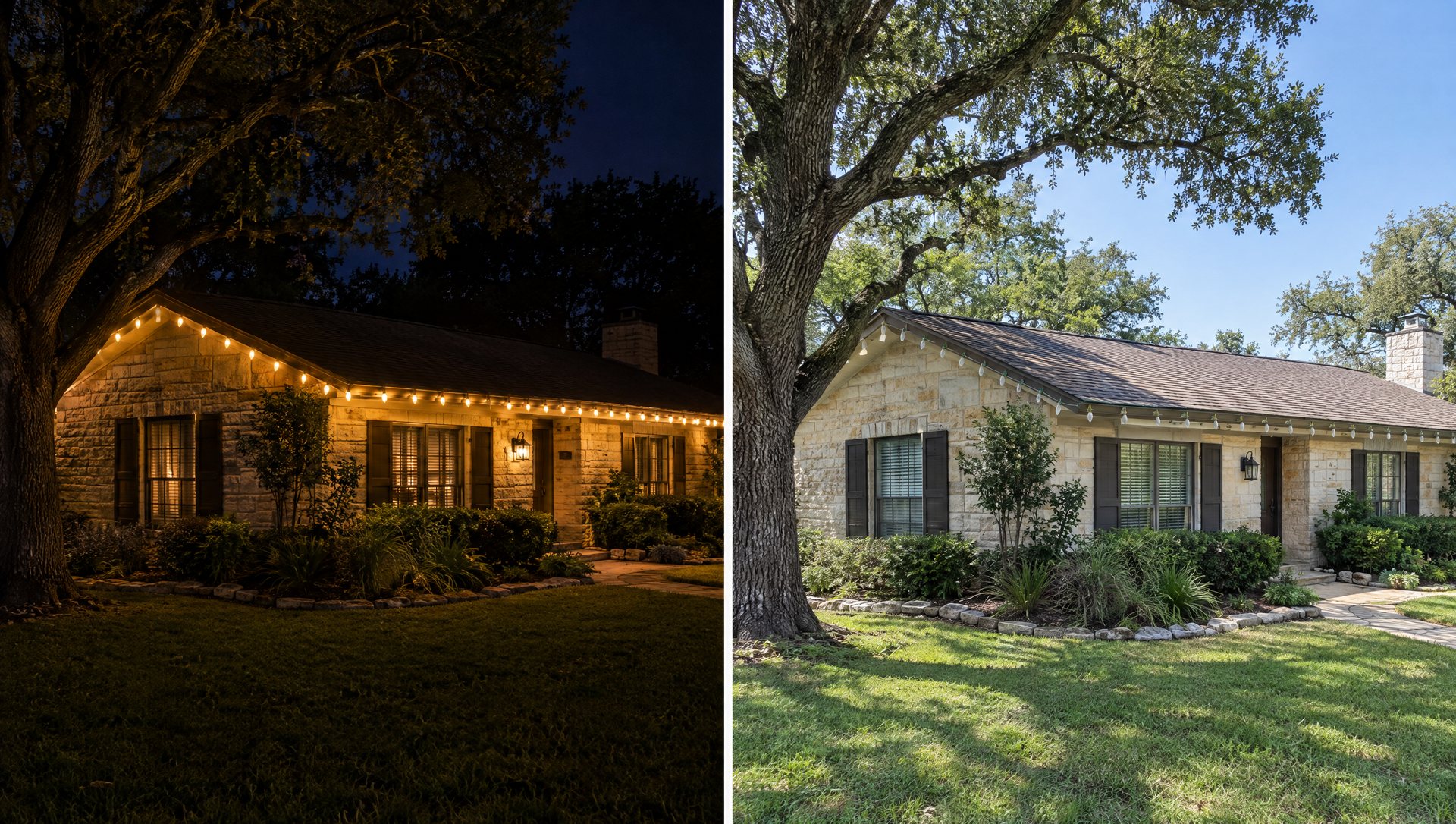
Photos also flatter. In our view, a dusk shot looks fuller than the same lights in full dark, so compare two homes only when they were shot at about the same time of day. In Austin in mid-December, U.S. Naval Observatory data put sunset at about 5:30 to 5:35 PM, with the last usable daylight gone by about 6 PM.
The six tells, in the order we’d check them:
- Is the line straight, or does it dip between clips?
- What happens at the corners and peaks?
- Do the bulbs all point the same way?
- Is it one white, or several?
- How far up the tree do the wraps go, and how even are they?
- Where do the cords go?
Tell 1: does the roofline stay straight?
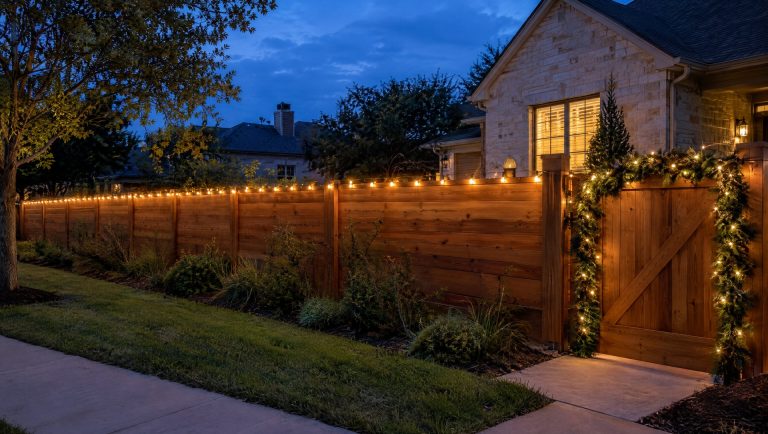
On a professionally hung roofline, every bulb sits at the same height and the same distance apart. A DIY run often dips a little between clips, so the line reads as a row of small arcs.
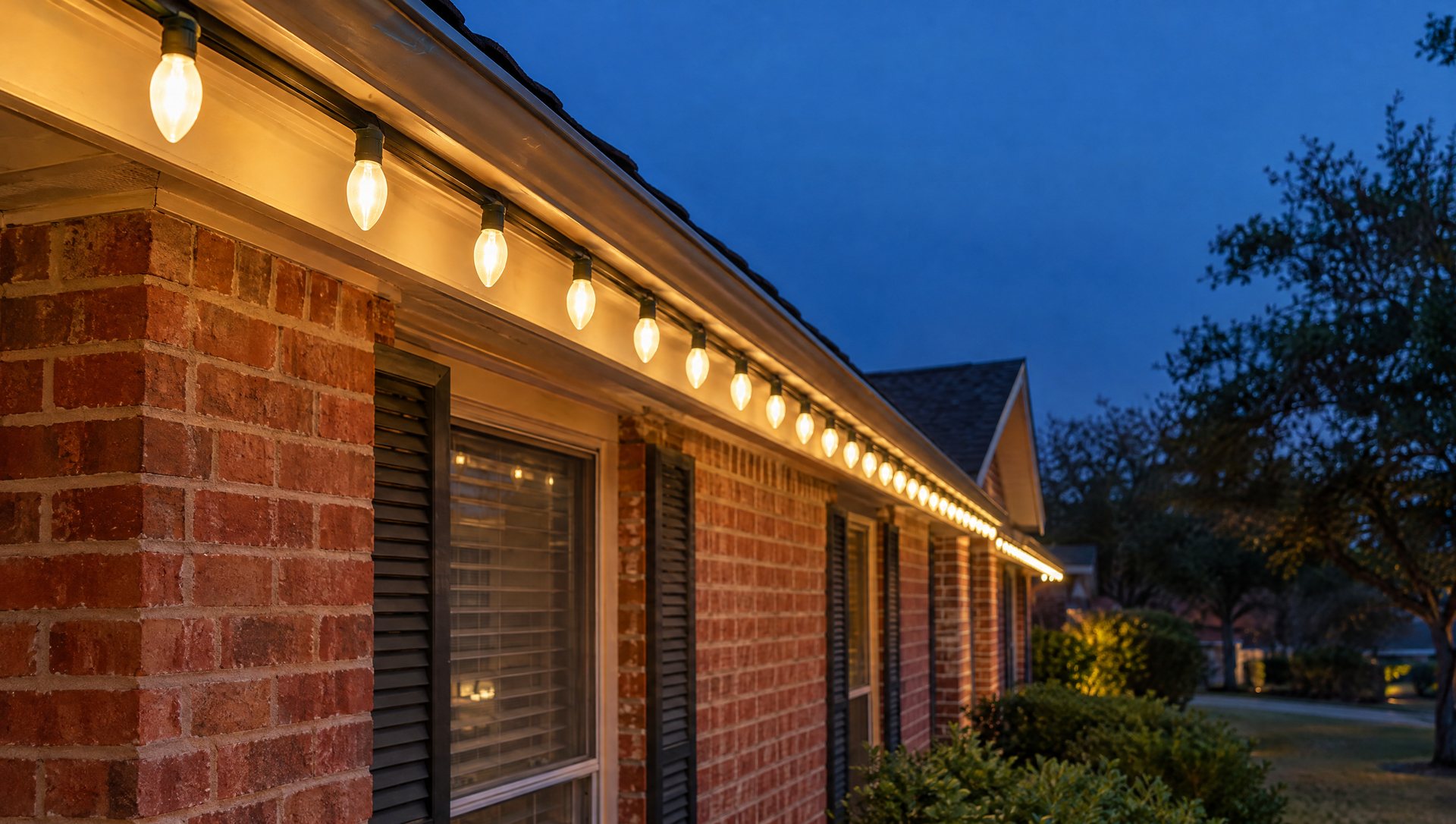
The cause is almost always clip spacing. Clip every few bulbs and the wire droops between them, more so after an Austin cold front blows through. The fix is a clip on every bulb, all on one edge, wire snug but not stretched. Sight along the eave from one end to check it: any dip shows up right away. Our guide on how to hang Christmas lights outside covers clip choice and layout.
Tell 2: what happens at the corners?
Store strings come in fixed lengths, and rooflines do not. One retailer’s prelamped 25-bulb C9 LED set is 17 feet long with bulbs 8 inches apart, per its product listing, checked October 2026.
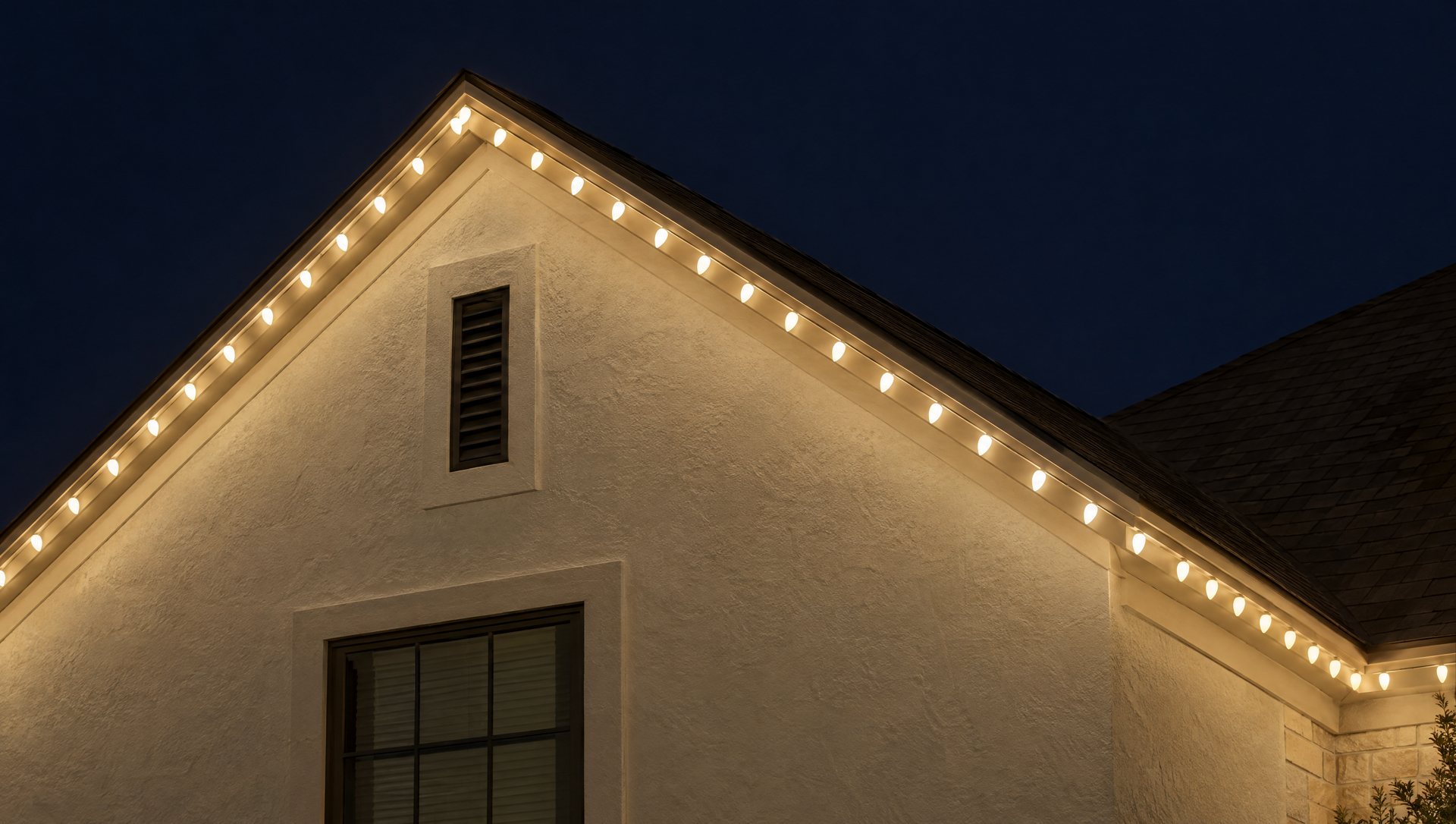
Example. A 40-foot eave takes two of those sets (34 feet) plus 6 feet of a third, leaving 11 feet over. That spare gets bundled at the corner or left off, and either way the corner shows it: a knot of bulbs, or a dark gap where the run stops short.
Look at each gable peak and corner. On pro work, the gap between bulbs there matches the gap on the rest of the run. Commercial light line sold for cutting can be cut to length and fitted with slide-on plugs, per Christmas Lights Etc’s commercial lighting page. Prelamped store sets cannot. More on that difference in commercial-grade versus store-bought lights.
Tell 3: do the bulbs point the same way?
Bulbs point different ways when the clip type changes along a run or some bulbs have no clip at all. An all-in-one clip slid under a shingle stands the bulb upright, and the same clip hooked over a gutter lip points it straight out, per Christmas Lights Etc’s clip guide. Shingle edges with no gutter take a shingle tab.
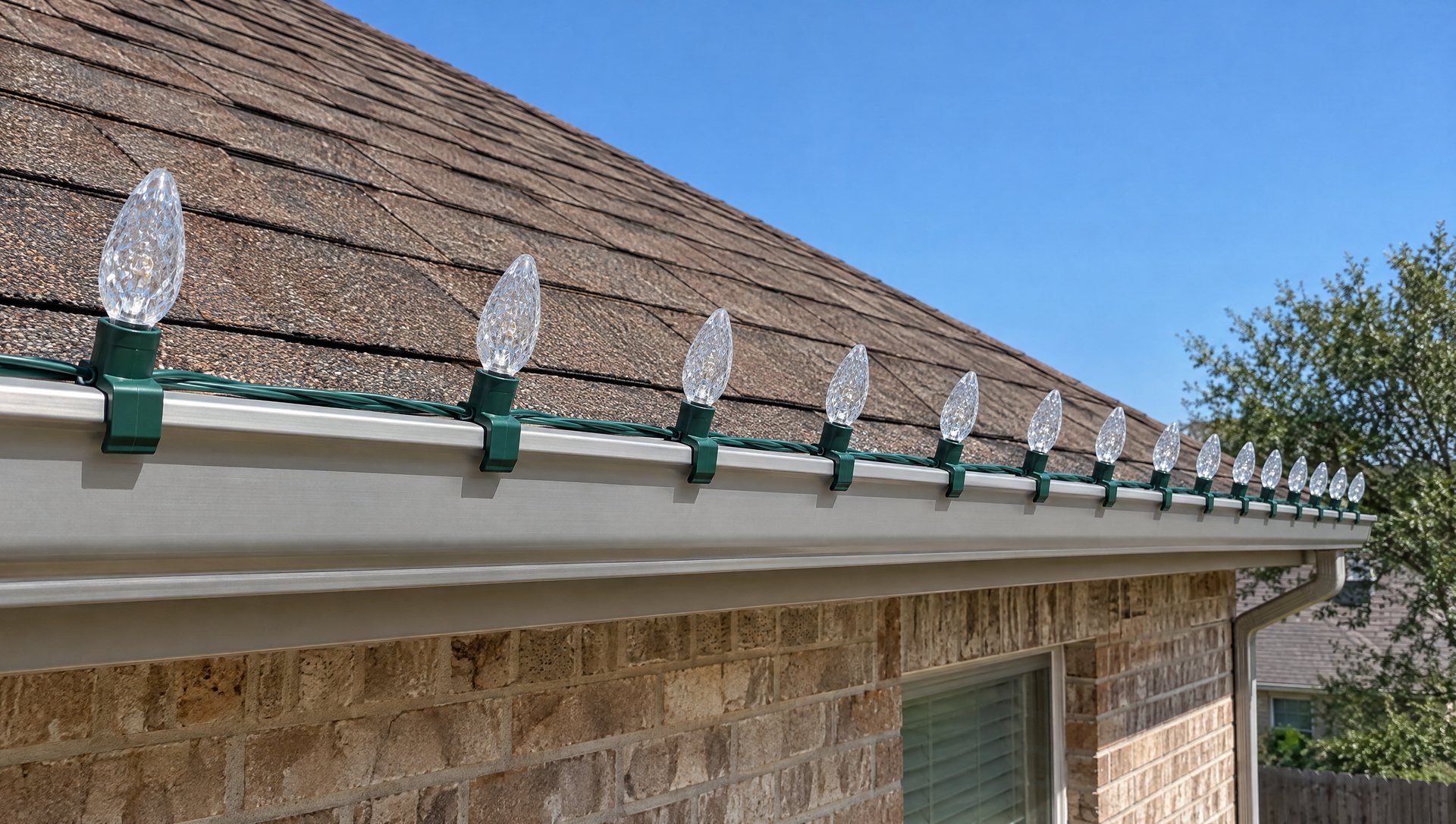
On a house with gutters on some edges and bare fascia on others, the bulb angle flips partway along unless the plan allows for it. This tell shows most in daylight, with the lights off, which is why a daytime photo is the harder test.
Use clips, not nails or staples. The National Fire Protection Association says so, and CertainTeed, a shingle maker, says nails and staples in shingles cause leaks.
Tell 4: is it one white, or several?
“Warm white” is not one color. It runs roughly 2,600 K to 3,000 K depending on the brand: one maker’s C9 warm whites are labeled 2,600 K and 2,700 K, and another seller’s is 3,000 K. That seller adds that LEDs drift with age and vary by color bin, so it suggests one product line per area.
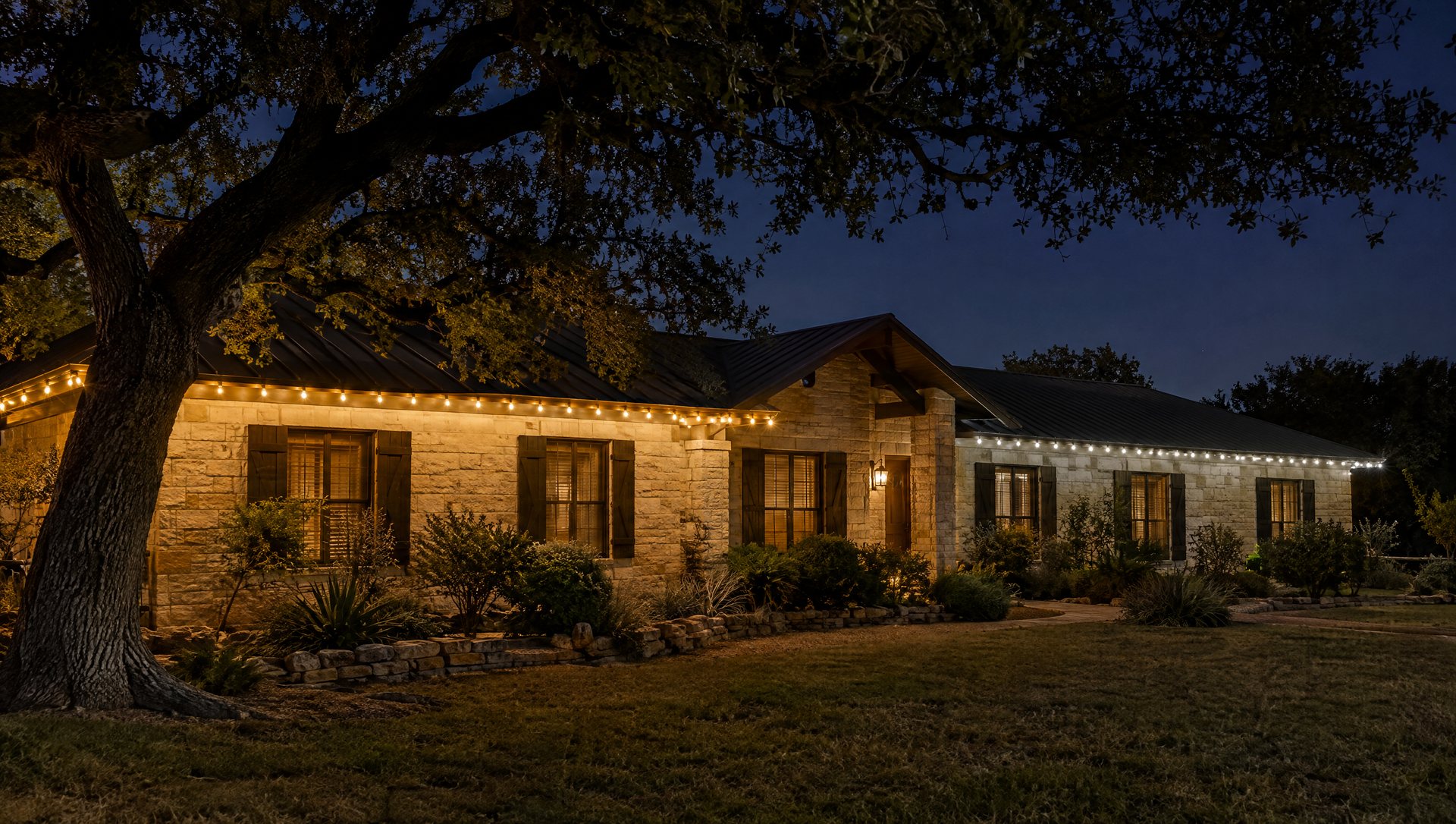
So a roofline built from three years of store runs often shows a seam: one stretch a little more golden, the next a little whiter. The DIY fix works with the lights already up: move the odd sets so each zone (the whole roofline, one tree, one bed) is one product line, and group older sets together on a bush. More in our guide to warm white versus cool white.
Tell 5: how far up the tree do the wraps go?
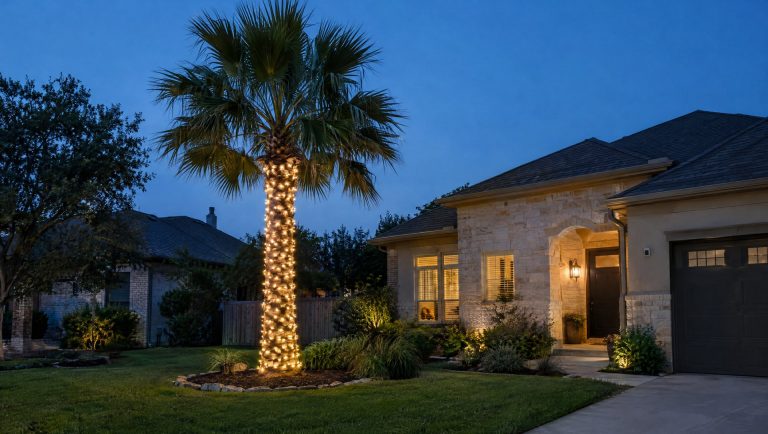
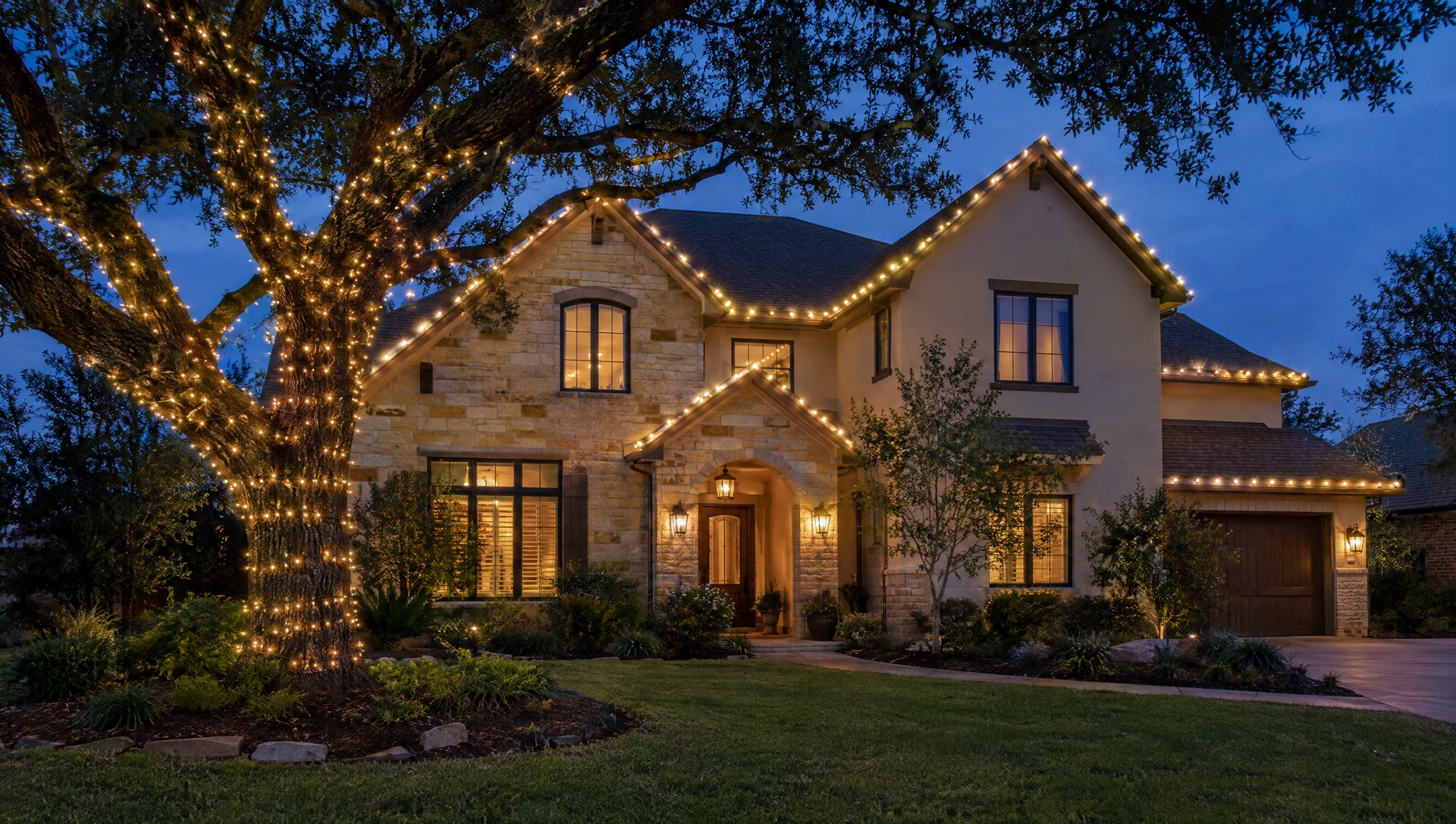
The tree tell is consistency and reach. A trunk wrap spirals a string up the trunk; a trunk-and-limb wrap carries the spiral out along the main limbs. In our judgment, a pro picks a spacing on purpose and holds it from the base onto the limbs.
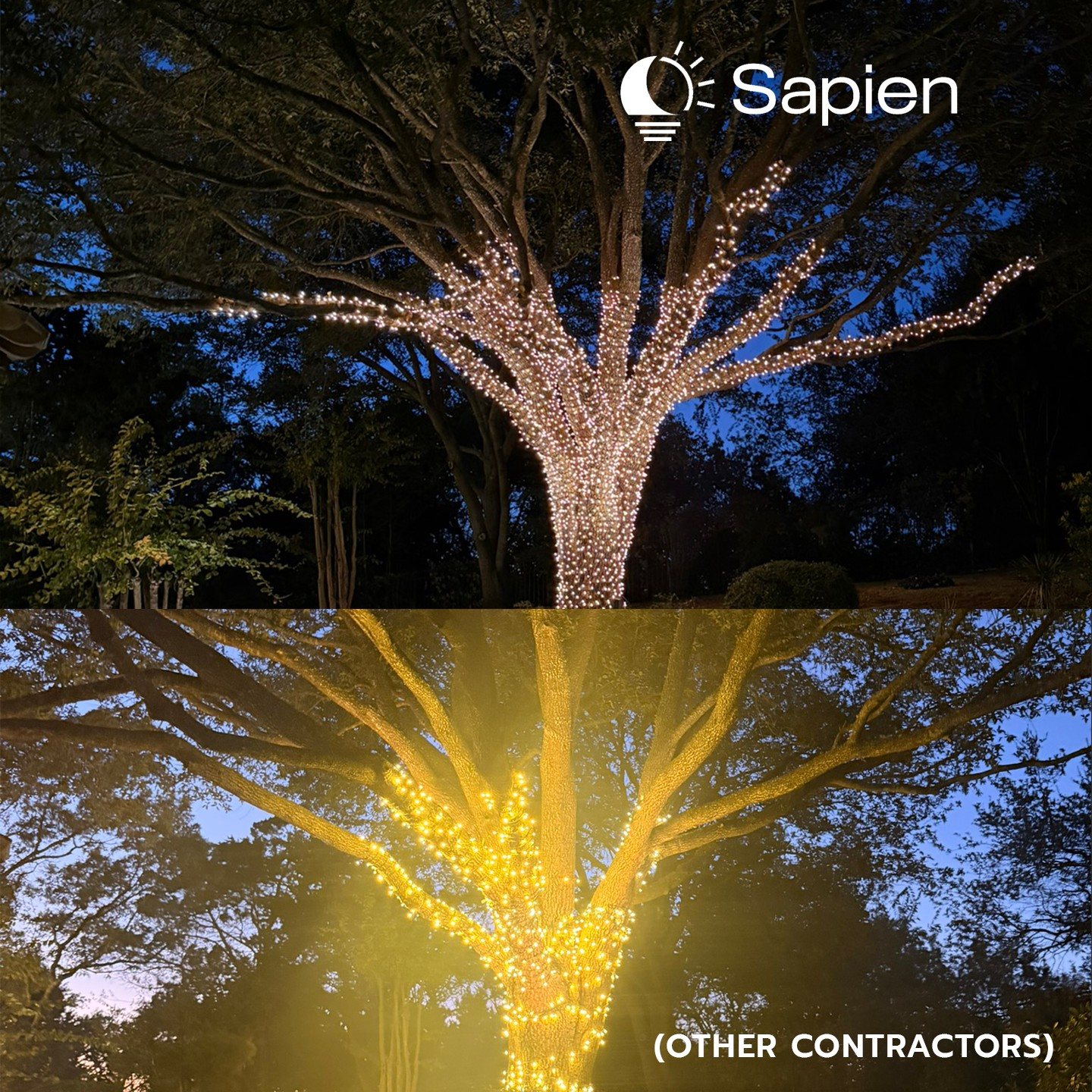
Davey Tree suggests 2 to 3 inches between wraps. Christmas Lights Etc’s tree-wrapping guide says most outdoor trees are wrapped the full trunk length and about 3 to 4 feet up the main branches.
DIY wraps often start tight, open up higher, and stop at arm’s reach, usually because the lights were bought for the tree’s height. By Davey’s formula, a trunk 12 inches across wrapped at 3-inch spacing takes about 12.6 feet of lights per foot of height. So 8 feet of that trunk takes about 100 feet of lights, before any limbs or rough bark.
On a live oak, with its long, low limbs, how far the wraps travel is the clearest tell of all. Our guide to what it costs to wrap a tree shows how girth, spacing and limb count set the footage and the price, and lighting live oaks covers that tree in particular.
Wraps go on snug, not cinched, and come off every year: the Morton Arboretum explains that wire left on a limb cuts in as the wood thickens.
Tell 6: where do the cords go?
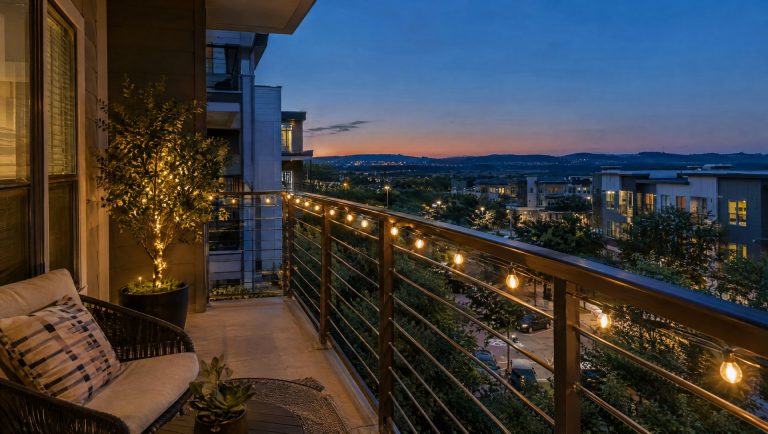
Cords are the easiest tell to fix. On a pro install, they run along edges, behind shrubs or down an inside corner. A cord across the walk or draped over a flower bed reads as DIY. Limestone and stucco walls usually give a cord no edge to hide along, so plan the route before the first clip goes up.
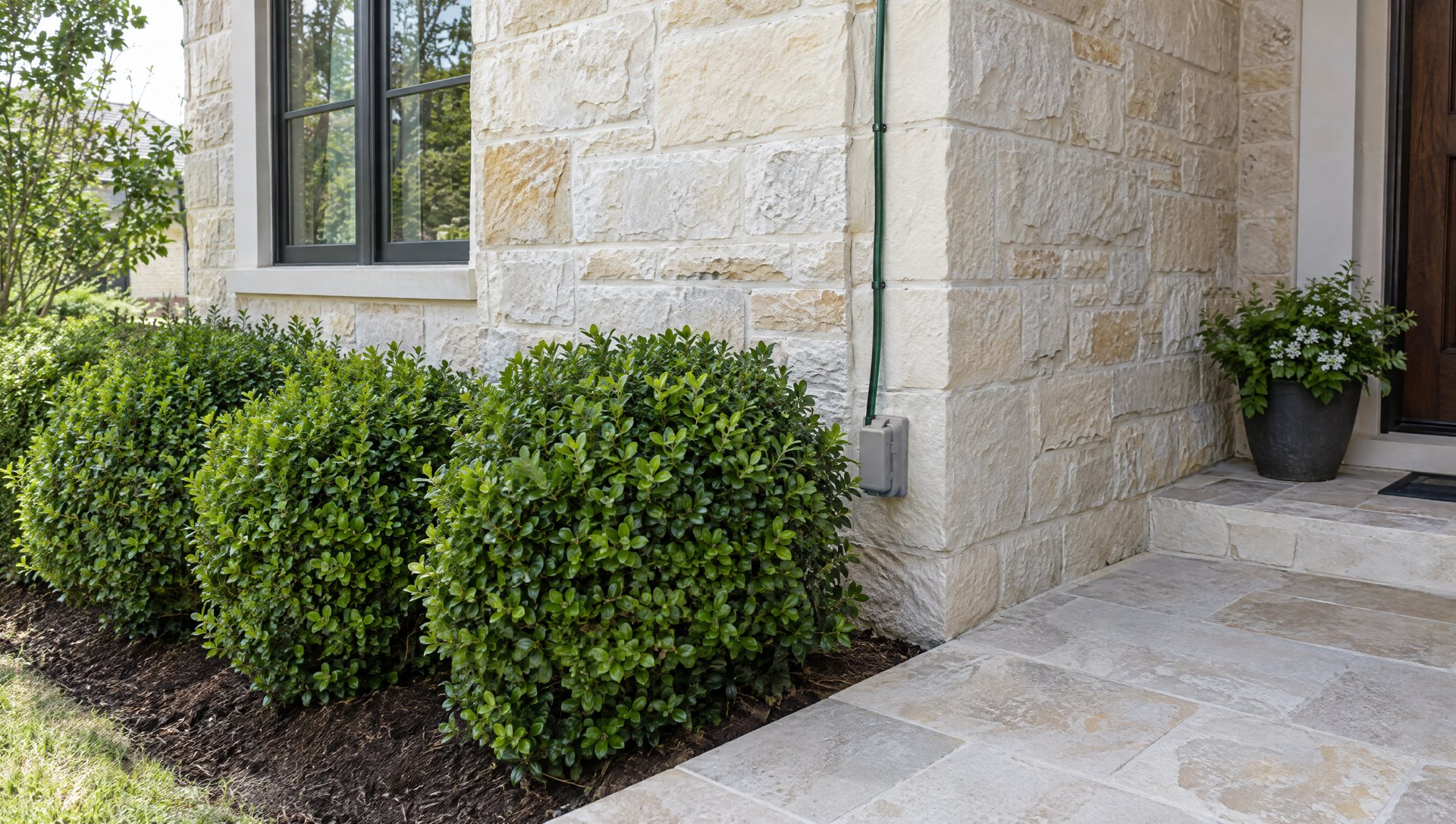
The Electrical Safety Foundation International lists the basics: outdoor-rated lights and cords, no cords pinched in doors or windows, nothing in standing water, and GFCI-protected circuits. If the plan needs a new outdoor outlet, that is electrical work under Texas Occupations Code chapter 1305. Texas licenses electricians through TDLR (the Texas Department of Licensing and Regulation), so hire a licensed electrician. Sapien installs plug-in seasonal lights only. If you’re short on outlets, see Christmas lights with no outdoor outlet.
How do you make DIY Christmas lights look professional?
DIY lights can come close from the street when the job is small and careful. In our judgment, six habits close most of the gap:
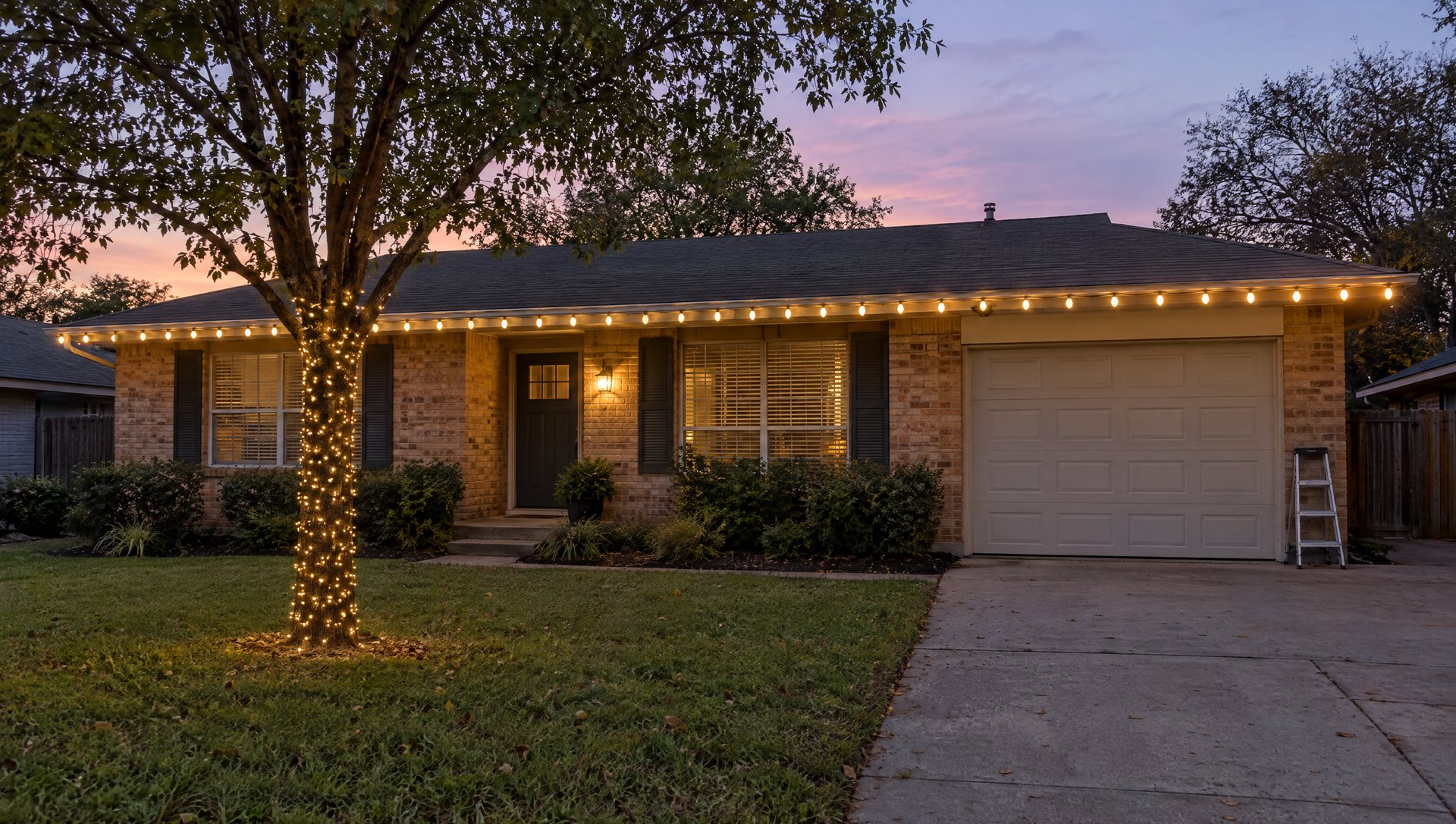
- Measure every edge before you buy, and put leftover wire at the outlet or behind a downspout, not at a visible corner.
- Use one product line in one white per area, and group older sets together.
- Clip every bulb on the same edge, wire snug but not stretched.
- Match the clip to the edge, and plan for where the gutter stops.
- Wrap trunks at one even spacing, only as high as you can reach from a short ladder.
- Run outdoor-rated cords along edges and behind shrubs, not across a walk.
Steps 2, 3 and 6 work with the lights already up.
Pros pull ahead on reach: ridges, second-story eaves, tile and metal roofs, and big trees. The TRI Alliance roof maintenance guide says only trained, insured professionals should walk on tile. McElroy Metal tells homeowners to stay off metal roofs, and CertainTeed says to avoid walking on shingle roofs, especially in cold weather. Lit ridges are a reach tell more than a skill tell.
What can’t a photo tell you?
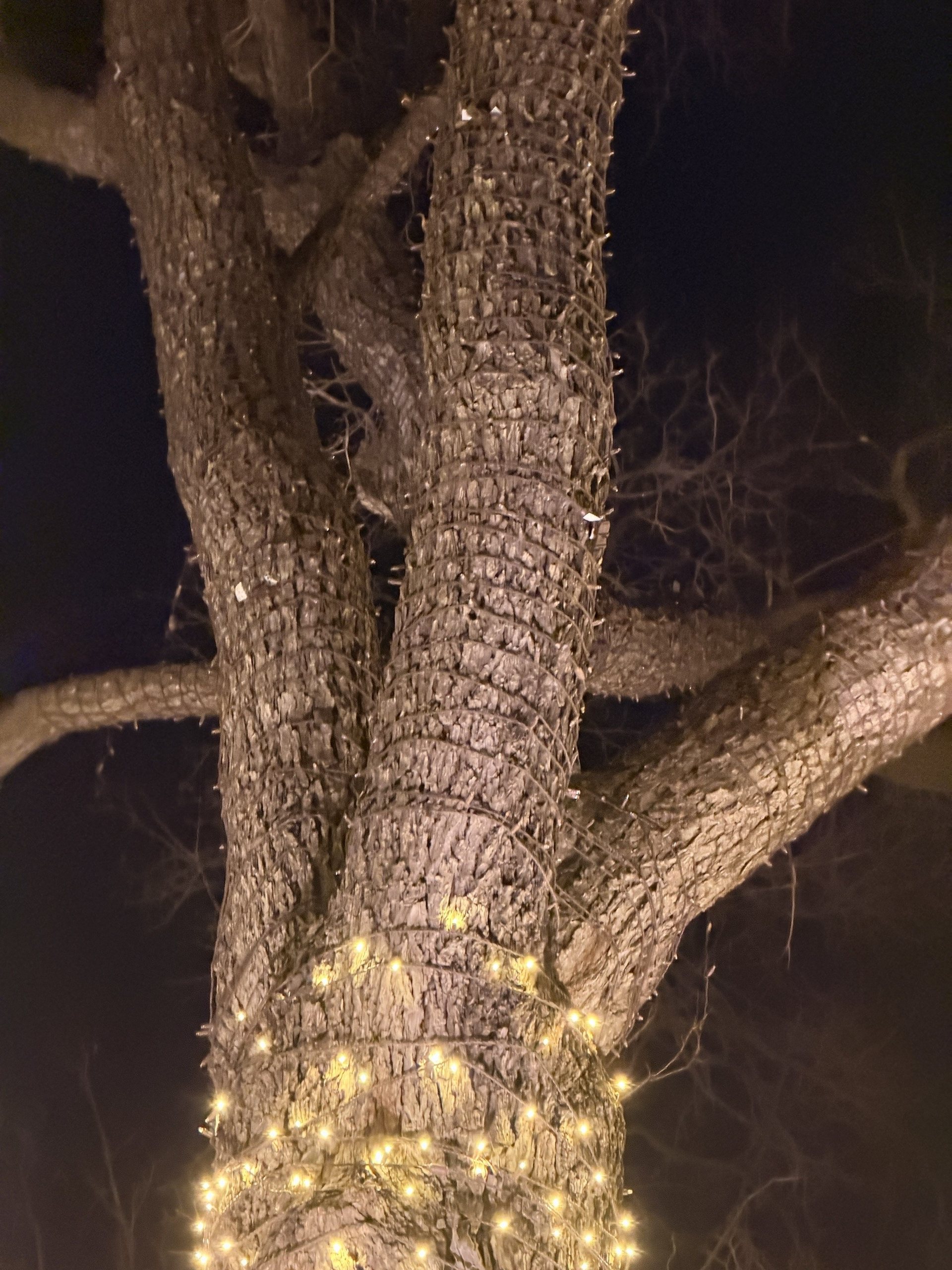
A photo cannot show the problems that cost money later:
- whether fasteners damaged the shingles or gutters,
- whether a set is rated for outdoor use (on UL-listed strings, a green label means indoor only and a red one indoor or outdoor, per UL Solutions),
- whether the outlet is GFCI-protected, and whether the connections are covered and off the ground,
- whether the line holds through a windy cold front,
- who takes it down, and whether the tree wraps come off. See how to take Christmas lights down without breaking them.
A wrap can look fine on install night and fail in week two because of a bad connection cover, old lights or too much on one circuit. None of that shows from the street. When you judge an installer by photos, ask what is under the glow too; how to read before-and-after Christmas light photos goes through what to ask.
Should you hire out your Christmas lights?
Whether a professional install is worth it depends on where the gap shows: narrow on a simple one-story front, wide on trees, ridges and second-story eaves. Weigh it against the price, your ladder time, takedown and storage.
We’d tell you to keep doing it yourself only if you enjoy it, have the time, know which lights to buy and don’t mind the extra tools and store runs, and:
- the house is one story and you light the front only,
- every edge you light is reachable from a ladder on firm, level ground,
- the trees are small enough to wrap from a short ladder,
- you are fine taking it down and storing it.
In our judgment, a plan that needs the roof, a second story or a large live oak is where hiring out makes the most sense. Get a quote before you climb.
For scale: Sapien’s minimum job is $500. Its typical 2026 roofline prices are $4.50 per foot for a single story, $6.50 per foot for two stories and $9.00 per foot for a third story or very steep peaks. Bigger roofs, steeper slopes and thicker trees cost more. Tree wraps run from $195 to $275 for the trunk of a small or medium tree to $450 to $950 for a large oak, quoted from photos of the tree. Those prices include the lights, clips, timer, install, in-season service and January takedown, and the lights are leased for the season unless your quote says otherwise, so there is nothing to store. See the line-by-line breakdown of what a professional install costs and the three-year DIY versus pro cost comparison.
The price climbs with height, the same place the pro and DIY gap widens. A $500 minimum job applies.
Source: Sapien Lighting, Christmas light installation in Austin, 2026 prices
Show the numbers
| Price per foot | |
|---|---|
| Single story | $4.50 |
| Two stories | $6.50 |
| Third story or very steep peaks | $9.00 |
Get a photo quote. Text a few daytime photos of the front of your house to (737) 777-9099, or use the contact page, and tell us which parts you want lit and any trees you want wrapped. We’ll tell you what we’d do and what it costs. More on the service itself is on our Christmas light installation in Austin page.
Frequently asked questions
Why do my Christmas lights sag between the clips?
Christmas lights sag when the clips sit several bulbs apart, so the wire hangs in small arcs. A clip on every bulb keeps the line straight.
Can a pro re-hang Christmas lights I already own?
Installer policies differ, so ask before you book. How Sapien handles it: yes, as labor only, if they are pro-grade and working. We test them first, and sets that are dead or retail-grade get replaced or declined.
Can store-bought lights look professional?
Only in a narrow case: a completely flat run that needs no splicing, where you don’t mind extra bulbs bunched on one side or pulling bulbs and taping the gap. Prelamped sets can’t be cut to fit an edge, so extra wire ends up at the corners or hanging between sections. For a neat, finished look, the answer is commercial line cut to each run and installed by a pro.
Sources
- Christmas Lights Etc: C9 LED Faceted Warm White Prelamped Light Set (17-foot length, 8-inch spacing, checked October 2026)
- Christmas Lights Etc: Commercial LED Christmas Lights (cut-to-length light line, slide-on plugs)
- Christmas Lights Etc: Christmas Light Clips Guide (all-in-one clip angles, shingle tabs)
- NFPA: Winter Holiday Safety tip sheet (2025) (clips, not nails)
- CertainTeed: Holiday Roof Safety (no nails or staples in shingles; avoid walking on the roof)
- Christmas Designers: Minleon C9 V2 retrofit bulb, Sun Warm White (2,600 K and 2,700 K warm whites)
- The Christmas Light Emporium: Warm White vs Pure White vs Cool White (3,000 K warm white; color bins, aging, grouping sets)
- Davey Tree: Wrapping Trees with Christmas Lights, the Dos and Don’ts (2- to 3-inch wrap spacing; footage formula)
- Christmas Lights Etc: Wrapping Trees with Lights (trunk length plus 3 to 4 feet of branches; wrap terms)
- Morton Arboretum: How to Take Care of Trees and Shrubs as You Light Your Landscape (girdling)
- ESFI: Outdoor Decoration Safety Tips (outdoor ratings, cords, standing water, GFCI)
- Texas Occupations Code chapter 1305: Electricians (electrical work requires a license; TDLR administers it)
- TRI Alliance: Roof Maintenance Guide (only trained, insured professionals should walk on tile)
- McElroy Metal: How to Walk on Metal Roofs (homeowners should stay off metal roofs)
- UL Solutions: Decorative Lighting Strings bulletin (green label indoor only, red indoor or outdoor)
- American Ladder Institute: Basic Ladder Safety (do-not-climb conditions)
- U.S. Naval Observatory: sun and twilight data for Austin, December 2026 (sunset and end of civil twilight)
About the author. Rick Safeman owns Sapien Lighting & Installation in Austin, Texas.